Steel Pet Door
CN → US| HS Code | Tariff Rate | Origin | Destination | Doc |
|---|---|---|---|---|
| 7326908688 | 87.9% | CN | US | Official Doc |
| 9403200017 | 85.0% | CN | US | Official Doc |
| 9403200086 | 85.0% | CN | US | Official Doc |
| 8302416045 | 88.9% | CN | US | Official Doc |
Product Images
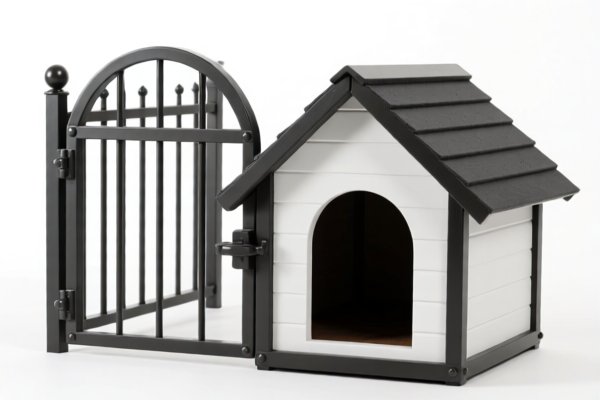
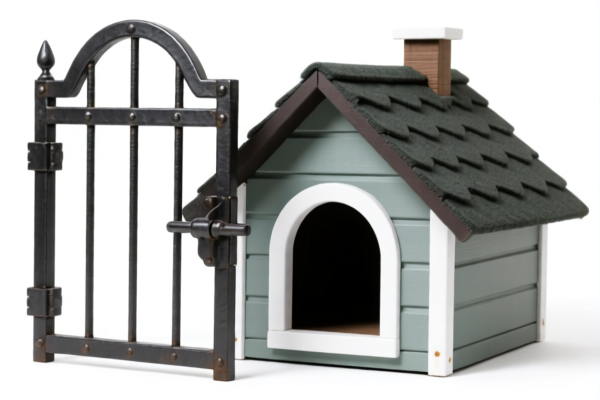
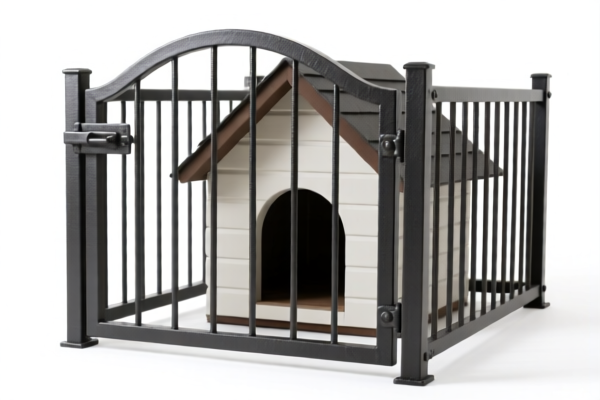
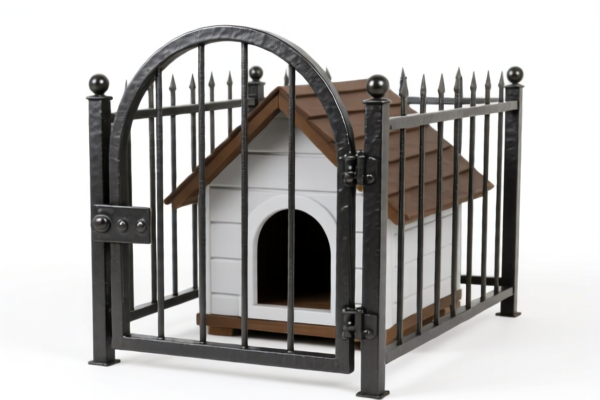
AI Analysis
🐾 Steel Pet Door (Steel Pet Gates/Enclosures)
🌐 HS Code Reference & Customs Clearance Guide | 2026 Latest Tariff Analysis | Professional Entry Strategy
📌 I. Product Definition & Classification: What Exactly is a "Steel Pet Door"?
A "Steel Pet Door" is not a single standardized product in international trade. It can be classified differently depending on its structure, function, and installation method. In the context of US import regulations (based on the provided data), these goods generally fall into two main categories:
1. Building Accessories: If installed as a permanent fixture in a wall or door frame.
2. Metal Furniture/Enclosures: If it functions as a freestanding pen, cage, or restricted activity zone.
⚠️ Critical Distinction:
- If the item is a small flap/panel installed into a home’s main door or wall → It is likely a Building Accessory (Heading 8302).
- If the item is a large metal cage, gate, or pen that restricts pet movement → It is likely Metal Furniture (Heading 9403).
- If it is a generic steel assembly not fitting specific furniture or accessory definitions → It may fall under Miscellaneous Steel Articles (Heading 7326).
📦 II. HS Code Classification Details (2026 Latest Tariff Concordance)
Based on the provided dataset, here are the valid HS Codes for Steel Pet Doors in the US market:
| HS Code | Product Description | Applicable Scenario | Key Classification Logic |
|---|---|---|---|
8302.41.60.45 |
Steel Pet Door, as building door accessory | Installed in wall/door frame; acts as a hinge/batten/accessory | Treated as "Base metal fittings" for buildings |
9403.20.00.17 |
Steel Pet Door, as enclosure/restricted activity fence | Freestanding or wall-mounted pen/cage; functions as furniture | Treated as "Metal furniture" |
9403.20.00.86 |
Steel Pet Door, other metal furniture component | Generic metal pet gate not specified elsewhere | Treated as "Other metal furniture" |
7326.90.86.88 |
Steel/Stainless Steel Pet Door, other steel article | Generic steel assembly; not clearly furniture or accessory | Treated as "Other articles of iron/steel" |
🔍 Key Reminder:
- Material Matters: Both carbon steel and stainless steel pet doors often fall under7326.90.86.88unless they clearly fit the definition of furniture (9403) or accessories (8302).
- Function Over Form: Customs officers will look at how the item is used. Is it a "gate" (furniture) or a "hinge/fitting" (accessory)?
💰 III. 2026 Latest Tariff Rate Breakdown (Including Surcharges & Policy Add-ons)
✅ Applicable Country: United States (US)
✅ Origin: China (CN)
✅ Effective Date: Current (Includes Section 232 & Section 301 duties)
The tax structure for steel products from China is complex due to multiple layers of tariffs. Below is the detailed breakdown for each HS Code.
🎯 1. 7326.90.86.88 — Other Steel Articles (Pet Doors)
This code applies to both Steel and Stainless Steel pet doors if classified as miscellaneous steel goods.
| Item | Content |
|---|---|
| Base Duty Rate | 2.9% (Ad Valorem) |
| Section 301 Duty (Add-on) | +25.0% (Trade Remedy Duties) |
| Section 122 Duty (Steel Add-on) | +10.0% (Specific to Steel/Aluminum/Copper products under certain conditions) |
| Section 232 Duty (Steel/Aluminum) | +50.0% (National Security Tariff for Steel Products) |
| Total Effective Tax Rate | 87.9% |
| Tax Calculation | CIF Value × 87.9% |
| De Minimis Eligibility | ❌ NO (High-duty items are excluded) |
| Legal Basis Path | USITC:7326.90.86.88 → SECTION_232:50% → SECTION_301:25% → SECTION_122:10% → Base:2.9% |
📌 Explanation:
- The 50% Section 232 duty is the most significant cost driver for steel imports.
- The 25% Section 301 duty is a punitive trade tariff.
- The 10% Section 122 duty is an additional levy on specific steel/aluminum products.
- Total: 87.9%. This is an extremely high barrier to entry.
🎯 2. 9403.20.00.17 & 9403.20.00.86 — Metal Furniture (Pet Enclosures/Gates)
These codes apply if the pet door is considered furniture (e.g., a large metal pen or gate). Note the slightly lower total rate compared to 7326.
| Item | Content |
|---|---|
| Base Duty Rate | 0.0% (Ad Valorem) |
| Section 301 Duty (Add-on) | +25.0% |
| Section 122 Duty (Steel Add-on) | +10.0% |
| Section 232 Duty (Steel/Aluminum) | +50.0% |
| Total Effective Tax Rate | 85.0% |
| Tax Calculation | CIF Value × 85.0% |
| De Minimis Eligibility | ❌ NO |
| Legal Basis Path | USITC:9403.20.00.xx → SECTION_232:50% → SECTION_301:25% → SECTION_122:10% → Base:0% |
📌 Comparison:
- Savings: $85.0\% - 87.9\% = -2.9\%$ savings by classifying as furniture (9403) vs. miscellaneous steel (7326).
- Why lower base rate?: Furniture often has a 0% base MFN rate, whereas steel articles have a 2.9% base rate. However, the add-on duties (85%) remain the dominant cost.
🎯 3. 8302.41.60.45 — Building Accessories (Door Fittings)
This code applies if the pet door is a small accessory attached to a main door or wall (e.g., a pet flap hinge or insert).
| Item | Content |
|---|---|
| Base Duty Rate | 3.9% (Ad Valorem) |
| Section 301 Duty (Add-on) | +25.0% |
| Section 122 Duty (Steel Add-on) | +10.0% |
| Section 232 Duty (Steel/Aluminum) | +50.0% |
| Total Effective Tax Rate | 88.9% |
| Tax Calculation | CIF Value × 88.9% |
| De Minimis Eligibility | ❌ NO |
| Legal Basis Path | USITC:8302.41.60.45 → SECTION_232:50% → SECTION_301:25% → SECTION_122:10% → Base:3.9% |
📌 Note:
- This is the highest tax rate (88.9%) among the options.
- While it has a higher base rate (3.9%), it still incurs all three major add-on tariffs.
- Only use this if the product is clearly a small fitting (e.g., < 2 feet) and not a standalone structure.
🛠️ IV. Customs Clearance Practical Advice (Avoid Pitfalls)
✅ 1. Documentation Checklist (Non-Negotiable)
| Document | Required | Notes |
|---|---|---|
| ✅ Commercial Invoice | ✔️ | Must clearly state: "Steel Pet Door/Gate/Cage" and specify material (Stainless/Carbon Steel). |
| ✅ Product Photos | ✔️ | Show scale, installation type (wall-mounted vs. freestanding), and material finish. |
| ✅ Structure Diagram | ✔️ | Crucial for distinguishing between Furniture (9403) and Accessories (8302/7326). |
| ✅ Bill of Lading | ✔️ | Ensure HS Codes match invoice exactly. |
| ✅ Origin Certificate | ✔️ | Confirm Country of Origin is China (to apply correct surcharges). |
| ✅ 301/232 Exclusion Docs | ❌ | Note: Steel products generally do not qualify for exclusions. Do not rely on expired exclusions. |
✅ 2. Classification Strategy (Key Mnemonic)
🔥 “Size & Structure Determine Code: Furniture 85%, Steel 88%, Accessory 89%!”
| Scenario | Recommended HS Code | Total Tax | Why? |
|---|---|---|---|
| Large Pet Pen/Gate (Stands alone) | 9403.20.00.17 or .86 |
85.0% | Classified as Metal Furniture; lowest base rate (0%). |
| Standard Pet Door (Generic Steel) | 7326.90.86.88 |
87.9% | Generic steel article; 2.9% base rate. |
| Small Pet Flap/Hinge (Accessory) | 8302.41.60.45 |
88.9% | Building accessory; highest base rate (3.9%). |
| Stainless Steel Pet Door | 7326.90.86.88 |
87.9% | Same as carbon steel; material doesn’t change code here. |
⚠️ Warning:
- Do NOT split shipments to avoid de minimis. All steel items from China are subject to Section 232 and 301 duties, regardless of value.
- Stainless Steel is NOT exempt from Section 232. It still attracts the 50% duty.
✅ 3. Special Cases & Handling
| Scenario | Handling Advice |
|---|---|
| OEM Custom Pet Doors | Provide design specs to prove if it’s a "furniture" item or a "fitting." Customization doesn’t change HS Code logic. |
| Packaging | If shipped with screws/hinges, declare as set under the primary good (Pet Door). Do not split-pack. |
| Origin Evasion | DO NOT try to reroute via Vietnam/Mexico without substantial transformation. CBP closely monitors steel products. Fines are severe. |
| Section 232 Coverage | Confirm if your specific steel product type is listed in the Exclusions List. Most standard pet doors are not excluded. |
🌍 V. Global Market Comparison (2026 Update)
| Country/Region | Recommended HS Code | Est. Duty Rate | Key Certification | Notes |
|---|---|---|---|---|
| 🇺🇸 USA | 9403.20.00.17 |
85.0% | None specific | High steel tariffs dominate. |
| 🇨🇳 China | 7326.90.86.88 |
~2.9% - 5% | CCC (if applicable) | No Section 232/301. |
| 🇪🇺 EU | 7326.90.86.88 |
~2.9% + VAT | CE/RoHS | No Section 232 equivalent. |
| 🇬🇧 UK | 7326.90.86.88 |
~2.9% + VAT | UKCA | Post-Brexit tariffs similar to EU. |
📌 Conclusion:
- The US market is the most expensive for steel pet doors due to layered tariffs.
- Profit Margin Alert: With an 85-89% tax rate, you must price accordingly or consider sourcing from non-China countries to avoid Section 301/232 duties.
📌 VI. Common Mistakes & Pitfalls (Lessons Learned)
❌ Mistake 1: Classifying steel pet doors under 7326 without checking if they qualify as 9403 (Furniture).
👉 Consequence: Paying 87.9% instead of 85.0%. Small savings, but worth optimizing.
❌ Mistake 2: Assuming "Stainless Steel" is exempt from Section 232.
👉 Consequence: 50% duty still applies. Stainless steel is NOT exempt.
❌ Mistake 3: Splitting a pet gate into "wires" and "hinges" to avoid duty.
👉 Consequence: CBP will reclassify as a whole unit and apply 88.9%+ on the entire value, plus penalties.
❌ Mistake 4: Ignoring Section 122 (10% add-on).
👉 Consequence: Unexpected tax bill. Ensure your broker includes Section 122 in their calculation.
✅ Correct Approach:
“Steel Pet Gate, Freestanding, Powder-Coated Carbon Steel, Model XYZ, Made in China.”
→ Use HS Code 9403.20.00.17 (85.0% Total Duty).
🎯 VII. Conclusion: Professional Declaration, Cost Control!
🎯 Remember the Mnemonic:
🔹 “Furniture 85%, Steel 88%, Accessory 89%!”
🔹 “No De Minimis for Steel from China!”
🔹 “Check Section 232, 301, and 122 – All Apply!”
📌 Pro Tip:
If your pet doors are originating from Vietnam, Thailand, or Mexico and undergo substantial transformation, you may avoid Section 301 (25%) duties. However, Section 232 (50%) may still apply to steel products regardless of origin.
Recommendation:
📞 Consult a licensed customs broker for a Pre-Ruling Application before shipping.
🚀 Accurate classification saves thousands in unexpected duties.
✨ Professional Clearance Starts with Accurate Classification!
💼 Every Percent Counts in Cross-Border Trade!
Customer Reviews
About HS Code Classification
The Harmonized System (HS) is an internationally standardized nomenclature developed by the World Customs Organization (WCO) to classify traded products. Over 200 countries use the HS system as the basis for customs tariffs, trade statistics, and import/export regulations.
Each HS code follows a hierarchical structure:
- Chapter (2 digits) — Broad category of goods (e.g., Chapter 84: Machinery and Mechanical Appliances)
- Heading (4 digits) — More specific grouping within the chapter
- Subheading (6 digits) — Internationally standardized breakdown, used by all WCO member countries
- National subdivisions (8-10 digits) — Country-specific extensions for further classification, such as US HTSUS 10-digit codes
Correct HS code classification is essential for smooth customs clearance, accurate duty payment, and compliance with trade regulations. Misclassification can lead to customs delays, overpayment of duties, or penalties.
When importing from CN to US, the applicable tariff rates may include:
- Most-Favored-Nation (MFN) rate — The standard duty rate applied to WTO members
- General rate — Applied to countries without trade agreements
- Trade remedy duties — Additional tariffs such as Section 301 (anti-dumping), Section 232 (national security), or countervailing duties
The information provided on this page is for reference purposes only. For official classification, please consult with your local customs authority or a licensed customs broker.