Steel Pipes and Tubes
CN → US| HS Code | Tariff Rate | Origin | Destination | Doc |
|---|---|---|---|---|
| 7306305056 | 10.0% | CN | US | Official Doc |
| 7306901000 | 35.0% | CN | US | Official Doc |
| 7304110020 | 35.0% | CN | US | Official Doc |
| 7304291040 | 10.0% | CN | US | Official Doc |
| 7305111060 | 10.0% | CN | US | Official Doc |
| 7305191060 | 35.0% | CN | US | Official Doc |
Product Images
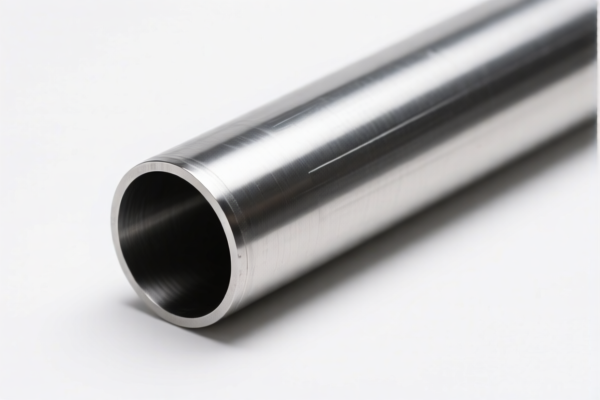
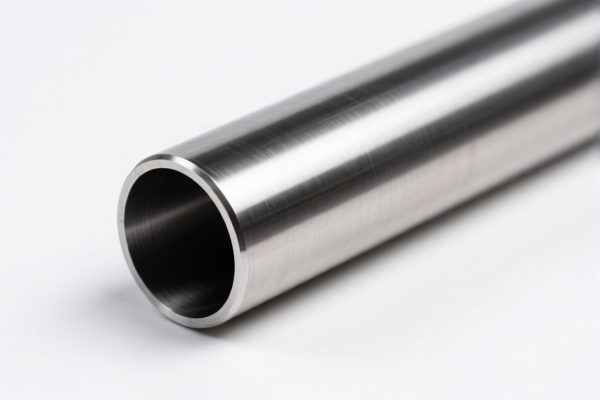
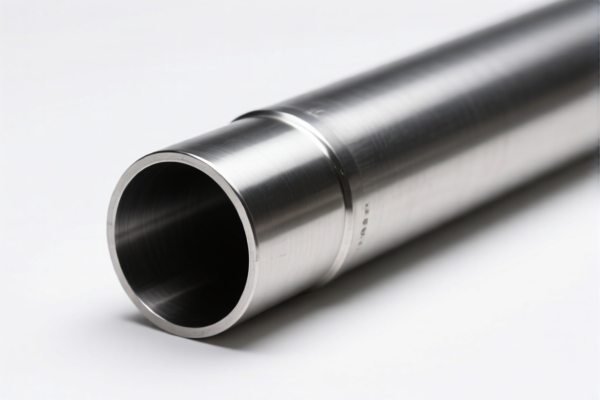

AI Analysis
🏭 Steel Pipes & Tubes (Iron & Steel Hollow Profiles)
🌐 HS Code Reference & Customs Clearance Guide | 2026 Latest Tariff Analysis | Professional Compliance Strategy
📌 Part I: Product Definition & Classification: Do You Really Understand "Steel Pipes"?
Steel pipes and tubes are essential components in infrastructure, energy, and manufacturing. In international trade, they are strictly categorized by manufacturing process (seamless vs. welded), cross-section shape (circular is most common here), material type (non-alloy/stainless), and application (line pipe, casing, etc.).
Key Distinctions: * Line Pipe: Designed for transporting oil, gas, or other liquids under pressure. * Casing/Drill Pipe: Used specifically for oil/gas drilling operations. * General Purpose Pipes: Used for structural, mechanical, or fluid conveyance where high pressure isn't the primary driver.
⚠️ Critical Classification Points:
- Welded vs. Seamless: Manufacturing method significantly impacts the HS Code (e.g., 7305 vs. 7304).
- Diameter Thresholds:
- > 406.4 mm: High-value industrial/export categories.
- > 609.6 mm: Specific sub-categories for large-diameter line pipes.
- ≤ 114.3 mm: Smaller diameter tubes often subject to different tariff treatments.
- Wall Thickness: For some small-diameter pipes, wall thickness (>1.65mm) is a key differentiator.
📦 Part II: HS Code Classification Matrix (2026 Latest Tariff Authority)
Based on the provided data, here are the specific HS Codes, descriptions, and tax implications.
| HS Code | Product Description & Specifications | Applicable Scenario | Key Differentiator |
|---|---|---|---|
7305.11.10.60 |
Line Pipe (Oil/Gas), LSAW, Non-alloy Steel, Ø > 609.6 mm | Large-diameter pipeline construction. Longitudinally Submerged Arc Welded. | ✅ Welded (LSAW) |
7305.19.10.60 |
Line Pipe (Oil/Gas), Other Welded, Non-alloy Steel, Ø > 609.6 mm | Large-diameter pipelines not using LSAW process. | ✅ Welded (Other) |
7306.30.50.56 |
Welded Pipes, Non-alloy Steel, Wall Thickness ≥ 1.65 mm, Ø ≤ 114.3 mm (≤ 50.8 mm) | Small-diameter structural/mechanical tubing. | ✅ Small Ø & Thick Wall |
7306.90.10.00 |
Other Welded/Seamless Pipes, Iron/Non-alloy Steel | General purpose pipes not fitting other specific narrow categories. | ✅ General Category |
7304.11.00.20 |
Seamless Line Pipe, Stainless Steel, Ø ≤ 114.3 mm | Corrosive fluid transport, chemical industry. | ✅ Stainless & Seamless |
7304.29.10.40 |
Drill Pipe/Casing, Non-alloy, Ø 215.9-285.8 mm, Wall ≥ 12.7 mm | Oil/Gas drilling operations. Threaded/Coupled. | ✅ Drilling Specific |
💰 Part III: 2026 Latest Tariff Rate Breakdown
✅ Applicable Market: United States (US)
✅ Origin: China (CN) (Implied by the 25% Additional Tariff pattern)
✅ Effective Time: Current Regulations (Section 301 / IEEPA impacts)
🎯 1. 7305.11.10.60 & 7306.30.50.56 —— Zero Duty Items
| Item | Content |
|---|---|
| HS Code | 7305.11.10.60 (LSAW Line Pipe >609.6mm) 7306.30.50.56 (Small Welded Pipe ≤50.8mm, Thick Wall) |
| Base Tariff | 0.0% |
| Additional Tariff | 0.0% |
| Total Tax Rate | 0.0% |
| Tax Detail | "Base Tariff: 0.0%, Additional Tariff: 0.0%" |
| Legal Basis | Specific exclusions or lower-priority categories in the tariff schedule. |
📌 Interpretation:
- These specific configurations benefit from 0% total duty.
-7305.11.10.60is for large LSAW pipes; note the specific diameter requirement (>609.6 mm).
-7306.30.50.56is for very small diameter pipes (≤50.8 mm) with significant wall thickness (≥1.65 mm). Precision in measurement is critical to qualify.
🎯 2. 7305.19.10.60 —— 25% Additional Tariff Item
| Item | Content |
|---|---|
| HS Code | 7305.19.10.60 |
| Product | Line Pipe (Oil/Gas), Other Welded, Non-alloy Steel, Ø > 609.6 mm |
| Base Tariff | 0.0% |
| Additional Tariff | 25.0% |
| Total Tax Rate | 25.0% |
| Tax Detail | "Base Tariff: 0.0%, Additional Tariff: 25.0%" |
| Legal Basis | Likely subject to Section 301 additional duties on steel products. |
📌 Interpretation:
- Although the base tariff is 0%, the 25% additional tariff applies to "Other" welded line pipes exceeding 609.6 mm.
- Crucial Distinction: If the pipe is LSAW (Longitudinally Submerged Arc Welded), it falls under7305.11...(0%). If it uses other welding methods (e.g., ERW, HFW) but is still a line pipe >609.6mm, it falls here (25%).
- Declaration Tip: Clearly specify the welding method (LSAW vs. Other) to avoid misclassification.
🎯 3. 7306.90.10.00 —— 25% Additional Tariff Item
| Item | Content |
|---|---|
| HS Code | 7306.90.10.00 |
| Product | Other Tubes/Pipes, Iron/Non-alloy Steel |
| Base Tariff | 0.0% |
| Additional Tariff | 25.0% |
| Total Tax Rate | 25.0% |
| Tax Detail | "Base Tariff: 0.0%, Additional Tariff: 25.0%" |
| Legal Basis | General catch-all for non-alloy steel pipes not fitting specific low-duty categories. |
📌 Interpretation:
- This is a "residual" category for iron/steel pipes that do not meet the strict criteria for the 0% lines (like large LSAW or small thick-wall pipes).
- If your pipe is >406.4 mm but not LSAW, or doesn't fit the small diameter/Thick Wall rule, it likely lands here.
🎯 4. 7304.11.00.20 —— 25% Additional Tariff Item (Stainless)
| Item | Content |
|---|---|
| HS Code | 7304.11.00.20 |
| Product | Seamless Line Pipe, Stainless Steel, Ø ≤ 114.3 mm |
| Base Tariff | 0.0% |
| Additional Tariff | 25.0% |
| Total Tax Rate | 25.0% |
| Tax Detail | "Base Tariff: 0.0%, Additional Tariff: 25.0%" |
📌 Interpretation:
- Stainless steel seamless pipes are treated differently than non-alloy steel.
- Even though it's "stainless," it still incurs the 25% additional tariff under current US regulations for steel products from China.
🎯 5. 7304.29.10.40 —— 0% Tariff Item (Drilling Casing)
| Item | Content |
|---|---|
| HS Code | 7304.29.10.40 |
| Product | Drill Pipe/Casing, Non-alloy, Ø 215.9–285.8 mm, Wall ≥ 12.7 mm |
| Base Tariff | 0.0% |
| Additional Tariff | 0.0% |
| Total Tax Rate | 0.0% |
| Tax Detail | "Base Tariff: 0.0%, Additional Tariff: 0.0%" |
📌 Interpretation:
- Specific drilling equipment (casing) with precise dimensions (Ø 215.9-285.8 mm) and thick walls (≥12.7 mm) enjoys 0% duty.
- Precision is Key: If the OD is 215.8 mm or wall thickness is 12.6 mm, you may be misclassified and hit with the 25% rate under7306.90.10.00.
🛠️ Part IV: Customs Clearance Practical Advice
✅ 1. Essential Documentation Checklist
| Document | Required? | Description |
|---|---|---|
| ✅ Product Specification Sheet | ✔️ | Must include: OD, Wall Thickness, Length, Material Grade (e.g., API 5L X65, 304 SS). |
| ✅ Manufacturing Process Statement | ✔️ | Critical: Specify if LSAW, ERW, Seamless, etc. Determines 7305.11 vs 7305.19. |
| ✅ Commercial Invoice | ✔️ | Must clearly state "Line Pipe for Oil/Gas" or "Drill Casing" to match HS description. |
| ✅ Packing List | ✔️ | Detail weights and dimensions for verification of OD/Wall Thickness claims. |
| ✅ Certificate of Origin | ✔️ | To verify origin (China vs. others) for additional tariff application. |
| ✅ Technical Drawings | ✔️ | Recommended for large diameter or complex profiles to prove classification. |
✅ 2. Classification Strategy & Warnings
🔥 "Measure Twice, Declare Once: OD, Wall, and Weld Method Are Everything!"
| Scenario | Correct HS Code | Risk of Error |
|---|---|---|
| Large Pipe (>609.6mm), LSAW Welded | 7305.11.10.60 (0%) |
⚠️ High Risk: If declared as "Welded" without specifying LSAW, it may fall to 7305.19.10.60 (25%). |
| Large Pipe (>609.6mm), ERW/HFW Welded | 7305.19.10.60 (25%) |
✅ Correct: Use "Other" welded category. |
| Small Pipe (≤50.8mm), Wall ≥1.65mm | 7306.30.50.56 (0%) |
⚠️ High Risk: If wall is 1.64mm, it drops to 7306.90.10.00 (25%). |
| Drill Casing (Ø 215.9-285.8mm, Wall ≥12.7mm) | 7304.29.10.40 (0%) |
⚠️ High Risk: Slight deviation in OD or Wall Thickness leads to 25% tax. |
| General Stainless Seamless Pipe (≤114.3mm) | 7304.11.00.20 (25%) |
✅ Correct: No 0% option for this general category. |
✅ 3. Special Cases & Mitigation
| Situation | Advice |
|---|---|
| Mixed Shipments | Separate declarations for LSAW vs. Other Welded pipes to claim 0% for the correct subset. |
| Measurement Discrepancies | Use calibrated instruments. A 0.1mm difference in wall thickness can change the tax rate by 25%. |
| "Line Pipe" Definition | Ensure the pipe is intended for oil/gas pipelines. If used for structural purposes, it might fall under general pipe codes (higher tax). |
| Stainless Steel vs. Non-Alloy | Verify material grade certificates. Misdeclaring carbon steel as stainless (or vice versa) is a serious compliance violation. |
🌍 Part V: Global Market Comparison (2026 Outlook)
| Region | Typical Tariff Impact | Key Consideration |
|---|---|---|
| 🇺🇸 USA | 0% - 25% | Highly dependent on specific dimensions and welding method. Section 301 tariffs apply. |
| 🇨🇳 China | Varies (5-10%) | Import duties apply. No additional punitive tariffs. |
| 🇪🇺 EU | Varies (0-12%) | Anti-dumping duties may apply to certain steel tubes. Verify CE marking. |
| 🇮🇳 India | Varies (7.5-15%) | Anti-dumping duties on many steel tubes from China/Vietnam. |
📌 Conclusion:
The US market offers 0% duty for very specific, large-diameter LSAW pipes and thick-wall small-diameter pipes. However, the 25% tariff is the norm for most other non-alloy and stainless steel pipes. Precision in diameter, wall thickness, and welding process is the single most important factor in minimizing duty costs.
📌 Part VI: Common Mistakes & Pitfalls
❌ Mistake 1: Declaring all large welded pipes as 7305.11 (0%)
👉 Consequence: If not LSAW, customs will reclassify to 7305.19 (25%) + penalties.
Fix: Explicitly state "Longitudinally Submerged Arc Welded (LSAW)" on the invoice and packing list.
❌ Mistake 2: Ignoring Wall Thickness for Small Pipes
👉 Consequence: A pipe with 1.64mm wall thickness instead of 1.65mm loses the 0% duty.
Fix: Implement strict QC checks on wall thickness. Declare with precise tolerances.
❌ Mistake 3: Confusing "Line Pipe" with "Structural Pipe"
👉 Consequence: Structural pipes used for oil transport might be misclassified.
Fix: Define the end-use clearly. If for oil/gas pipelines, use Line Pipe codes.
✅ Correct Declaration Example:
"Steel Line Pipe, API 5L X65, Longitudinally Submerged Arc Welded (LSAW), Outside Diameter 720mm, Wall Thickness 16mm, for Oil Pipeline Transportation, Origin China."
🎯 Part VII: Conclusion: Precision Drives Profit
🎯 Key Takeaways:
🔹 "LSAW is King for Large Pipes" (0% duty if >609.6mm).
🔹 "Thick Walls Save on Small Pipes" (0% duty if ≤50.8mm & ≥1.65mm).
🔹 "Drilling Casing Has Specific Rules" (0% if dimensions match exactly).
🔹 "Everything Else Gets 25%" (General catch-all category).
📌 Pro Tip:
If your product is close to a threshold (e.g., wall thickness 1.64mm vs 1.65mm), consider design optimization or process adjustment to cross into the 0% duty bracket. The 25% saving is significant.
📣 Immediate Action:
📞 Consult a Customs Broker: Verify the welding process and exact dimensions.
📄 Request Pre-Ruling: Apply for an Advance Ruling from US Customs (CBP) if the shipment value is high.
🚀 Optimize Your Product Specs: Design pipes to meet the 0% duty criteria (LSAW for large, thick wall for small).
✨ Precision in Classification, Savings in Duty!
💼 Every millimeter and millimeter of thickness counts!
Customer Reviews
About HS Code Classification
The Harmonized System (HS) is an internationally standardized nomenclature developed by the World Customs Organization (WCO) to classify traded products. Over 200 countries use the HS system as the basis for customs tariffs, trade statistics, and import/export regulations.
Each HS code follows a hierarchical structure:
- Chapter (2 digits) — Broad category of goods (e.g., Chapter 84: Machinery and Mechanical Appliances)
- Heading (4 digits) — More specific grouping within the chapter
- Subheading (6 digits) — Internationally standardized breakdown, used by all WCO member countries
- National subdivisions (8-10 digits) — Country-specific extensions for further classification, such as US HTSUS 10-digit codes
Correct HS code classification is essential for smooth customs clearance, accurate duty payment, and compliance with trade regulations. Misclassification can lead to customs delays, overpayment of duties, or penalties.
When importing from CN to US, the applicable tariff rates may include:
- Most-Favored-Nation (MFN) rate — The standard duty rate applied to WTO members
- General rate — Applied to countries without trade agreements
- Trade remedy duties — Additional tariffs such as Section 301 (anti-dumping), Section 232 (national security), or countervailing duties
The information provided on this page is for reference purposes only. For official classification, please consult with your local customs authority or a licensed customs broker.