Steel Profiles and Sections
CN → US| HS Code | Tariff Rate | Origin | Destination | Doc |
|---|---|---|---|---|
| 7216500000 | 35.0% | CN | US | Official Doc |
| 7326908688 | 87.9% | CN | US | Official Doc |
| 7216990090 | 35.0% | CN | US | Official Doc |
| 7308906000 | 85.0% | CN | US | Official Doc |
| 7326908610 | 87.9% | CN | US | Official Doc |
| 7308903000 | 85.0% | CN | US | Official Doc |
Product Images
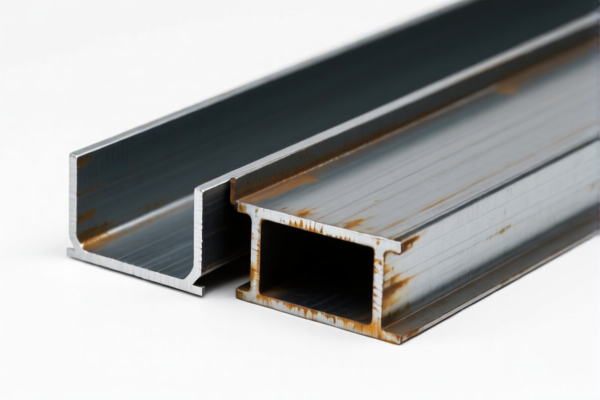
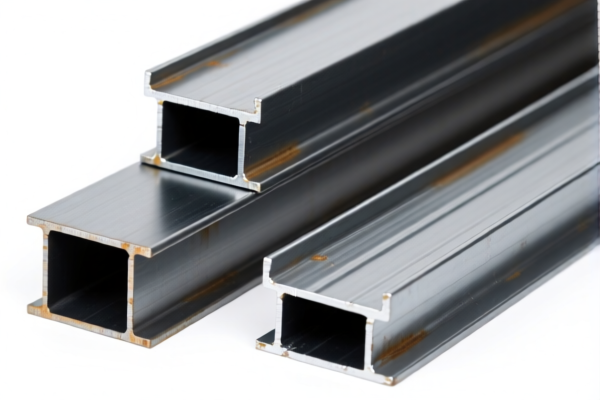
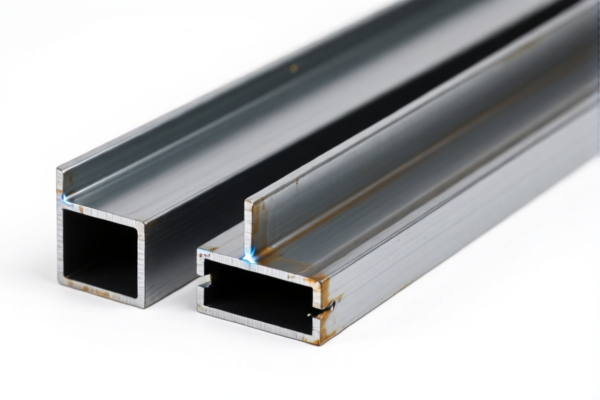
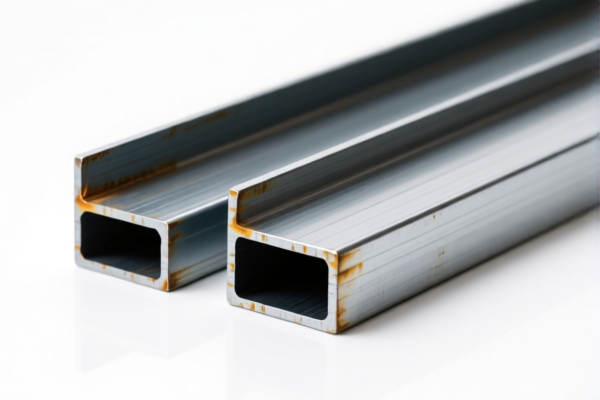
AI Analysis
⚙️ Steel Profiles and Sections (Steel Structural Shapes)
🌐 HS Code Reference & Customs Clearance Guide | 2026 Latest Tariff Analysis | Professional-Level Strategy for US Import
📌 I. Product Definition: What Are "Steel Profiles"?
Steel profiles (also known as structural shapes, bars, or sections) are long products with constant cross-sections, produced by rolling, extruding, or drawing. They are the "backbone" of construction, machinery, and infrastructure.
In international trade, classification depends heavily on: 1. Material: Alloyed vs. Non-alloyed (Carbon) Steel; Iron vs. Steel. 2. Shape: Angular, Z-shaped, H-shaped, T-shaped, etc. 3. End-Use: Structural support (buildings/bridges) vs. General manufactured articles.
⚠️ Critical Distinction Point:
- Chapter 72 (Iron and Steel): Covers raw structural shapes, beams, channels, and angles intended for construction or basic fabrication.
- Chapter 73 (Articles of Iron or Steel): Covers finished or semi-finished steel articles that do not fit the specific structural definitions of Chapter 72 (e.g., general-purpose fittings, supports, or non-structural metal parts).
📦 II. HS Code Classification Details (2026 Authoritative Mapping)
Based on the provided data, here are the four specific HS Codes relevant to Steel Profiles imported into the USA from China.
| HS Code | Product Description (Summary) | Applicable Scenario | Key Characteristics |
|---|---|---|---|
7216.50.00.00 |
Steel profiles; matched with iron or non-alloy steel material; Angles, sections, and profiles | Structural beams, angle iron, channel beams for construction | Non-alloy steel; Specific structural shapes (angles/sections) |
7326.90.86.88 |
Steel profiles; matched with iron or steel material and other articles of iron/steel; Other category | General steel fittings, brackets, non-standard supports | Broad "Other" category; Higher duty due to "Steel/Aluminum/Copper" surcharge |
7216.99.00.90 |
Steel profiles; matched with steel material; Angular, shaped, and section catch-all/fallback category | Less common shapes, custom sections, or items not fitting 7216.50 |
Steel material; Fallback for Section 72 if not specifically listed in 50/10/20/30/40 |
7308.90.60.00 |
Steel profiles; matched with iron or steel; Structural preparation materials (Beams, Angles) for construction | Structural components for buildings/bridges (pre-fab) | Structural preparation; High surcharge risk due to "Steel/Aluminum/Copper" clause |
7326.90.86.10 |
Steel profiles; matched with steel material and other articles; Based on n.e.s. (Not Elsewhere Specified) fallback principle | General steel articles not covered elsewhere | "Other" category; High duty due to surcharge clauses |
🔍 Key Insight:
- Chapter 72 (7216.xxxx) items are typically "structural" and attract a 35% total duty (Base 0% + 25% Sec 301 + 10% IEEPA).
- Chapter 73 (7326.xxxx / 7308.xxxx) items are often considered "articles" rather than raw structural shapes, attracting 85-88% total duty due to an additional 50% surcharge on steel/aluminum/copper products.
- Do not misclassify a standard structural angle bar (7216) as a general steel article (7326) to avoid massive overpayment or audits.
💰 III. 2026 Latest Tariff Rate Breakdown (Including Surcharges)
✅ Applicable Country: United States (US)
✅ Origin: China (CN)
✅ Effective Date: Includes imports post-2025/2026 current rules
🎯 1. 7216.50.00.00 & 7216.99.00.90 — Structural Steel Profiles (Chapter 72)
| Item | Content |
|---|---|
| Base Duty | 0.0% (Ad Valorem) |
| USITC Additional Duty (Section 301) | +25.0% |
| IEEPA Additional Duty | +10.0% (Specific to China/HK origin) |
| Steel/Aluminum/Copper Surcharge | Not Applied |
| Total Effective Duty | 35.0% |
| Tax Calculation | CIF Value × 35% |
| De Minimis Exemption | ❌ Not Applicable (Denied under current enforcement) |
| Legal Basis Path | HTSUS:7216.50.00.00 → USITC:Footnote 301 → IEEPA:9903.01.24 |
📌 Explanation:
- These codes fall under Chapter 72 (Iron/Steel Semifinished Products).
- They are subject to the standard 25% Section 301 tariff and 10% IEEPA tariff.
- Total: 35%. This is the "standard" high tariff for structural steel from China.
🎯 2. 7326.90.86.88, 7308.90.60.00, 7326.90.86.10 — General Steel Articles (Chapter 73)
| Item | Content |
|---|---|
| Base Duty | 0.0% - 2.9% (Varies by specific subheading) |
| USITC Additional Duty (Section 301) | +25.0% |
| IEEPA Additional Duty | +10.0% |
| Steel/Aluminum/Copper Surcharge | +50.0% (Critical! Based on "Steel, Aluminum, Copper Products" clause) |
| Total Effective Duty | 85.0% - 87.9% |
| Tax Calculation | CIF Value × (Base + 25% + 10% + 50%) |
| De Minimis Exemption | ❌ Not Applicable |
| Legal Basis Path | HTSUS:7326.90.86.88 → USITC:Steel/Copper/Surcharge Footnote → IEEPA:9903.01.24 |
📌 Warning:
- Items in Chapter 73 often trigger the additional 50% surcharge on steel/aluminum/copper products.
- Even if the base duty is low (0-2.9%), the 50% surcharge pushes the total to ~88%.
-7308.90.60.00(Structural preparation) explicitly carries this 50% surcharge in the provided data, resulting in 85.0%.
-7326variants carry the 50% surcharge, resulting in 87.9% (Base 2.9% + 25% + 10% + 50%).
🛠️ IV. Customs Clearance Practical Advice (Battle-Tested Pitfall Guide)
✅ 1. Essential Documentation Checklist
| Document | Required | Notes |
|---|---|---|
| ✅ Product Specifications | ✔️ | Must detail cross-section shape (Angle, H-Beam, Channel), dimensions, and material grade (e.g., A36, S235JR). |
| ✅ Material Certification (MTC) | ✔️ | Proof of "Non-Alloy Steel" vs. "Alloy Steel". Critical for distinguishing Chapter 72 vs. 73. |
| ✅ Product Photos | ✔️ | Clear shots of the cross-section and ends. |
| ✅ Commercial Invoice | ✔️ | Must explicitly state "Steel Structural Shapes" or "Steel Profiles" – avoid vague terms like "Metal Parts". |
| ✅ Country of Origin Certificate | ✔️ | To confirm CN origin and trigger correct IEEPA/Section 301 duties. |
✅ 2. Classification Strategy (Key Mnemonic)
🔥 "Shape Defines Chapter: 72 for Structure, 73 for Articles!"
| Scenario | Correct HS Code | Duty Rate | Reason |
|---|---|---|---|
| Standard Angle Iron / Channel / H-Beam | 7216.50.00.00 |
35% | Specific structural shape, non-alloy steel. |
| Custom/Non-Standard Steel Sections | 7216.99.00.90 |
35% | Fallback in Chapter 72 for steel sections. |
| General Steel Brackets / Fittings | 7326.90.86.88 |
87.9% | Chapter 73 "Other" articles; triggers 50% surcharge. |
| Pre-fab Structural Supports | 7308.90.60.00 |
85.0% | Chapter 73 structural prep; triggers 50% surcharge. |
| General Steel Articles (N.E.S.) | 7326.90.86.10 |
87.9% | Chapter 73 "Other"; triggers 50% surcharge. |
✅ 3. Critical Warnings
| Risk | Consequence | Mitigation |
|---|---|---|
| Misclassifying Structural Steel as "Other Articles" | Paying 88% instead of 35% | Provide detailed engineering drawings proving structural intent. |
| Using Vague Descriptions | Customs may reclassify to highest-duty code | Use precise terms: "Rolled Steel Angle Section, 50x50x5mm, A36 Grade". |
| Ignoring Material Type | Wrong Chapter assignment | Ensure MTC confirms "Non-Alloy" for Chapter 72. Alloy steel may have different duties. |
🌍 V. Global Market Comparison (2026 Context)
| Market | Recommended HS Code (Example) | Base Duty | US-Specific Surcharges | Notes |
|---|---|---|---|---|
| 🇺🇸 USA | 7216.50.00.00 |
0% | +35% (25% Sec 301 + 10% IEEPA) | Avoid Chapter 73 if possible due to 50% surcharge. |
| 🇨🇳 China | 7216.50.00.00 |
0% - 5% | None | Import into China has different rules. |
| 🇪🇺 EU | 7216.31.00 |
0% - 5% | None | No Section 301 or IEEPA equivalent. |
| 🇨🇦 Canada | 7216.50.00.00 |
0% | None (CUSMA eligible) | Free trade agreement benefits. |
📌 Conclusion:
- USA is the most expensive market for steel profiles from China due to dual-layer surcharges.
- Chapter 72 (35%) is significantly cheaper than Chapter 73 (85-88%).
- Prove your product is a "Structural Shape" (Chapter 72) to avoid the punitive 50% steel surcharge.
📌 VI. Common Mistakes & How to Avoid Them
❌ Mistake 1: Calling "Angle Iron" "Steel Fitting"
👉 Result: Classified under 7326.90.86.88 → 87.9% Duty.
✅ Fix: Declare as "Rolled Steel Angle Section".
❌ Mistake 2: Ignoring the "Steel/Aluminum/Copper" Surcharge
👉 Result: Unexpected bill of $50,000 extra on a $100k shipment.
✅ Fix: Verify if the HS Code triggers the 50% surcharge in the USITC notes.
❌ Mistake 3: Vague Description "Metal Parts"
👉 Result: Customs assigns highest duty rate by default.
✅ Fix: Use specific terms: "Structural Steel Profiles", "H-Beams", "Angle Bars".
🎯 VII. Conclusion: Smart Classification Saves Money
🎯 Remember the Golden Rule:
🔹 "Structural Shapes = Chapter 72 (35%);
🔹 "General Articles = Chapter 73 (85-88%)"!
🔹 "If it builds a structure, fight for 72! If it's a fitting, expect 88!"
📌 Pro Tip:
If your steel profiles are shipped from Vietnam or Mexico (with sufficient transformation), you may avoid IEEPA/Section 301 duties entirely.
Recommendation: Apply for a Pre-Ruling with CBP if your product falls between Chapter 72 and 73.
📣 Take Action:
📞 Consult a licensed customs broker.
📄 Prepare Material Test Certificates (MTC).
🚀 Classify correctly to save up to 53% in tariffs!
✨ Precise Classification is the First Step to Profitable Export!
💼 Your Tariff Bill Should Reflect the Product, Not the Confusion!
Customer Reviews
About HS Code Classification
The Harmonized System (HS) is an internationally standardized nomenclature developed by the World Customs Organization (WCO) to classify traded products. Over 200 countries use the HS system as the basis for customs tariffs, trade statistics, and import/export regulations.
Each HS code follows a hierarchical structure:
- Chapter (2 digits) — Broad category of goods (e.g., Chapter 84: Machinery and Mechanical Appliances)
- Heading (4 digits) — More specific grouping within the chapter
- Subheading (6 digits) — Internationally standardized breakdown, used by all WCO member countries
- National subdivisions (8-10 digits) — Country-specific extensions for further classification, such as US HTSUS 10-digit codes
Correct HS code classification is essential for smooth customs clearance, accurate duty payment, and compliance with trade regulations. Misclassification can lead to customs delays, overpayment of duties, or penalties.
When importing from CN to US, the applicable tariff rates may include:
- Most-Favored-Nation (MFN) rate — The standard duty rate applied to WTO members
- General rate — Applied to countries without trade agreements
- Trade remedy duties — Additional tariffs such as Section 301 (anti-dumping), Section 232 (national security), or countervailing duties
The information provided on this page is for reference purposes only. For official classification, please consult with your local customs authority or a licensed customs broker.