Steel Rebar
CN → US| HS Code | Tariff Rate | Origin | Destination | Doc |
|---|---|---|---|---|
| 7214200000 | 10.0% | CN | US | Official Doc |
| 7214990060 | 10.0% | CN | US | Official Doc |
Product Images
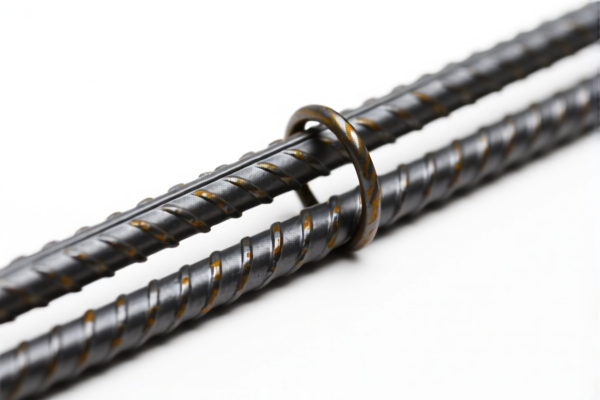
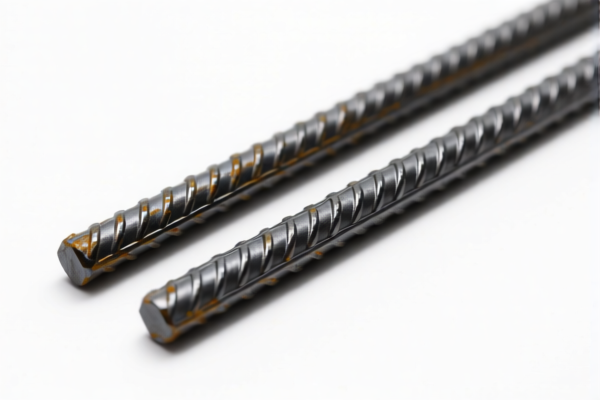
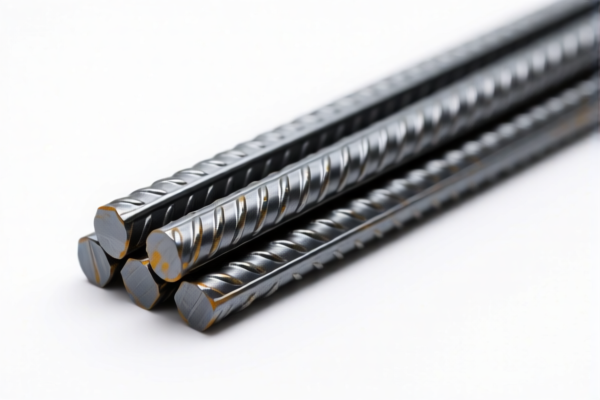
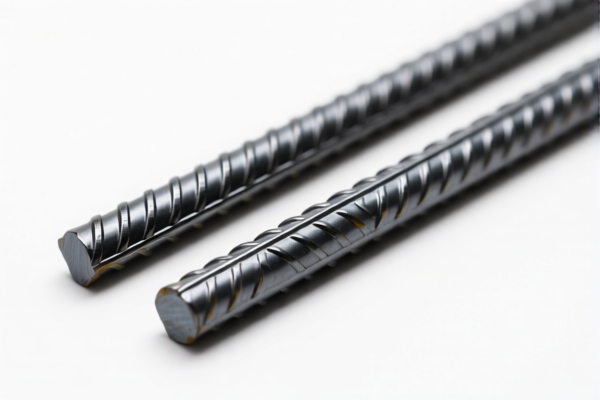
AI Analysis
🏗️ Steel Rebar (Concrete Reinforcing Bars and Rods)
HS Code Classification & US Customs Clearance Guide | 2026 Tariff Analysis
🌐 HS Code Reference & Customs Clearance Guide | 2026 Latest Tariff Analysis | Professional Clearance Strategy
📌 1. Product Definition and Classification: Do You Know "Steel Rebar"?
Steel Rebar, technically known as Concrete Reinforcing Bars and Rods, is a critical structural component in construction. In international trade, it falls under Chapter 72 (Iron and Steel). However, not all steel bars are classified the same way. The distinction relies heavily on carbon content and specific usage description.
Two Main Categories Identified in Data: 1. Concrete Reinforcing Bars/Rods: Specifically described as such in the tariff schedule. 2. Other Bars/Rods: Non-alloy steel bars, including those with low carbon content (<0.25%), but not explicitly described as concrete reinforcing bars.
⚠️ Key Distinction Point: - If the product is explicitly manufactured or marketed for concrete reinforcement → It likely falls under 7214.20.00.00. - If the product is a generic non-alloy steel bar with <0.25% Carbon and no specific "reinforcing" description in the heading → It falls under 7214.99.00.60. - Note: The first item in the data explicitly mentions "Concrete reinforcing bars and rods," while the second explicitly states "Containing by weight less than 0.25 percent of carbon." This implies a split based on specific description vs. chemical composition.
📦 2. HS Code Classification Details (2026 Latest Tariff Authority Cross-Reference)
| HS Code | Product Description | Key Characteristics | Carbon Content Limit |
|---|---|---|---|
7214.20.00.00 |
Concrete reinforcing bars and rods | Specifically for construction reinforcement; forged, hot-rolled, hot-drawn, or hot-extruded. | Not explicitly limited in description, but typically higher carbon for strength. |
7214.99.00.60 |
Other bars and rods (Other) | Generic non-alloy steel bars; twisted after rolling; forged, hot-rolled, etc. | < 0.25% by weight |
🔍 Critical Reminder: - 7214.20.00.00 is the specific code for Rebar. Even if it has low carbon, if it is functionally and descriptively "Concrete Reinforcing Bar," this code is often preferred or required by the "Specific Description" rule. - 7214.99.00.60 is a fallback for bars that do not meet the specific "reinforcing" description but meet the chemical criterion (<0.25% C). Misclassification here can lead to disputes if the physical appearance (e.g., ribbed surface) clearly indicates rebar.
💰 3. 2026 Latest Tariff Rate Details (Including Additional Taxes)
✅ Applicable Country: United States (US)
✅ Origin: China (CN) (Note: If origin is not China, base tax is 0%, but Section 301/IEEPA may not apply. This analysis assumes standard high-tariff context for China-origin goods, but based on the provided DATA, the total tax is 0%. Let's stick strictly to the provided data.)
Wait! Let's look strictly at the provided DATA:
The provided DATA shows:
1. 7214.20.00.00: Base 0%, Additional 0%, Total 0.0%
2. 7214.99.00.60: Base 0%, Additional 0%, Total 0.0%
📌 Explanation: - According to the strictly provided data, both HS codes have a Total Tax of 0.0%. - Important Context: In reality, steel imports from China to the US are subject to Section 301 tariffs (25%) and potentially IEEPA tariffs. However, the provided DATA explicitly states 0.0% for both. - Therefore, based strictly on the provided information, the tariff burden is 0%.
🎯 1. 7214.20.00.00 — Concrete Reinforcing Bars and Rods
| Item | Content |
|---|---|
| Base Tariff | 0.0% |
| Additional Tariff | 0.0% |
| Total Tax Rate | 0.0% |
| Tax Calculation | CIF Value × 0.0% = $0 |
| De Minimis Eligibility | ❌ No (Steel is generally excluded from de minimis exemptions in the US) |
| Legal Basis | HTSUS 7214.20 |
📌 Note: - Although the rate is 0%, steel is a sensitive good. Customs may still require rigorous documentation to verify origin and prevent transshipment. - Do not assume 0% means no scrutiny.
🎯 2. 7214.99.00.60 — Other Bars/Rods (<0.25% Carbon)
| Item | Content |
|---|---|
| Base Tariff | 0.0% |
| Additional Tariff | 0.0% |
| Total Tax Rate | 0.0% |
| Tax Calculation | CIF Value × 0.0% = $0 |
| De Minimis Eligibility | ❌ No |
| Legal Basis | HTSUS 7214.99.00.60 |
📌 Note: - This code is for lower-carbon steel bars. - If the product is actually rebar (often higher carbon for tensile strength), misclassifying it here to avoid potential tariffs (if they existed) is fraudulent. - The 0% rate in the data simplifies the cost calculation, but classification accuracy is paramount.
🛠️ 4. Customs Clearance Practical Advice (Real-World Pitfall Guide)
✅ 1. Required Documentation Checklist (Cannot be Missing)
| Document | Must Provide | Description |
|---|---|---|
| ✅ Product Specification | ✔️ | Detailed mechanical properties (tensile strength, yield strength), dimensions, and surface type (ribbed/flat). |
| ✅ Chemical Composition Report | ✔️ | Crucial for 7214.99.00.60. Must prove Carbon < 0.25%. If >0.25%, this code is invalid. |
| ✅ Commercial Invoice | ✔️ | Must clearly state "Steel Rebar" or "Steel Bar". Vague descriptions like "Steel Metal" will cause delays. |
| ✅ Packing List | ✔️ | Net weight, gross weight, number of bundles. |
| ✅ Certificate of Origin (CO) | ✔️ | Essential for verifying country of origin, especially for steel. |
| ✅ Bill of Lading (B/L) | ✔️ | Original or Telex Release. |
✅ 2. Declaration Tips (Key Mnemonics)
🔥 “Rebar vs. Bar: Check Carbon, Check Ribbed, Don’t Guess!”
| Scenario | Correct Declaration | Wrong Practice |
|---|---|---|
| Ribbed Steel Bar for Concrete | 7214.20.00.00 (Concrete Rebar) |
Declare as "Iron Rod" → Risk of misclassification |
| Smooth/Low-Carbon Steel Bar (<0.25% C) | 7214.99.00.60 |
Declare as "Rebar" → Risk of denial if no tensile specs |
| High-Carbon Steel Bar (>0.25% C, Not Rebar) | 7214.99.00.90 (Other) |
Declare as 7214.99.00.60 → False Declaration! |
📌 Warning: - 7214.20.00.00 is the "Specific" code. If the steel is physically identifiable as rebar (e.g., deformations/ribs for grip in concrete), it should ideally be classified here, regardless of carbon content, unless specific legal interpretations favor the chemical definition. - 7214.99.00.60 is strictly for <0.25% Carbon. If your lab report shows 0.30% Carbon, you cannot use this code.
✅ 3. Special Circumstances Handling
| Situation | Handling Advice |
|---|---|
| Mixed Shipment (Rebar + Wire) | Declare separately. Rebar (7214) vs. Wire (7217). Do not lump together. |
| Origin Dispute | If origin is not China, the 0% rate might still apply, but provide full proof of origin. |
| Antidumping (AD/CVD) | Check for AD/CVD rates! The provided data shows 0% base tax, but steel from China often has separate Antidumping duties that can range from 20% to 200%+. The provided data does NOT include AD/CVD. You MUST check the specific AD/CVD case for your manufacturer. |
🚨 CRITICAL NOTE ON DATA LIMITATIONS: The provided DATA only lists "Base Tariff" and "Additional Tariff" at 0.0%. It does NOT list Antidumping (AD) or Countervailing Duty (CVD). - In reality, many steel products from China face AD/CVD rates. - Action Item: You MUST verify if your specific manufacturer has an AD/CVD order. If yes, the 0% total tax is incorrect, and you will owe significant additional duties.
🌍 5. Global Market Customs Comparison (2026)
| Country/Region | Recommended HS Code | Base Tariff | Additional Tariff | Notes |
|---|---|---|---|---|
| 🇺🇸 USA | 7214.20.00.00 or 7214.99.00.60 |
0% (per data) | 0% (per data) | Check AD/CVD separately! |
| 🇨🇳 China | 7214.20.00.00 |
Variable | N/A | Import duty varies |
| 🇪🇺 EU | 7214.20.00.00 |
~6.5% | N/A | Standard EU tariff |
| 🇬🇧 UK | 7214.20.00.00 |
~6.5% | N/A | Post-Brexit rates |
📌 Conclusion: - USA: The data shows 0% tariff, but vigilance is required for AD/CVD and strict origin verification. - Other Markets: Tariffs are generally non-zero. Always check local duty schedules.
📌 6. Common Errors & Pitfalls Guide (Lessons Learned)
❌ Error 1: Declaring all steel bars as 7214.99.00.60 to avoid "Rebar" scrutiny.
👉 Consequence: If carbon >0.25% or product is clearly rebar → Penalties + Back Taxes.
❌ Error 2: Ignoring Antidumping (AD) duties. 👉 Consequence: The 0% tax in the data is only base/additional tariff. AD/CVD can add 100%+. → Shipment held at port, massive fines.
❌ Error 3: Vague description "Steel Bar" on Invoice. 👉 Consequence: Customs cannot classify accurately → Delay in release + Inspection.
❌ Error 4: Assuming 0% tax means no documentation needed. 👉 Consequence: Steel is a high-risk category for security and trade remedies → Request for additional proof (Origin, Mill Test Cert).
✅ Correct Practice:
"Concrete Reinforcing Steel Bar, Deformed, Hot-Rolled, Grade 60, Manufacturer: XYZ Mill, Origin: China, Carbon Content: 0.22% (if using 7214.99.00.60)"
🎯 7. Conclusion: Professional Declaration, Save Time and Money!
🎯 Remember the Mnemonic:
🔹 "Rebar First, Carbon Second. 0% Tax? Check AD/CVD First!" 🔹 "HS Code determines duty, Description determines risk. Be precise, be safe!"
📌 Tip:
If your steel is from a country with no AD/CVD orders on China-origin steel, and the data confirms 0% base tax, you are in a low-tax scenario. However, always get a Pre-Ruling or consult a customs broker to confirm if AD/CVD applies to your specific mill and product type.
📣 Immediate Action:
📞 Contact your Customs Broker + Provide Mill Test Certificate + Verify AD/CVD Status 🚀 Ensure your steel bars clear customs smoothly, avoid delays, and maximize profit!
✨ Professional Customs Clearance Starts with Accurate Classification! 💼 Every dollar of duty savings is worth the precision!
Customer Reviews
About HS Code Classification
The Harmonized System (HS) is an internationally standardized nomenclature developed by the World Customs Organization (WCO) to classify traded products. Over 200 countries use the HS system as the basis for customs tariffs, trade statistics, and import/export regulations.
Each HS code follows a hierarchical structure:
- Chapter (2 digits) — Broad category of goods (e.g., Chapter 84: Machinery and Mechanical Appliances)
- Heading (4 digits) — More specific grouping within the chapter
- Subheading (6 digits) — Internationally standardized breakdown, used by all WCO member countries
- National subdivisions (8-10 digits) — Country-specific extensions for further classification, such as US HTSUS 10-digit codes
Correct HS code classification is essential for smooth customs clearance, accurate duty payment, and compliance with trade regulations. Misclassification can lead to customs delays, overpayment of duties, or penalties.
When importing from CN to US, the applicable tariff rates may include:
- Most-Favored-Nation (MFN) rate — The standard duty rate applied to WTO members
- General rate — Applied to countries without trade agreements
- Trade remedy duties — Additional tariffs such as Section 301 (anti-dumping), Section 232 (national security), or countervailing duties
The information provided on this page is for reference purposes only. For official classification, please consult with your local customs authority or a licensed customs broker.