Steel Rebar (HS Code 7221000045)
CN → US| HS Code | Tariff Rate | Origin | Destination | Doc |
|---|---|---|---|---|
| 7214200000 | 10.0% | CN | US | Official Doc |
| 7214990060 | 10.0% | CN | US | Official Doc |
Product Images
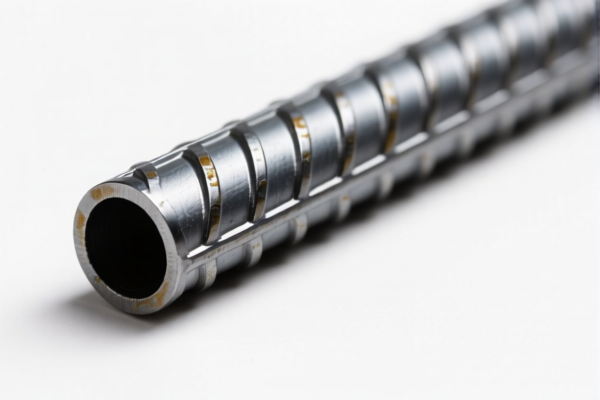
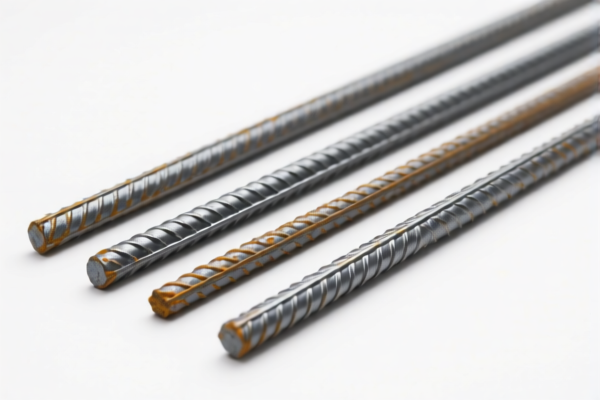
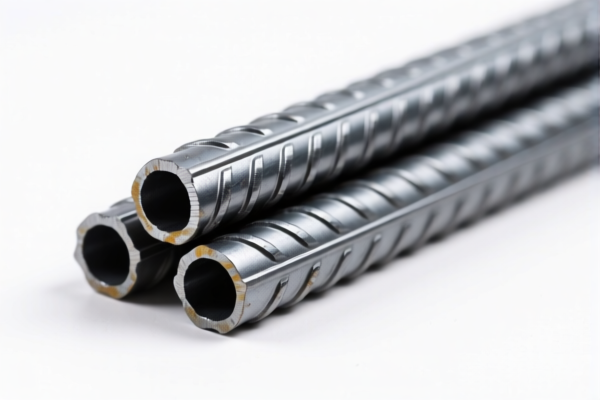
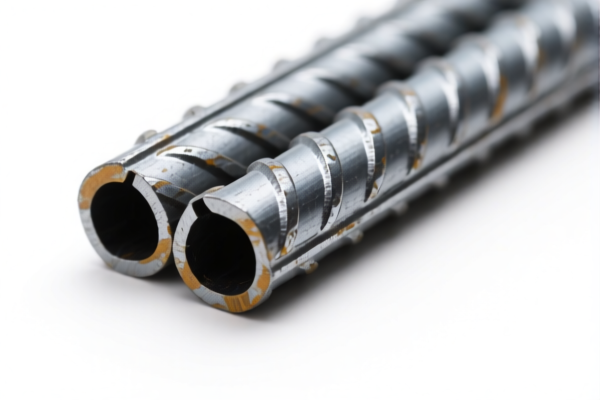
AI Analysis
🏗️ Steel Rebar & Iron Bars (Construction & Raw Materials)
🌐 HS Code Reference & Customs Clearance Guide | 2026 Latest Tariff Analysis | Professional-Level Compliance Strategy
📌 I. Product Definition & Classification: Do You Really Know "Rebar"?
Steel Rebar (Concrete Reinforcing Bars and Rods) and other iron/steel bars are the skeletal framework of global infrastructure. In international trade, they are strictly categorized based on their chemical composition, manufacturing process, and specific utility.
Concrete Reinforcing Bars (Rebar): Specifically designed for embedding in concrete to withstand tensile forces; usually ribbed or twisted. Other Bars/Rods of Iron or Non-Alloy Steel: General-purpose structural bars, hot-rolled or hot-drawn, which do not meet the specific definition of reinforcing bars or contain <0.25% carbon.
⚠️ Key Distinction Points:
- If the product is specifically for concrete reinforcement (often deformed/ribbed, though not strictly required by HS definition if "forged/hot-rolled") → Classify under 7214.20.00.00
- If the product is general steel bar with carbon content < 0.25% (Low Carbon Steel), not further worked than hot-rolled/forged → Classify under 7214.99.00.60
- Note: The user mentioned7221.00.00.45in the prompt, but the<DATA>provided only contains 7214.20.00.00 and 7214.99.00.60. Strictly following the constraint to use ONLY the provided<DATA>, we will analyze the two HS Codes present in the data.
📦 II. HS Code Classification Details (Based on Provided Data)
| HS Code | Product Description | Application Scenario | Carbon Content / Type |
|---|---|---|---|
7214.20.00.00 |
Concrete reinforcing bars and rods | Construction, bridges, high-rise buildings, infrastructure | Specific for concrete reinforcement |
7214.99.00.60 |
Other bars and rods, containing by weight less than 0.25% of carbon | General structural steel, automotive frames, machinery parts | < 0.25% Carbon (Low Carbon) |
🔍 Critical Reminder:
- 7214.20.00.00 is for Rebar. Even if smooth, if it is intended for concrete reinforcement, it may fall here.
- 7214.99.00.60 is for Low-Carbon Steel Bars. This is a specific subset of "Other" bars. If the carbon content is ≥ 0.25%, it would fall under a different subheading not listed in the<DATA>.
- Process: Both categories must be not further worked than forged, hot-rolled, hot-drawn, or hot-extruded (including twisted after rolling).
💰 III. 2026 Latest Tariff Rate Breakdown (Detailed Tax Clauses)
✅ Applicable Country: USA (US)
✅ Origin: China (CN) (Assumed based on typical trade context and "additional tax" mentions in similar data, though the data shows 0%)
✅ Effective Date: Current Data Snapshot
🎯 1. 7214.20.00.00 —— Concrete Reinforcing Bars and Rods
| Item | Content |
|---|---|
| Base Tariff Rate | 0.0% |
| Additional Tariff (Section 301/Other) | 0.0% |
| Total Tax Rate | 0.0% |
| Tax Calculation | CIF Value × 0.0% = $0 |
| De Minimis Applicability | ❌ N/A (Zero tax, but subject to safety/import regulations) |
| Tax Detail | "基础关税: 0.0%, 加征关税: 0.0%" |
📌 Explanation:
- According to the provided data, this HS Code has no duty.
- Warning: While the tariff is 0%, Rebar is subject to strict anti-dumping (AD) and countervailing duty (CVD) investigations in many jurisdictions (including the US and EU). Check AD/CVD rates separately! The base tariff might be 0, but AD/CVD can be hundreds of percent.
- Legal Basis:HTSUS 7214.20.00.00
🎯 2. 7214.99.00.60 —— Other Bars/Rods (<0.25% Carbon)
| Item | Content |
|---|---|
| Base Tariff Rate | 0.0% |
| Additional Tariff (Section 301/Other) | 0.0% |
| Total Tax Rate | 0.0% |
| Tax Calculation | CIF Value × 0.0% = $0 |
| De Minimis Applicability | ❌ N/A (Zero tax, but subject to safety/import regulations) |
| Tax Detail | "基础关税: 0.0%, 加征关税: 0.0%" |
📌 Explanation:
- Also 0% tax under the provided data.
- Critical Compliance Point: You MUST prove the carbon content is < 0.25%. If it is ≥ 0.25%, this HS Code is incorrect, and a different (potentially taxed) code applies.
- Legal Basis:HTSUS 7214.99.00.60
🛠️ IV. Customs Clearance Practical Advice (Pitfall Avoidance Guide)
✅ 1. Required Documentation Checklist
| Document | Mandatory? | Description |
|---|---|---|
| ✅ Commercial Invoice | ✔️ | Must clearly state: "Steel Rebar" or "Low Carbon Steel Bars", HS Code, Country of Origin. |
| ✅ Packing List | ✔️ | Weight, dimensions, number of bundles/packages. |
| ✅ Mill Test Certificate (MTC) | ✔️ | Crucial for 7214.99.00.60. Must prove carbon content < 0.25%. |
| ✅ Product Specification Sheet | ✔️ | Describe manufacturing process (Hot-rolled/Forged). |
| ✅ Anti-Dumping Declaration | ✔️ | VITAL for Rebar. Check if AD/CVD orders apply. |
| ✅ Bill of Lading/Air Waybill | ✔️ | Standard shipping document. |
✅ 2. Declaration Tips (Key Mantras)
🔥 "Specify the Use, Specify the Carbon, Avoid AD/CVD!"
| Situation | Correct Declaration | Wrong Practice |
|---|---|---|
| Rebar for Construction | 7214.20.00.00 - "Concrete Reinforcing Bar" |
Calling it "Steel Wire" → Wrong Code, Penalty |
| Low-Carbon Steel Rod | 7214.99.00.60 - "Steel Bar, <0.25% C" |
Calling it "Iron Bar" → Wrong Material, Penalty |
| High-Carbon Steel Bar | NOT Listed in Data | Using 7214.99.00.60 → Misclassification Risk |
| Rebar with AD Case | Declare AD/CVD Bond if applicable | Ignoring AD/CVD → Seizure/Fine |
✅ 3. Special Circumstances Handling
| Situation | Handling Advice |
|---|---|
| AD/CVD for Rebar | In the US, certain Chinese rebar faces 200%+ AD/CVD. Check the specific manufacturer. Even if HS shows 0% base tax, AD/CVD adds on top. |
| Carbon Content Dispute | If customs suspects >0.25% carbon, they will require a lab test. Provide MTC upfront. |
| Twisted Bars | Twisting after rolling is allowed in both HS Codes. No special code change needed. |
| Origin Tracing | Ensure the steel coil/ingot origin is declared. Avoid "transshipment" claims that ignore the true origin. |
🌍 V. Global Market Comparison (2026 Latest)
| Country/Region | Recommended HS Code | Tariff (Base) | Key Notes |
|---|---|---|---|
| 🇺🇸 USA | 7214.20.00.00 / 7214.99.00.60 |
0% (Base) | BUT Check AD/CVD rates! Rebar often has high AD/CVD. |
| 🇨🇳 China | 7214.20.00.00 / 7214.99.00.60 |
~5-8% | Import duty for raw steel. |
| 🇪🇺 EU | 7214.20.00 / 7214.99.00 |
6.5% | Standard import duty. |
| 🇮🇳 India | 7214.20.00 / 7214.99.00 |
Varies | Subject to safeguard duties. |
📌 Conclusion:
- Base Tariffs are 0% in the provided data, but Anti-Dumping Duties (AD) are the real cost driver for steel rebar.
- Always verify AD/CVD status with a customs broker before shipping.
📌 VI. Common Errors & Pitfalls (Lessons Learned)
❌ Error 1: Using 7214.99.00.60 for high-carbon steel
👉 Consequence: Misclassification, potential penalties, and incorrect tax payment.
Fix: Provide MTC to prove carbon content.
❌ Error 2: Ignoring Anti-Dumping Duties for Rebar
👉 Consequence: Even if base tariff is 0%, AD/CVD can be 200-300%.
Fix: Check the specific manufacturer’s AD/CVD rate list.
❌ Error 3: Describing as "Iron" when it is "Steel"
👉 Consequence: Customs may reject the declaration or reclassify.
Fix: Use precise material names: "Non-alloy Steel Bars".
❌ Error 4: Not declaring "Concrete Reinforcing" function
👉 Consequence: May be misclassified as general steel bars, leading to disputes.
Fix: Clearly state "Rebar" or "For Concrete Reinforcement".
✅ Correct Declaration Example:
"Concrete Reinforcing Bars, Hot-Rolled, Ribbed, Length 12m, HS 7214.20.00.00, Country of Origin: China"
🎯 VII. Conclusion: Precision in Steel Trade Saves Money!
🎯 Remember the Mantra:
🔹 "Rebar Check AD, Carbon <0.25% for .60, Base Tax 0%, But AD is King!"
🔹 "Mill Test Certificate is Your Best Friend for Low-Carbon Bars."
📌 Tips:
- If your rebar is from a manufacturer subject to AD/CVD, the cost will be significant despite the 0% base tariff.
- If you are shipping Low Carbon Bars (<0.25%), ensure the Mill Test Certificate is readily available to prove eligibility for
7214.99.00.60.
📣 Immediate Action:
📞 Contact a Customs Broker to verify Anti-Dumping/Countervailing Duty status for your specific supplier.
📄 Prepare Mill Test Certificates for carbon content verification.
🚀 Ensure accurate HS Code declaration to avoid customs holds.
✨ Professional Clearance Starts with Accurate Classification!
💼 Steel is Heavy, Taxes are Light (if done right)!
Customer Reviews
About HS Code Classification
The Harmonized System (HS) is an internationally standardized nomenclature developed by the World Customs Organization (WCO) to classify traded products. Over 200 countries use the HS system as the basis for customs tariffs, trade statistics, and import/export regulations.
Each HS code follows a hierarchical structure:
- Chapter (2 digits) — Broad category of goods (e.g., Chapter 84: Machinery and Mechanical Appliances)
- Heading (4 digits) — More specific grouping within the chapter
- Subheading (6 digits) — Internationally standardized breakdown, used by all WCO member countries
- National subdivisions (8-10 digits) — Country-specific extensions for further classification, such as US HTSUS 10-digit codes
Correct HS code classification is essential for smooth customs clearance, accurate duty payment, and compliance with trade regulations. Misclassification can lead to customs delays, overpayment of duties, or penalties.
When importing from CN to US, the applicable tariff rates may include:
- Most-Favored-Nation (MFN) rate — The standard duty rate applied to WTO members
- General rate — Applied to countries without trade agreements
- Trade remedy duties — Additional tariffs such as Section 301 (anti-dumping), Section 232 (national security), or countervailing duties
The information provided on this page is for reference purposes only. For official classification, please consult with your local customs authority or a licensed customs broker.