Steel Round Wire Glue Nail
CN → US| HS Code | Tariff Rate | Origin | Destination | Doc |
|---|---|---|---|---|
| 7326908630 | 87.9% | CN | US | Official Doc |
| 7318158085 | 93.5% | CN | US | Official Doc |
| 7318220000 | 85.0% | CN | US | Official Doc |
Product Images
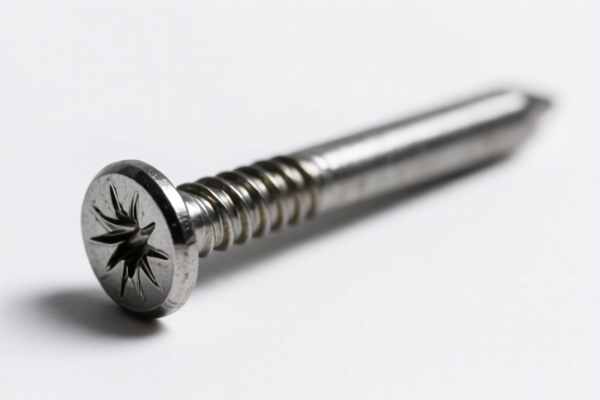
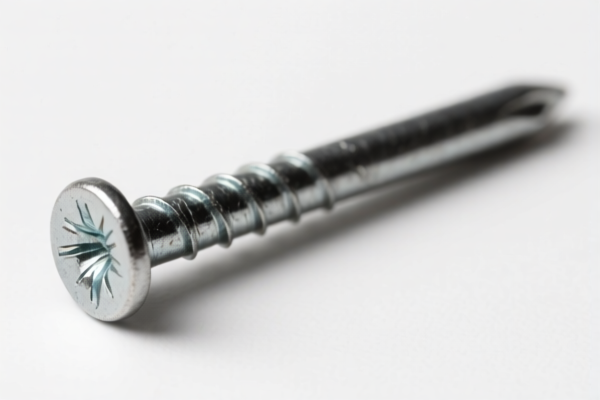
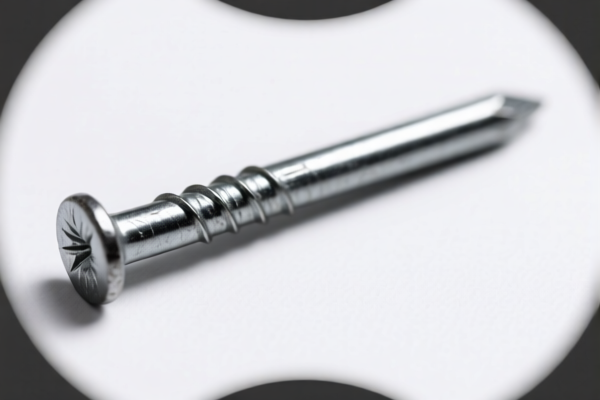
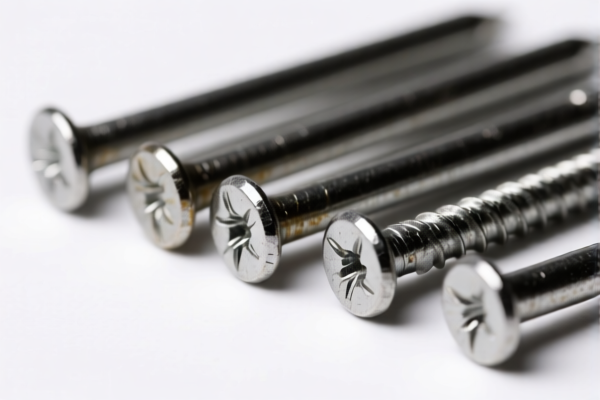
AI Analysis
🛠️ Steel Round Wire Glue Nails (Steel Fixed Fasteners)
🌐 HS Code Reference & Customs Clearance Guide | 2026 Latest Tariff Analysis | Professional Customs Strategy 📌 I. Product Definition & Classification: What Exactly is a "Steel Round Wire Glue Nail"?
A Steel Round Wire Glue Nail is a specialized fastener made of steel wire, typically featuring a plastic or adhesive coating (glue) on the shank. Its primary purpose is to provide secure, non-slip fixation in piping systems or structural frameworks.
In international trade, the classification depends heavily on its physical form and intended use: * As a Fixing Device: If designed specifically for holding pipes/tubes in place, it may fall under generic steel articles. * As a Screw/Nail: If the form resembles a standard screw or nail (threaded or unthreaded fastener), it falls under Chapter 73 (Articles of Iron or Steel).
⚠️ Critical Distinction: - If the product is explicitly defined as a pipe clip/fixing accessory (not a standard mechanical fastener like a screw) → HS 7326. - If the product is defined as a screw, nail, or bolt (even if coated) → HS 7318.
📦 II. HS Code Classification Details (2026 Authoritative Comparison)
| HS Code | Product Description | Applicable Scenario | Key Classification Feature |
|---|---|---|---|
7326.90.86.30 |
Steel Round Wire Glue Nail, for piping fixing | Pipe supports, cable ties, industrial mounting | Purpose-driven: Classified as a generic steel article for fixing purposes. |
7318.15.80.85 |
Steel Round Wire Glue Nail, Screw-type form | Standard screw nails, threaded wire nails | Form-driven: Classified as "Other Screws and Bolts, whether or not with their nuts or washers." |
7318.22.00.00 |
Steel Round Wire Glue Nail, Non-threaded Fastener | Smooth shank nails, cotter pins, rivets (if applicable) | Form-driven: Classified as "Other Non-threaded Fasteners." |
🔍 Key Reminder: - The total tax burden is extremely high for all three codes due to US-China trade tensions (Section 301 & IEEPA tariffs). - Misclassification between 7326 (Generic Article) and 7318 (Fastener) can lead to significant tax differences or customs delays.
💰 III. 2026 Latest Tariff Rate Breakdown (Including Additional Duties & Policies)
✅ Applicable Country: United States (US) ✅ Country of Origin: China (CN) ✅ Effective Time: Current applicable rates (Section 301 + IEEPA)
🎯 1. 7326.90.86.30 —— Steel Round Wire Glue Nail (Piping Fixing Use)
| Item | Detail |
|---|---|
| Basic Tariff | 2.9% |
| Section 301 Tariff | +25.0% |
| 122 Provision Tariff | +10.0% |
| Aluminum/Steel/Copper Add-on | +50.0% |
| Total Tax Rate | 87.9% |
| Tax Calculation | CIF Value × 87.9% |
| De Minimis Exemption | ❌ Not Eligible (Deny de minimis for Chinese goods under this threshold) |
| Legal Basis Path | HTS:7326.90.86.30 → SEC301:25% → 122Provision:10% → Aluminum/SteelRule:50% |
📌 Explanation: - The 2.9% is the standard MFN (Most Favored Nation) duty for general steel articles. - The 25% is the standard Section 301 tariff on Chinese steel products. - The 10% refers to the "122 Provision" (often associated with specific trade remedy or anti-circumvention rules). - The 50% is a critical add-on for Steel, Aluminum, and Copper products under recent trade enforcement actions. - Total: 87.9%. This is a catastrophic tariff rate. Profit margins will be completely erased unless offset by extremely low production costs or alternative routing (though still risky).
🎯 2. 7318.15.80.85 —— Steel Round Wire Glue Nail (Screw-Type)
| Item | Detail |
|---|---|
| Basic Tariff | 8.5% |
| Section 301 Tariff | +25.0% |
| 122 Provision Tariff | +10.0% |
| Aluminum/Steel/Copper Add-on | +50.0% |
| Total Tax Rate | 93.5% |
| Tax Calculation | CIF Value × 93.5% |
| De Minimis Exemption | ❌ Not Eligible |
| Legal Basis Path | HTS:7318.15.80.85 → SEC301:25% → 122Provision:10% → Aluminum/SteelRule:50% |
📌 Note: - This code is for screw-type steel fasteners. - The basic rate (8.5%) is higher than the generic article (2.9%). - Total: 93.5%. This is the highest tariff burden among the three options. - Risk: High probability of customs audit due to the high duty rate. Ensure the product is definitively classified as a "screw" and not a "nail" or "clip" to avoid re-classification penalties.
🎯 3. 7318.22.00.00 —— Steel Round Wire Glue Nail (Non-threaded Fastener)
| Item | Detail |
|---|---|
| Basic Tariff | 0.0% |
| Section 301 Tariff | +25.0% |
| 122 Provision Tariff | +10.0% |
| Aluminum/Steel/Copper Add-on | +50.0% |
| Total Tax Rate | 85.0% |
| Tax Calculation | CIF Value × 85.0% |
| De Minimis Exemption | ❌ Not Eligible |
| Legal Basis Path | HTS:7318.22.00.00 → SEC301:25% → 122Provision:10% → Aluminum/SteelRule:50% |
📌 Attention: - This code is for non-threaded fasteners (e.g., smooth pins, nails without threads). - The basic rate is 0%, making this the most favorable of the three options. - Total: 85.0%. While still extremely high, it is 4.9 percentage points lower than the screw-type and 2.9 points lower than the generic fixing article. - Strategy: If the glue nail is smooth (non-threaded) and can be reasonably argued as a "non-threaded fastener" rather than a "screw," this code offers the best cost savings.
🛠️ IV. Customs Clearance Practical Advice (Real-World Pitfall Guide)
✅ 1. Documentation Checklist (Mandatory)
| Document | Required | Explanation |
|---|---|---|
| ✅ Product Specification Sheet | ✔️ | Must clearly state: Material (Steel), Shape (Round Wire), Coating (Glue/Rubber), and Form (Threaded vs. Non-threaded). |
| ✅ Photos (Clear & Detailed) | ✔️ | Show the shank texture (smooth or threaded) and the head type. Crucial for distinguishing between 7318.15 and 7318.22. |
| ✅ Commercial Invoice | ✔️ | Must use precise terminology. Avoid vague terms like "Fastener." Use "Steel Round Wire Nail, Non-threaded, Glue-coated." |
| ✅ Country of Origin Certificate | ✔️ | Confirms China origin, triggering the high tariffs. |
| ✅ Packing List | ✔️ | Standard for customs verification. |
✅ 2. Declaration Strategy (Key Tips)
🔥 “Form Defines Duty, Glue is Irrelevant to HS, but Proof is Key!”
| Scenario | Correct Declaration | Wrong Practice |
|---|---|---|
| Smooth Shank (No Threads) | 7318.22.00.00 (85.0%) |
Declaring as Screw → 93.5% |
| Threaded Shank (Screw-like) | 7318.15.80.85 (93.5%) |
Declaring as Nail → Potential Penalty |
| Pipe Clip/Fixing Accessory | 7326.90.86.30 (87.9%) |
Declaring as Fastener → Mismatch with Use |
| Generic Steel Item | 7326.90.86.30 (87.9%) |
Vague Description → Customs Delay |
✅ 3. Special Considerations
| Situation | Handling Advice |
|---|---|
| OEM Customization | Provide the client’s drawing showing the shank texture (threaded vs. smooth). |
| Mixed Shipments | If the shipment contains both threaded and non-threaded nails, declare separately. Do not mix under one code to avoid audit flags. |
| "Glue" Coating | The glue is considered part of the fastener. It does not change the HS Code from Chapter 73 to Chapter 39 (Plastics). It remains a Steel Article. |
| High Tariff Mitigation | With rates at 85-93%, direct shipping from China is financially unviable for most commercial volumes. Consider: 1. Third-country Transshipment (e.g., Malaysia, Vietnam) – Note: Must ensure substantial transformation, not just minor processing, to avoid anti-circumvention duties. 2. Negotiate CIF Terms with suppliers to share the tariff burden. |
🌍 V. Global Market Comparison (2026 Update)
| Country/Region | Recommended HS Code | Estimated Total Duty | Notes |
|---|---|---|---|
| 🇺🇸 USA | 7318.22.00.00 |
85.0% | Highest burden. Check for any new Section 301 updates. |
| 🇨🇳 China | 7318.22.00.00 |
~0-6% (Imported) | Low duty if importing finished goods. |
| 🇪🇺 EU | 7318.15.99 / 7318.22.00 |
~0-6% | No additional punitive tariffs for this category. |
| 🇯🇵 Japan | 7318.22.00.00 |
~5-10% | Standard MFN rates apply. |
📌 Conclusion: - USA is the most hostile market for steel fasteners from China due to the layered tariff structure (Base + 301 + 122 + Steel Add-on). - EU and Japan are far more favorable for steel fasteners.
📌 VI. Common Errors & Pitfalls (Blood-Lesson Guide)
❌ Error 1: Declaring a threaded nail as a non-threaded fastener (7318.22) to save tax.
👉 Consequence: Customs inspection will reveal threads → Re-classification to 7318.15 → 93.5% duty + Penalty.
❌ Error 2: Using vague terms like "Metal Pin" or "Steel Clip" without specifying form. 👉 Consequence: Customs may assign the highest default duty rate or delay shipment for classification review.
❌ Error 3: Ignoring the "Steel Add-on Tariff" (50%). 👉 Consequence: Many importers calculate only 301 (25%) + Base. Missing the 50% add-on leads to massive underpayment and potential fraud allegations.
❌ Error 4: Assuming "Glue" makes it a plastic product. 👉 Consequence: It is still a Steel Article. Misclassifying under Chapter 39 will result in rejection.
✅ Correct Practice:
"Steel Round Wire Nail, Smooth Shank, Plastic/Glue Coated, for Pipe Fixing, Model XYZ, Origin: China"
🎯 VII. Conclusion: Professional Declaration, Cost Control!
🎯 Remember the Mantra:
🔹 "Smooth is 85%, Threaded is 93%, Pipe Fixing is 87%." 🔹 "Check the Shank, Check the Tariff, Don't Get Caught by the 50% Add-on!"
📌 Small Tip: Given the 85-93.5% tariff rate, direct import from China to the US is economically unfeasible for most businesses. Consider: 1. Supply Chain Diversification: Source from non-China origins (Vietnam, Thailand, Mexico) to avoid Section 301 and Steel Add-on tariffs. 2. Pre-Ruling: Apply for an Advance Ruling from US Customs to confirm the HS Code, especially if the product has mixed features.
📣 Immediate Action:
📞 Consult a licensed US Customs Broker. 📷 Provide high-res photos of the shank texture. 🚀 Evaluate the total landed cost before finalizing the order.
✨ Professional Clearance, Start with Accurate Classification! 💼 Your Every Penny Counts in a High-Tariff Environment!
Customer Reviews
About HS Code Classification
The Harmonized System (HS) is an internationally standardized nomenclature developed by the World Customs Organization (WCO) to classify traded products. Over 200 countries use the HS system as the basis for customs tariffs, trade statistics, and import/export regulations.
Each HS code follows a hierarchical structure:
- Chapter (2 digits) — Broad category of goods (e.g., Chapter 84: Machinery and Mechanical Appliances)
- Heading (4 digits) — More specific grouping within the chapter
- Subheading (6 digits) — Internationally standardized breakdown, used by all WCO member countries
- National subdivisions (8-10 digits) — Country-specific extensions for further classification, such as US HTSUS 10-digit codes
Correct HS code classification is essential for smooth customs clearance, accurate duty payment, and compliance with trade regulations. Misclassification can lead to customs delays, overpayment of duties, or penalties.
When importing from CN to US, the applicable tariff rates may include:
- Most-Favored-Nation (MFN) rate — The standard duty rate applied to WTO members
- General rate — Applied to countries without trade agreements
- Trade remedy duties — Additional tariffs such as Section 301 (anti-dumping), Section 232 (national security), or countervailing duties
The information provided on this page is for reference purposes only. For official classification, please consult with your local customs authority or a licensed customs broker.