Steel Screw
CN → US| HS Code | Tariff Rate | Origin | Destination | Doc |
|---|---|---|---|---|
| 7318141060 | 91.2% | CN | US | Official Doc |
| 7318156070 | 91.2% | CN | US | Official Doc |
Product Images
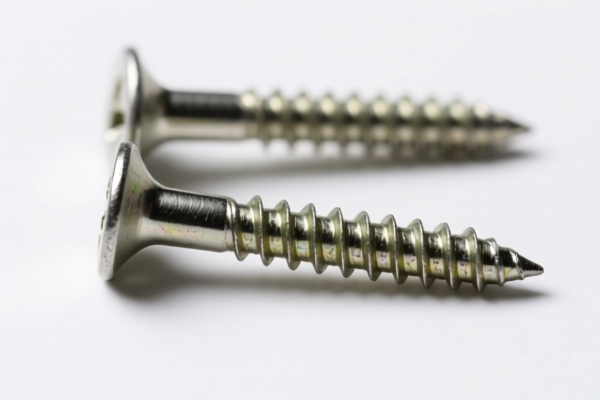
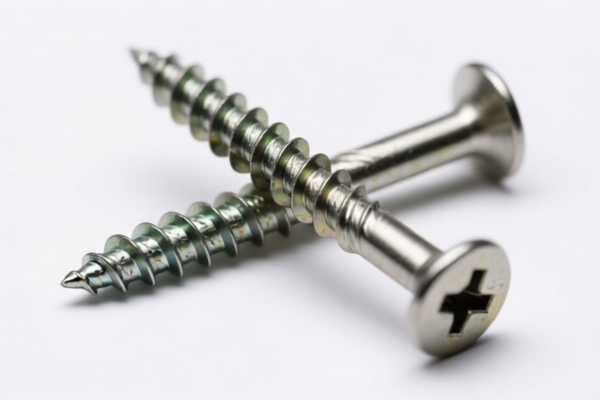
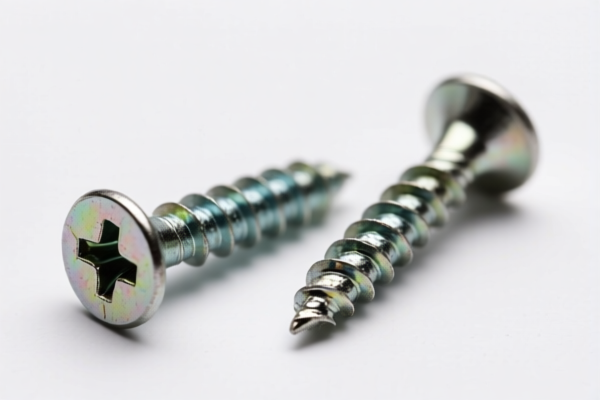
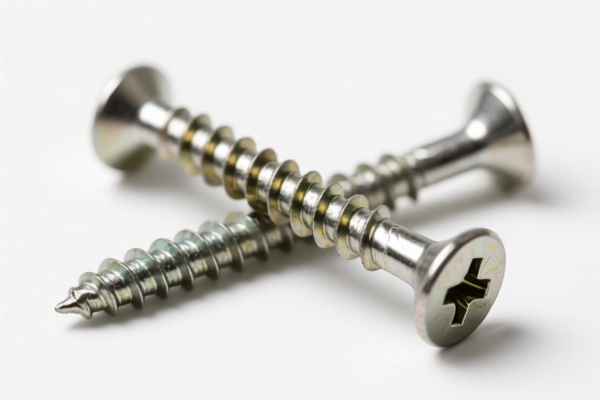
AI Analysis
🔩 Steel Screws, Bolts, Nuts & Fasteners (Iron or Steel Articles)
🌐 HS Code Reference & Clearance Guide | 2026 Latest Tariff Analysis | Professional Clearance Strategy
📌 I. Product Definition & Classification: Do You Know Exactly What You Are Shipping?
"Steel Screws" is a broad term in international trade. In customs classification, they are strictly categorized by material, threading type, and dimension (shank/thread diameter). Misclassification can lead to severe tariff shocks or customs holds.
In international trade, they are generally divided into three main categories based on the provided data:
1. Self-Tapping Screws (High Precision): Screws that form their own thread without a nut.
2. Other Screws and Bolts (Stainless Steel): Standard fasteners, specifically those made of stainless steel.
3. Other Iron/Steel Fasteners: Generic nuts, washers, rivets, and non-stainless screws.
⚠️ Key Distinction Point:
- If the screw is Self-Tapping and the shank/thread diameter is less than 6 mm → It falls under a specific high-priority code.
- If the screw is Other (standard machine screw) and made of Stainless Steel with a shank/thread diameter less than 6 mm → It has a different, higher tariff code.
- Material Matters: "Iron or Steel" is the base material. If it is not stainless, it usually follows general rules; if it is stainless, it triggers specific sub-headings.
📦 II. HS Code Classification Details (Based on Provided Data)
| HS Code | Product Description | Key Criteria | Tariff Status |
|---|---|---|---|
7318.14.10.60 |
Self-Tapping Screws | • Material: Iron or Steel • Type: Self-Tapping • Diameter: < 6 mm • Other (generic) |
🔴 High Risk 50.0% Total |
7318.15.60.70 |
Other Screws & Bolts | • Material: Stainless Steel • Type: Other (non-self-tapping) • Diameter: < 6 mm • With/without nuts/washers |
🔴 High Risk 81.2% Total |
🔍 Important Note:
- Both codes listed in the data apply to items with a shank or thread diameter of less than 6 mm. This is a critical threshold. Larger screws (≥ 6 mm) would fall under different HS codes not listed in the<DATA>provided.
- Material is Decisive: Code7318.14is for Self-Tapping screws (usually carbon steel). Code7318.15is for Other screws, but specifically calls out Stainless Steel in this context. If you are shipping stainless steel self-tapping screws, you must verify if they fit the "Self-Tapping" definition more accurately than "Other," but the data provided strictly links7318.15.60.70to "Other... Of stainless steel."
💰 III. 2026 Latest Tariff Rate Breakdown (Detailed)
✅ Applicable Region: Based on the tax details provided (Steel, Aluminum, Copper products surcharge), this reflects US Import Tariffs (Section 301 / Trade War Tariffs).
✅ Origin: Likely China (CN), given the "Steel, Aluminum, Copper Products Surcharge" context.
🎯 1. 7318.14.10.60 —— Self-Tapping Screws (< 6mm)
| Item | Content |
|---|---|
| Base Tariff | 0.0% (Ad Valorem) |
| Section 301 Surcharge | 0.0% (Base) |
| Specific Product Surcharge | +50% (Steel, Aluminum, Copper Products Surcharge) |
| Total Tariff Rate | 50.0% |
| Tax Calculation | CIF Value × 50% |
| Legal Basis Path | 7318.14.10.60 → Steel/Aluminum/Copper Surcharge: 50% |
📌 Explanation:
- The base duty for these specific small self-tapping screws is 0%.
- However, they are subject to a 50% surcharge specifically targeting "Steel, Aluminum, Copper products."
- Total Cost Impact: You pay 50% of the declared value in tariffs alone. This is a massive cost driver.
🎯 2. 7318.15.60.70 —— Other Screws/Bolts, Stainless Steel (< 6mm)
| Item | Content |
|---|---|
| Base Tariff | 6.2% |
| Section 301 Surcharge | 25.0% |
| Specific Product Surcharge | +50% (Steel, Aluminum, Copper Products Surcharge) |
| Total Tariff Rate | 81.2% |
| Tax Calculation | CIF Value × 81.2% |
| Legal Basis Path | 7318.15.60.70 → Base: 6.2% + Section 301: 25% + Steel Surcharge: 50% |
📌 Explanation:
- Base Duty: 6.2% applies to standard stainless steel fasteners.
- Section 301 Tariff: An additional 25% applies to Chinese-made stainless steel fasteners.
- Steel Surcharge: An additional 50% applies specifically to steel products.
- Total Cost Impact: 81.2%. This is an extremely high tariff. Stainless steel fasteners are taxed significantly higher than carbon steel self-tappers in this specific data set.
🛠️ IV. Clearance Operational Advice (Practical Pitfall Avoidance)
✅ 1. Preparation Checklist (Non-negotiable)
| Material | Must Provide | Reason |
|---|---|---|
| ✅ Product Specification Sheet | ✔️ | Must clearly state: Material (e.g., SUS304, Carbon Steel), Head Type, Thread Pitch, Diameter. |
| ✅ Technical Drawing/Photo | ✔️ | To prove Diameter < 6mm. If ≥ 6mm, the HS code changes completely, and tariffs might differ. |
| ✅ Self-Tapping Proof | ✔️ | For 7318.14, you must prove it is a self-tapping screw (pointed tip, thread design). If it's a standard machine screw, it falls under 7318.15 or 7318.16. |
| ✅ Commercial Invoice | ✔️ | Must clearly describe as "Steel Fasteners" or "Stainless Steel Screws," not just "Screws." |
| ✅ Origin Certificate | ✔️ | Essential for determining if the 50% surcharge applies (usually yes for CN origin). |
✅ 2. Declaration Tips (Key Mnemonic)
🔥 "Material First, Diameter Second, Type Third!"
| Scenario | Correct HS Code | Wrong Declaration | Consequence |
|---|---|---|---|
| Carbon Steel Self-Tapping Screw Diameter 4mm |
7318.14.10.60 |
Declaring as "Stainless Screw" | Misclassification → Penalty + Retention |
| Stainless Steel Machine Screw Diameter 5mm |
7318.15.60.70 |
Declaring as "Self-Tapping" | Misclassification → Penalty + Retention |
| Screw Diameter = 8mm | NOT Listed | 7318.14... or 7318.15... |
Customs Hold → Code is wrong (must be ≥6mm category) |
⚠️ Critical Warning:
- Diameter is King: Both codes in the data specify < 6 mm. If your screws are 6 mm or larger, these HS codes are INVALID. You must find the correct HS code for ≥ 6 mm screws (e.g.,7318.15.50.40or similar), which may have different rates. Do not use these codes for larger screws.
✅ 3. Special Cases
| Case | Handling Advice |
|---|---|
| Mixed Lots (Stainless + Carbon) | Split the Declaration. Do not mix. Stainless goes to 7318.15.60.70 (81.2%), Carbon Self-Tapping to 7318.14.10.60 (50%). Mixing leads to audits. |
| Set of Screw + Nut + Washer | Declare as the principal article. If it's a self-tapping screw kit, declare under 7318.14. If it's a standard bolt/nut set, declare under 7318.15 or 7318.16. |
| Plastic-Inserted Lock Nuts | Still considered "Of Iron or Steel" if the metal content is primary. Check specific customs rulings. |
🌍 V. Global Market Comparison (2026)
| Country/Region | Recommended HS Code | Tariff Rate | Notes |
|---|---|---|---|
| 🇺🇸 USA | 7318.14.10.60 / 7318.15.60.70 |
50% - 81.2% | High tariffs due to Section 301 & Steel Surcharge. Very Expensive. |
| 🇨🇳 China | 7318.14 / 7318.15 |
~6-13% | Standard import tariffs, no Section 301. |
| 🇪🇺 EU | 7318.15 |
0-6% | No major surcharges for standard screws. CE/RoHS may apply. |
| 🇻🇳 Vietnam | 7318.15 |
0% (if RCEP) | Use Vietnam for transshipment to avoid US tariffs. |
📌 Conclusion:
- The US market is the most expensive for steel fasteners due to the 50% steel surcharge.
- Stainless steel fasteners are taxed even higher (81.2%) in the US under the provided data.
- Cost Optimization: Consider sourcing from non-China origins (e.g., Vietnam, Malaysia) to avoid the 50% Steel Surcharge and 25% Section 301.
📌 VI. Common Errors & Pitfall Guide (Lessons from Blood)
❌ Error 1: Declaring 8mm screws under 7318.14.10.60
👉 Consequence: Customs will reject the declaration because the code explicitly requires < 6 mm. Delay + Correction Fee.
❌ Error 2: Calling Stainless Steel Screws "Self-Tapping" to get the 50% rate instead of 81.2%
👉 Consequence: Customs inspection will reveal the head type (pan head, hex head) is not self-tapping. Fraud Penalty + Back Taxes.
❌ Error 3: Ignoring the 50% Steel Surcharge
👉 Consequence: Budgeting only for base tax (0-6%). Unexpected 50%+ bill at clearance.
✅ Correct Practice:
"Stainless Steel Socket Head Cap Screw, SUS304, M5x10mm, Qty 10,000 pcs"
HS Code:7318.15.60.70
Tariff: 81.2% (US)
🎯 VII. Conclusion: Precision Classification Saves Money
🎯 Remember the Mnemonic:
🔹 "Diameter under 6? Check Code 14 or 15."
🔹 "Self-Tapping? 50% Tax."
🔹 "Stainless & Other? 81.2% Tax."
🔹 "6mm or above? Code is WRONG!"
📌 Pro Tip:
If you are importing into the US, calculate the Total Landed Cost including the 81.2% tariff for stainless steel or 50% for carbon steel self-tappers.
For large volumes (> 6mm), ensure you have the correct HS code for larger diameters, as rates may vary.
📣 Immediate Action:
📞 Confirm Material (Carbon vs. Stainless)
📞 Measure Diameter (< 6mm or ≥ 6mm)
📞 Identify Type (Self-Tapping vs. Standard)
🚀 Then, Select the HS Code Above.
✨ Professional Clearance Starts with Accurate Classification!
💼 Your Cost Efficiency Depends on These 25.2% Differences!
Customer Reviews
About HS Code Classification
The Harmonized System (HS) is an internationally standardized nomenclature developed by the World Customs Organization (WCO) to classify traded products. Over 200 countries use the HS system as the basis for customs tariffs, trade statistics, and import/export regulations.
Each HS code follows a hierarchical structure:
- Chapter (2 digits) — Broad category of goods (e.g., Chapter 84: Machinery and Mechanical Appliances)
- Heading (4 digits) — More specific grouping within the chapter
- Subheading (6 digits) — Internationally standardized breakdown, used by all WCO member countries
- National subdivisions (8-10 digits) — Country-specific extensions for further classification, such as US HTSUS 10-digit codes
Correct HS code classification is essential for smooth customs clearance, accurate duty payment, and compliance with trade regulations. Misclassification can lead to customs delays, overpayment of duties, or penalties.
When importing from CN to US, the applicable tariff rates may include:
- Most-Favored-Nation (MFN) rate — The standard duty rate applied to WTO members
- General rate — Applied to countries without trade agreements
- Trade remedy duties — Additional tariffs such as Section 301 (anti-dumping), Section 232 (national security), or countervailing duties
The information provided on this page is for reference purposes only. For official classification, please consult with your local customs authority or a licensed customs broker.