Steel Self Tapping Screws
CN → US| HS Code | Tariff Rate | Origin | Destination | Doc |
|---|---|---|---|---|
| 7318141030 | 91.2% | CN | US | Official Doc |
| 7318145020 | 93.6% | CN | US | Official Doc |
| 7318145080 | 93.6% | CN | US | Official Doc |
| 7318141060 | 91.2% | CN | US | Official Doc |
| 7318145080 | 93.6% | CN | US | Official Doc |
Product Images
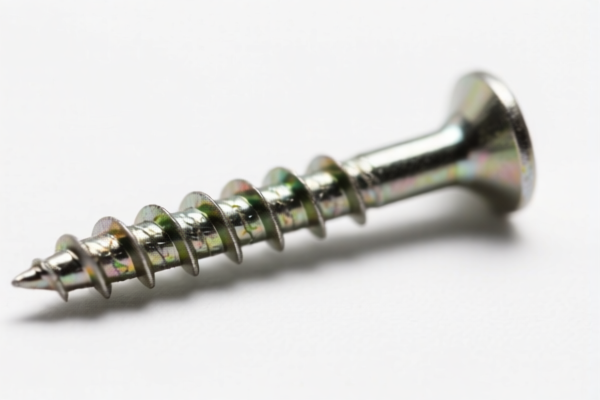
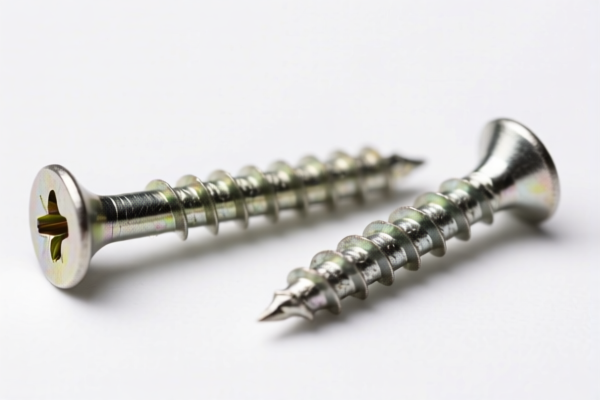
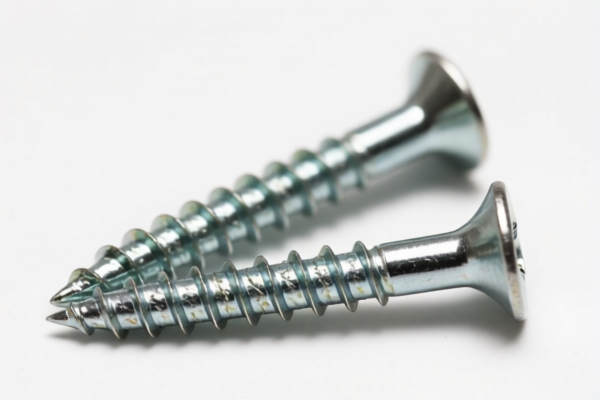
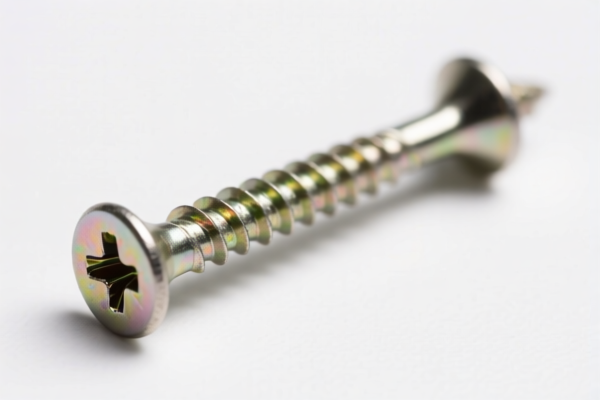
AI Analysis
🔩 Steel Self-Tapping Screws (Stainless & Carbon Steel)
🌐 HS Code Reference & Clearance Guide | 2026 Latest Tariff Analysis | Professional Level Customs Strategy
📌 I. Product Definition & Classification: Do You Really Understand "Self-Tapping Screws"?
Steel self-tapping screws are fasteners that can form their own thread in material (wood, metal, or plastic) without requiring a pre-tapped hole. In international trade, they are primarily categorized by material (Stainless vs. Carbon/Steel) and thread diameter.
1. Stainless Steel Self-Tapping Screws: * Diameter < 6mm: Generally classified under specific subheadings for smaller fasteners. * Diameter ≥ 6mm: Classified under subheadings for larger stainless fasteners.
2. Carbon Steel (Non-Stainless) Self-Tapping Screws: * Diameter < 6mm: Often black-oxide coated or plain carbon steel. * Diameter ≥ 6mm: Larger gauge carbon steel screws.
⚠️ Key Distinction Point:
- Material is Crucial: "Stainless" (HS 7318.14.10.) vs. "Steel/Carbon" (HS 7318.14.50.) has significantly different duty structures due to trade policies.
- Diameter Matters: The threshold of 6mm often splits the tariff subheadings.
- Coating Doesn't Change HS: Black oxide, zinc plating, or other coatings on carbon steel do not change the base HS code from "Steel" to "Stainless."
📦 II. HS Code Classification Details (2026 Latest Tariff Authoritative Comparison)
| HS Code | Product Description | Application Scenario | Material | Total Tax Rate (CN→US) |
|---|---|---|---|---|
7318.14.10.30 |
Stainless Steel Self-Tapping Screws | Small diameter (<6mm implied by code 30), high corrosion resistance | Stainless Steel | 91.2% |
7318.14.50.20 |
Stainless or Steel Self-Tapping Screws, Diameter ≥ 6mm | Larger industrial fasteners, structural applications | Stainless OR Steel | 93.6% |
7318.14.50.80 |
Steel Self-Tapping Screws, Diameter ≥ 6mm (Non-Stainless) | Large carbon steel screws, black screws, construction | Carbon Steel | 93.6% |
7318.14.10.60 |
Black Self-Tapping Screws (Typically Carbon Steel) | Small diameter (<6mm implied by code 60), common in construction | Carbon Steel (Non-Stainless) | 91.2% |
7318.14.50.80 |
Black Self-Tapping Screws, Carbon Steel, Non-Stainless | Large black screws, confirmed non-stainless | Carbon Steel | 93.6% |
🔍 Important Reminder:
- "Stainless" vs. "Steel": If your screws are stainless steel, you must use the7318.14.10.*or7318.14.50.20codes. Misdeclaring stainless as carbon steel (or vice versa) leads to customs seizure and heavy fines.
- "Black Screws" are usually Carbon Steel: Even if they look metallic, "black screws" (black oxide finish) are typically carbon steel. They fall under the non-stainless category (7318.14.10.60or7318.14.50.80).
- Diameter ≥ 6mm: If the diameter is 6mm or larger, use the.50subheadings. If smaller, use the.10subheadings (based on the provided data mapping).
💰 III. 2026 Latest Tariff Rate Breakdown (Including Additional Duties & Policy Surcharges)
✅ Applicable Country: United States (US)
✅ Country of Origin: China (CN)
✅ Effective Date: 2025+ (Current Trade War Policies)
🎯 1. 7318.14.10.30 & 7318.14.10.60 — Stainless/Steel Screws (Small Diameter < 6mm)
| Item | Content |
|---|---|
| Basic Tariff | 6.2% |
| Section 301 Additional Duty | +25.0% |
| Section 122 Duty (10% Tariff) | +10.0% |
| Steel, Aluminum, Copper Products Surcharge | +50.0% |
| Total Tax Rate | 91.2% |
| Calculation Method | CIF Value × 91.2% |
| De Minimis Exemption | ❌ NOT Eligible (Highly restricted) |
| Legal Basis Path | Section 301 + Section 122 + Steel/Copper Surcharge |
📌 Explanation:
- Basic Duty (6.2%): Standard MFN rate for self-tapping screws.
- Section 301 (+25%): Tariffs on Chinese goods under Trade Promotion Authority.
- Section 122 (+10%): Specific duty on certain steel/aluminum/copper products.
- Steel/Copper Surcharge (+50%): This is the killer. Under recent policies, steel and aluminum products from China face an additional 50% surcharge. Since self-tapping screws are steel products, this applies heavily.
- Total: 6.2 + 25 + 10 + 50 = 91.2%. This is an extremely high duty.
🎯 2. 7318.14.50.20 & 7318.14.50.80 — Screws Diameter ≥ 6mm
| Item | Content |
|---|---|
| Basic Tariff | 8.6% |
| Section 301 Additional Duty | +25.0% |
| Section 122 Duty (10% Tariff) | +10.0% |
| Steel, Aluminum, Copper Products Surcharge | +50.0% |
| Total Tax Rate | 93.6% |
| Calculation Method | CIF Value × 93.6% |
| De Minimis Exemption | ❌ NOT Eligible |
| Legal Basis Path | Section 301 + Section 122 + Steel/Copper Surcharge |
📌 Note:
- The basic duty is slightly higher (8.6%) for larger screws.
- The same surcharges apply: +25% (301) + 10% (122) + 50% (Steel Surcharge).
- Total: 8.6 + 25 + 10 + 50 = 93.6%.
- Whether stainless or carbon steel, if it's a steel product from China, the 50% surcharge is unavoidable.
🛠️ IV. Customs Clearance Practical Advice (Real-World Pitfall Avoidance Guide)
✅ 1. Required Documentation Checklist (None Can Be Missing)
| Document | Mandatory | Description |
|---|---|---|
| ✅ Product Specification Sheet | ✔️ | Must specify Material (Stainless vs. Carbon), Diameter, Length, Thread Type, and Hardness. |
| ✅ Material Certification | ✔️ | Mill test certificates or chemical analysis reports to prove "Stainless" (e.g., 304/316) vs. "Carbon Steel." |
| ✅ Product Photos (Labeled) | ✔️ | Clear images showing head type, thread, and any markings (e.g., "A2-70" for stainless). |
| ✅ Commercial Invoice | ✔️ | Must clearly state: "Self-Tapping Screws, [Material], [Diameter], HS Code: [XXXX.XX.XX.XX]" |
| ✅ Packing List | ✔️ | Weight and dimensions per carton. Avoid "mixed loads" of different HS codes if possible. |
| ✅ Country of Origin Label | ✔️ | Must be visible and accurate. "Made in China" is required. |
✅ 2. Declaration Tips (Key Mnemonics)
🔥 "Material First, Diameter Second, Surcharge is King!"
| Scenario | Correct Declaration | Incorrect Practice |
|---|---|---|
| Stainless Steel Screws (<6mm) | HS: 7318.14.10.30Desc: "Stainless Steel Self-Tapping Screws" |
Mislabel as "Carbon Steel" → Audit risk |
| Black Carbon Screws (≥6mm) | HS: 7318.14.50.80Desc: "Carbon Steel Black Self-Tapping Screws" |
Mislabel as "Stainless" → Heavy penalty |
| Stainless Screws (≥6mm) | HS: 7318.14.50.20Desc: "Stainless Steel Screws, Ø≥6mm" |
Use wrong subheading → Wrong duty |
| Mixed Pack (Different Materials) | Separate HS Codes | Mixed declaration → Customs holds shipment |
📌 Warning:
- Do NOT claim "Stainless" if it's not. Customs will test chemical composition. If it fails, you face fraud penalties.
- "Black Screws" are NOT Stainless. They are carbon steel. Use the correct HS code to avoid delays.
✅ 3. Special Cases Handling
| Scenario | Handling Advice |
|---|---|
| OEM Custom Screws | Provide client design specs and material certifications. |
| Plated Screws (Zinc/Nickel) | Still classified by base material (Steel). Plating does not change HS code. |
| Small Quantities (De Minimis) | ❌ Not Eligible. Due to Section 301 and Steel Surcharge, de minimis (Section 321) is blocked for steel products from China. You must file formal entry. |
| Transshipment (Vietnam/Mexico) | ❌ High Risk. If origin is still China, surcharges apply. If truly manufactured in Vietnam/Mexico, ensure substantial transformation and provide correct COO. |
🌍 V. Global Market Clearance Comparison (2026 Latest)
| Country/Region | Recommended HS Code | Tariff Rate (CN→Local) | Certification Requirements | Notes |
|---|---|---|---|---|
| 🇺🇸 USA | 7318.14.10.30 / .50.* |
91.2% - 93.6% | No special certs | Highest duty globally due to steel surcharge |
| 🇨🇳 China | 7318.14.10.30 / .50.* |
5% - 8% | None | Low duty, but export restrictions may apply |
| 🇪🇺 EU | 7318.14.10 / .50 |
0% - 2% (GSP) | CE (if used in construction) | No US-style surcharges. Much cheaper than US. |
| 🇬🇧 UK | 7318.14.10 / .50 |
0% - 2% | UKCA | Similar to EU. |
| 🇨🇦 Canada | 7318.14.10 / .50 |
0% (CUSMA if Canadian) | None | Free trade if originating. |
📌 Conclusion:
- The US is the most expensive market for Chinese steel screws due to the 50% Steel Surcharge.
- EU and other markets are significantly cheaper. Consider diversifying supply chains if your primary market is the US.
- Cost Impact: A $10,000 shipment to the US will incur ~$9,120 in duties. To the EU, it may be $0.
📌 VI. Common Mistakes & Pitfalls (Blood & Tears Lessons)
❌ Mistake 1: Declaring "Black Screws" as "Stainless"
👉 Consequence: Customs lab test reveals carbon steel → Penalties + Back Duty + Loss of Import Privileges.
❌ Mistake 2: Splitting a single shipment of 6mm screws into "Small" and "Large" to save duty
👉 Consequence: Illegal. All screws ≥6mm must be declared under .50 codes. Misclassification leads to seizure.
❌ Mistake 3: Assuming De Minimis (Section 321) applies
👉 Consequence: No. Steel products from China are excluded from de minimis. Shipments will be held at customs until formal entry is filed.
❌ Mistake 4: Not providing Material Certification
👉 Consequence: Customs cannot verify "Stainless" status → Delay in release or forced reclassification to lower-grade tariff.
✅ Correct Practice:
"Stainless Steel Self-Tapping Screws, Grade 304, Diameter 4mm, Length 20mm, HS 7318.14.10.30, Origin: China"
🎯 VII. Conclusion: Professional Declaration, Save Time, Reduce Costs!
🎯 Remember the Mantra:
🔹 "Steel from China = 50% Surcharge!"
🔹 "Stainless ≠ Carbon: Declare Correctly!"
🔹 "No De Minimis for Steel: Formal Entry Required!"
🔹 "Total Duty >90%: Factor into Price!"
📌 Pro Tip:
If your screws are originally manufactured in Vietnam, Mexico, or Thailand, you may apply for preferential treatment or avoid the 50% Steel Surcharge (if rules of origin are met). However, ensure transshipment is NOT used to evade US tariffs.
It is recommended to apply for an Advance Ruling from CBP if you have large volumes.
📣 Immediate Action:
📞 Contact a Professional Broker + Provide Material Certs + Verify HS Code
🚀 Let your screws, clear customs smoothly, avoid penalties, and protect your margins!
✨ Professional Clearance Starts with Accurate Classification!
💼 Every Penny of Your Cost Deserves Precise Calculation!
Customer Reviews
About HS Code Classification
The Harmonized System (HS) is an internationally standardized nomenclature developed by the World Customs Organization (WCO) to classify traded products. Over 200 countries use the HS system as the basis for customs tariffs, trade statistics, and import/export regulations.
Each HS code follows a hierarchical structure:
- Chapter (2 digits) — Broad category of goods (e.g., Chapter 84: Machinery and Mechanical Appliances)
- Heading (4 digits) — More specific grouping within the chapter
- Subheading (6 digits) — Internationally standardized breakdown, used by all WCO member countries
- National subdivisions (8-10 digits) — Country-specific extensions for further classification, such as US HTSUS 10-digit codes
Correct HS code classification is essential for smooth customs clearance, accurate duty payment, and compliance with trade regulations. Misclassification can lead to customs delays, overpayment of duties, or penalties.
When importing from CN to US, the applicable tariff rates may include:
- Most-Favored-Nation (MFN) rate — The standard duty rate applied to WTO members
- General rate — Applied to countries without trade agreements
- Trade remedy duties — Additional tariffs such as Section 301 (anti-dumping), Section 232 (national security), or countervailing duties
The information provided on this page is for reference purposes only. For official classification, please consult with your local customs authority or a licensed customs broker.