Steel Self Tapping Screws (Diameter ≥ 6mm)
CN → US| HS Code | Tariff Rate | Origin | Destination | Doc |
|---|---|---|---|---|
| 7318145080 | 93.6% | CN | US | Official Doc |
| 7318145020 | 93.6% | CN | US | Official Doc |
| 7318145080 | 93.6% | CN | US | Official Doc |
| 7318145020 | 93.6% | CN | US | Official Doc |
| 7318145080 | 93.6% | CN | US | Official Doc |
Product Images
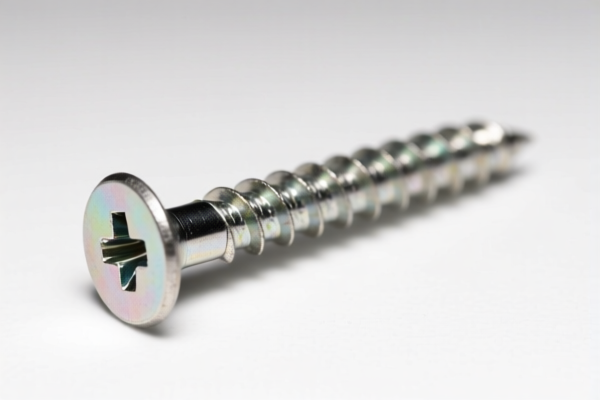
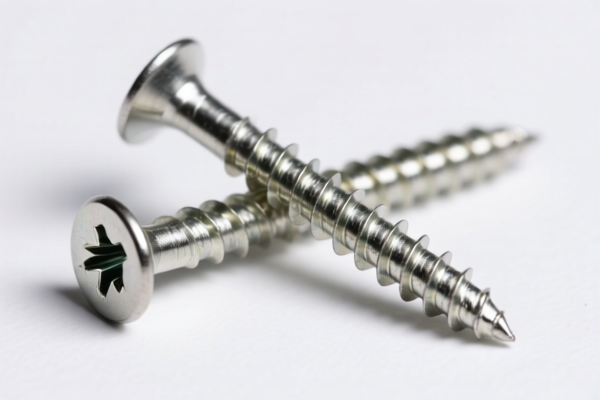
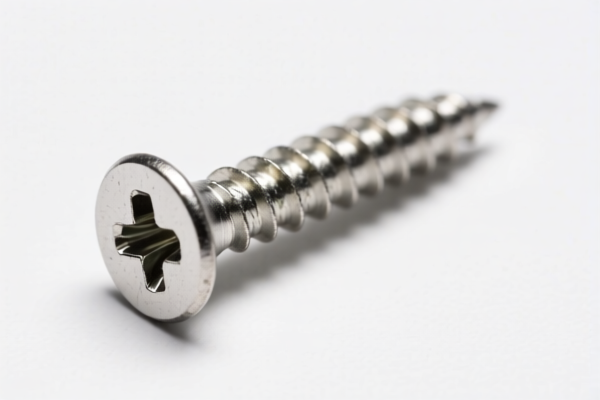
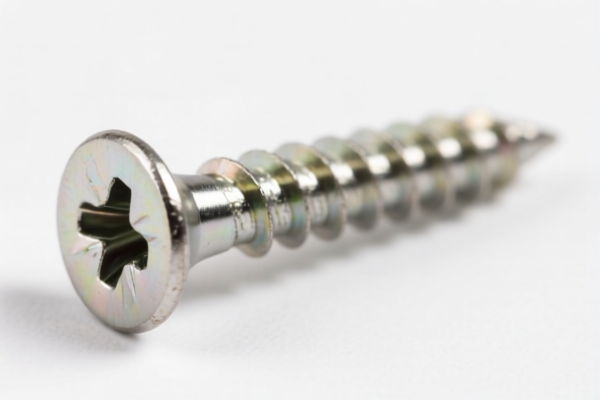
AI Analysis
🔩 Steel Self-Tapping Screws (Diameter ≥ 6mm)
🌐 HS Code Reference & Customs Clearance Guide | 2026 Latest Tariff Analysis | Professional Clearance Strategy
📌 I. Product Definition & Classification: Do You Really Understand "Self-Tapping Screws"?
Steel self-tapping screws are fasteners designed to create their own mating thread in materials such as wood, plastic, or thin metal sheets upon installation. In international trade, specifically for shipments from China to the United States, the classification hinges heavily on the material composition (Iron or Steel) and physical specifications (Diameter).
For products with a diameter ≥ 6mm, the U.S. Customs and Border Protection (CBP) strictly categorizes them under heading 7318. The key distinction lies in whether the product is classified under subheading .20 (Iron or Steel) or .80 (Other), though the tariff impact remains identical due to aggressive trade measures.
⚠️ Key Classification Point:
- Material: Must be clearly defined as "Steel" or "Iron-Steel". If the material is stainless steel with different alloy compositions, it might fall under.80, but for standard carbon steel/self-tapping screws, both.20and.80are relevant codes provided in the data.
- Size Constraint: The summary explicitly states "Diameter ≥ 6mm". This size threshold is critical for accurate HTSUS (Harmonized Tariff Schedule of the United States) identification.
- Function: "Self-tapping" implies no pre-existing thread in the mating material is required.
📦 II. HS Code Classification Details (2026 Latest Tariff Authority Cross-Reference)
| HS Code | Product Description (Summary) | Applicable Scenario | Key Attributes |
|---|---|---|---|
| 7318.14.50.20 | Steel Self-Tapping Screws, Diameter ≥ 6mm, conforming to iron/steel and self-tapping attributes | Standard carbon steel screws, diameter 6mm or larger, meeting specific "Iron or Steel" legal definitions | ✅ Iron/Steel Composition |
| 7318.14.50.80 | Steel Self-Tapping Screws, Diameter ≥ 6mm, matching material and size requirements for the code | Steel self-tapping screws, diameter ≥ 6mm, fitting broader "Steel" or "Other" subheadings based on specific alloy or finish | ✅ Steel Composition |
🔍 Important Note:
- Both 7318.14.50.20 and 7318.14.50.80 are applicable depending on the precise metallurgical definition of "Iron" vs. "Steel" in your specific bill of materials, but the tariff rate is identical for both codes under current US trade policy.
- The description "Steel Self-Tapping Screws" is mandatory. Vague terms like "Fasteners" or "Bolts" will lead to misclassification and penalties.
💰 III. 2026 Latest Tariff Rate Detailed Explanation (Including Surtaxes & Policy Surcharges)
✅ Applicable Country: United States (US)
✅ Origin: China (CN)
✅ Effective Time: Current ongoing trade measures (Section 301, Section 232, IEEPA)
🎯 HS Codes: 7318.14.50.20 & 7318.14.50.80
| Item | Content |
|---|---|
| Base Tariff Rate | 8.6% (Standard MFN Rate for Steel Articles) |
| Section 301 Surtax | +25.0% (Specific to Chinese origin goods under USTR exclusions) |
| Section 122 Tariff | +10.0% (Specific statutory surcharge on steel products) |
| Steel/Aluminum/Copper Surtax | +50.0% (Under Section 232 or related executive orders targeting steel/aluminum/copper) |
| Total Tax Rate | 93.6% |
| Tax Calculation | CIF Value × 93.6% |
| De Minimis Eligibility | ❌ Not Eligible (deny_de_minimis). Low-value shipments are NOT exempt from these duties. |
| Legal Basis Path | Base: HTSUS 7318.14 → Sec301: Footnote 9903.88 → Sec122: Statutory Steel Surcharge → Sec232: Steel/Aluminum/Copper Surcharge |
📌 Interpretation:
- Base Rate (8.6%): Standard duty for steel screws.
- Section 301 (25%): The landmark trade war tariff on Chinese manufactured goods.
- Section 122 (10%): A specific tariff imposed on steel imports for national security reasons.
- Steel/Aluminum/Copper Surcharge (50%): This is the most punitive layer, effectively doubling the base value plus other tariffs. It targets raw and processed steel products.
- Total 93.6%: This is an extremely high effective duty rate. It makes direct import of standard steel self-tapping screws from China to the US economically unviable unless offset by significant price margins or tariff engineering strategies.
🛠️ IV. Customs Clearance Practical Advice (Battle-Tested Pitfall Avoidance)
✅ 1. Required Documentation Checklist (Non-Negotiable)
| Document | Mandatory? | Explanation |
|---|---|---|
| ✅ Product Specification Sheet | ✔️ | Must explicitly state: Material (e.g., Carbon Steel), Diameter (≥6mm), Length, Thread Pitch, and "Self-Tapping" designation. |
| ✅ Commercial Invoice | ✔️ | Must accurately describe goods as "Steel Self-Tapping Screws, Diameter ≥ 6mm". Avoid generic "Hardware" labels. |
| ✅ Packing List | ✔️ | Detail net/gross weight and quantity. |
| ✅ Certificate of Origin (CO) | ✔️ | To prove Chinese origin (which triggers the 93.6% rate). If transshipped through Vietnam/Malaysia, additional proof of substantial transformation is needed. |
| ✅ Material Test Report | ✔️ | Optional but recommended to prove "Steel" vs. "Iron" if disputing .20 vs .80, though rates are the same. |
✅ 2. Declaration Tips (Key Mantra)
🔥 "Steel & Self-Tapping, 6mm Min, 93.6% Pin!"
| Scenario | Correct Declaration | Wrong Practice |
|---|---|---|
| Standard Steel Screw | 7318.14.50.20 or .80 + "Steel Self-Tapping Screw" |
Declaring as "Iron Nail" or "Bolt" → Misclassification Penalty |
| Diameter < 6mm | Different HS Code (e.g., 7318.14.00.xx) | Declaring ≥6mm to match higher volume codes → Fraud Risk |
| Mixed Containers | Separate lines for Steel vs. Plastic vs. Stainless | Mixing materials to dilute "Steel" content → Audit Trigger |
✅ 3. Special Handling
| Scenario | Handling Advice |
|---|---|
| Origin Fraud Risk | If the product is made in China but shipped from a third country (e.g., Vietnam), CBP requires proof that substantial transformation occurred. Simple repacking or minor processing is insufficient. |
| Section 232 Compliance | Ensure the product falls under the specific steel headings. "Self-tapping screws" are explicitly covered under steel product tariffs. |
| De Minimis Loophole | ❌ Do not rely on $800 De Minimis. With a 93.6% rate, even small shipments are scrutinized. CBP actively blocks low-value shipments containing steel fasteners to circumvent tariffs. |
🌍 V. Global Major Market Comparison (2026 Latest)
| Country/Region | Recommended HS Code | Tariff (China Origin) | Certification | Notes |
|---|---|---|---|---|
| 🇺🇸 USA | 7318.14.50.20 / .80 |
93.6% | None (but strict origin check) | Highest Barrier. 25% Sec 301 + 50% Steel Surtax + 10% Sec 122 + 8.6% Base. |
| 🇨🇳 China | 7318.14.50.20 / .80 |
Low/Zero (Export) | CCC (if applicable) | Export duty may apply. |
| 🇪🇺 EU | 7318.15.00 |
~6-9% (Anti-dumping may apply) | CE / REACH | EU has separate anti-dumping duties on Chinese fasteners. |
| 🇬🇧 UK | 7318.15.00 |
~6-9% | UKCA | Post-Brexit rules align closely with EU. |
| 🇦🇺 Australia | 7318.15.00 |
~5% | RCM | Generally lower than US, but anti-dumping investigations exist. |
📌 Conclusion:
- The USA is the most hostile market for Chinese steel self-tapping screws, with a 93.6% effective duty rate.
- Supply Chain Strategy: Consider sourcing from non-China countries (e.g., Vietnam, Thailand) only if substantial manufacturing (not just assembly) takes place there. Otherwise, expect severe customs penalties and retroactive duty assessments.
📌 VI. Common Mistakes & Pitfall Guide (Lessons Learned)
❌ Mistake 1: Declaring as "Iron Screws" to avoid "Steel" tariffs
👉 Consequence: CBP will inspect the metallurgy. If it's steel, you face fines for misdeclaration + back duties.
❌ Mistake 2: Ignoring the "Diameter ≥ 6mm" specification
👉 Consequence: Incorrect HS code classification. Smaller screws might have different tariff lines, but ≥6mm steel screws are heavily targeted.
❌ Mistake 3: Assuming De Minimis ($800) exemption applies
👉 Consequence: 93.6% tax is applied anyway. CBP explicitly denies de minimis for Section 301 and Section 232 goods.
❌ Mistake 4: Using generic descriptions like "Hardware Parts"
👉 Consequence: High risk of random inspection, detention, and audit. Always be specific: "Steel Self-Tapping Screw".
✅ Correct Approach:
"Steel Self-Tapping Screws, Carbon Steel, Diameter 6mm, Zinc Plated, Length 50mm, Model XYZ, Made in China."
🎯 VII. Conclusion: Professional Declaration Saves Money and Time!
🎯 Remember the Mantra:
🔹 "Steel + Self-Tapping + ≥6mm = 93.6% Duty!"
🔹 "No De Minimis, No Exemptions, No Exceptions!"
📌 Pro Tip:
If your business relies on these screws, re-evaluate your supply chain immediately. The 93.6% tariff makes direct imports from China cost-prohibitive.
1. Option A: Source from countries with FTAs or no Section 301/232 tariffs (e.g., Mexico, Canada, ASEAN).
2. Option B: Ensure Substantial Transformation in a third country (e.g., manufacturing from raw steel rods, not just cutting/threading in China).
3. Option C: Apply for HTSUS Exclusions (if still available/valid), though steel exclusions are largely exhausted.
📣 Immediate Action:
📞 Consult a licensed Customs Broker.
📄 Provide exact material specs (Steel vs. Iron, Alloy type).
🚀 Do not ship without verifying the latest Section 301/232 status for your specific product code.
✨ Professional Customs Clearance Starts with Precise Classification!
💼 Every dollar of tax is a dollar of profit lost. Calculate wisely!
Customer Reviews
About HS Code Classification
The Harmonized System (HS) is an internationally standardized nomenclature developed by the World Customs Organization (WCO) to classify traded products. Over 200 countries use the HS system as the basis for customs tariffs, trade statistics, and import/export regulations.
Each HS code follows a hierarchical structure:
- Chapter (2 digits) — Broad category of goods (e.g., Chapter 84: Machinery and Mechanical Appliances)
- Heading (4 digits) — More specific grouping within the chapter
- Subheading (6 digits) — Internationally standardized breakdown, used by all WCO member countries
- National subdivisions (8-10 digits) — Country-specific extensions for further classification, such as US HTSUS 10-digit codes
Correct HS code classification is essential for smooth customs clearance, accurate duty payment, and compliance with trade regulations. Misclassification can lead to customs delays, overpayment of duties, or penalties.
When importing from CN to US, the applicable tariff rates may include:
- Most-Favored-Nation (MFN) rate — The standard duty rate applied to WTO members
- General rate — Applied to countries without trade agreements
- Trade remedy duties — Additional tariffs such as Section 301 (anti-dumping), Section 232 (national security), or countervailing duties
The information provided on this page is for reference purposes only. For official classification, please consult with your local customs authority or a licensed customs broker.