Steel Shelving Unit
CN → US| HS Code | Tariff Rate | Origin | Destination | Doc |
|---|---|---|---|---|
| 7314496000 | 85.0% | CN | US | Official Doc |
| 7326200090 | 88.9% | CN | US | Official Doc |
| 7326200010 | 88.9% | CN | US | Official Doc |
| 4602114500 | 41.6% | CN | US | Official Doc |
| 4421919880 | 38.3% | CN | US | Official Doc |
Product Images
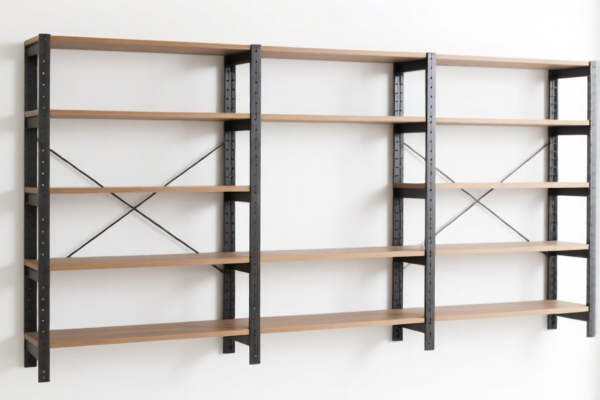
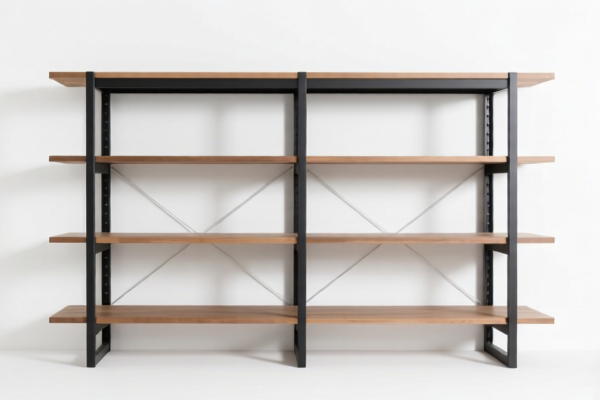
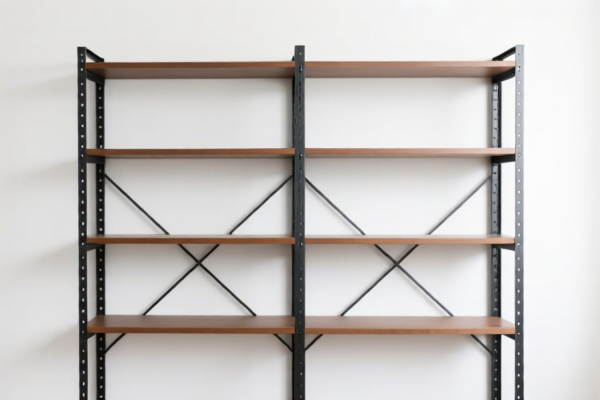
AI Analysis
🏗️ Steel Shelving Unit (Iron Mesh Storage Rack)
🌐 HS Code Reference & Customs Clearance Guide | 2026 Latest Tariff Analysis | Professional Clearance Strategy
📌 I. Product Definition & Classification: What Exactly is a "Steel Shelving Unit"?
A Steel Shelving Unit (specifically described in the data as "Iron Mesh Storage Rack") is a storage solution made primarily of iron/steel. In international trade, its classification depends heavily on its specific shape and manufacturing method.
The key distinction lies in whether it is classified as: 1. General Wire Products (Mesh/Netting): If it is seen as a general article made of wire mesh. 2. Fences/Enclosures: If it is viewed as a specific type of fencing or mesh enclosure. 3. Bamboo Alternatives (Misclassification Risk): Note: The data includes bamboo codes. These are technically incorrect for "Steel" but listed in the data context. We will focus on the Steel-specific codes provided in the JSON.
⚠️ Critical Distinction for Steel Items:
- If the item is primarily wire mesh used as a fence or barrier →7314.49.60.00
- If the item is a general article made of wire (like a rack constructed from wire mesh) →7326.20.00.x0
📦 II. HS Code Classification Details (2026 Latest Tariff Authority Comparison)
Based strictly on the provided <DATA>, here are the applicable HS Codes for Steel/Iron Shelving Units:
| HS Code | Product Description | Application Scenario | Material/Form Logic |
|--------|--------------------------|--------------------------|
| 7314.49.60.00 | Iron Mesh Shelving - Specifically categorized under "Other fences, grilles, and similar mesh products." | Shelving units that resemble fencing structures or are explicitly classified as mesh barriers in their design. | Iron/Steel, Form: Mesh/Grid |
| 7326.20.00.90 | Other Wire Articles - Iron mesh shelving classified as other articles of wire. | Standard shelving units made from woven or welded wire mesh, not strictly defined as fencing. | Iron/Steel, Form: Wire Articles |
| 7326.20.00.10 | Steel Articles - Iron/Steel shelving classified as other articles of steel. | Shelving units made of steel (ferrous metal), falling under "Other articles of iron or steel." | Iron/Steel, Form: Articles of Steel |
🔍 Key Reminder:
- The data provided excludes bamboo codes (4602.11.45.00,4421.91.98.80) for the steel item, as those apply to Bamboo shelving.
- Steel Shelving falls under Chapter 73 (Articles of Iron or Steel).
- The difference between7314(Fences/Mesh) and7326(Other Wire/Steel Articles) often depends on customs interpretation of the product's primary function and structure.7314is often used for flat mesh or fence-like structures, while7326is for formed wire articles like racks, hooks, or cages.
💰 III. 2026 Latest Tariff Rate Breakdown (Including Additional Taxes & Policies)
✅ Applicable Country: United States (US)
✅ Origin: China (CN)
✅ Effective Time: Current applicable rates as per data (Reflecting 2025/2026 trade policies)
🎯 1. 7314.49.60.00 —— Iron Mesh Shelving (Fence/Mesh Category)
| Item | Content |
|---|---|
| Base Duty Rate | 0.0% |
| Section 301 Additional Duty | +25.0% |
| Section 122 Duty | +10.0% |
| Section 232 Duty (Steel/Aluminum/Copper) | +50.0% |
| Total Tax Rate | 85.0% |
| Tax Calculation | CIF Value × 85.0% |
| De Minimis Exemption Eligible? | ❌ NO (deny_de_minimis) |
| Legal Basis Path | 301:7314.49.60.00 → 122:Steel/Aluminum → 232:Steel |
📌 Explanation:
- This code attracts the highest total tax (85%).
- It is hit by three layers of additional tariffs:
1. 25% (Section 301 - China Specific)
2. 10% (Section 122 - National Security/Import Restrictions)
3. 50% (Section 232 - Steel/Aluminum Products)
- Result: Extremely high entry cost. Must be carefully justified if chosen.
🎯 2. 7326.20.00.90 —— Other Wire Articles (Wire Mesh Product)
| Item | Content |
|---|---|
| Base Duty Rate | 3.9% |
| Section 301 Additional Duty | +25.0% |
| Section 122 Duty | +10.0% |
| Section 232 Duty (Steel/Aluminum/Copper) | +50.0% |
| Total Tax Rate | 88.9% |
| Tax Calculation | CIF Value × 88.9% |
| De Minimis Exemption Eligible? | ❌ NO (deny_de_minimis) |
| Legal Basis Path | 301:7326.20.00.90 → 122:Steel/Aluminum → 232:Steel |
📌 Explanation:
- Despite having a base duty of 3.9%, the additional tariffs remain the same as above.
- Total Rate: 88.9% (Slightly higher than 7314 due to higher base rate).
- Both 7314 and 7326 codes for steel/iron products from China are subject to the full stack of punitive tariffs.
🎯 3. 7326.20.00.10 —— Other Steel Articles
| Item | Content |
|---|---|
| Base Duty Rate | 3.9% |
| Section 301 Additional Duty | +25.0% |
| Section 122 Duty | +10.0% |
| Section 232 Duty (Steel/Aluminum/Copper) | +50.0% |
| Total Tax Rate | 88.9% |
| Tax Calculation | CIF Value × 88.9% |
| De Minimis Exemption Eligible? | ❌ NO (deny_de_minimis) |
| Legal Basis Path | 301:7326.20.00.10 → 122:Steel/Aluminum → 232:Steel |
📌 Explanation:
- Identical tax structure to7326.20.00.90.
- The slight difference in subheading (10vs90) does not change the additional tariff application in this specific data context.
🛠️ IV. Customs Clearance Practical Advice (Battle-Tested Pitfall Avoidance)
✅ 1. Mandatory Document Checklist
| Document | Required | Notes |
|---|---|---|
| ✅ Product Specification Sheet | ✔️ | Must clearly state: Material (Iron/Steel), Dimensions, Weight, Load Capacity. |
| ✅ Structure Diagrams | ✔️ | Show if it is assembled, welded, or woven wire. Helps distinguish between 7314 (mesh/fence) and 7326 (article). |
| ✅ High-Res Photos | ✔️ | Show the mesh pattern, joint connections, and any labels/markings. |
| ✅ Commercial Invoice | ✔️ | Must accurately describe as "Steel Shelving Unit" or "Iron Mesh Rack". Avoid vague terms like "Metal Storage." |
| ✅ Bill of Lading (B/L) | ✔️ | Ensure weight and dimensions match the invoice. |
| ✅ Origin Certificate | ✔️ | To confirm Chinese origin (which triggers the 85-89% tariffs). |
✅ 2. Classification Strategy & Naming Tips
🔥 "Describe the Form, Not Just the Function"
| Scenario | Recommended HS Code | Reasoning |
|---|---|---|
| Shelving looks like a wire fence/barrier | 7314.49.60.00 |
Customs may view it as a "fence-like" mesh product. |
| Shelving is a standard wire rack (grid-like) | 7326.20.00.90 |
Best fit for "other articles of wire." |
| Shelving is robust steel construction | 7326.20.00.10 |
Emphasize "Steel Article" status. |
⚠️ Common Mistake:
❌ Do NOT try to classify steel shelving under Bamboo (4421/4602) codes.
👉 Consequence: Misdeclaration, severe penalties, cargo seizure. The data provided lists bamboo codes, but they are incorrect for "Steel Shelving Unit." Only use 73xx codes.
✅ 3. Special Handling Notes
| Situation | Recommendation |
|---|---|
| Section 232 Impact | Since the product is Iron/Steel, it is subject to the 50% Section 232 tariff. This is non-negotiable for Chinese-origin steel. |
| De Minimis (Section 321) | ❌ Not Eligible. The data explicitly states deny_de_minimis for these HS codes. You must file a formal entry. |
| Mitigation Strategy | Since tariffs are fixed at ~85-89%, focus on accurate valuation to avoid penalties. Consider if duty drawback is applicable for re-exported goods. |
🌍 V. Global Market Tariff Comparison (2026 Outlook)
| Country/Region | Recommended HS Code | Estimated Duty (China Origin) | Notes |
|---|---|---|---|
| 🇺🇸 USA | 7326.20.00.90 / 7314.49.60.00 |
85.0% - 88.9% | Includes Section 301 (25%), 122 (10%), 232 (50%). |
| 🇨🇳 China | 7326.20.00.90 |
~3.9% - 5% | Low import duty, but data reflects US export context. |
| 🇪🇺 EU | 7326.20.00.90 |
~4.0% - 6.0% | No Section 301/232/122. Standard MFN rate applies. |
| 🇬🇧 UK | 7326.20.00.90 |
~4.0% - 6.0% | Similar to EU post-Brexit. |
📌 Conclusion:
- USA is the highest-cost market for steel shelving from China due to the triple-tax hammer (301+122+232).
- For markets like EU/UK, the duty is significantly lower, but the product must not be transshipped through China without proper documentation.
📌 VI. Common Errors & Pitfalls (Lessons Learned)
❌ Error 1: Classifying Steel Shelving as "Furniture" (Chapter 94)
👉 Consequence: Incorrect HS Code. Furniture codes often have different tariff structures. Steel storage racks are typically Chapter 73.
👉 Risk: Customs rejection, delays, and back-tax with interest.
❌ Error 2: Trying to use "Bamboo" Codes (4421.91.98.80) for Steel Items
👉 Consequence: Misdeclaration. The data lists bamboo codes, but they are irrelevant for steel.
👉 Risk: Fraud penalties.
❌ Error 3: Assuming De Minimis Exemption Applies
👉 Consequence: Shipping small parcels directly to consumers without formal entry.
👉 Risk: Seizure at border. The data explicitly denies de minimis for these codes.
🎯 VII. Final Recommendation: Professional Clearance for High-Tariff Items
🎯 Key Takeaway:
🔹 Steel Shelving from China to USA = 85-89% Total Duty.
🔹 Accurate Classification is Vital: Choose between7314(Mesh/Fence) and7326(Wire Article) based on structure.
🔹 No De Minimis: All shipments require formal customs entry.
📌 Action Plan:
1. Confirm Material: Ensure it is 100% Iron/Steel.
2. Choose HS Code:
- If it looks like a fence/mesh panel → 7314.49.60.00 (85.0%)
- If it is a standard wire rack → 7326.20.00.90 or .10 (88.9%)
3. Prepare Docs: Specification sheet, photos, invoice.
4. Calculate Landed Cost: Include 85-89% duty in your pricing model.
📣 Immediate Action:
📞 Consult a Licensed Customs Broker to file an Advance Ruling if the classification is disputed.
🚀 Optimize Supply Chain: Consider sourcing from non-China origins (e.g., Vietnam, Thailand) if avoiding 85%+ tariffs is critical, as those may be eligible for lower or zero additional tariffs.
✨ Precision in Classification Saves Millions!
💼 For Steel Shelving, Tariff Strategy is Everything!
Customer Reviews
About HS Code Classification
The Harmonized System (HS) is an internationally standardized nomenclature developed by the World Customs Organization (WCO) to classify traded products. Over 200 countries use the HS system as the basis for customs tariffs, trade statistics, and import/export regulations.
Each HS code follows a hierarchical structure:
- Chapter (2 digits) — Broad category of goods (e.g., Chapter 84: Machinery and Mechanical Appliances)
- Heading (4 digits) — More specific grouping within the chapter
- Subheading (6 digits) — Internationally standardized breakdown, used by all WCO member countries
- National subdivisions (8-10 digits) — Country-specific extensions for further classification, such as US HTSUS 10-digit codes
Correct HS code classification is essential for smooth customs clearance, accurate duty payment, and compliance with trade regulations. Misclassification can lead to customs delays, overpayment of duties, or penalties.
When importing from CN to US, the applicable tariff rates may include:
- Most-Favored-Nation (MFN) rate — The standard duty rate applied to WTO members
- General rate — Applied to countries without trade agreements
- Trade remedy duties — Additional tariffs such as Section 301 (anti-dumping), Section 232 (national security), or countervailing duties
The information provided on this page is for reference purposes only. For official classification, please consult with your local customs authority or a licensed customs broker.