Steel Structures and Parts
CN → US| HS Code | Tariff Rate | Origin | Destination | Doc |
|---|---|---|---|---|
| 7308200090 | 85.0% | CN | US | Official Doc |
| 7308906000 | 85.0% | CN | US | Official Doc |
Product Images
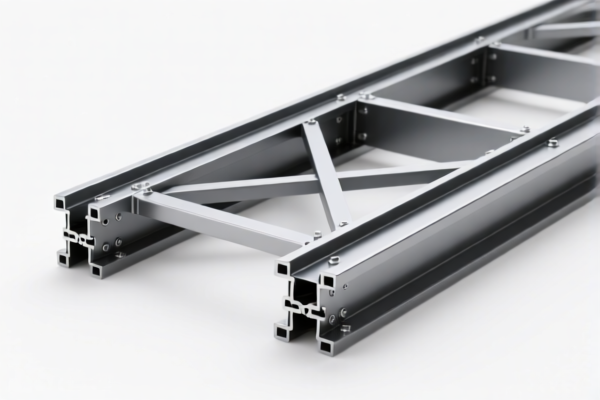
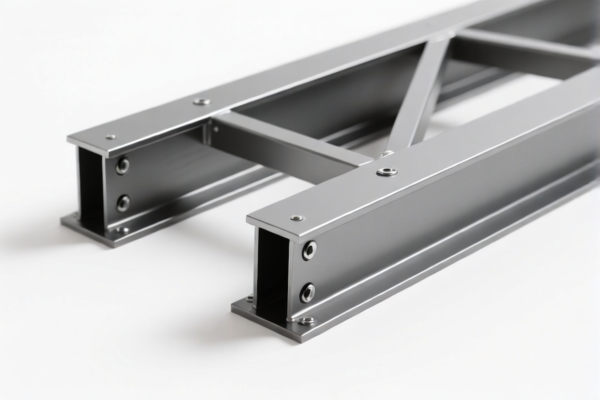
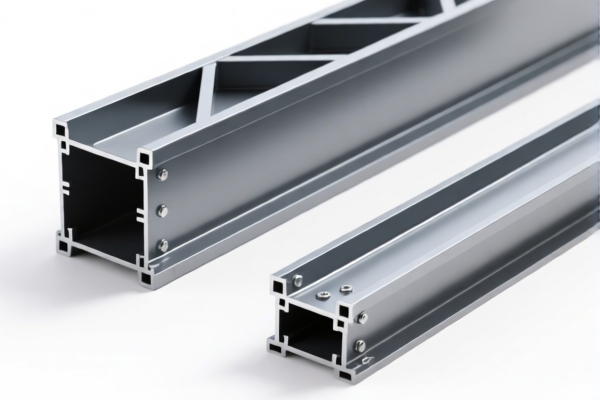
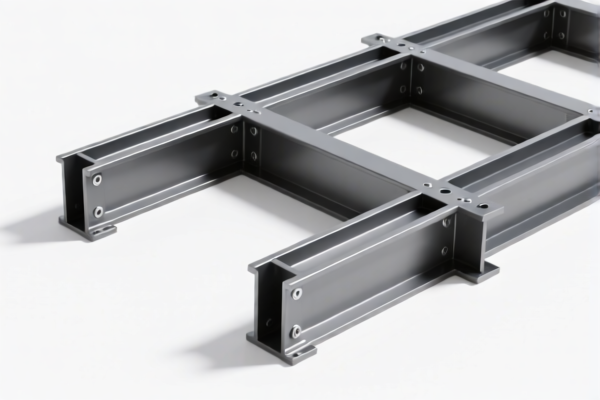
AI Analysis
🏗️ Steel Structures and Parts (Iron/Steel)
🌐 HS Code Reference & Customs Clearance Guide | 2026 Latest Tariff Analysis | Professional通关 Strategy
📌 1. Product Definition and Classification: What Are "Steel Structures"?
Steel structures refer to the framework of buildings, bridges, towers, and other large-scale constructions. Unlike prefabricated buildings (which fall under Heading 9406), these items are primarily composed of iron or steel. They are divided into two main categories for customs purposes:
- Finished Structural Units: Ready-to-assemble components such as towers, lattice masts, columns, pillars, beams, girders, and complete frameworks.
- Prepared Structural Elements: Plates, rods, angles, shapes, sections, and tubes that have been cut, drilled, or shaped specifically for use in structures but are not yet fully assembled.
⚠️ Key Distinction Point:
- If the item is a Tower or Lattice Mast (e.g., radio towers, transmission towers) → Classify under 7308.20
- If the item is a Column, Pillar, Post, Beam, or Girder (e.g., building support columns) → Classify under 7308.90
- Exclusion: Prefabricated buildings (e.g., prefabricated homes, cabins) belong to Heading 9406 and are NOT included here.
📦 2. HS Code Classification Details (2026 Latest Tariff Authority对照)
| HS Code | Product Description | Application Scenario | Specific Item Type |
|---|---|---|---|
7308.20.00.90 |
Structures: Towers and lattice masts (Other) | Radio/TV towers, transmission masts, communication towers, decorative steel towers | 🔹 Towers / Lattice Masts |
7308.90.60.00 |
Structures: Other: Columns, pillars, posts, beams, girders (Other) | Building support columns, steel beams, pillars for bridges, structural posts | 🔹 Columns / Beams / Girders |
🔍 Important Note:
- Both codes fall under Heading 7308: Structures (excluding prefabricated buildings of heading 9406) and parts of structures...
- "Lattice Masts" refer to open-frame structures (like electricity pylons).
- "Columns/Pillars" refer to solid or hollow vertical supports.
- "Beams/Girders" refer to horizontal load-bearing members.
- Even if painted, galvanized, or pre-drilled, if they are ready for use in structures, they fall under 7308.
💰 3. 2026 Latest Tariff Rate Details (Including Additional Taxes)
✅ Applicable Country: United States (US)
✅ Country of Origin: China (CN)
✅ Effective Date: Current policies as of 2025/2026
✅ Tax Detail: Base Tariff: 0.0%, Section 301 Additional Tariff: 25.0%, Steel/Aluminum/Copper Additional Tariff: 50%
🎯 1. 7308.20.00.90 —— Towers and Lattice Masts
| Item | Content |
|---|---|
| Base Tariff | 0% (ad valorem) |
| Section 301 Additional Tariff | +25% (Trade Act Section 301) |
| Uyghur Forced Labor Prevention Act (UFLPA) / Section 232 Steel Tariff | +50% (Specifically for Steel Products) |
| Total Tariff Rate | 75.0% |
| Tax Calculation | CIF Value × 75% |
| De Minimis Exemption Eligibility | ❌ NOT Eligible (High risk of audit; generally not applicable for structural steel from China) |
| Legal Basis Path | HTSUS:7308.20.00.90 → Section 301 Footnote → Section 232 Steel Tariff → Total 75% |
📌 Explanation:
- The 0% base rate is standard for many steel structures.
- The 25% is the standard Section 301 penalty on Chinese goods.
- The 50% is the critical additional tariff for steel products under recent trade measures (often linked to Section 232 or specific retaliatory measures on steel/aluminum).
- Total: 75% is extremely high. This significantly impacts cost-efficiency.
🎯 2. 7308.90.60.00 —— Columns, Pillars, Posts, Beams, Girders
| Item | Content |
|---|---|
| Base Tariff | 0% (ad valorem) |
| Section 301 Additional Tariff | +25% |
| Uyghur Forced Labor Prevention Act (UFLPA) / Section 232 Steel Tariff | +50% (Specifically for Steel Products) |
| Total Tariff Rate | 75.0% |
| Tax Calculation | CIF Value × 75% |
| De Minimis Exemption Eligibility | ❌ NOT Eligible |
| Legal Basis Path | HTSUS:7308.90.60.00 → Section 301 Footnote → Section 232 Steel Tariff → Total 75% |
📌 Note:
- Same tariff structure as towers.
- Applies to all load-bearing steel components for buildings, bridges, etc.
- Even if shipped as loose parts (beams, columns), the 75% rate applies if they are "prepared for use in structures."
🛠️ 4. Customs Clearance Practical Advice (Real-World Pitfall Guide)
✅ 1. Required Documentation Checklist (None Can Be Omitted)
| Document | Mandatory | Description |
|---|---|---|
| ✅ Product Specifications | ✔️ | Detailed drawings, dimensions, material grade (e.g., ASTM A36, A572), weight per piece |
| ✅ Structural Diagrams | ✔️ | Show how parts assemble; prove they are "structural" not just "scrap" |
| ✅ Product Photos | ✔️ | Clear images of labels, coatings (galvanized/painted), and connections |
| ✅ Commercial Invoice | ✔️ | Must explicitly state: "Steel Structures: [Towers/Beams] for Construction, Not Prefabricated Buildings" |
| ✅ Bill of Lading | ✔️ | Accurate weight and volume; avoid vague descriptions like "Steel Parts" |
| ✅ Country of Origin Certificate | ✔️ | Essential for proving origin; if from China, 75% tax applies |
| ✅ UFLPA Compliance Docs | ✔️ | Critical: Supply chain transparency docs to prove no forced labor (especially for steel from Xinjiang) |
✅ 2. Declaration Tips (Key Mantra)
🔥 "Specify Type, Exclude Prefab, Prove Origin, Prepare for 75%!"
| Scenario | Correct Declaration | Wrong Practice |
|---|---|---|
| Steel Tower | 7308.20.00.90 - "Lattice Tower for Communication" |
Vague: "Steel Tower" → May be audited |
| Steel Beam/Column | 7308.90.60.00 - "Steel Column for Building Structure" |
Vague: "Steel Parts" → High audit risk |
| Prefabricated Cabin | NOT 7308 → Use 9406 | Misclassify as 7308 → Penalty + Rejection |
| Scrap Steel | NOT 7308 → Use 7204/7302 | Misclassify as Structure → Tariff Error |
⚠️ Critical Warning:
- Do NOT describe items as "Prefabricated Buildings" if they are just structural components.
- Do NOT omit "Steel" in the description.
- Ensure the material is clearly "Iron or Steel." If it’s aluminum, different codes and tariffs apply.
✅ 3. Special Case Handling
| Scenario | Handling Advice |
|---|---|
| OEM Custom Structures | Provide client design specs + assembly drawings to prove "prepared for structure" |
| Galvanized/Painted Steel | Still classified under 7308. Coating does not change HS Code. |
| Mixed Shipment (Steel + Aluminum) | Separate declarations required. Aluminum may have different tariffs. |
| UFLPA Audit Risk | Steel from China faces high scrutiny. Ensure full supply chain documentation. Non-compliance = Seizure. |
🌍 5. Global Market Comparison (2026 Latest)
| Country/Region | Recommended HS Code | Tariff (China Origin) | Certification Required | Notes |
|---|---|---|---|---|
| 🇺🇸 USA | 7308.20.00.90 / 7308.90.60.00 |
75% (0% Base + 25% + 50% Steel) | None (but UFLPA docs critical) | Highest tariffs globally |
| 🇨🇳 China | 7308.20.00.90 / 7308.90.60.00 |
0% (Export) | GB Standards | N/A for export |
| 🇪🇺 EU | 7308.20.00 / 7308.90.00 |
0% (Most FTA) | CE (if construction product) | Low tariffs, strict CE marking |
| 🇯🇵 Japan | 7308.20.00 / 7308.90.00 |
0-5% | JIS Standards | Preferential rates under JEPAs |
| 🇦🇺 Australia | 7308.20.00 / 7308.90.00 |
0-5% | AS/NZS Standards | Low tariffs |
📌 Conclusion:
- USA imposes the highest combined tariff (75%) on steel structures from China.
- Other markets (EU, Japan, Australia) have significantly lower or zero tariffs.
- Strategic Advice: If targeting the US market, consider supply chain diversification (e.g., manufacturing in Vietnam, Mexico, or Turkey) to avoid the 75% penalty.
📌 6. Common Mistakes & Pitfalls (Lessons Learned)
❌ Mistake 1: Classifying Prefabricated Buildings (e.g., prefab homes) under 7308
👉 Consequence: Wrong HS Code → 200%+ penalty + shipment held.
✅ Correct: Prefab buildings go to 9406.
❌ Mistake 2: Ignoring UFLPA Compliance for Chinese Steel
👉 Consequence: Goods seized at border, delayed for months, or destroyed.
✅ Correct: Provide full supply chain evidence (mill certificates, bill of lading, factory photos).
❌ Mistake 3: Vague Description ("Steel Parts")
👉 Consequence: Customs cannot determine if it’s "structural" or "scrap" → Audit & Delay.
✅ Correct: Use precise terms: "Steel Lattice Tower for Telecommunication" or "Rolled Steel I-Beam for Construction."
❌ Mistake 4: Assuming "Steel" means only Black Steel
👉 Consequence: Stainless steel or aluminum structures have different codes.
✅ Correct: Verify material. If aluminum, use Aluminum Structure codes (e.g., 7610) with different tariffs.
🎯 7. Conclusion: Professional Declaration, Cost Control, Efficiency!
🎯 Remember the Mantra:
🔹 "7308 for Structure, 9406 for Prefab, 75% Tax for China Steel!"
🔹 "Precise Description, Full Compliance, Avoid Seizure!"
🔹 "HS Code Decides Cost, 75% Can Make or Break Your Deal!"
📌 Tips:
- If your steel structures are originally from Vietnam, Mexico, or Turkey, you may avoid the 75% US tariff (subject to FTA rules and UFLPA compliance).
- Apply for Advance Rulings from US Customs (CBP) if unsure about classification.
- For UFLPA, ensure every link in the supply chain is documented.
📣 Action Now:
📞 Contact Professional Customs Broker
📄 Provide Full Supply Chain Docs
🚀 Ensure Smooth Clearance, Minimize Costs, Maximize Profit!
✨ Professional Customs Clearance Starts with Accurate Classification!
💼 Every Penny of Cost Deserves Precise Calculation!
Customer Reviews
About HS Code Classification
The Harmonized System (HS) is an internationally standardized nomenclature developed by the World Customs Organization (WCO) to classify traded products. Over 200 countries use the HS system as the basis for customs tariffs, trade statistics, and import/export regulations.
Each HS code follows a hierarchical structure:
- Chapter (2 digits) — Broad category of goods (e.g., Chapter 84: Machinery and Mechanical Appliances)
- Heading (4 digits) — More specific grouping within the chapter
- Subheading (6 digits) — Internationally standardized breakdown, used by all WCO member countries
- National subdivisions (8-10 digits) — Country-specific extensions for further classification, such as US HTSUS 10-digit codes
Correct HS code classification is essential for smooth customs clearance, accurate duty payment, and compliance with trade regulations. Misclassification can lead to customs delays, overpayment of duties, or penalties.
When importing from CN to US, the applicable tariff rates may include:
- Most-Favored-Nation (MFN) rate — The standard duty rate applied to WTO members
- General rate — Applied to countries without trade agreements
- Trade remedy duties — Additional tariffs such as Section 301 (anti-dumping), Section 232 (national security), or countervailing duties
The information provided on this page is for reference purposes only. For official classification, please consult with your local customs authority or a licensed customs broker.