Steel Wire Mesh
CN → US| HS Code | Tariff Rate | Origin | Destination | Doc |
|---|---|---|---|---|
| 7326908688 | 87.9% | CN | US | Official Doc |
| 7314190100 | 85.0% | CN | US | Official Doc |
| 7326200090 | 88.9% | CN | US | Official Doc |
| 5911203000 | 35.0% | CN | US | Official Doc |
| 5911900080 | 38.8% | CN | US | Official Doc |
| 7314390000 | 85.0% | CN | US | Official Doc |
Product Images


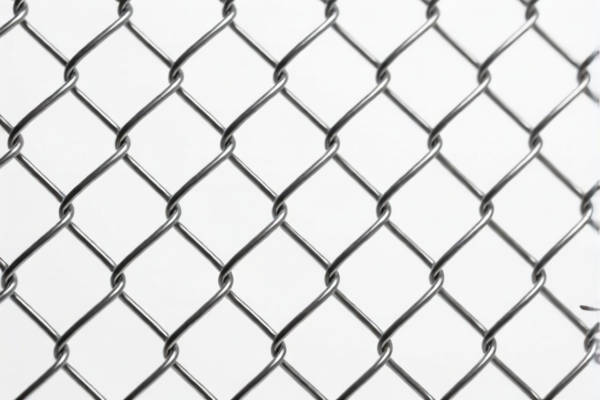
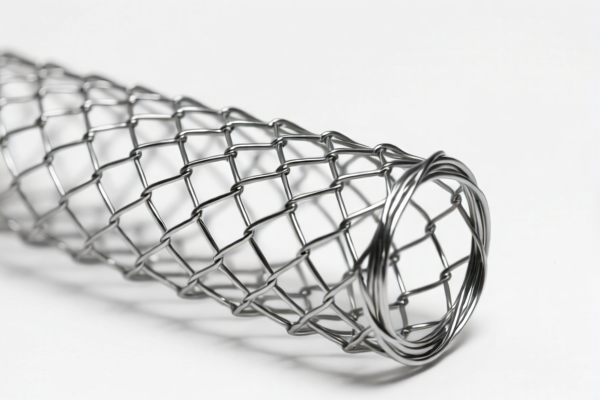
AI Analysis
🕸️ Steel Wire Mesh (Steel Wire Netting)
🌐 HS Code Reference & Customs Clearance Guide | 2026 Latest Tariff Analysis | Professional Compliance Strategy
📌 I. Product Definition & Classification: What Exactly is "Steel Wire Mesh"?
Steel Wire Mesh is a versatile industrial and construction material formed by weaving, welding, or bonding steel wires into a grid-like structure. In international trade, it is often misclassified due to its dual nature—being both a metal product and a technical textile/screen. The correct HS Code depends heavily on: 1. Specific Form: Is it a simple grid (screen), a heavy-duty fence (welded), or a technical filtration medium? 2. Intended Use: General construction vs. specialized industrial screening. 3. Material Weight/Thickness: Heavier gauges often fall under general metal articles, while finer meshes might be argued as technical textiles.
⚠️ Key Distinction Point:
- If it is a general-purpose metal grid (fences, cages, filters) → Look at Chapter 73 (Articles of Iron or Steel).
- If it is primarily used as a technical screening cloth in industrial machinery → Look at Chapter 59 (Textile Articles).
📦 II. HS Code Classification Details (Based on Provided Data)
The following HS Codes are derived from the specific analysis of "Steel Wire Mesh" in the provided dataset. Note the significant variation in tax rates based on classification choice.
| HS Code | Product Description & Logic | Total Tax Rate (Approx.) | Key Tax Components |
|---|---|---|---|
| 7314.19.01.00 | Iron or Steel Wire Mesh Directly matches "Steel Wire Mesh" (Material: Steel, Form: Mesh). Matches the definition of "Mesh of iron or steel wire." |
85.0% | Base: 0% Section 301: 25% Section 122: 10% Section 232 (Steel/Alu/Cu): 50% |
| 7314.39.00.00 | Other Iron/Steel Wire Mesh/Grids Includes meshes, grating, and fences. Matches the "Steel" material and "Mesh" form. |
85.0% | Base: 0% Section 301: 25% Section 122: 10% Section 232 (Steel/Alu/Cu): 50% |
| 7326.90.86.88 | Other Articles of Iron/Steel Non-specific "Steel" article. "Mesh" is not specifically listed elsewhere, so it falls under "Other." |
87.9% | Base: 2.9% Section 301: 25% Section 122: 10% Section 232 (Steel/Alu/Cu): 50% |
| 7326.20.00.90 | Other Iron/Steel Wire Articles Covers wire products other than belts, hooks, or staples. Mesh is "Other" wire article. |
88.9% | Base: 3.9% Section 301: 25% Section 122: 10% Section 232 (Steel/Alu/Cu): 50% |
| 5911.20.30.00 | Technical Textiles / Screening Cloth Argues mesh is a "Technical Textile" for screening. Matches "Other screening cloth." |
35.0% | Base: 0% Section 301: 25% Section 122: 10% (No Section 232 50%) |
| 5911.90.00.80 | Other Technical Textile Products Covers "Other" technical textile products, including metal weaving for industrial use. |
38.8% | Base: 3.8% Section 301: 25% Section 122: 10% (No Section 232 50%) |
🔍 Critical Insight:
- Chapter 73 (7314, 7326): Higher tax rates (85%–89%) because it triggers the 50% Section 232 Tariff on steel/aluminum/copper products plus other duties.
- Chapter 59 (5911): Lower tax rates (35%–39%) by classifying as "Technical Textiles," which avoids the harsh Section 232 steel tariffs. However, this classification requires strong justification that the product is used primarily as a technical screening cloth rather than a structural metal part.
💰 III. 2026 Latest Tariff Rate Breakdown (Detailed Policy Analysis)
✅ Target Market: USA (US)
✅ Origin: China (CN)
✅ Effective Time: Post-2025 policies (including Section 301, IEEPA, and Section 232)
🎯 A. High-Tax Category: Chapter 73 (Metal Articles)
1. 7314.19.01.00 & 7314.39.00.00 – The Most Accurate Fit for General Mesh
- Base Duty: 0% (for 7314) or Low Base (for others)
- Section 301 Duty: +25% (Standard on most Chinese steel products)
- Section 122 Duty: +10% (Specific to steel/aluminum/copper products under certain provisions)
- Section 232 Duty: +50% (The "Steel Tariff" - applies to products of steel)
- Total Effective Rate: ~85.0%
- Calculation:
(CIF Value) × 85% - De Minimis Exemption: ❌ Denied (High-value industrial goods are excluded).
📌 Explanation:
- The 50% Section 232 tariff is the killer here. It applies specifically to "articles of iron or steel." - Section 301 (25%) and Section 122 (10%) stack on top. - Result: Importing steel wire mesh under Chapter 73 is extremely expensive.
2. 7326.90.86.88 & 7326.20.00.90 – "Other" Metal Articles
- Total Effective Rate: 87.9% – 88.9%
- Why Higher? These codes often have a small Base Duty (2.9% or 3.9%) in addition to the 25% + 10% + 50% surcharges.
- Risk: Misclassification as "Other" rather than specific "Mesh" (7314) can lead to higher base rates and potential penalties if Customs disagrees.
🎯 B. Low-Tax Category: Chapter 59 (Technical Textiles)
3. 5911.20.30.00 – Technical Screening Cloth
- Base Duty: 0%
- Section 301 Duty: +25%
- Section 122 Duty: +10%
- Section 232 Duty: $0$ (Not classified as a steel article, but as a textile/screen)
- Total Effective Rate: 35.0%
- Potential Savings: ~50% less tax than Chapter 73 classification.
📌 Explanation:
- This classification argues the mesh is a "screening cloth" used in technical applications (filtration, sifting). - It avoids the 50% Section 232 steel tariff entirely. - Risk: Customs may reject this if the mesh is thick, structural, or clearly a metal construction material rather than a flexible screen.
4. 5911.90.00.80 – Other Technical Textiles
- Total Effective Rate: 38.8%
- Base Duty: 3.8%
- Surcharge: 25% (301) + 10% (122)
- Note: Slightly higher than 5911.20 due to the base duty, but still significantly cheaper than Chapter 73.
🛠️ IV. Customs Clearance Practical Advice (Avoid Pitfalls)
✅ 1. Documentation Checklist (Essential)
| Document | Required? | Purpose |
|---|---|---|
| ✅ Product Specification Sheet | ✔️ | Must detail wire diameter, mesh opening size, material grade (e.g., SS304, Carbon Steel). |
| ✅ Photos (Clear & Detailed) | ✔️ | Show the mesh structure. Is it welded? Woven? Fine enough to be a "screen"? |
| ✅ Intended Use Statement | ✔️ | Crucial for Chapter 59. If claiming 35% tax, state: "Used as industrial screening cloth for filtration processes." |
| ✅ Commercial Invoice | ✔️ | Must clearly describe as "Steel Wire Mesh" or "Technical Screening Mesh." Avoid vague terms. |
| ✅ Certificate of Origin | ✔️ | To prove Chinese origin (subject to tariffs). |
| ✅ Third-Party Test Report | ✔️ | If claiming Chapter 59, prove it meets technical textile/screening standards. |
✅ 2. Declaration Strategy (The "Goldilocks" Approach)
🔥 Rule of Thumb:
"Heavy/Structural = Ch.73 (85%+); Fine/Filtration = Ch.59 (35-39%)"
| Scenario | Recommended HS Code | Tax Rate | Reasoning |
|---|---|---|---|
| Welded Mesh Fence (Heavy gauge, construction) | 7314.39.00.00 |
~85% | Clearly a construction metal article. Cannot be a textile. |
| Fine Wire Filter Mesh (Industrial filtration) | 5911.20.30.00 |
~35% | Argue as "Technical Screening Cloth." Avoids 50% steel tariff. |
| General Purpose Hardware Cloth | 7314.19.01.00 |
~85% | Standard classification for wire mesh not specifically elsewhere. |
| Unspecified "Steel Net" | 7326.90.86.88 |
~88% | Risky. High base rate. Avoid if possible. |
✅ 3. Special Considerations
| Situation | Advice |
|---|---|
| OEM Custom Mesh | Provide design specs. If it's a custom filter, lean towards Chapter 59. |
| Mixed Shipments | If shipping both fences (Ch73) and filter mesh (Ch59) together, separate lines on the invoice to apply different duties. |
| Section 232 Exemptions | Check if your specific steel grade or product form is exempt from the 50% tariff. Some specialized alloys may qualify. |
| Pre-Ruling Application | Highly Recommended! For large volumes, apply for an Advance Ruling with CBP to confirm if your mesh qualifies as Chapter 59 (35%) or Chapter 73 (85%). |
🌍 V. Global Market Comparison (2026 Context)
| Market | Recommended HS Code | Est. Total Duty | Notes |
|---|---|---|---|
| 🇺🇸 USA | 5911.20.30.00 (If eligible) |
35.0% | Avoid Ch73 if possible due to 50% Section 232. |
| 🇨🇳 China (Import) | 7314.19.00.00 |
~5-10% | Lower tariffs. No Section 232/301. |
| 🇪🇺 EU | 7314.19.00.00 |
~6.5% | No Section 232 equivalent. Standard MFN rate. |
| 🇮🇳 India | 7314.19.00.00 |
~10-15% | High basic customs duty, but no US-style surcharges. |
📌 Key Takeaway:
The USA is the most challenging market due to the layered tariffs (301 + 122 + 232). The Chapter 59 loophole (Technical Textiles) is the only viable way to reduce costs below 40%, but it requires strict compliance with "technical screen" definitions.
📌 VI. Common Mistakes & How to Avoid Them
❌ Mistake 1: Declaring "Steel Wire Mesh" as general "Steel Articles" (7326)
👉 Consequence: Higher base duty (2.9-3.9%) + full surcharges → 88%+ Tax.
👉 Fix: Use specific code 7314 if it doesn't qualify for Ch59.
❌ Mistake 2: Misdeclaring Structural Fencing Mesh as "Textile Screen" (5911)
👉 Consequence: Customs seizure, penalties, and retroactive tax at 85% + fines.
👉 Fix: Only use Ch59 for fine, flexible, filtration-focused mesh.
❌ Mistake 3: Ignoring Section 122 & 232 Stacking
👉 Consequence: Unexpected bills at border.
👉 Fix: Always calculate: Base + 25% (301) + 10% (122) + 50% (232 for Ch73).
🎯 VII. Conclusion: Smart Classification Saves Money
🎯 Final Advice:
🔹 If your mesh is for filtration/sieving: Fight for
5911.20.30.00(35% Tax). Provide technical specs proving it's a "screen."
🔹 If your mesh is for construction/fencing: Accept7314.19.01.00(85% Tax). No legal way around the steel tariffs.
🔹 Never guess: A wrong HS Code can cost you 50% more in duties.
📌 Pro Tip:
For high-volume imports, apply for a Binding Tariff Ruling with U.S. Customs and Border Protection (CBP). Present your mesh as a "technical screening cloth" to see if you can secure the lower 35% rate legally.
📣 Act Now:
📞 Consult a licensed customs broker.
📄 Gather product specs and usage photos.
🚀 Optimize your HS Code choice to save thousands in duties.
✨ Precision in Classification, Profit in Your Pocket!
💼 Don’t let tariffs eat your margin. Classify correctly.
Customer Reviews
About HS Code Classification
The Harmonized System (HS) is an internationally standardized nomenclature developed by the World Customs Organization (WCO) to classify traded products. Over 200 countries use the HS system as the basis for customs tariffs, trade statistics, and import/export regulations.
Each HS code follows a hierarchical structure:
- Chapter (2 digits) — Broad category of goods (e.g., Chapter 84: Machinery and Mechanical Appliances)
- Heading (4 digits) — More specific grouping within the chapter
- Subheading (6 digits) — Internationally standardized breakdown, used by all WCO member countries
- National subdivisions (8-10 digits) — Country-specific extensions for further classification, such as US HTSUS 10-digit codes
Correct HS code classification is essential for smooth customs clearance, accurate duty payment, and compliance with trade regulations. Misclassification can lead to customs delays, overpayment of duties, or penalties.
When importing from CN to US, the applicable tariff rates may include:
- Most-Favored-Nation (MFN) rate — The standard duty rate applied to WTO members
- General rate — Applied to countries without trade agreements
- Trade remedy duties — Additional tariffs such as Section 301 (anti-dumping), Section 232 (national security), or countervailing duties
The information provided on this page is for reference purposes only. For official classification, please consult with your local customs authority or a licensed customs broker.