Steel wire rope
CN → US| HS Code | Tariff Rate | Origin | Destination | Doc |
|---|---|---|---|---|
| 7312103080 | 85.0% | CN | US | Official Doc |
| 7312109090 | 85.0% | CN | US | Official Doc |
| 8307106000 | 38.8% | CN | US | Official Doc |
| 8307103000 | 38.8% | CN | US | Official Doc |
Product Images


AI Analysis
🌐 Steel Wire Rope: Global Trade Classification & Tariff Survival Guide (2026)
🔥 HS Code Deep Dive | 85% vs 38.8% Tax Trap | Expert Clearance Strategy
📌 I. Product Definition: What is "Steel Wire Rope"?
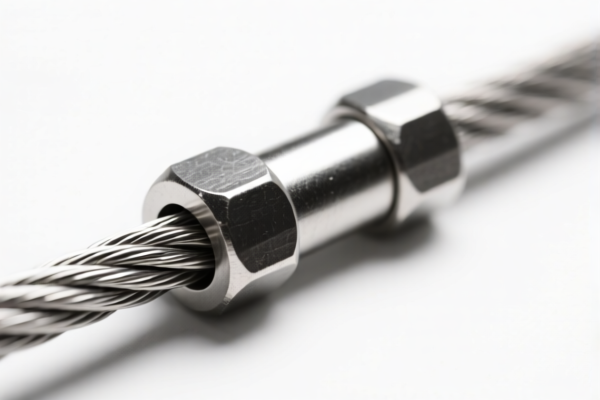
Steel Wire Rope is a critical industrial component consisting of multiple steel wires twisted or laid into strands, which are then wound around a core. It is the "muscle" of lifting, towing, and suspension systems.
In international trade, classification is NOT just about the material (Steel) or the form (Rope); it hinges on Function, Diameter, and End-Use.
⚠️ The Critical Pivot:
- If it's a high-strength, multi-strand lifting or structural rope → Often Chapter 73 (Steel Products).
- If it's a general-purpose textile-like rope or fastener → Often Chapter 83 (Miscellaneous Metals).
❌ Misclassification leads to a 46.2% tax penalty difference!
📦 II. HS Code Classification Breakdown (Based on Your Data)
| HS Code | Product Description (Based on Input) | Key Classification Logic | Total Tax Rate |
|---|---|---|---|
7312.10.30.80 |
High-Strength Steel Wire Rope (Steel, Rope Form) | Fallback Logic: Matches "Other" category for steel wire products not specified elsewhere. High structural integrity implied. | 85.0% |
7312.10.90.90 |
High-Strength Steel Wire Rope (Steel, Rope/Cable Form) | Exact Match: "Rope/Cable" explicitly matches the definition. The "90" suffix often denotes "Other" or specific high-strength variants. | 85.0% |
8307.10.60.00 |
High-Strength Steel Wire Rope (Steel, Rope Form) | Inference Logic: Classified under "Other" metal articles where material and form match but specific sub-codes apply. Lower base duty. | 38.8% |
8307.10.30.00 |
High-Strength Steel Wire Rope (Steel, Rope Form) | Material & Form Match: Direct alignment with steel rope specifications under Chapter 83. | 38.8% |
🔍 The "Tax War" Analysis:
- Group A (73xx): Taxed at 85% due to "Steel Products" classification + Heavy US Section 232/301 penalties.
- Group B (83xx): Taxed at 38.8% due to "Miscellaneous Metals" classification + Lighter Section 232 penalties.
🚨 Critical Insight: Choosing the correct HS Code can save you 46.2% on every single unit!
💰 III. 2026 Tariff & Tax Detail Breakdown
🏗️ A. The Heavy Burden: HS Codes 7312.10.30.80 & 7312.10.90.90
Total Tax: 85.0%
Why so high? This is a "Perfect Storm" of tariffs.
| Tax Component | Rate | Legal Basis & Detail |
|---|---|---|
| Base Duty | 0.0% | Standard MFN (Most Favored Nation) rate is often 0% for steel wires under Chapter 73. |
| Section 301 / "Add-On" Duty | 25.0% | US Trade Representative (USTR) Section 301 List 3/4: Retaliatory tariff on Chinese steel products. |
| Section 232 ("122 Clauses") | 50.0% | Critical! Under "122 Clauses" (Section 232 Steel & Aluminum), a specific 50% surcharge applies to Steel, Aluminum, and Copper products. |
| Total Effective Tax | 85.0% | 0% + 25% + 50% = 85% |
📌 Explanation:
The 50% surcharge is the deal-breaker. Under the "Steel & Aluminum" 232 rules, almost all steel wire ropes in Chapter 73 are flagged as "steel products" requiring this massive surcharge.
🛠️ B. The Strategic Alternative: HS Codes 8307.10.60.00 & 8307.10.30.00
Total Tax: 38.8%
How to achieve this? Move away from "Steel Products" chapter.
| Tax Component | Rate | Legal Basis & Detail |
|---|---|---|
| Base Duty | 3.8% | Standard duty for "Miscellaneous Articles of Base Metal" (Chapter 83). |
| Section 301 / "Add-On" Duty | 25.0% | Similar Section 301 add-on applies to Chinese metal goods in this category. |
| Section 232 ("122 Clauses") | 10.0% | Crucial Difference! The 10% surcharge applies (likely under a specific "10% steel, aluminum, copper" provision or a different sub-category exemption). |
| Total Effective Tax | 38.8% | 3.8% + 25.0% + 10.0% = 38.8% |
📌 Explanation:
- The 10% surcharge (vs. 50%) suggests these codes might be classified as "Ropes" (textile-like) or specific non-structural metal articles, allowing them to bypass the heavy "Steel Product" 50% penalty. - Strategy: If the rope is used for general lashing, towing, or non-load-bearing structural purposes, argue for Chapter 83 to save 46.2% tax.
🛠️ IV. Customs Clearance Strategy & Actionable Advice
✅ 1. Pre-Shipment Classification Audit
Before you ship, ask: "Is this rope structural steel or a general metal rope?" - High-Strength Lifting/Load-Bearing: Likely Chapter 73 (85% tax). Risk: High. - General Towing/Fishing/Mooring: Likely Chapter 83 (38.8% tax). Risk: Low (if defensible). - Action: Review the Technical Data Sheet. If it lacks specific "wire rope" structural specs, push for 8307.
✅ 2. Documentation Checklist (Must-Have)
| Document | Requirement | Purpose |
|---|---|---|
| Product Specification | Mandatory | Must explicitly state: "Material: Steel", "Form: Rope", "Usage: General Towing/Industrial". Avoid generic "Wire Rope" if possible. |
| Technical Drawing | Mandatory | Show wire diameter, strand count. If it looks like a cable, argue for 8307. |
| Commercial Invoice | Mandatory | DO NOT write "Steel Wire Rope" blindly. Use descriptive terms like "Steel Cable for General Use" if qualifying for 8307. |
| Certificate of Origin | Mandatory | Verify China origin to confirm Section 301/232 applicability. |
✅ 3. Declaration Tactics (The "Golden Rule")
🔥 Rule: "Form and Function Dictate Tax Class!"
| Scenario | Recommended HS Code | Declaration Tip |
|---|---|---|
| Construction/Lifting | 7312.10.x0.xx |
Avoid if possible. If unavoidable, prepare for 85% tax. |
| Marine/Mooring | 8307.10.x0.xx |
Declare as "Mooring Rope" or "Towing Cable" to justify Chapter 83. |
| Industrial Machinery Parts | 8307.10.x0.xx |
Argue it is a "Fitting" or "Accessory" rather than a raw steel product. |
✅ 4. Special Warning: The "Steel" Trap
- Warning: Even if you choose 8307, if the rope contains >60% steel by weight and is used for structural support, US Customs may reclassify it to 7312, demanding back taxes + penalties.
- Mitigation: Provide Engineering Certificates proving the rope is non-structural (e.g., for securing lightweight loads only).
🌍 V. Global Market Comparison (2026)
| Market | Primary HS Code | Tax Rate (China Origin) | Status |
|---|---|---|---|
| 🇺🇸 USA | 7312 (High Tax) / 8307 (Medium Tax) |
85% vs 38.8% | ⚠️ High Risk - 232 Steel Penalty |
| 🇨🇳 China | 7312 |
~3-5% | ✅ Low Risk - No Section 232 |
| 🇪🇺 EU | 7312 |
~0% + VAT | ✅ Low Risk - No Section 232 (mostly) |
| 🇯🇵 Japan | 7312 |
~0-3% | ✅ Low Risk |
📌 Conclusion:
USA is the only market where the 50% Section 232 penalty applies to steel wire ropes, creating a massive tax cliff. - Strategy: If shipping to the US, aggressively pursue the 8307 classification (38.8%) unless the rope is a certified high-strength lifting cable (where 7312 is mandatory).
🚨 VI. Common Mistakes & How to Avoid Them
❌ Mistake 1: Blindly declaring "Steel Wire Rope" under 7312
👉 Result: Paying 85% tax.
👉 Fix: Analyze usage. If it's not heavy-lifting, push for 8307.
❌ Mistake 2: Ignoring the "122 Clauses"
👉 Result: Surprise 50% surcharge on top of 25%.
👉 Fix: Check the "Steel & Aluminum" list status before shipping.
❌ Mistake 3: Mixing "Steel" and "Textile" Ropes
👉 Result: Customs rejects the 8307 claim.
👉 Fix: Ensure the product is purely metal but classified under "miscellaneous" due to form, not structure.
🎯 VII. Expert Conclusion
🚀 Your Move:
1. Audit your product specs: Is it structural (7312) or general (8307)?
2. Calculate:85%(7312) vs38.8%(8307). Save 46.2%.
3. Declare: Use precise terms like "Steel Towing Cable" instead of generic "Wire Rope" for 8307 eligibility.
4. Verify: Ensure no "lifting" or "load-bearing" keywords trigger the 50% steel penalty.
✨ Professional Clearance Starts with Precision!
💼 Don't let a 46% tax gap eat your profit!
📞 Contact a customs broker to validate your HS Code choice BEFORE loading.
Note: Tax rates and regulations (Section 301, Section 232) are subject to change. Always verify with the latest US Customs and Border Protection (CBP) rulings for 2026.
Customer Reviews
About HS Code Classification
The Harmonized System (HS) is an internationally standardized nomenclature developed by the World Customs Organization (WCO) to classify traded products. Over 200 countries use the HS system as the basis for customs tariffs, trade statistics, and import/export regulations.
Each HS code follows a hierarchical structure:
- Chapter (2 digits) — Broad category of goods (e.g., Chapter 84: Machinery and Mechanical Appliances)
- Heading (4 digits) — More specific grouping within the chapter
- Subheading (6 digits) — Internationally standardized breakdown, used by all WCO member countries
- National subdivisions (8-10 digits) — Country-specific extensions for further classification, such as US HTSUS 10-digit codes
Correct HS code classification is essential for smooth customs clearance, accurate duty payment, and compliance with trade regulations. Misclassification can lead to customs delays, overpayment of duties, or penalties.
When importing from CN to US, the applicable tariff rates may include:
- Most-Favored-Nation (MFN) rate — The standard duty rate applied to WTO members
- General rate — Applied to countries without trade agreements
- Trade remedy duties — Additional tariffs such as Section 301 (anti-dumping), Section 232 (national security), or countervailing duties
The information provided on this page is for reference purposes only. For official classification, please consult with your local customs authority or a licensed customs broker.