Steelmaking Furnace Parts
CN → US| HS Code | Tariff Rate | Origin | Destination | Doc |
|---|---|---|---|---|
| 8417900000 | 38.9% | CN | US | Official Doc |
| 6902201010 | 35.0% | CN | US | Official Doc |
| 8417100000 | 37.9% | CN | US | Official Doc |
| 7304390004 | 10.0% | CN | US | Official Doc |
| 8417900000 | 38.9% | CN | US | Official Doc |
Product Images
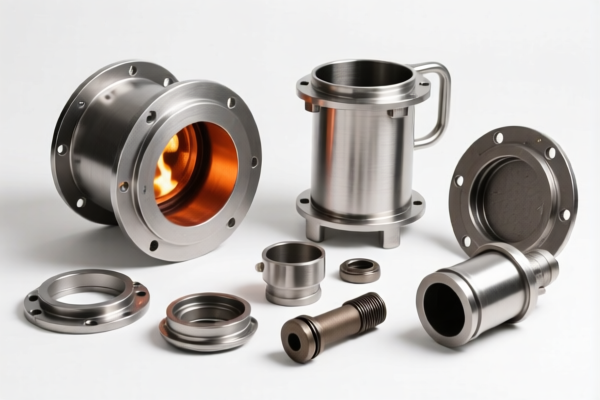
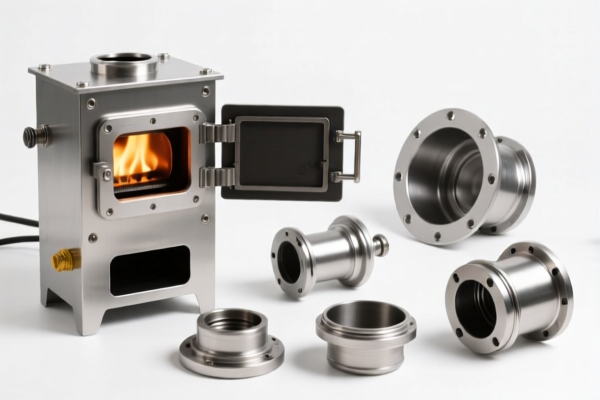
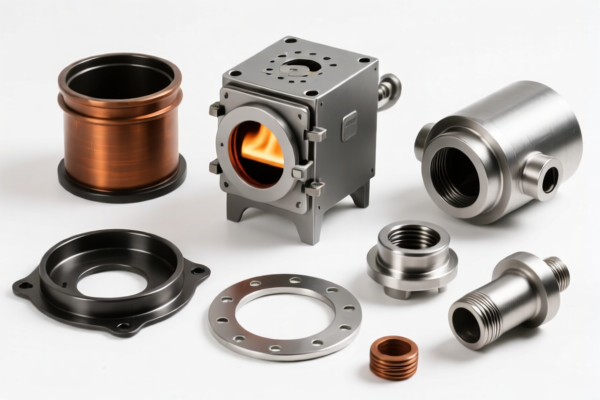
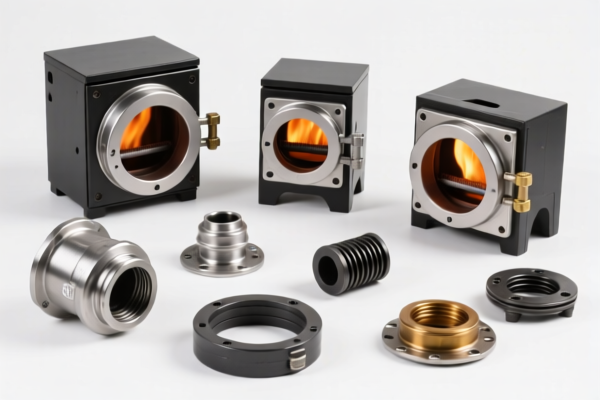
AI Analysis
🏭 Steelmaking Furnace Parts (炼钢炉用零件)
🌐 HS Code Reference & Customs Clearance Guide | 2026 Latest Tariff Analysis | Professional Clearance Strategy
📌 I. Product Definition: What Exactly Are "Steelmaking Furnace Parts"?
Steelmaking furnace parts are critical components used in the manufacturing of steel, primarily serving Electric Arc Furnaces (EAF), Basic Oxygen Furnaces (BOF), or Induction Furnaces. These parts can be broadly categorized into:
- Structural/Metal Components: Frames, covers, electrodes holders, and pipes made of steel or cast iron.
- Refractory/Heat-Resistant Components: Linings, bricks, or ceramic inserts designed to withstand extreme temperatures.
- Specialized Machinery Parts: Specific attachments for lifting, tilting, or processing molten metal.
⚠️ Key Classification Challenge:
The HS Code depends heavily on material composition (metal vs. ceramic) and specific function (part of machinery vs. general pipe). Misclassification can lead to significant tariff differences, especially under Section 301 and IEEPA measures.
📦 II. HS Code Classification Details (2026 Latest Tariff Authority)
Based on the provided data, here are the five potential classifications for "Steelmaking Furnace Parts," ranging from specific machinery parts to general metal goods.
| HS Code | Product Description | Application Scenario | Material/Logic |
|---|---|---|---|
8417.90.00.00 |
Parts of Industrial Furnaces (Primary Classification) | General parts for steelmaking furnaces (EAF, BOF), matching the primary function of the furnace. | Default Preference: "Parts of machinery" takes precedence if specifically designed for the furnace. |
8417.10.00.00 |
Parts of Heat Treatment Furnaces | Parts specifically for metal heat treatment furnaces (if the "steelmaking" process is classified as heat treatment in this context). | Matches the definition of "Metal Heat Treatment Furnace" accessories. |
6902.20.10.10 |
Refractory Insulating Bricks (Fallback Category) | High-temperature refractory materials or metal components inferred for high-temp scenarios. | Fallback: If deemed a "refractory material" rather than a mechanical part. |
7304.39.00.04 |
Tubes, Pipes & Hollow Profiles (Iron/Steel) | Parts inferred to be made of iron or non-alloy steel, classified as "Refining Furnace Accessories" based on material. | Material-Based: If the part is essentially a pipe/tube of iron/steel, even if used in a furnace. |
8417.90.00.00 |
Cast Iron Furnace Accessories | Accessories made of cast iron for furnaces. | Material Specific: Explicitly mentions "Cast Iron" and "Accessories" matching mechanical parts. |
🔍 Key Reminder:
-8417(Machinery Parts) is generally the preferred classification for specific furnace components because it reflects the function.
-7304(Pipes/Tubes) or6902(Refractories) are fallbacks based on material or generic shape.
- Always prioritize functional classification (8417) unless the item is a generic commodity (like a standard steel pipe) used incidentally in a furnace.
💰 III. 2026 Latest Tariff Rate Breakdown (Including Surtaxes)
✅ Applicable Country: United States (US)
✅ Origin: China (CN)
✅ Effective Date: Post-2025 (Including subsequent imports)
🎯 1. 8417.90.00.00 & 8417.10.00.00 —— Parts of Industrial/Heat Treatment Furnaces
These are the most common classifications for specific furnace components.
| Item | Content |
|---|---|
| Base Tariff | 3.9% (8417.90) or 2.9% (8417.10) (Ad Valorem) |
| Section 301 Surtax | +25% (From USITC Footnote related to HTS 8417) |
| IEEPA Surtax | +10% (Against China/HK products, effective from Nov 10, 2025) |
| 122-Clause Tariff | +10% (Specific to certain industrial goods from China) |
| Total Effective Rate | 37.9% (8417.10) or 38.9% (8417.90) |
| Tax Calculation | CIF Value × Total Rate |
| De Minimis Eligibility | ❌ No (Denied) |
| Legal Basis Path | IEEPA:9903.01.25 → IEEPA:9903.01.24 → USITC:8417.x0.00.00 → FOOTNOTE:9903.88.01 |
📌 Explanation:
- The 25% is the standard Section 301 tariff on machinery parts.
- The 10% IEEPA is the new layer on top for Chinese goods.
- The 10% 122-Clause tariff is specific to certain industrial categories.
- Total: ~38-39%. This is a high-cost category. You must budget for this.
🎯 2. 6902.20.10.10 —— Refractory Insulating Materials (Fallback)
| Item | Content |
|---|---|
| Base Tariff | 0.0% (Ad Valorem) |
| Section 301 Surtax | +25% |
| IEEPA Surtax | +10% |
| 122-Clause Tariff | +10% |
| Total Effective Rate | 35.0% |
| Tax Calculation | CIF Value × 35% |
| De Minimis Eligibility | ❌ No |
| Legal Basis Path | IEEPA:9903.01.25 → IEEPA:9903.01.24 → USITC:6902.20.10.10 |
📌 Note:
- Slightly lower than8417because the base tariff is 0%.
- However, misclassifying a mechanical part as a refractory brick can lead to customs penalties if audited.
🎯 3. 7304.39.00.04 —— Iron/Steel Tubes & Pipes (Material-Based)
| Item | Content |
|---|---|
| Base Tariff | 0.0% (Ad Valorem) |
| Section 301 Surtax | 0.0% |
| IEEPA Surtax | +10% |
| 122-Clause Tariff | +10% |
| Total Effective Rate | 10.0% |
| Tax Calculation | CIF Value × 10% |
| De Minimis Eligibility | ❌ No |
| Legal Basis Path | IEEPA:9903.01.25 → IEEPA:9903.01.24 → USITC:7304.39.00.04 |
📌 Critical Insight:
- ONLY 10% Total! This is the most tax-efficient classification.
- Risk: This classification is only valid if the part is essentially a standard pipe or tube made of iron/non-alloy steel.
- If the part is a complex, custom-machined component (e.g., a furnace door hinge), it cannot be classified here. It must go to8417.
- Strategy: If your part is a simple pipe/tube, use7304.39.00.04to save ~28-29% in tariffs. If it’s a complex machine part, you must use8417.
🎯 4. 8417.90.00.00 (Cast Iron Specific) —— Cast Iron Furnace Accessories
| Item | Content |
|---|---|
| Base Tariff | 3.9% |
| Section 301 Surtax | +25% |
| IEEPA Surtax | +10% |
| 122-Clause Tariff | +10% |
| Total Effective Rate | 38.9% |
| Tax Calculation | CIF Value × 38.9% |
| De Minimis Eligibility | ❌ No |
📌 Note:
- Same tax burden as general8417.90, but explicitly mentions Cast Iron.
- Use this if the part is specifically cast iron and not just general steel.
🛠️ IV. Customs Clearance Practical Advice (Battle-Tested Pitfall Avoidance)
✅ 1. Documentation Checklist (Mandatory)
| Document | Required | Notes |
|---|---|---|
| ✅ Product Specification Sheet | ✔️ | Must detail dimensions, material (e.g., "Carbon Steel," "Cast Iron," "Refractory Ceramic"), and weight. |
| ✅ Engineering Drawings | ✔️ | Crucial for proving if the item is a "general pipe" (7304) or a "specialized machine part" (8417). |
| ✅ Product Photos (Labeled) | ✔️ | Show the part installed in the furnace to prove its function. |
| ✅ Commercial Invoice | ✔️ | Describe item as "Steelmaking Furnace Part" or "Cast Iron Furnace Accessory," NOT just "Steel Pipe." |
| ✅ Packing List | ✔️ | Ensure no mixed shipments with unrelated goods that could confuse the classifier. |
| ✅ Certificate of Origin | ✔️ | Required for IEEPA and 122-Clause assessments. |
✅ 2. Declaration Strategy (Key Tips)
🔥 "Function First, Material Second, Be Specific or Pay More!"
| Scenario | Recommended HS Code | Incorrect Approach | Result |
|---|---|---|---|
| Custom-machined furnace door, hinge, or arm | 8417.90.00.00 |
Declaring as "Steel Part" or "Pipe" | 38.9% (Correct, but high) |
| Standard steel pipe used to transport water/air to the furnace | 7304.39.00.04 |
Declaring as "Furnace Part" | 10.0% (Save money! Use if truly a standard pipe.) |
| Refractory bricks/linings | 6902.20.10.10 |
Declaring as "Steel Part" | 35.0% (Lower than 8417, but verify material.) |
| Mixed shipment (Pipe + Custom Part) | Split Declaration | Bundling into one line | Risk of audit, higher rate applied to whole batch |
✅ 3. Special Cases & Risk Management
| Situation | Handling Advice |
|---|---|
| OEM Parts for Steel Mills | Provide customer PO and technical specs. Prove the part is exclusively for furnace use → Support 8417. |
| Generic Pipes Used in Furnaces | If the pipe is a standard commercial grade (e.g., Schedule 40 steel pipe), declare as 7304.39.00.04 to get 10%. Do NOT call it a "Furnace Part." |
| Refractory Components | If the part is ceramic or high-temp alloy, use 6902.20.10.10. Provide material safety data sheets (MSDS) if required. |
| Dual-Use Items | If a part could be for a boiler or a furnace, lean towards the primary end-user industry. For steelmaking, 8417 is safer. |
🌍 V. Global Market Comparison (2026)
| Country/Region | Recommended HS Code | Tariff Rate | Notes |
|---|---|---|---|
| 🇺🇸 USA | 8417.90.00.00 / 7304.39.00.04 |
38.9% or 10.0% | Critical: Use 7304 if applicable to save 28%. Section 301 + IEEPA + 122 apply. |
| 🇨🇳 China | 8417.90 |
~5-10% | Import duties for raw materials/parts may be lower. No Section 301. |
| 🇪🇺 EU | 8417.90 |
0-2% | No major retaliatory tariffs on furnace parts. |
| 🇮🇳 India | 8417.90 |
~7.5-10% | Basic customs duty + social welfare surcharge. |
| 🇻🇳 Vietnam | 8417.90 |
0-5% | Potential for lower tariffs if assembled locally. |
📌 Conclusion:
- USA is the most expensive market due to layered tariffs (301 + IEEPA + 122).
- Strategic Optimization: If your product is a standard pipe/tube, classify under7304to reduce tariffs from ~39% to 10%.
- For complex, custom parts, you have no choice but8417. Budget accordingly.
📌 VI. Common Errors & Pitfalls (Lessons Learned)
❌ Error 1: Declaring a custom furnace hinge as a "Steel Pipe"
👉 Consequence: Customs audits find the part is not a standard pipe → Back taxes + Penalties at 38.9%.
❌ Error 2: Declaring a standard pipe as a "Furnace Part"
👉 Consequence: Overpaying taxes. You paid 38.9% instead of 10%. Loss of profit.
❌ Error 3: Ignoring the 122-Clause Tariff
👉 Consequence: The 10% 122-Clause tariff is new. If missed, you face immediate payment demand + interest.
❌ Error 4: Not providing Drawings
👉 Consequence: Customs cannot distinguish between 8417 (Machine Part) and 7304 (Pipe) → Delays or incorrect assessment.
✅ Correct Approach:
"Custom Steel Furnace Door Hinge, Model XYZ, Made of Carbon Steel, For Electric Arc Furnace" →
8417.90.00.00
"Standard Carbon Steel Pipe, Schedule 40, 10-inch Diameter, For Furnace Cooling System" →7304.39.00.04
🎯 VII. Conclusion: Precision Classification Saves Money!
🎯 Remember the Golden Rules:
🔹 "Custom Part = 8417 (High Tax) | Standard Pipe = 7304 (Low Tax)"
🔹 "122-Clause is Real: 10% Extra!"
🔹 "Total Tax for 8417: ~39%. Total Tax for 7304: ~10%."
📌 Pro Tip:
If you are importing standard pipes used in furnaces, do not label them as "Furnace Parts." Label them as "Steel Pipes." This small change can save you ~29% in tariffs.
For complex parts, ensure your engineering drawings clearly show the specific fit for the furnace to justify 8417.
📣 Immediate Action:
📞 Consult a Customs Broker to review your Bill of Lading and Invoice.
📊 Request a Pre-Ruling from CBP if the item is borderline between8417and7304.
🚀 Optimize your HS Code to avoid overpayment or underpayment penalties!
✨ Professional Clearance, Start with Accurate Classification!
💼 Every percentage point saved is pure profit!
Customer Reviews
About HS Code Classification
The Harmonized System (HS) is an internationally standardized nomenclature developed by the World Customs Organization (WCO) to classify traded products. Over 200 countries use the HS system as the basis for customs tariffs, trade statistics, and import/export regulations.
Each HS code follows a hierarchical structure:
- Chapter (2 digits) — Broad category of goods (e.g., Chapter 84: Machinery and Mechanical Appliances)
- Heading (4 digits) — More specific grouping within the chapter
- Subheading (6 digits) — Internationally standardized breakdown, used by all WCO member countries
- National subdivisions (8-10 digits) — Country-specific extensions for further classification, such as US HTSUS 10-digit codes
Correct HS code classification is essential for smooth customs clearance, accurate duty payment, and compliance with trade regulations. Misclassification can lead to customs delays, overpayment of duties, or penalties.
When importing from CN to US, the applicable tariff rates may include:
- Most-Favored-Nation (MFN) rate — The standard duty rate applied to WTO members
- General rate — Applied to countries without trade agreements
- Trade remedy duties — Additional tariffs such as Section 301 (anti-dumping), Section 232 (national security), or countervailing duties
The information provided on this page is for reference purposes only. For official classification, please consult with your local customs authority or a licensed customs broker.