Steering Wheel Lock with Alarm
CN → US| HS Code | Tariff Rate | Origin | Destination | Doc |
|---|---|---|---|---|
| 8708947000 | 35.0% | CN | US | Official Doc |
| 8708947550 | 0.0% | CN | US | Official Doc |
| 8301200030 | 40.7% | CN | US | Official Doc |
| 7326908688 | 87.9% | CN | US | Official Doc |
| 7326190080 | 87.9% | CN | US | Official Doc |
Product Images
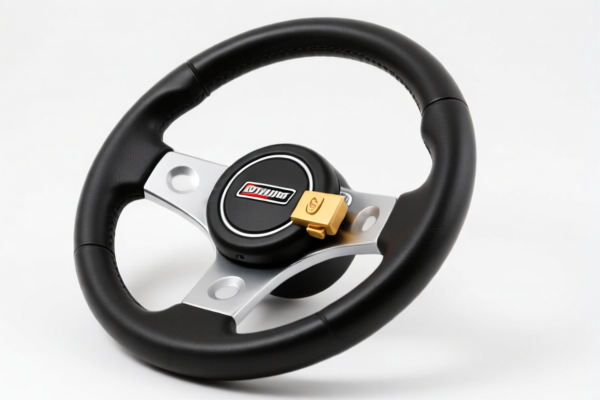
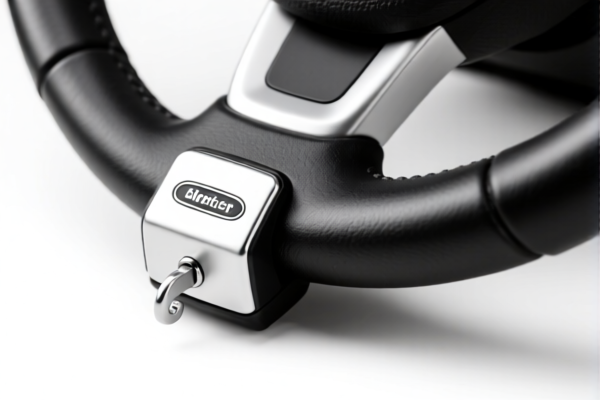
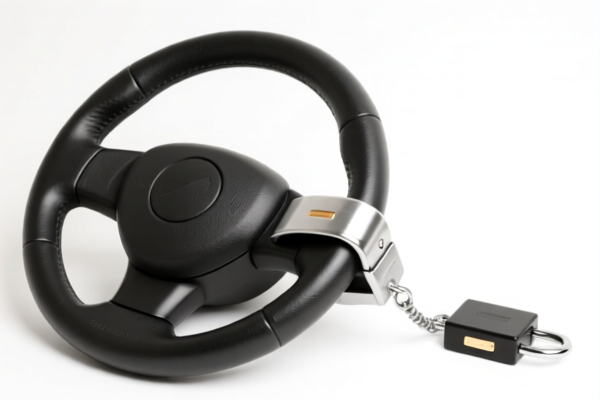
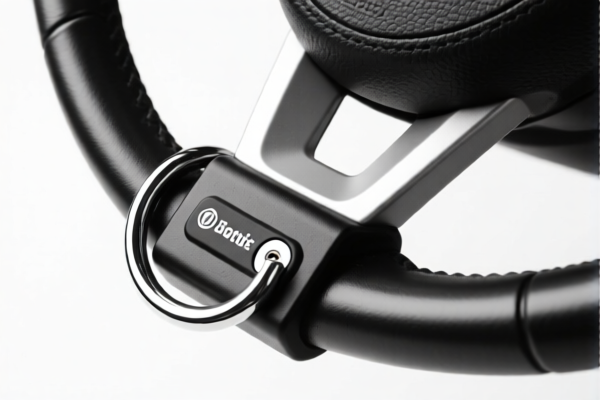
AI Analysis
🔒 Steering Wheel Lock with Alarm (Security Device for Vehicles)
🌐 HS Code Reference & Customs Clearance Guide | 2026 Latest Tariff Analysis | Professional Clearance Strategy
📌 I. Product Definition & Classification: What Exactly Is a "Steering Wheel Lock"?
A Steering Wheel Lock with Alarm is an anti-theft device for automobiles. In international trade, its classification hinges on two critical factors: Function (Security vs. Automotive Part) and Composition (Lock Mechanism vs. Steering Assembly).
1. Security Lock Perspective (The "Lock" Argument):
- Treated as a physical security device similar to padlocks or bicycle locks.
- Key feature: Contains an alarm system (siren/buzzer) triggered by tampering.
- Classification Target: Chapter 83 (Base Metal Locks).
2. Automotive Part Perspective (The "Part" Argument):
- Treated as a component of the vehicle’s steering system or a general automotive spare part.
- Key feature: Attached to the steering wheel column or rim.
- Classification Target: Chapter 87 (Vehicles; Automotive Parts).
⚠️ Critical Distinction:
- If declared as a lock, it falls under 8301.20 (Locks of base metal).
- If declared as a steering part, it falls under 8708.94 (Steering wheels and parts thereof).
- Risk: Misclassification leads to massive tariff discrepancies (e.g., 40.7% vs. 35.0%).
📦 II. HS Code Classification Details (Based on Provided Data)
The provided data indicates five potential HS codes with varying tariff implications. Here is the detailed breakdown of why each code might be applied and its corresponding tax liability.
| HS Code | Summary/Reasoning for Classification | Total Tax Rate | Tax Detail Breakdown |
|---|---|---|---|
| 8708.94.70.00 | Steering System Part: Matches the use (steering system part) and form (lock belongs to steering gear/column related components). Material inferred as metal/iron with no conflict. | 35.0% | Base Duty: 0.0% Additional Duty: 25.0% Section 122 Duty: 10% |
| 8708.94.75.50 | Other Vehicle Part: Safe spare part for steering systems. No material conflict. Inferred material is metal or composite, fitting the "other vehicle parts" catch-all category. | 2.5% +35.0% | Base Duty: 2.5% Additional Duty: 25.0% Section 122 Duty: 10% |
| 8301.20.00.30 | Base Metal Lock: Use matches "automotive lock" and "steering wheel locking device." Material inferred as base metal, consistent with locks. | 40.7% | Base Duty: 5.7% Additional Duty: 25.0% Section 122 Duty: 10% |
| 7326.90.86.88 | Other Iron/Steel Article: Material inferred as iron/steel (common for car locks). Form fits "other iron articles" catch-all logic. | 87.9% | Base Duty: 2.9% Additional Duty: 25.0% Section 122 Duty: 10% Steel/Aluminum/Copper Duty: 50% |
| 7326.19.00.80 | Other Iron/Steel Article: Material inferred as steel (auto accessory common sense). Form fits "other steel articles" (stamped/forged). | 87.9% | Base Duty: 2.9% Additional Duty: 25.0% Section 122 Duty: 10% Steel/Aluminum/Copper Duty: 50% |
🔍 Key Observation:
- Codes 8708.94.70.00 and 8301.20.00.30 are the most plausible depending on whether Customs views the item as a "part of the car" or a "standalone security lock." - Codes 7326.90.86.88 and 7326.19.00.80 result in extremely high tariffs (87.9%) due to the 50% additional duty on steel/aluminum/copper products, which is likely not the intended classification for a finished product unless declared as raw material or specific steel goods.
💰 III. 2026 Latest Tariff Rate Details (Including Surcharges & Policy Add-ons)
✅ Applicable Country: United States (US)
✅ Origin: China (CN)
✅ Effective Time: Post-November 2025 (Including subsequent imports)
🎯 1. 8708.94.70.00 —— Steering System Part (Recommended Low-Tariff Path)
| Item | Content |
|---|---|
| Base Rate | 0% (ad valorem) |
| Section 301 Surcharge | +25% (Additional Duty) |
| Section 122 Surcharge | +10% (Specific to China) |
| Total Rate | 35.0% |
| Tax Calculation | CIF Value × 35% |
| De Minimis Exemption | ❌ Not Eligible (Denied for Section 301/122 goods) |
| Legal Basis Path | USITC:8708.94.70.00 → Section 301: 25% → Section 122: 10% |
📌 Explanation:
- This code treats the lock as a component of the steering system.
- Base duty is 0%, but subject to 25% (Section 301) and 10% (Section 122).
- Total: 35%. This is a moderate-high tariff, but significantly lower than the 87.9% alternatives.
🎯 2. 8301.20.00.30 —— Base Metal Lock (Security Device Path)
| Item | Content |
|---|---|
| Base Rate | 5.7% (ad valorem) |
| Section 301 Surcharge | +25% |
| Section 122 Surcharge | +10% |
| Total Rate | 40.7% |
| Tax Calculation | CIF Value × 40.7% |
| De Minimis Exemption | ❌ Not Eligible |
| Legal Basis Path | USITC:8301.20.00.30 → Section 301: 25% → Section 122: 10% |
📌 Note:
- This code treats the product as a general lock.
- Base duty is 5.7%, plus the same surcharges.
- Total: 40.7%. This is 5.7% higher than the steering part classification.
- Risk: Customs may argue that because it attaches to the steering wheel, it is a "part" (8708), not a generic lock (8301).
🎯 3. 8708.94.75.50 —— Other Vehicle Part (Catch-All)
| Item | Content |
|---|---|
| Base Rate | 2.5% |
| Section 301 Surcharge | +25% |
| Section 122 Surcharge | +10% |
| Total Rate | 37.5% |
| Tax Calculation | CIF Value × 37.5% |
| De Minimis Exemption | ❌ Not Eligible |
| Legal Basis Path | USITC:8708.94.75.50 → Section 301: 25% → Section 122: 10% |
📌 Note:
- Slightly higher than8708.94.70.00due to the 2.5% base duty.
- Total: 37.5%. Still preferable to the 87.9% steel categories.
🚨 4. 7326.90.86.88 & 7326.19.00.80 —— Other Iron/Steel Articles (High Risk)
| Item | Content |
|---|---|
| Base Rate | 2.9% |
| Section 301 Surcharge | +25% |
| Section 122 Surcharge | +10% |
| Steel/Al/Cu Surcharge | +50% |
| Total Rate | 87.9% |
| Tax Calculation | CIF Value × 87.9% |
| De Minimis Exemption | ❌ Not Eligible |
| Legal Basis Path | USITC:7326... → Section 301: 25% → Section 122: 10% → Steel Surcharge: 50% |
📌 Warning:
- These codes trigger an additional 50% tariff specifically for steel/aluminum/copper products under current trade measures.
- Total: 87.9%. This is prohibitively high for a finished consumer product.
- Avoid unless the product is declared as raw steel materials, not a finished lock.
🛠️ IV. Customs Clearance Practical Advice (Avoiding Pitfalls)
✅ 1. Document Preparation Checklist (Mandatory)
| Document | Required? | Description |
|---|---|---|
| ✅ Product Specification Sheet | ✔️ | Must clearly state: "Steering Wheel Lock with Alarm," model number, power source (battery?), weight. |
| ✅ Product Photos | ✔️ | Show the lock attached to a steering wheel to prove it is a vehicle security device. |
| ✅ Commercial Invoice | ✔️ | Description must match HS Code reasoning (e.g., "Steering System Security Lock" vs. "Base Metal Lock"). |
| ✅ Origin Certificate | ✔️ | To prove Chinese origin for accurate tariff calculation. |
| ✅ Alarm Function Proof | ✔️ | Video or manual showing the alarm activates upon tampering (supports "Security Device" argument if needed). |
✅ 2. Declaration Strategy (Key Mantras)
🔥 “Part of the Car: 35%. Lock: 40.7%. Steel: 87.9%. Choose Wisely!”
| Scenario | Recommended Declaration | Risk |
|---|---|---|
| Primary Use: Prevents steering wheel rotation. | HS 8708.94.70.00 | Lowest risk, moderate tariff (35%). |
| Emphasis: Anti-theft device, sold in hardware stores. | HS 8301.20.00.30 | Slightly higher tariff (40.7%). |
| Misclassification: Declared as "Steel Hardware." | HS 7326.90.86.88 | Disaster! 87.9% tariff. |
📌 Advice:
- Recommend HS 8708.94.70.00 if the lock is specifically designed for automotive steering wheels. The 0% base duty makes it the most cost-effective.
- Do NOT use 7326 codes unless you are exporting raw steel products. The 50% surcharge will destroy your margin.
✅ 3. Special Considerations
| Situation | Handling Suggestion |
|---|---|
| With Battery? | If the alarm uses a replaceable battery, ensure the battery is declared separately if required by US regulations (e.g., lithium-ion rules). |
| OEM vs. Generic | Provide OEM orders to prove it is a specific automotive accessory, supporting HS 8708 classification. |
| Pre-Ruling | Consider applying for an Advance Ruling from US Customs if the shipment value is high. This locks in the HS code and prevents disputes. |
🌍 V. Global Market Comparison (2026)
| Country/Region | Recommended HS Code | Tariff (China Origin) | Notes |
|---|---|---|---|
| 🇺🇸 USA | 8708.94.70.00 |
35% | Best option. Avoids 50% steel surcharge. |
| 🇺🇸 USA | 8301.20.00.30 |
40.7% | Acceptable, but 5.7% higher. |
| 🇺🇸 USA | 7326... |
87.9% | DO NOT USE. Extremely high. |
| 🇨🇳 China | 8301.20.00.30 |
~5% (Export Tax) | No US surcharges. |
| 🇪🇺 EU | 8301.20.00.00 |
~2.5% | No Section 301/122 surcharges. |
📌 Conclusion:
- USA is the most challenging market due to Section 301 (25%) and Section 122 (10%) duties.
- Correct HS Code selection is critical to avoid the 87.9% trap.
- HS 8708.94.70.00 is the optimal choice for cost and compliance.
📌 VI. Common Errors & Pitfalls (Lessons Learned)
❌ Error 1: Declaring as "Steel Lock" (7326)
👉 Consequence: 87.9% tariff. Total cost nearly doubles.
❌ Error 2: Declaring as "Car Part" but providing no proof of steering system integration
👉 Consequence: Customs may reclassify to 8301 (40.7%) or demand additional documentation.
❌ Error 3: Ignoring Section 122 (10%)
👉 Consequence: Underpayment of duties, leading to penalties and delays.
✅ Correct Declaration Example:
"Steering Wheel Lock with Alarm, Automotive Security Accessory, Model XYZ, Attached to Steering Column, Base Metal Construction"
HS Code:8708.94.70.00
Tariff: 35%
🎯 VII. Conclusion: Precise Classification for Maximum Profit
🎯 Remember the Mantra:
🔹 "Steering Lock: 35%. Generic Lock: 40.7%. Steel: 87.9%."
🔹 "HS Code decides survival. A 1% difference can mean thousands in savings."
📌 Pro Tip:
If your product is originally manufactured in Vietnam, Mexico, or Thailand, you may avoid Section 301/122 duties.
However, for China-origin goods, HS 8708.94.70.00 is your best defense.
📣 Immediate Action:
📞 Consult a licensed customs broker.
📄 Prepare technical specs showing steering wheel attachment.
🚀 Secure your clearance, protect your margin, and ship with confidence!
✨ Professional Clearance Starts with Accurate Classification!
💼 Every dollar saved on duty is pure profit!
Customer Reviews
About HS Code Classification
The Harmonized System (HS) is an internationally standardized nomenclature developed by the World Customs Organization (WCO) to classify traded products. Over 200 countries use the HS system as the basis for customs tariffs, trade statistics, and import/export regulations.
Each HS code follows a hierarchical structure:
- Chapter (2 digits) — Broad category of goods (e.g., Chapter 84: Machinery and Mechanical Appliances)
- Heading (4 digits) — More specific grouping within the chapter
- Subheading (6 digits) — Internationally standardized breakdown, used by all WCO member countries
- National subdivisions (8-10 digits) — Country-specific extensions for further classification, such as US HTSUS 10-digit codes
Correct HS code classification is essential for smooth customs clearance, accurate duty payment, and compliance with trade regulations. Misclassification can lead to customs delays, overpayment of duties, or penalties.
When importing from CN to US, the applicable tariff rates may include:
- Most-Favored-Nation (MFN) rate — The standard duty rate applied to WTO members
- General rate — Applied to countries without trade agreements
- Trade remedy duties — Additional tariffs such as Section 301 (anti-dumping), Section 232 (national security), or countervailing duties
The information provided on this page is for reference purposes only. For official classification, please consult with your local customs authority or a licensed customs broker.