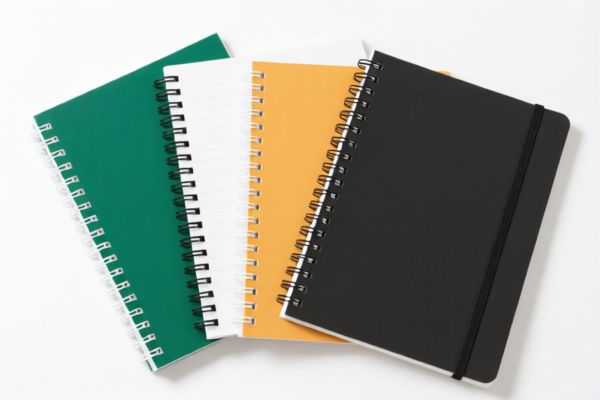
Stenography Notebook
CN → US| HS Code | Tariff Rate | Origin | Destination | Doc |
|---|---|---|---|---|
| 4820102010 | 35.0% | CN | US | Official Doc |
| 4820102060 | 35.0% | CN | US | Official Doc |
Product Images



AI Analysis
📓 Stenography Notebook (Shorthand Notebook)
🌐 HS Code Reference & Customs Clearance Guide | 2026 Latest Tariff Analysis | Professional Level Compliance Strategy
📌 Part 1: Product Definition & Classification: Do You Really Understand the "Stenography Notebook"?
A Stenography Notebook (also known as a Shorthand Notebook) is a specialized stationery item designed for professional transcription, legal recording, or rapid note-taking. In international trade, it is classified under Chapter 48 (Paper and Paperboard; Articles of Paper Pulp, of Paper or Paperboard...).
It falls specifically under Heading 48.20: Registers, account books, note books, order books, receipt books, letter pads, memorandum pads, diaries and similar articles, exercise books, blotting pads, binders (loose-leaf or other), folders, file covers, manifold business forms, interleaved carbon sets and other articles of stationery, of paper or paperboard.
⚠️ Key Classification Distinction:
- If the notebook is bound (e.g., glued, stitched, or stitched-and-glued binding like a standard diary) and used for diaries, address books, or general notes → It is classified as "Diaries, notebooks and address books, bound; memorandum pads, letter pads and similar articles". - The specific structure (lined vs. unlined, shorthand symbols printed) does not change the HS code if it remains a standard paper stationery item. - Critical Point: It is NOT considered "electronic" or "digital" recording devices. It is purely paper-based.
📦 Part 2: HS Code Classification Details (2026 Latest Tariff Authority Comparison)
Based on the provided <DATA>, there are two sub-categories for bound notebooks/diaries. The distinction usually lies in the specific physical form or intended primary use (e.g., diary vs. general notebook).
| HS Code | Product Description | Applicable Scenario | Binding Type |
|---|---|---|---|
4820.10.20.10 |
Diaries, notebooks and address books, bound; memorandum pads, letter pads and similar articles: Diaries and address books | Stenography Notebooks used as Diaries/Personal Journals If the product is marketed/formatted as a "Diary" (with dates, personal tracking) or formal address book. |
Bound (Glued/Stitched) |
4820.10.20.60 |
Diaries, notebooks and address books, bound; memorandum pads, letter pads and similar articles: Other | Stenography Notebooks for General Professional Use If the product is a standard "Notebook" (undated, grid/lined for shorthand) without diary formatting. |
Bound (Glued/Stitched) |
🔍 Important Note:
- Both codes fall under the same parent heading 4820.10.20.
- The difference between.10and.60is a national sub-classification (often US HTS or similar).
- If in doubt, most "Stenography Notebooks" (undated, lined/shorthand format) are classified under4820.10.20.60("Other" notebooks).
- If the notebook has dates pre-printed for daily logging, it may lean towards4820.10.20.10.
💰 Part 3: 2026 Latest Tariff Rate Details (Including Additional Taxes & Policy Surcharges)
✅ Applicable Country: United States (US)
✅ Country of Origin: China (CN)
✅ Effective Date: Current 2026 Tariff Structure (Section 301 + IEEPA)
🎯 1. 4820.10.20.10 —— Diaries & Address Books (Bound)
| Item | Detail |
|---|---|
| Base Tariff Rate | 0.0% (General, No Duty) |
| Section 301 Additional Duty | +25.0% |
| IEEPA Additional Duty | +0.0% (Note: Paper stationery often excluded from IEEPA 10% if not on specific lists, but Section 301 applies) |
| Total Effective Tax Rate | 25.0% |
| Tax Calculation | CIF Value × 25% |
| De Minimis Exemption | ❌ Not Eligible (Section 301 goods are excluded from Section 321 de minimis) |
| Legal Basis | USITC:4820.10.20.10 → Footnote 9903.88.01 (Section 301) |
📌 Explanation:
- The Base Tariff for paper notebooks is generally 0%.
- However, due to Section 301 Trade Actions against China, an additional 25% is imposed.
- Total Tax: 25%. This is a significant cost for low-value stationery items.
🎯 2. 4820.10.20.60 —— Other Notebooks (Bound)
| Item | Detail |
|---|---|
| Base Tariff Rate | 0.0% (General, No Duty) |
| Section 301 Additional Duty | +25.0% |
| IEEPA Additional Duty | +0.0% |
| Total Effective Tax Rate | 25.0% |
| Tax Calculation | CIF Value × 25% |
| De Minimis Exemption | ❌ Not Eligible |
| Legal Basis | USITC:4820.10.20.60 → Footnote 9903.88.01 (Section 301) |
📌 Note:
- Same tariff treatment as.10.
- Whether it is a "Diary" or a "General Notebook," the 25% Section 301 duty applies.
- No IEEPA 10% surcharge is listed in the<DATA>for these codes, so only the 25% applies.
🛠️ Part 4: Customs Clearance Practical Advice (Pitfall Avoidance Guide)
✅ 1. Required Documentation Checklist
| Document | Must Provide | Notes |
|---|---|---|
| ✅ Product Specification | ✔️ | Specify: "Paper Notebook, Bound, for Stenography/Shorthand". |
| ✅ Composition Details | ✔️ | Paper content (e.g., 80gsm wood pulp paper). |
| ✅ Binding Type | ✔️ | Clearly state: "Glued Binding" or "Sewn Binding". |
| ✅ Commercial Invoice | ✔️ | Description must match HS Code: "Bound Paper Notebook". |
| ✅ Packing List | ✔️ | Include dimensions, weight, and quantity. |
✅ 2. Declaration Tips (Key Mantra)
🔥 "Bound Paper, Not Electronic; Section 301 Applies, 25% Duty is Key!"
| Scenario | Correct Declaration | Incorrect Declaration | Consequence |
|---|---|---|---|
| Stenography Notebook (Paper) | 4820.10.20.60 (Notebook) |
"Recording Device" or "Electronic Pad" | Misclassification: Heavy penalties, delay |
| Diary Format Steno Book | 4820.10.20.10 (Diary) |
"Notebook" | Minor: May be audited, but duty rate is same (25%) |
| Unbound Sheets | Not 4820 (Check 4817/4802) |
4820.10.20.60 |
Refusal: Unbound papers fall under different headings |
| Chinese Origin | Declare CN Origin | "Made in USA" (False) | Fraud: Seizure, fines, blacklisting |
✅ 3. Special Considerations
| Situation | Handling Advice |
|---|---|
| Sample Imports | If value < $800, check if Section 301 exemptions apply to samples. Usually, no, de minimis is excluded for Section 301 goods. Pay the 25%. |
| Mixed Containers | If the shipment contains both duty-free and duty-paid items, ensure separate HS Codes are declared to avoid blanket audits. |
| Marketing Terms | Avoid terms like "Smart Notebook" or "Digital Pad" if it is purely paper. Use "Analog Stenography Notebook" to prevent confusion with electronics. |
🌍 Part 5: Global Market Comparison (2026)
| Country/Region | Recommended HS Code | Tariff Rate | Notes |
|---|---|---|---|
| 🇺🇸 USA | 4820.10.20.60 |
25% (Section 301) | High cost for Chinese origin. |
| 🇨🇳 China | 4820.10.20.60 |
~6-10% | Import duty into China for export goods? (N/A for export) |
| 🇪🇺 EU | 4820.10.90 |
0% (Most FNP) | No Section 301 equivalent. Low duty. |
| 🇨🇦 Canada | 4820.10.20 |
0% | CUSMA/USMCA preferred, but general rate is low/zero. |
| 🇬🇧 UK | 4820.10.20 |
0% | Post-Brexit tariff is favorable for paper goods. |
📌 Conclusion:
- The USA is the most challenging market for Chinese-made stenography notebooks due to the 25% Section 301 duty.
- Consider Third-Country Transshipment (e.g., Vietnam, Malaysia) only if substantial transformation occurs. Simple re-packing does NOT exempt from Section 301.
- For EU/UK/Canada, the cost advantage is significant.
📌 Part 6: Common Errors & Pitfalls (Lessons Learned)
❌ Error 1: Declaring "Steno Pad" as "Paper Sheets" (4802)
👉 Result: If it is bound, it MUST be 4820. Misclassification leads to 25% underpayment and penalties.
❌ Error 2: Assuming "Stationery" is duty-free
👉 Result: Base rate may be 0%, but Section 301 adds 25%. Ignoring this leads to 25% surprise duty bill.
❌ Error 3: Using "Diary" vs. "Notebook" interchangeably without checking binding
👉 Result: .10 vs .60 distinction is minor for duty (both 25%), but auditors may flag for inconsistency in product description.
✅ Correct Declaration Example:
"Stenography Notebook, Bound, Paper, Chinese Origin, HS: 4820.10.20.60"
🎯 Part 7: Conclusion: Professional Declaration, Cost Control, Risk Reduction
🎯 Remember the Mantra:
🔹 "Bound Paper = HS 4820"
🔹 "Chinese Origin = 25% Section 301 Duty"
🔹 "No De Minimis Exemption for Section 301!"
🔹 "Accurate Description Saves You from Audits!"
📌 Pro Tip:
If you are shipping low-value samples (<$800), confirm with your customs broker if any temporary exemptions apply for Section 301 goods. Generally, no exemption exists for standard paper notebooks from China.
For high-volume commercial shipments, factor the 25% duty into your pricing model. Consider sourcing from non-China origins (e.g., Vietnam, India) if targeting the US market to avoid tariffs.
📣 Immediate Action:
📞 Consult a Licensed Customs Broker for pre-classification.
📄 Ensure Commercial Invoices clearly state "Bound Paper Notebook" and Origin: China.
🚀 Optimize Your Supply Chain to manage the 25% duty impact.
✨ Professional Customs Clearance Starts with Accurate Classification!
💼 Every 25% Tax Counts — Know Your HS Code!
Customer Reviews
About HS Code Classification
The Harmonized System (HS) is an internationally standardized nomenclature developed by the World Customs Organization (WCO) to classify traded products. Over 200 countries use the HS system as the basis for customs tariffs, trade statistics, and import/export regulations.
Each HS code follows a hierarchical structure:
- Chapter (2 digits) — Broad category of goods (e.g., Chapter 84: Machinery and Mechanical Appliances)
- Heading (4 digits) — More specific grouping within the chapter
- Subheading (6 digits) — Internationally standardized breakdown, used by all WCO member countries
- National subdivisions (8-10 digits) — Country-specific extensions for further classification, such as US HTSUS 10-digit codes
Correct HS code classification is essential for smooth customs clearance, accurate duty payment, and compliance with trade regulations. Misclassification can lead to customs delays, overpayment of duties, or penalties.
When importing from CN to US, the applicable tariff rates may include:
- Most-Favored-Nation (MFN) rate — The standard duty rate applied to WTO members
- General rate — Applied to countries without trade agreements
- Trade remedy duties — Additional tariffs such as Section 301 (anti-dumping), Section 232 (national security), or countervailing duties
The information provided on this page is for reference purposes only. For official classification, please consult with your local customs authority or a licensed customs broker.