Step down Power Module
CN → US| HS Code | Tariff Rate | Origin | Destination | Doc |
|---|---|---|---|---|
| 8542900000 | 60.0% | CN | US | Official Doc |
| 8542390090 | 60.0% | CN | US | Official Doc |
| 8543709860 | 37.6% | CN | US | Official Doc |
| 8543906800 | 35.0% | CN | US | Official Doc |
| 8504409540 | 35.0% | CN | US | Official Doc |
| 8504409580 | 35.0% | CN | US | Official Doc |
Product Images
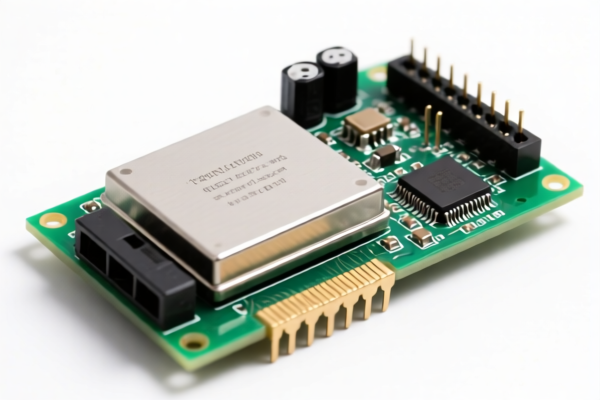
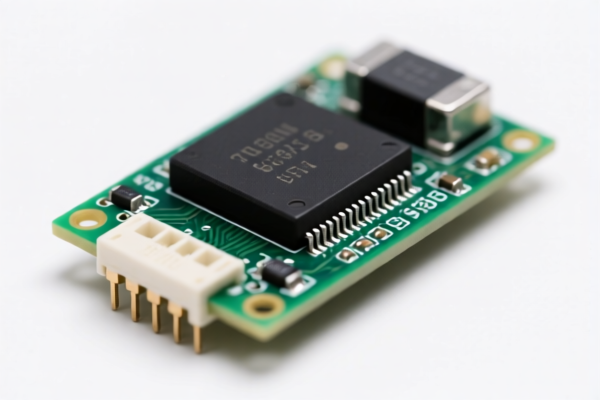
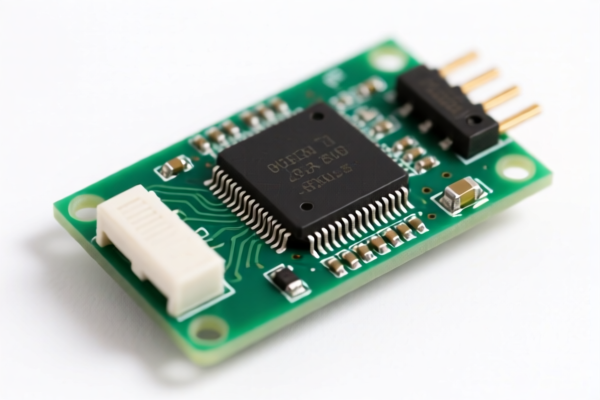

AI Analysis
🔌 Step-Down Power Module (Power Supplies & Converters)
🌐 HS Code Reference & Customs Clearance Guide | 2026 Latest Tariff Analysis | Professional-Level Strategy
📌 I. Product Definition & Classification: What Exactly is a "Step-Down Power Module"?
A Step-Down Power Module is a critical component in electronic systems designed to convert a higher input voltage to a lower, stable output voltage (e.g., 24V to 5V, 48V to 12V). In international trade, these modules are not "one-size-fits-all." Their classification depends entirely on functional integration and physical form.
They generally fall into three categories:
- Integrated Circuit Components (PCB Level): Bare modules soldered directly onto a motherboard, functioning as part of an IC assembly.
- Independent Electrical Apparatus (Box/Chassis Level): Standalone units with housings, input/output terminals, and control circuits, functioning as complete converters.
- Parts/Accessories: Components used specifically for repairing or assembling other machines.
⚠️ Key Distinction Point:
- If the module is bare, surface-mount, and lacks an independent housing/interface → It is likely an IC part or IC assembly.
- If the module has its own casing, input plugs, output wires, or control interface → It is likely an independent electrical apparatus or static converter.
📦 II. HS Code Classification Details (2026 Latest Tariff Authority Comparison)
Based on the provided data, here is the detailed breakdown of potential HS Codes for Step-Down Power Modules, ranging from high-tariff "IC parts" to lower-tariff "converters."
| HS Code | Product Description | Applicable Scenario | Key Classification Logic |
|---|---|---|---|
| 8542.90.00.00 | Parts of Electronic Integrated Circuits | Bare PCB-mounted modules; no conflict with material definition. | Classified as a component of an IC circuit. |
| 8542.39.00.90 | Other Electronic Integrated Circuits | Modules considered part of an IC assembly, not specifically excluded. | Classified under the "Other" catch-all for ICs. |
| 8543.70.98.60 | Other Machines & Apparatus (Independent Function) | Standalone devices with independent function; inferred as electronic元件/apparatus. | Classified as an independent electrical apparatus. |
| 8543.90.68.00 | Parts of Electrical Apparatus (Printed Circuit Assembly) | Components inferred as printed circuit assemblies; fits "Other" catch-all. | Classified as a part of an electrical device (PCBA). |
| 8504.40.95.40 | Static Converters (Other) | Standalone units acting as static converters; power rating not explicitly specified. | Classified as a static converter (broad category). |
| 8504.40.95.80 | Static Converters (Other) | Functionally identical to above; no material or form conflict. | Classified as a static converter (broad category). |
🔍 Critical Insight:
- 8542.xxxx classifications carry HIGH tariff penalties due to "IC Part" status.
- 8504.xxxx and 8543.xxxx classifications carry LOWER tariffs and are generally preferred if the module can be proven to be an independent unit or standard converter.
- Why the difference? Customs authorities scrutinize whether the item is a "part of a specific machine" (8542) or a "general-purpose electrical apparatus" (8504/8543).
💰 III. 2026 Latest Tariff Rate Breakdown (Including Surcharges & Policy Add-ons)
✅ Applicable Country: United States (US)
✅ Country of Origin: China (CN)
✅ Effective Date: November 10, 2025 (and subsequent imports)
🎯 1. High-Tariff Category: IC Components
Codes: 8542.90.00.00 & 8542.39.00.90
| Item | Detail |
|---|---|
| Base Duty Rate | 0.0% (Ad Valorem) |
| Section 301 Surcharge | +50.0% (From USITC Footnote 9903.88.01/Other relevant notes) |
| IEEPA Surcharge | +10.0% (Targeted at China/HK products, effective Nov 10, 2025) |
| Total Effective Rate | 60.0% |
| Calculation | CIF Value × 60% |
| De Minimis Exemption? | ❌ NO (deny_de_minimis) |
| Legal Basis Path | USITC:8542.90.00.00 → Surcharge: 50% + IEEPA: 10% |
📌 Explanation:
- These codes classify the power module as a part of an Integrated Circuit.
- The 50% Section 301 tariff applies because these are considered sensitive electronic components.
- The 10% IEEPA tariff is a new/additional layer for Chinese-origin goods.
- Total Cost Impact: For every $1,000 of goods, you pay $600 in duties. This is extremely costly.
🎯 2. Mid-to-Low Tariff Category: Independent Apparatus / Converters
Codes: 8543.70.98.60, 8543.90.68.00, 8504.40.95.40, 8504.40.95.80
A. 8543.70.98.60 (Independent Apparatus)
| Item | Detail |
|---|---|
| Base Duty Rate | 2.6% |
| Section 301 Surcharge | +25.0% |
| IEEPA Surcharge | +10.0% |
| Total Effective Rate | 37.6% |
| Legal Basis Path | USITC:8543.70.98.60 → Surcharge: 25% + IEEPA: 10% |
B. 8543.90.68.00 (Parts/PCBA)
| Item | Detail |
|---|---|
| Base Duty Rate | 0.0% |
| Section 301 Surcharge | +25.0% |
| IEEPA Surcharge | +10.0% |
| Total Effective Rate | 35.0% |
| Legal Basis Path | USITC:8543.90.68.00 → Surcharge: 25% + IEEPA: 10% |
C. 8504.40.95.40 & 8504.40.95.80 (Static Converters)
| Item | Detail |
|---|---|
| Base Duty Rate | 0.0% |
| Section 301 Surcharge | +25.0% |
| IEEPA Surcharge | +10.0% |
| Total Effective Rate | 35.0% |
| Legal Basis Path | USITC:8504.40.95.40/80 → Surcharge: 25% + IEEPA: 10% |
📌 Strategic Note:
- By classifying the module as a Static Converter (8504) or Independent Apparatus (8543), you save 25% to 25.4% in total duties compared to the IC classification.
- On a $1,000 shipment, this is a $250–$254 savings.
🛠️ IV. Customs Clearance Practical Advice (Combat Pitfalls Guide)
✅ 1. Preparation Checklist (Mandatory)
| Document | Required? | Purpose |
|---|---|---|
| ✅ Technical Specification Sheet | ✔️ | Must clearly state: Input Voltage, Output Voltage, Current, Power (Watts). |
| ✅ Circuit Diagram / Block Diagram | ✔️ | Crucial: Prove it is an independent converter (8504) or apparatus (8543), NOT just a bare IC part (8542). Show external interfaces. |
| ✅ Product Photos | ✔️ | Show the housing, connectors, labels, and overall assembly. |
| ✅ Third-Party Certifications | ✔️ | UL, CE, FCC, RoHS reports. Helps prove "Electrical Apparatus" status. |
| ✅ Commercial Invoice | ✔️ | Use precise description: "Step-Down Voltage Regulator Module, Model XYZ, 48V to 12V, 5A". Avoid vague terms like "IC Part." |
| ✅ Packing List | ✔️ | Ensure units are not disassembled if they are sold as complete units. |
✅ 2. Declaration Strategy (The Golden Rules)
🔥 Rule: "Prove Independence, Avoid IC Classification!"
| Scenario | Recommended HS Code | Risk of Misclassification |
|---|---|---|
| Bare PCB Module (No housing, just chips) | 8542.90.00.00 |
High Tariff (60%). Only use if strictly an IC part. |
| Enclosed Module (With plastic/metal case, input/output terminals) | 8504.40.95.40/80 |
Low Tariff (35%). Best for standalone units. |
| Module with Control Logic/Display | 8543.70.98.60 |
Mid Tariff (37.6%). If it has complex independent functions. |
| PCBA used in repair | 8543.90.68.00 |
Low Tariff (35%). If sold as a replacement part for a machine. |
⚠️ Warning:
- Do NOT declare an enclosed, standalone power module as8542.xxxx(IC Part). Customs will reject this if it has external connectors and a casing.
- Do NOT declare a bare IC chip as8504.xxxx(Converter). It lacks the "static converter" architecture.
✅ 3. Special Circumstances
| Situation | Recommendation |
|---|---|
| Custom OEM Module | Provide the customer’s design spec to prove it’s a custom "Static Converter" under 8504. |
| Mixed Container | Ensure packaging clearly separates "PCBA Parts" (8542) from "Complete Modules" (8504). Mixed declarations can trigger audits. |
| Voltage/Current Mismatch | Ensure the invoice matches the technical specs exactly. Discrepancies lead to reclassification and penalties. |
| Origin Marking | Ensure "Made in China" is clearly marked on the module and packaging to avoid country-of-origin disputes. |
🌍 V. Global Market Comparison (2026 Update)
| Country/Region | Recommended HS Code | Duty Rate (China Origin) | Certification | Notes |
|---|---|---|---|---|
| 🇺🇸 USA | 8504.40.95.40 |
35.0% | FCC + UL | Avoid 8542 (60%). |
| 🇨🇳 China | 8504.40.95.40 |
Varies (Import) | CCC + RoHS | Domestic trade may have different rules. |
| 🇪🇺 EU | 8504.40.90 |
0% (Often) | CE + RoHS | No Section 301 or IEEPA. |
| 🇬🇧 UK | 8504.40.90 |
0% | UKCA + RoHS | Post-Brexit rules apply. |
| 🇦🇺 Australia | 8504.40.90 |
5% | RCM | No high surcharges. |
📌 Conclusion:
- USA is the only market with punitive surcharges (25% IEEPA + 25-50% Section 301).
- Optimization is key: Shifting from8542(60%) to8504(35%) saves 25% of the CIF value.
📌 VI. Common Errors & Pitfalls (Lessons Learned)
❌ Error 1: Calling a "Standalone Power Supply Box" an "IC Part"
👉 Result: 60% duty instead of 35%. Losing $250 per $1000!
❌ Error 2: Declaring "Power Adapter" when it’s a "PCBA Module"
👉 Result: Customs may reclassify to 8504 (35%) or 8543 (37.6%), leading to delays and potential back-taxes.
❌ Error 3: Ignoring the IEEPA 10% Surcharge
👉 Result: Underpayment of duties. The 10% IEEPA tax is new and mandatory for Chinese goods since Nov 2025. Failure to include it leads to penalties.
❌ Error 4: Missing Technical Data
👉 Result: Customs cannot determine if it’s a "Converter" (8504) or "Apparatus" (8543). Leads to hold at port, storage fees, and forced reclassification.
✅ Correct Practice:
"Step-Down DC-DC Converter Module, 48V Input to 12V Output, 5A, Enclosed in Metal Housing, UL Certified, Model PD-1205"
🎯 VII. Conclusion: Professional Declaration, Cost Savings
🎯 Remember the Golden Rule:
🔹 "If it has a case and plugs, it’s a Converter (8504), not an IC Part (8542)."
🔹 "Save 25% by declaring correctly! 60% vs 35% is a huge difference."
🔹 "Don’t forget the 10% IEEPA surcharge – it’s here to stay!"
📌 Pro Tip:
If your power modules are shipped as kits (PCBA + Housing + Instructions) intended for assembly, consider declaring them as "Parts for Assembly" (8543.90) to potentially qualify for 35% instead of 60%, but ensure the documentation supports this intent.
📣 Action Required:
📞 Consult a Customs Broker to verify your specific module’s structure.
🚀 Submit Pre-Rulings if you are a large importer to lock in the 35% rate for8504codes.
💼 Optimize Your Supply Chain to avoid the 60% IC classification trap.
✨ Precision in Classification is Profit in Your Pocket!
💼 Every 1% of duty saved is pure margin gained!
Customer Reviews
About HS Code Classification
The Harmonized System (HS) is an internationally standardized nomenclature developed by the World Customs Organization (WCO) to classify traded products. Over 200 countries use the HS system as the basis for customs tariffs, trade statistics, and import/export regulations.
Each HS code follows a hierarchical structure:
- Chapter (2 digits) — Broad category of goods (e.g., Chapter 84: Machinery and Mechanical Appliances)
- Heading (4 digits) — More specific grouping within the chapter
- Subheading (6 digits) — Internationally standardized breakdown, used by all WCO member countries
- National subdivisions (8-10 digits) — Country-specific extensions for further classification, such as US HTSUS 10-digit codes
Correct HS code classification is essential for smooth customs clearance, accurate duty payment, and compliance with trade regulations. Misclassification can lead to customs delays, overpayment of duties, or penalties.
When importing from CN to US, the applicable tariff rates may include:
- Most-Favored-Nation (MFN) rate — The standard duty rate applied to WTO members
- General rate — Applied to countries without trade agreements
- Trade remedy duties — Additional tariffs such as Section 301 (anti-dumping), Section 232 (national security), or countervailing duties
The information provided on this page is for reference purposes only. For official classification, please consult with your local customs authority or a licensed customs broker.