Sterilant Mixture (Wettable Powder)
CN → US| HS Code | Tariff Rate | Origin | Destination | Doc |
|---|---|---|---|---|
| 3402901000 | 38.8% | CN | US | Official Doc |
| 3808945010 | 40.0% | CN | US | Official Doc |
| 3402905030 | 38.7% | CN | US | Official Doc |
| 3808999501 | 40.0% | CN | US | Official Doc |
Product Images
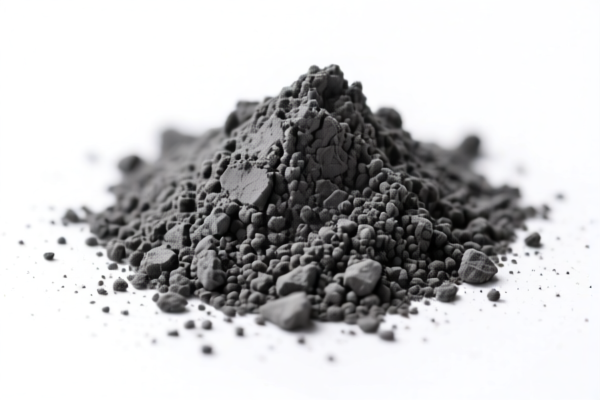
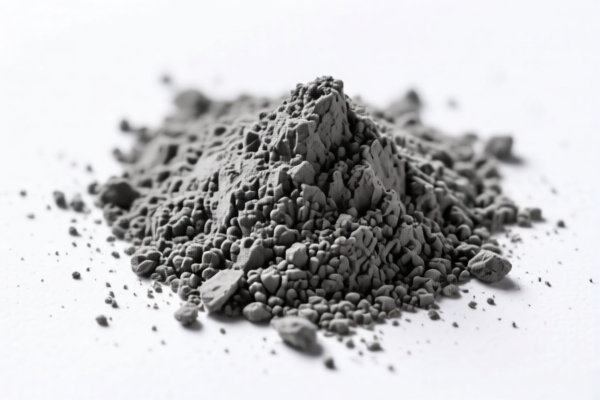
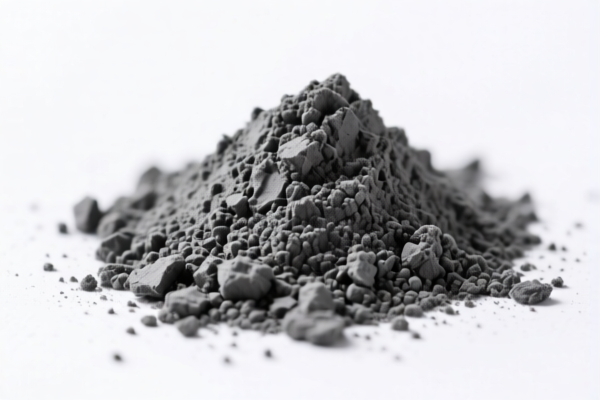
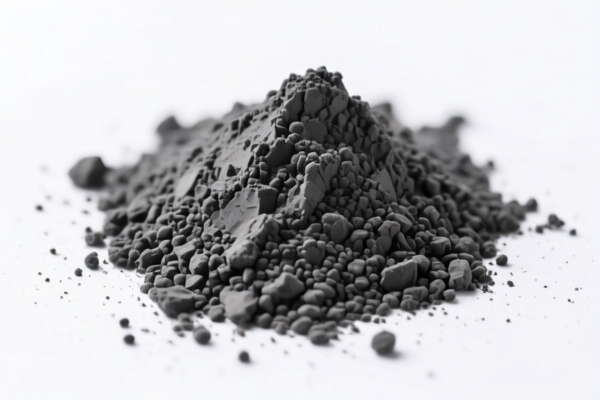
AI Analysis
🧪 Sterilant Mixture (Wettable Powder)
🌐 HS Code Reference & Customs Clearance Guide | 2026 Latest Tariff Analysis | Professional Entry Strategy
📌 I. Product Definition & Classification: What is a "Sterilant Mixture"?
A Sterilant Mixture (Wettable Powder) is a chemical preparation in a solid, sprayable form (wettable powder) used for disinfection, sterilization, or cleaning purposes. In international trade, the classification hinges on two key factors: 1. Chemical Nature: Is it primarily a surfactant/cleaning agent (Chapter 34) or a biocidal/disinfectant agent (Chapter 38)? 2. Form: "Wettable Powder" (WP) implies a mixture where active ingredients are suspended in water when applied, often containing surfactants, wetting agents, and carriers.
⚠️ Key Distinction:
- If the primary function is cleaning/surfactant-based with sterilizing additives → Likely Chapter 34.
- If the primary function is killing pathogens (disinfectant/sterilant) with chemical actives → Likely Chapter 38.
- Note: Misclassification can lead to significant tariff differences and compliance risks.
📦 II. HS Code Classification Details (2026 Latest Tariff Alignment)
Based on the provided data, here are the four potential HS Codes for this product, ranging from 38.7% to 40.0% total tax burden.
| HS Code | Product Description | Application/Logic | Total Tax Rate |
|---|---|---|---|
3402.90.10.00 |
Chemical Surface-Active Agents & Cleaning Preparations | Classified as a sterilizing agent mixture falling under chemical cleaning/surfactant preparations. | 38.8% |
3808.94.50.10 |
Disinfectants & Insecticides (Other than Fumigants) | Classified explicitly as a disinfectant due to its "sterilant" purpose, with wettable powder form matching the "preparation" attribute. | 40.0% |
3402.90.50.30 |
Chemical Surface-Active Agents (Primary/Semi-finished) | Classified as a primary form/semi-finished sterilant, emphasizing its chemical nature for cleaning/disinfection. | 38.7% |
3808.99.95.01 |
Other Biocidal Products/Disinfectants | Classified broadly as a disinfectant in a granular/powder form, matching the "chemical preparation" category outside specific subheadings. | 40.0% |
🔍 Critical Insight:
- The lowest total tax rate is 38.7% (3402.90.50.30).
- The highest total tax rate is 40.0% (3808.94.50.10&3808.99.95.01).
- The difference lies in whether customs authorities view the product primarily as a cleaning chemical (Ch 34) or a biocidal disinfectant (Ch 38).
💰 III. Detailed 2026 Tariff Breakdown (US Market Focus)
✅ Applicable Country: United States (US)
✅ Origin: China (CN)
✅ Effective Date: Post-2025 Policy (Section 301 & IEEPA)
🎯 1. 3402.90.10.00 – Chemical Cleaning/Disinfecting Mixture
| Item | Details |
|---|---|
| Base Duty | 3.8% |
| Section 301 Duty (Add-on) | +25.0% |
| IEEPA Duty (122 Clause) | +10.0% |
| Total Effective Tax | 38.8% |
| Calculation Basis | CIF Value × 38.8% |
| De Minimis Exemption | ❌ Not Eligible (High tariff threshold) |
| Legal Pathway | IEEPA:122 → USITC:3402.90.10.00 → Footnote:301 |
📌 Explanation:
- This code is often chosen if the product contains significant surfactants or is marketed as a "cleaning sterilant."
- The 25% Section 301 duty applies to most chemical products from China.
- The additional 10% IEEPA duty (Section 122) further increases the cost.
🎯 2. 3808.94.50.10 – Disinfectant Preparation
| Item | Details |
|---|---|
| Base Duty | 5.0% |
| Section 301 Duty (Add-on) | +25.0% |
| IEEPA Duty (122 Clause) | +10.0% |
| Total Effective Tax | 40.0% |
| Calculation Basis | CIF Value × 40.0% |
| De Minimis Exemption | ❌ Not Eligible |
| Legal Pathway | IEEPA:122 → USITC:3808.94.50.10 → Footnote:301 |
📌 Explanation:
- This is the most common classification for "disinfectants" if the primary function is killing germs.
- Although the base duty is higher (5% vs 3.8%), the add-ons are identical, resulting in the highest total tax (40.0%).
- Requires strong evidence of biocidal efficacy (e.g., EPA registration in the US).
🎯 3. 3402.90.50.30 – Semi-finished Chemical Agent (Lowest Tax!)
| Item | Details |
|---|---|
| Base Duty | 3.7% |
| Section 301 Duty (Add-on) | +25.0% |
| IEEPA Duty (122 Clause) | +10.0% |
| Total Effective Tax | 38.7% |
| Calculation Basis | CIF Value × 38.7% |
| De Minimis Exemption | ❌ Not Eligible |
| Legal Pathway | IEEPA:122 → USITC:3402.90.50.30 → Footnote:301 |
📌 Explanation:
- This code offers the lowest total tax (38.7%).
- Risk: Customs may challenge this if the product is a finished disinfectant. You must argue it is a chemical intermediate or primary form for sterilization, not a ready-to-use biocide.
- Best used if the product is sold B2B for further processing or dilution.
🎯 4. 3808.99.95.01 – Other Biocidal Products
| Item | Details |
|---|---|
| Base Duty | 5.0% |
| Section 301 Duty (Add-on) | +25.0% |
| IEEPA Duty (122 Clause) | +10.0% |
| Total Effective Tax | 40.0% |
| Calculation Basis | CIF Value × 40.0%** |
| De Minimis Exemption | ❌ Not Eligible |
| Legal Pathway | IEEPA:122 → USITC:3808.99.95.01 → Footnote:301 |
📌 Explanation:
- A "catch-all" for disinfectants not fitting specific subcategories (like3808.94).
- Same tax burden as3808.94.50.10but less specific. Avoid unless the product formula doesn't fit3808.94.
🛠️ IV. Customs Clearance Practical Advice
✅ 1. Essential Documentation Checklist
| Document | Required? | Purpose |
|---|---|---|
| Product Specification Sheet | ✔️ | Must detail active ingredients, concentration, and form (Wettable Powder). |
| Label & Packaging Photos | ✔️ | Must show "Sterilant," "Disinfectant," or "Cleaning Agent" clearly. |
| Safety Data Sheet (SDS) | ✔️ | Critical for determining hazard class and chemical nature. |
| Usage Declaration | ✔️ | Explicitly state: "Used for cleaning/surfactant purposes" OR "Used for germ-killing/disinfection." |
| EPA Registration (if US) | ✔️ | Mandatory if classified as a disinfectant (3808). Without it, shipment may be refused. |
| Commercial Invoice | ✔️ | Must match the HS Code description precisely. |
✅ 2. Strategic Declaration Tips
🔥 "Claim Cleaning, Save Tax; Claim Disinfect, Pay More!"
| Scenario | Recommended HS Code | Reason |
|---|---|---|
| Product is primarily a surfactant with added mild sterilants | 3402.90.50.30 |
Lowest tax (38.7%). Argue it's a chemical preparation for cleaning. |
| Product is EPA-registered disinfectant | 3808.94.50.10 |
Mandatory for biocides. Higher tax (40.0%) but compliant. |
| Product is a general-purpose cleaner | 3402.90.10.00 |
Middle ground (38.8%). Safer than 3402.90.50.30 if not semi-finished. |
| Unclear primary function | Avoid 3808.99.95.01 |
Too vague. Use 3808.94.50.10 or 3402.90.10.00 based on SDS. |
⚠️ Warning:
- If you declare as3808(Disinfectant), EPA registration is likely required.
- If you declare as3402(Cleaning Agent), you must downplay germ-killing claims on labels/invoices to avoid misclassification penalties.
✅ 3. Special Handling Cases
| Case | Action |
|---|---|
| High-Volume Shipments | Apply for Advance Ruling from CBP to lock in HS Code and avoid audits. |
| Mixed Shipments | Separate 3402 and 3808 goods. Do not combine in one declaration if tax rates differ significantly. |
| Original Country Change | If sourced from Vietnam/Mexico, check for IEEPA exemptions (potential 0-5% duty). |
🌍 V. Global Market Comparison (2026)
| Country | Recommended HS Code | Est. Total Duty | Key Requirement |
|---|---|---|---|
| 🇺🇸 USA | 3402.90.50.30 |
38.7% (Lowest) | SDS, Invoice Match |
| 🇺🇸 USA | 3808.94.50.10 |
40.0% (Highest) | EPA Registration |
| 🇪🇺 EU | 3808.99 (General) |
~5-10% + VAT | BPR Compliance |
| 🇨🇳 China | 3402 or 3808 |
~5-10% | No Section 301 |
| 🇯🇵 Japan | 3402.90 |
~5-10% | JIS Standard |
📌 Conclusion:
- The US market is the most expensive due to Section 301 and IEEPA tariffs.
-3402.90.50.30is the most cost-effective if legally justifiable.
- Compliance is key: Never misdeclare a disinfectant as a cleaner to evade EPA rules.
📌 VI. Common Mistakes & Pitfalls (Blood Lessons)
❌ Mistake 1: Declaring a registered disinfectant as a cleaning agent (3402)
👉 Consequence: EPA seizure, fines, and blacklisting.
❌ Mistake 2: Using 3808.99.95.01 when 3808.94.50.10 applies
👉 Consequence: Customs audit for lack of specificity.
❌ Mistake 3: Ignoring Section 301 & IEEPA in cost calculation
👉 Consequence: Unexpected 35-40% duty at border, losing all profit margin.
❌ Mistake 4: Splitting shipments incorrectly
👉 Consequence: Higher administrative costs and potential duty evasion flags.
✅ Correct Approach:
"Wettable Powder, Chemical Surfactant Base with Sterilizing Additives, Not for Human Use, SDS Attached, CIF Value Declared"
(If targeting3402)"EPA-Registered Disinfectant, Wettable Powder, Kills 99.9% of Germs, For Surface Disinfection"
(If targeting3808)
🎯 VII. Conclusion: Precision Saves Money!
🎯 Key Takeaway:
🔹 "Lower Tax? Check Justification. Higher Tax? Check Compliance."
🔹 38.7% is possible, but only if you can prove it's a chemical intermediate/cleaning agent.
🔹 40.0% is the safe bet for true disinfectants, but you need EPA registration.
📌 Pro Tip:
If your product is sold in B2B contexts for dilution, argue for 3402.90.50.30 (semi-finished).
If sold ready-to-use to consumers, declare as 3808.94.50.10 (disinfectant) to avoid legal risks.
📣 Immediate Action:
📞 Consult a Customs Broker to review your SDS and Labels.
📝 Request an Advance Ruling from CBP if shipment value is high.
🚀 Optimize your HS Code to save up to 1.3% (38.7% vs 40.0%) + ensure full compliance.
✨ Smart Classification, Smarter Profits!
💼 Don't let tariffs erase your margin. Get it right from the start.
Customer Reviews
About HS Code Classification
The Harmonized System (HS) is an internationally standardized nomenclature developed by the World Customs Organization (WCO) to classify traded products. Over 200 countries use the HS system as the basis for customs tariffs, trade statistics, and import/export regulations.
Each HS code follows a hierarchical structure:
- Chapter (2 digits) — Broad category of goods (e.g., Chapter 84: Machinery and Mechanical Appliances)
- Heading (4 digits) — More specific grouping within the chapter
- Subheading (6 digits) — Internationally standardized breakdown, used by all WCO member countries
- National subdivisions (8-10 digits) — Country-specific extensions for further classification, such as US HTSUS 10-digit codes
Correct HS code classification is essential for smooth customs clearance, accurate duty payment, and compliance with trade regulations. Misclassification can lead to customs delays, overpayment of duties, or penalties.
When importing from CN to US, the applicable tariff rates may include:
- Most-Favored-Nation (MFN) rate — The standard duty rate applied to WTO members
- General rate — Applied to countries without trade agreements
- Trade remedy duties — Additional tariffs such as Section 301 (anti-dumping), Section 232 (national security), or countervailing duties
The information provided on this page is for reference purposes only. For official classification, please consult with your local customs authority or a licensed customs broker.