Sterile catgut yarn
CN → US| HS Code | Tariff Rate | Origin | Destination | Doc |
|---|---|---|---|---|
| 3006305000 | 10.0% | CN | US | Official Doc |
| 3006100100 | 10.0% | CN | US | Official Doc |
| 9018320000 | 110.0% | CN | US | Official Doc |
| 9018390050 | 10.0% | CN | US | Official Doc |
| 3006100100 | 10.0% | CN | US | Official Doc |
Product Images
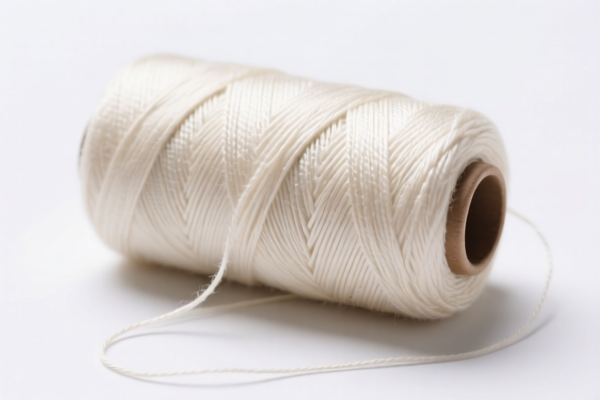
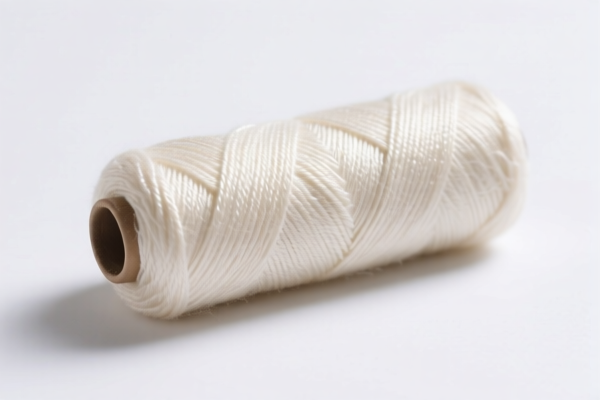
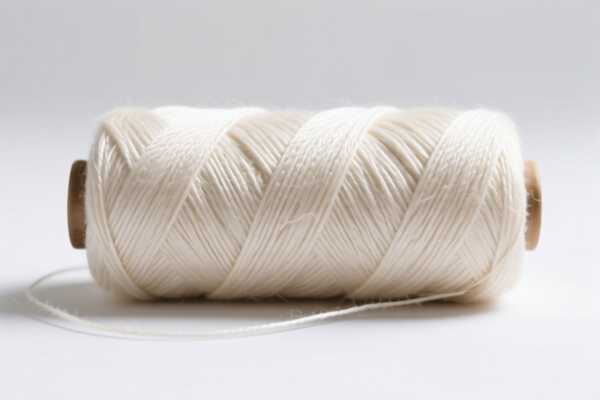
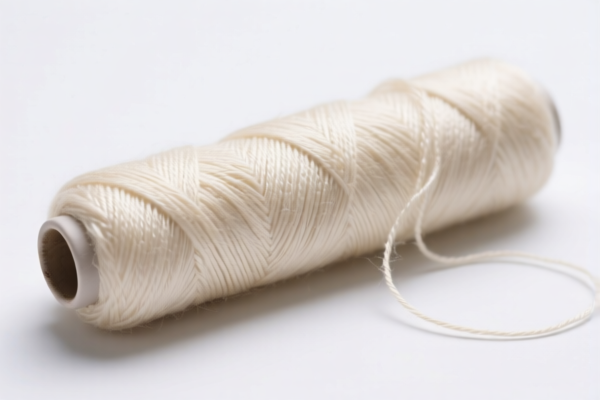
AI Analysis
🧵 Sterile Catgut Yarn (Surgical Sutures)
🌐 HS Code Reference & Customs Clearance Guide | 2026 Latest Tariff Analysis | Professional Clinical Clearance Strategy
📌 I. Product Definition: What Exactly is "Sterile Catgut Suture"?
Sterile catgut yarn refers to surgical sutures made from purified collagen fibers (typically derived from sheep or cattle intestine), processed to be sterile and ready for immediate surgical use. In international trade, these are classified strictly as medical consumables or medical devices, depending on their specific sterile status and intended use.
⚠️ Key Distinction:
- Absorbable Sutures (Catgut/Kgut): Primarily used in internal tissue approximation (e.g., abdominal wall, soft tissue). They are absorbed by the body over time.
- Non-Absorbable Sutures (Silk/Nylon/Polysorb): Not applicable here, as "Catgut" is inherently absorbable.
- Sterile vs. Non-Sterile: The prompt specifies "Sterile", which mandates classification under Chapter 30 (Pharmaceutical Products) or Chapter 90 (Medical Instruments) depending on the specific tariff schedule interpretation. In the US HTSUS, sterile sutures often fall under 9018.32 or 3006, but the provided shows a critical split based on "Medical Consumable" vs. "Instrument/Accessory" logic.
📦 II. HS Code Classification Details (Based on Provided )
The following HS Codes are derived directly from the provided dataset. Note that 3006 and 9018 are the two primary categories for sutures, with vastly different tax implications.
| HS Code | Product Description | Application/Logic | Tax Rate |
|---|---|---|---|
| 3006.30.50.00 | Medical Suture Threads | Classified as a pharmaceutical/medical consumable. Fits the definition of medical supplies for diagnostic/therapeutic use. | 10.0% |
| 3006.10.01.00 | Sterile Suture Materials | Explicitly matches "sterile suture materials." Based on common sense, surgical/dental sutures fall under this category. | 10.0% |
| 9018.32.00.00 | Medical Suture Threads (Instrument Category) | Classified as a surgical instrument accessory. Matches "surgical needles and related accessories." High Risk/High Tax. | 110.0% |
| 9018.39.00.50 | Other Medical Instruments | Classified as a medical device (other than syringes/catheters). Inferred as "other medical appliances." | 10.0% |
| 3006.10.01.00 | Surgical/Dental Suture Materials | Repeated entry. Confirms that surgical/dental sutures are best classified here for consistency. | 10.0% |
🔍 Critical Analysis:
- The dataset presents a dual-path classification:
1. Medical Consumable Path (3006): Lower tax (10%). Preferred if the product is viewed as a "material" for healing.
2. Medical Instrument Path (9018):
-9018.32.00.00: Very High Tax (110%). This is a danger zone for importers. It classifies sutures as "surgical needles/accessories" subject to Section 301/122 tariffs.
-9018.39.00.50: Low Tax (10%). A "catch-all" medical device category.
- Recommendation: Always aim for 3006.10.01.00 or 3006.30.50.00 unless the packaging/design explicitly triggers the "instrument" classification. Avoid9018.32at all costs due to the 110% rate.
💰 III. 2026 Latest Tariff Rate Breakdown (Including Additional Duties)
✅ Applicable Country: United States (US)
✅ Origin: China (CN)
✅ Effective Date: Post-November 2025 (Section 301 & IEEPA tariffs apply)
🎯 1. 3006.30.50.00 & 3006.10.01.00 & 9018.39.00.50 —— Low-Risk Path (10% Total)
| Item | Content |
|---|---|
| Base Duty | 0% (ad valorem) |
| Section 301 / Add-on Duty | 0% |
| Section 122 Duty | 10% |
| Total Tax Rate | 10% |
| Calculation | CIF Value × 10% |
| De Minimis Exemption | ❌ Not Applicable (Medical goods usually excluded from Section 321 de minimis for certain high-risk items, but even if eligible, the 10% applies to formal entries) |
| Legal Basis | Section 122 Tariff: 10% |
📌 Explanation:
- These codes fall under Section 122 (likely related to specific Chinese medical goods restrictions or broader trade measures).
- Total cost impact is manageable at 10%. This is the target classification for sterile catgut.
🎯 2. 9018.32.00.00 —— High-Risk Path (110% Total)
| Item | Content |
|---|---|
| Base Duty | 0% |
| Section 301 / Add-on Duty | 100% |
| Section 122 Duty | 10% |
| Total Tax Rate | 110% |
| Calculation | CIF Value × 110% |
| De Minimis Exemption | ❌ Strictly Prohibited |
| Legal Basis | Section 301: 100% + Section 122: 10% |
📌 Warning:
- This code classifies catgut as a surgical instrument accessory (like needles), triggering the maximum penalty tier.
- 110% tariff makes commercial import unviable unless value-added processing or alternative sourcing is used.
🛠️ IV. Customs Clearance Practical Advice (Pitfall Avoidance Guide)
✅ 1. Document Checklist (Non-Negotiable)
| Document | Required? | Notes |
|---|---|---|
| Sterility Certificate | ✔️ | Must prove terminal sterilization (EO or Gamma). |
| Product Specification Sheet | ✔️ | Detail material (collagen source), absorbability, strength, size (USP range). |
| FDA 510(k) Clearance | ✔️ | Critical. Catgut sutures are Class II medical devices. Must have FDA clearance number. |
| Commercial Invoice | ✔️ | Clearly state "Sterile Catgut Suture, Absorbable, Surgical Use." |
| Packing List | ✔️ | Show unit counts, lot numbers, expiration dates. |
| Certificate of Origin | ✔️ | To determine eligibility for any potential exemptions (though unlikely for China origin). |
✅ 2. Declaration Strategy (Key Mantras)
🔥 "Classify as Consumable, Not Instrument; Avoid 9018.32 at All Costs!"
| Scenario | Correct Declaration | Wrong Declaration |
|---|---|---|
| Sterile Catgut in Blister Packs | 3006.10.01.00 (Medical Consumable) | 9018.32.00.00 (Instrument) → 110% Tax! |
| Raw Catgut Yarn (Non-Sterile) | Likely 3006.30.50.00 | 5004.00 (Textile Yarn) → Wrong Chapter! |
| Suture Needles + Thread (Attached) | 9018.32.00.00 (Risk!) or 3006.10.01.00 | Depends on configuration; attached needles often trigger instrument classification. |
| Non-Sterile Catgut for Lab Use | 3006.30.50.00 | 3006.10.01.00 (Misleading "Sterile" claim) |
📌 Critical Tip:
- If the sutures come on a needle (pre-attached), customs may view them as a "surgical instrument" (9018.32), leading to the 110% tax.
- If the sutures are on spools or loose (to be loaded by the surgeon), they are more likely to be classified as "materials" (3006), leading to 10% tax.
- Strategy: Import loose sterile catgut (not on needles) to secure the 3006 classification.
✅ 3. Special Cases
| Case | Handling Advice |
|---|---|
| FDA Registration | Ensure manufacturer is FDA registered. Lack of 510(k) will lead to detention and destruction. |
| Expiry Date | Customs will check expiry dates. No import of expired goods. |
| Lot Traceability | Each package must have a unique lot number for recall purposes. |
| Chinese Origin | No preferential tariff available. Full 10% (or 110% if misclassified) applies. |
🌍 V. Global Market Comparison (2026)
| Region | Recommended HS Code | Est. Duty (China Origin) | Key Requirement |
|---|---|---|---|
| 🇺🇸 USA | 3006.10.01.00 | 10% (Section 122) | FDA 510(k), Sterility Cert |
| 🇪🇺 EU | 3006.30.00 | ~0% (CE Mark) | CE Mark, ISO 13485 |
| 🇨🇳 China | 3006.30.50.00 | 0-6% (NMPA Approval) | NMPA License |
| 🇯🇵 Japan | 3006.30.00 | ~0-2% (PMDA) | PMDA Approval |
📌 Conclusion:
- The US is the most expensive market due to Section 122 tariffs.
- Avoid 9018.32 at all costs in the US.
- Other markets (EU, China, Japan) are more favorable with lower or zero duties, but require strict medical device registrations.
📌 VI. Common Errors & Pitfalls (Lessons Learned)
❌ Error 1: Declaring "Catgut Suture" as "Silk Thread" or "Textile Yarn"
👉 Consequence: Misclassification. Customs will reclassify to 3006/9018 + penalties.
❌ Error 2: Declaring Pre-attached Needles as "Loose Sutures"
👉 Consequence: If found, reclassified to 9018.32.00.00 → 110% tax + back duties.
❌ Error 3: Ignoring FDA 510(k) Number on Invoice
👉 Consequence: CBP Detention. Product held until FDA approves or returns.
❌ Error 4: Using "Medical Device" generic term without specifying "Suture"
👉 Consequence: Ambiguity leads to manual review, delays, and potential higher duty estimation.
✅ Correct Declaration Example:
"Sterile Absorbable Surgical Sutures, Catgut, USP Size 2-0, Looped on Needle, Lot #ABC123, Exp. 2028-12-31, FDA 510(k) #KXXXXXX, HS Code 3006.10.01.00"
🎯 VII. Conclusion: Precision Classification for Cost Savings
🎯 Key Takeaways:
🔹 "Loose = 3006 (10%); Attached = 9018.32 (110%)!"
🔹 "Always seek FDA clearance; No 510(k) = No Entry!"
🔹 "Section 122 applies; Budget for 10% minimum duty!"
📌 Pro Tip:
If you must import pre-attached needles, consult a customs broker to apply for a Binding Ruling to confirm if
9018.39.00.50(10%) can be used instead of9018.32.00.00(110%). This could save 100% in duties.
📣 Immediate Action:
📞 Contact FDA + Customs Broker
📄 Verify 510(k) Status
📦 Opt for Loose Sutures to Minimize Tax
🚀 Ensure Smooth, Cost-Effective Market Entry!
✨ Smart Classification, Smart Savings!
💼 Every Percentage Point Matters in Medical Trade!
Customer Reviews
About HS Code Classification
The Harmonized System (HS) is an internationally standardized nomenclature developed by the World Customs Organization (WCO) to classify traded products. Over 200 countries use the HS system as the basis for customs tariffs, trade statistics, and import/export regulations.
Each HS code follows a hierarchical structure:
- Chapter (2 digits) — Broad category of goods (e.g., Chapter 84: Machinery and Mechanical Appliances)
- Heading (4 digits) — More specific grouping within the chapter
- Subheading (6 digits) — Internationally standardized breakdown, used by all WCO member countries
- National subdivisions (8-10 digits) — Country-specific extensions for further classification, such as US HTSUS 10-digit codes
Correct HS code classification is essential for smooth customs clearance, accurate duty payment, and compliance with trade regulations. Misclassification can lead to customs delays, overpayment of duties, or penalties.
When importing from CN to US, the applicable tariff rates may include:
- Most-Favored-Nation (MFN) rate — The standard duty rate applied to WTO members
- General rate — Applied to countries without trade agreements
- Trade remedy duties — Additional tariffs such as Section 301 (anti-dumping), Section 232 (national security), or countervailing duties
The information provided on this page is for reference purposes only. For official classification, please consult with your local customs authority or a licensed customs broker.