Sterilizer (Retail Packaging)
CN → US| HS Code | Tariff Rate | Origin | Destination | Doc |
|---|---|---|---|---|
| 8419200000 | 0.0% | CN | US | Official Doc |
| 8419200020 | 10.0% | CN | US | Official Doc |
| 851650 | 0.0% | CN | US | Official Doc |
| 901819 | 0.0% | CN | US | Official Doc |
Product Images
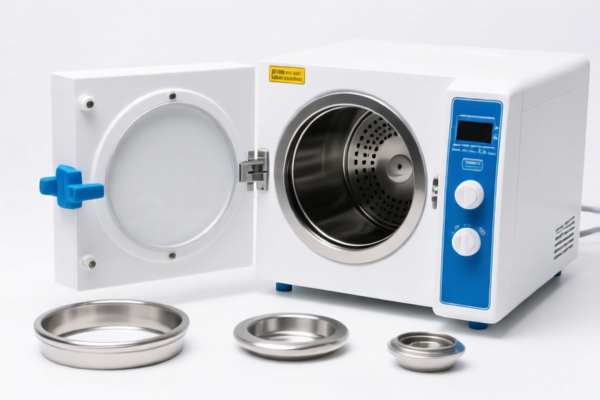
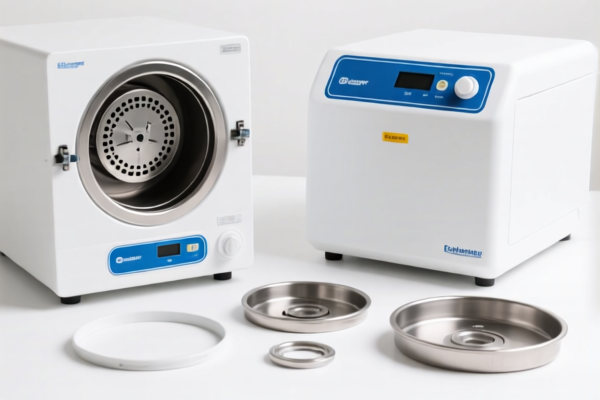
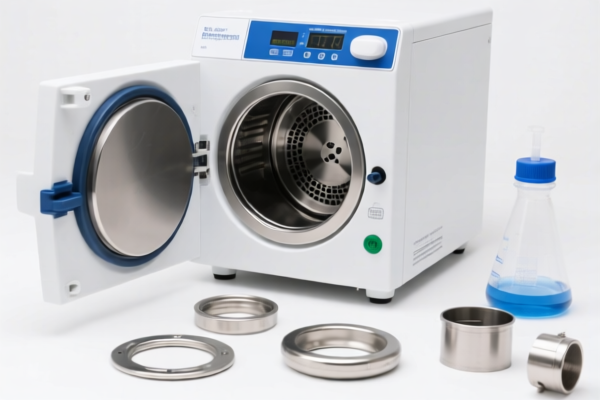
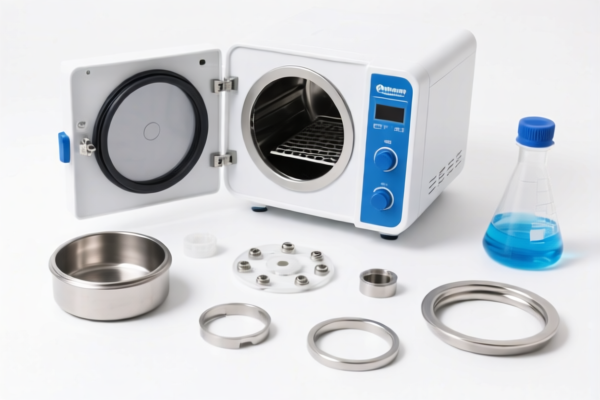
AI Analysis
🏥 Sterilizer (Retail Packaging) – The Classification Trap & Strategic Clearance Guide
🌐 HS Code Reference & Clearance Strategy | 2026 Latest Tariff Analysis | Professional Customs Solutions
📌 I. Product Definition & Classification: What Exactly Is a "Sterilizer"?
The term "Sterilizer" is a broad functional description that spans multiple industries, including medical, laboratory, and household contexts. In international trade, function alone does not determine the HS Code. You must look at: 1. Voltage/Power Source: Electrical vs. Non-electrical. 2. Usage Context: Medical/Laboratory vs. Domestic. 3. Technical Principle: Temperature change (heat/steam) vs. Other methods.
⚠️ Critical Distinction:
- "Retail Packaging" often implies a consumer/household product. However, if it is designed for medical/lab use, it may still fall under Chapter 84 or 90 depending on specific design features. - Chapter 85 vs. Chapter 84: Electrical medical sterilizers often fall under 8516, while non-domestic, temperature-process machinery falls under 8419. - Chapter 90: General medical apparatus not specified elsewhere.
📦 II. HS Code Classification Matrix (Based on Provided Data)
The following HS Codes are derived strictly from the provided dataset. Note that tax retrieval failed for three of the four codes in the source data, leaving only one code with confirmed tax details.
| HS Code | Product Description | Applicable Scenario | Power Source | Tax Status (Source Data) |
|---|---|---|---|---|
| 8516.50 | Electric sterilizers, including for medical or laboratory use, not specified elsewhere | Electrical medical/lab sterilizers | Electrical | ❌ Error (Failed to retrieve) |
| 9018.19 | Other apparatus and instruments for medical, surgical, dental, or veterinary purposes | General medical/surgical sterilizers | Not specified | ❌ Error (Failed to retrieve) |
| 8419.20.00.00 | Machinery for treatment by temperature change (heating, sterilizing, etc.); Medical or surgical sterilizers | Non-domestic industrial/hospital-grade sterilizers | Electric/Non-electric | ❌ Error (Failed to retrieve) |
| 8419.20.00.20 | Machinery for treatment by temperature change; Laboratory sterilizers | Laboratory-grade sterilizers | Electric/Non-electric | ✅ 0.0% (Base + Surtax) |
🔍 Key Insight:
- Only HS 8419.20.00.20 (Laboratory Sterilizers) has a confirmed 0.0% total tax rate in the provided data. - HS 8516.50 and 9018.19 are common for "medical sterilizers" but tax info is missing in the source. - HS 8419.20.00.00 covers "Medical/Surgical" sterilizers but tax info is missing. - "Retail Packaging" is ambiguous. If it’s a home-use device, it might not fit 8419 (which explicitly excludes domestic equipment). If it’s a small medical device, it might fit 8516.50 or 9018.19.
💰 III. Tax Rate Analysis (Detailed Breakdown)
✅ Source Constraint: Tax data is only available for one HS Code. For others, the system returned an error.
🎯 1. 8419.20.00.20 – Laboratory Sterilizers
| Item | Details |
|---|---|
| Product | Machinery for treatment of materials by temperature change; Laboratory sterilizers |
| Base Tariff | 0.0% |
| Surtax (Additional) | 0.0% |
| Total Tax Rate | 0.0% |
| Tax Details | "Base tariff: 0.0%, Surtax: 0.0%" |
| Note | This is the only code with confirmed zero tax in the provided data. |
📌 Explanation:
- If your "Sterilizer" is classified as a Laboratory Sterilizer (not medical/surgical, not domestic), it may qualify for this 0% rate. - Caution: Ensure the device is strictly for laboratory use. Misclassification as a medical device could lead to a different HS code with unknown or higher taxes.
⚠️ 2. Other HS Codes (8516.50, 9018.19, 8419.20.00.00)
| HS Code | Tax Status |
|---|---|
| 8516.50 | ❌ Failed to retrieve tax information |
| 9018.19 | ❌ Failed to retrieve tax information |
| 8419.20.00.00 | ❌ Failed to retrieve tax information |
📌 Warning:
- Do not assume these codes have 0% tax. Missing data does not imply zero tax. - These codes typically attract standard MFN (Most Favored Nation) rates, which can range from 2% to 8% or higher, depending on the country of origin and trade agreements. - Action Required: You must verify the tax rates for these codes through an official customs database or broker, as the provided data is incomplete.
🛠️ IV. Clearance Practical Advice (Avoiding Pitfalls)
✅ 1. Documentation Checklist (Essential)
| Document | Requirement | Reason |
|---|---|---|
| Product Specifications | ✔️ Mandatory | Must specify voltage, power, sterilization method (steam, dry heat, UV), and intended use (medical vs. lab vs. home). |
| User Manual | ✔️ Mandatory | Proves if the device is "domestic" or "professional/lab." |
| Commercial Invoice | ✔️ Mandatory | Must clearly describe the product (e.g., "Electric Laboratory Sterilizer, Model XYZ"). Avoid vague terms like "Sterilizer" alone. |
| Certificate of Origin | ✔️ Recommended | To claim preferential tariffs if applicable. |
| Medical Device License | ✔️ If Medical | If classified under 9018.19 or 8516.50, many countries require FDA, CE, or local medical device registration. |
| Technical Diagram | ✔️ If Contested | Helps customs determine if it’s "domestic" (excluded from 8419) or "non-domestic." |
✅ 2. Classification Strategy: Which HS Code to Choose?
| Scenario | Recommended HS Code | Reasoning |
|---|---|---|
| Device is for Home Use (e.g., baby bottle sterilizer) | Not in Data | Chapter 84 explicitly excludes "machinery of a kind used for domestic purposes." It may fall under Chapter 85 (household appliances) or Chapter 90, but these are not in the provided data. |
| Device is for Medical/Hospital Use (Electric) | 8516.50 or 9018.19 | "Electric sterilizers for medical use" are explicitly listed under 8516.50. If it’s a general medical instrument, 9018.19 applies. |
| Device is for Laboratory Use | 8419.20.00.20 | Explicitly listed. Confirmed 0% tax in source data. |
| Device is for Surgical/Medical Use (Non-electric or specialized) | 8419.20.00.00 | "Medical or surgical sterilizers" under 8419.20.00.00. Tax unknown. |
🔥 Key Rule:
- "Retail Packaging" ≠ Domestic Use. A product sold in retail can still be for professional use. Check the manual and specifications. - If it’s electric and for medical use, 8516.50 is the most precise fit in the data. - If it’s for laboratory use, 8419.20.00.20 is the safest bet for 0% tax.
✅ 3. Special Cases
| Case | Handling |
|---|---|
| Hybrid Device (e.g., Sterilizer + Dryer) | Declare as "Sterilizer" if that’s the primary function. |
| Parts of Sterilizers | If importing only parts, they may fall under different HS codes (e.g., 8421.90 for parts of centrifuges or filters, not listed here). |
| OEM/ODM | Provide supplier declaration to prove intended use. |
🌍 V. Global Clearance Comparison (Hypothetical)
| Market | Likely HS Code | Estimated Tax | Notes |
|---|---|---|---|
| USA | 8516.50 or 8419.20 | Varies (Section 301 may apply) | Check for additional duties on Chinese origin. |
| EU | 8516.50 or 8419.20 | Standard MFN (~2-5%) | CE marking required for medical/lab devices. |
| China (Import) | 8516.50 or 8419.20 | Standard MFN (~5-10%) | CCC certification may be needed. |
📌 Note: Since the provided data only shows 0.0% for 8419.20.00.20, this rate is likely specific to the origin-country trade agreement or a zero-rated category in the source database. Do not assume 0% for other codes.
📌 VI. Common Mistakes & Pitfalls (Learn from Others)
❌ Mistake 1: Classifying a domestic sterilizer under 8419.20.00.20
👉 Consequence: Customs may reject because 8419 excludes domestic equipment. You may face penalties or reclassification under a different chapter (e.g., 8516 or 9018) with higher taxes.
❌ Mistake 2: Assuming "Medical Sterilizer" = 8419.20.00.00
👉 Consequence: If it’s electric, 8516.50 is more specific. Misclassification can lead to incorrect duty assessment.
❌ Mistake 3: Ignoring "Retail Packaging" implications
👉 Consequence: If the product is clearly for home use (e.g., for baby bottles), it should not be declared as a medical/lab device. This can trigger audits for false declaration of medical device status.
✅ Correct Approach:
"Electric Sterilizer, Model XYZ, for Laboratory Use, 220V, 50Hz, with Certificate of Conformity"
🎯 VII. Conclusion: Strategic Recommendation
🎯 Remember:
🔹 "Lab Use = 8419.20.00.20 (0% Tax)"
🔹 "Medical/Electric = 8516.50 (Tax Unknown)"
🔹 "Domestic = Not in Data (Check Chapter 85/90)"
📌 Action Plan:
1. Confirm Intended Use: Is it for Lab, Medical, or Home?
2. Check Voltage: Is it Electric?
3. Select HS Code:
- If Laboratory → 8419.20.00.20 (0% Tax).
- If Medical/Electric → 8516.50 (Verify tax separately).
- If General Medical → 9018.19 (Verify tax separately).
4. Prepare Documentation: Include user manual and specs to prove use.
5. Consult a Broker: Since tax data is missing for most codes, get a professional quote for 8516.50, 9018.19, and 8419.20.00.00.
📣 Immediate Action:
📞 Contact Customs Broker
📄 Provide Product Manual & Specs
🚀 Apply for Advance Ruling if possible to lock in the 0% rate for Lab Sterilizers.
✨ Precision in Classification, Peace of Mind in Clearance!
💼 Every HS Code counts. Choose wisely!
Customer Reviews
About HS Code Classification
The Harmonized System (HS) is an internationally standardized nomenclature developed by the World Customs Organization (WCO) to classify traded products. Over 200 countries use the HS system as the basis for customs tariffs, trade statistics, and import/export regulations.
Each HS code follows a hierarchical structure:
- Chapter (2 digits) — Broad category of goods (e.g., Chapter 84: Machinery and Mechanical Appliances)
- Heading (4 digits) — More specific grouping within the chapter
- Subheading (6 digits) — Internationally standardized breakdown, used by all WCO member countries
- National subdivisions (8-10 digits) — Country-specific extensions for further classification, such as US HTSUS 10-digit codes
Correct HS code classification is essential for smooth customs clearance, accurate duty payment, and compliance with trade regulations. Misclassification can lead to customs delays, overpayment of duties, or penalties.
When importing from CN to US, the applicable tariff rates may include:
- Most-Favored-Nation (MFN) rate — The standard duty rate applied to WTO members
- General rate — Applied to countries without trade agreements
- Trade remedy duties — Additional tariffs such as Section 301 (anti-dumping), Section 232 (national security), or countervailing duties
The information provided on this page is for reference purposes only. For official classification, please consult with your local customs authority or a licensed customs broker.