Sticky Fly Roll
CN → US| HS Code | Tariff Rate | Origin | Destination | Doc |
|---|---|---|---|---|
| 3919102055 | 40.8% | CN | US | Official Doc |
| 3919905060 | 40.8% | CN | US | Official Doc |
| 3808911000 | 37.8% | CN | US | Official Doc |
| 3808915001 | 40.0% | CN | US | Official Doc |
| 6307102030 | 22.8% | CN | US | Official Doc |
Product Images
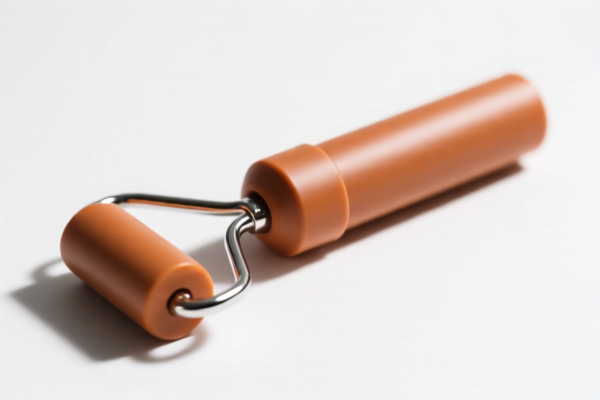

AI Analysis
🪰 Sticky Fly Roll (Adhesive Fly Traps & Pest Control Strips)
🌐 HS Code Reference & Customs Clearance Guide | 2026 Latest Tariff Analysis | Professional Clearance Strategy
📌 I. Product Definition & Classification: Do You Really Understand "Sticky Fly Roll"?
"Sticky Fly Roll" is a broad commercial term that can refer to different types of adhesive pest control products. In international trade, its classification depends entirely on its material composition and intended use. It generally falls into two main categories:
- Plastic Adhesive Sheets/Rolls: Plain or coated plastic strips used for general sticking or industrial purposes.
- Insecticidal Adhesive Strips: Specifically treated with pesticides (insecticides) to kill flies, designed for pest control.
⚠️ Key Distinction Point: - If the product is purely plastic/adhesive without pesticidal treatment → Classified under Chapter 39 (Plastics) or Chapter 63 (Other Made-up Articles). - If the product contains pesticides/insecticides for killing pests → Classified under Chapter 38 (Pharmaceutical/Chemical Products).
📦 II. HS Code Classification Details (Based on Provided Data)
| HS Code | Product Description | Application Scenario | Tax Rate (China to US) |
|---|---|---|---|
3919.10.20.55 |
Self-adhesive plates, sheets, film, foil, tape, strip, and other shapes of plastics, flat | General plastic adhesive rolls, plain sticky strips | 40.8% |
3919.90.50.60 |
Self-adhesive plates, sheets, film, foil, tape, strip, and other shapes of plastics, other | Other plastic-based sticky rolls not specified above | 40.8% |
3808.91.10.00 |
Insecticides, fungicides, herbicides, anti-sprouting agents, plant-growth regulators, disinfectants, and similar products; preparations of a kind used for destroying rodents or other pests; disinfectants for preventing the growth of plants, and similar products: Insecticides, fungicides, herbicides, anti-sprouting agents, plant-growth regulators, disinfectants and similar products: Insecticides | Sticky fly paper/rolls treated with insecticides | 37.8% |
3808.91.50.01 |
Other insecticides | Other sticky fly strips classified under "Other" insecticides | 40.0% |
6307.10.20.30 |
Other made-up articles, including dress patterns and patterns for dressmaking: Dress patterns and patterns for dressmaking | Cleaning products, adhesive cleaning rolls (lint rollers, dust strips) | 22.8% |
🔍 Key Reminder: - Pesticidal Content: If the fly roll contains chemical agents to kill insects, it must be classified under 3808. Misclassifying it as plastic (3919) when it is pesticide-treated is a serious compliance error. - Non-Pesticidal: If it's just a sticky strip for general use (e.g., cleaning, bundling), it falls under 3919 or 6307. - Cleaning Products: Specific adhesive cleaning rolls (like lint removers) may fall under 6307.10.20.30, which has a significantly lower tax rate.
💰 III. 2026 Latest Tariff Rate Details (Including Surtaxes & Policy Add-ons)
✅ Applicable Country: United States (US)
✅ Origin: China (CN)
✅ Effective Date: From 2025-11-10 onwards (including subsequent imports)
🎯 1. 3919.10.20.55 & 3919.90.50.60 —— Plastic Self-Adhesive Rolls (Non-Pesticidal)
| Item | Detail |
|---|---|
| Base Duty Rate | 5.8% |
| Section 301 Surtax | +25.0% |
| Section 122 Tariff | +10.0% |
| Total Tax Rate | 40.8% |
| Tax Calculation | CIF Value × 40.8% |
| De Minimis Eligibility | ❌ No (Not eligible for de minimis exemption) |
| Legal Basis Path | Base: 5.8% → Sec 301: +25% → Sec 122: +10% |
📌 Explanation: - These HS codes are for plastic-based adhesive strips without pesticide content. - The total tax burden is high (40.8%) due to the combination of base tariffs and US trade remedies (Section 301 and Section 122). - Risk: Ensure the product description clearly states "Non-Pesticidal" to avoid misclassification penalties.
🎯 2. 3808.91.10.00 —— Sticky Fly Paper/Tape (Insecticide Treated)
| Item | Detail |
|---|---|
| Base Duty Rate | 2.8% |
| Section 301 Surtax | +25.0% |
| Section 122 Tariff | +10.0% |
| Total Tax Rate | 37.8% |
| Tax Calculation | CIF Value × 37.8% |
| De Minimis Eligibility | ❌ No |
| Legal Basis Path | Base: 2.8% → Sec 301: +25% → Sec 122: +10% |
📌 Explanation: - This code applies to sticky fly rolls/paper that are treated with insecticides. - Although the base rate is lower (2.8%), the surtaxes push the total to 37.8%. - Compliance: Must provide proof of pesticide content and EPA registration (if applicable) to justify this classification.
🎯 3. 3808.91.50.01 —— Other Insecticides (Sticky Fly Strips)
| Item | Detail |
|---|---|
| Base Duty Rate | 5.0% |
| Section 301 Surtax | +25.0% |
| Section 122 Tariff | +10.0% |
| Total Tax Rate | 40.0% |
| Tax Calculation | CIF Value × 40.0% |
| De Minimis Eligibility | ❌ No |
| Legal Basis Path | Base: 5.0% → Sec 301: +25% → Sec 122: +10% |
📌 Explanation: - This is a fallback code for sticky fly products classified under "Other" insecticides. - Tax rate is 40.0%, slightly higher than
3808.91.10.00.
🎯 4. 6307.10.20.30 —— Cleaning Products (Adhesive Cleaning Rolls)
| Item | Detail |
|---|---|
| Base Duty Rate | 5.3% |
| Section 301 Surtax | +7.5% |
| Section 122 Tariff | +10.0% |
| Total Tax Rate | 22.8% |
| Tax Calculation | CIF Value × 22.8% |
| De Minimis Eligibility | ❌ No |
| Legal Basis Path | Base: 5.3% → Sec 301: +7.5% → Sec 122: +10% |
📌 Explanation: - If the "sticky roll" is specifically designed for cleaning (e.g., lint rollers, dust strips, adhesive cleaning rolls), it may qualify for this code. - Significant Savings: Only 22.8% total tax, compared to 37-40% for other categories. - Condition: Must clearly demonstrate its primary use is for cleaning, not pest control or general adhesion.
🛠️ IV. Customs Clearance Practical Advice (Pitfall Avoidance Guide)
✅ 1. Required Documentation Checklist (All Are Mandatory)
| Document | Mandatory | Notes |
|---|---|---|
| ✅ Product Specification Sheet | ✔️ | Must specify material (plastic/paper), adhesive type, and whether it contains pesticides. |
| ✅ Ingredient/Composition List | ✔️ | For 3808 codes, must list active pesticide ingredients and concentrations. |
| ✅ Product Photos (Clear) | ✔️ | Show packaging, label, and product form (roll/sheet). |
| ✅ Commercial Invoice | ✔️ | Clearly state "Sticky Fly Roll" and specify use (e.g., "For Pest Control" or "For Cleaning"). |
| ✅ EPA Registration (If Applicable) | ✔️ | For pesticide-treated products (3808), EPA registration number is often required. |
| ✅ Origin Certificate (CO) | ✔️ | To prove origin (China) and apply correct surtaxes. |
| ✅ Packing List | ✔️ | Detail net/gross weight, dimensions, and number of rolls. |
✅ 2. Declaration Tips (Critical Rules)
🔥 “Use Defines Code: Pesticide=3808, Plastic=3919, Cleaning=6307!”
| Scenario | Correct HS Code | Wrong Declaration |
|---|---|---|
| Sticky fly paper with insecticide | 3808.91.10.00 |
Declare as "Plastic Roll" → Penalty for Misclassification |
| Plain adhesive plastic strip (no pest control) | 3919.10.20.55 |
Declare as "Fly Trap" → Potential Rejection |
| Adhesive lint roller/cleaning strip | 6307.10.20.30 |
Declare as "Fly Trap" → Higher Tax (40% vs 22.8%) |
| Mixed shipment (Fly traps + Cleaning rolls) | Separate Codes | Single HS Code → Customs Hold |
✅ 3. Special Case Handling
| Case | Handling Advice |
|---|---|
| Fly Rolls with Unknown Pesticide Content | Do not declare as 3808. Use 3919 if no pesticide is confirmed, or test for active ingredients. |
| Reusable Sticky Rolls | If designed for repeated use and cleaning, consider 6307.10.20.30 for lower tax. |
| OEM Custom Labels | Provide design files and label samples to prove intended use. |
| Bulk Industrial Use | If sold in large rolls for industrial pest control, still use 3808 but provide B2B invoice. |
🌍 V. Global Market Clearance Comparison (2026 Latest)
| Country/Region | Recommended HS Code | Total Tax (China Origin) | Certification Required | Notes |
|---|---|---|---|---|
| 🇺🇸 USA | 3808.91.10.00 |
37.8% (Pesticidal) | EPA Registration | High surtaxes apply |
| 🇺🇸 USA | 3919.10.20.55 |
40.8% (Non-Pesticidal) | None | No EPA needed, but higher tax |
| 🇺🇸 USA | 6307.10.20.30 |
22.8% (Cleaning) | None | Best for cleaning rolls |
| 🇨🇳 China | 3808.91.10.00 |
5-10% (Varies) | Pesticide License | Lower base tax |
| 🇪🇺 EU | 3808.91 |
0-6.5% | BPR Registration | Stricter pesticide rules |
| 🇬🇧 UK | 3808.91 |
0-6.5% | PPP Regulation | Post-Brexit rules apply |
📌 Conclusion: - USA imposes high tariffs on all categories due to Section 301 and 122. - Cleaning rolls (
6307) offer the lowest tax burden (22.8%) but must strictly meet the definition of "cleaning product." - Pesticide content is the key classifier. Misdeclaration can lead to fines, seizures, and legal issues.
📌 VI. Common Errors & Pitfall Guide (Lessons Learned)
❌ Error 1: Declaring pesticide-treated fly rolls as "Plastic Roll" (3919)
👉 Consequence: EPA violation, product seizure, heavy fines.
❌ Error 2: Declaring cleaning rolls as "Fly Traps" (3808)
👉 Consequence: Paying 37.8% tax instead of 22.8%. Unnecessary cost increase.
❌ Error 3: Not providing EPA registration for pesticide products
👉 Consequence: Customs refusal, shipment held at port, return or destruction.
❌ Error 4: Using vague descriptions like "Sticky Roll"
👉 Consequence: Customs officer may guess the code, leading to incorrect classification and delays.
✅ Correct Practice:
"Sticky Fly Trap Roll, Treated with Insecticide [Name], For Pest Control, EPA Reg. No. XXXXX"
OR
"Adhesive Cleaning Roll, For Lint and Dust Removal, Non-Pesticidal"
🎯 VII. Conclusion: Precise Classification Saves Money & Time!
🎯 Remember These Rules:
🔹 “Pesticide = 3808 (37-40%)”
🔹 “Plastic = 3919 (40.8%)”
🔹 “Cleaning = 6307 (22.8%)”
🔹 “Vague Description = High Risk & High Cost!”📌 Tip:
If your product is a cleaning roll, emphasize its cleaning function to benefit from the 22.8% tax rate.
If it is a fly trap, ensure EPA compliance to avoid legal issues.
📣 Immediate Action:
📞 Contact a professional customs broker + Provide product details + Apply for HS Code Pre-Ruling
🚀 Clear your Sticky Fly Rolls efficiently, avoid penalties, and maximize profits!
✨ Professional Clearance Starts with Accurate Classification!
💼 Every dollar of tax saved is profit earned!
Customer Reviews
About HS Code Classification
The Harmonized System (HS) is an internationally standardized nomenclature developed by the World Customs Organization (WCO) to classify traded products. Over 200 countries use the HS system as the basis for customs tariffs, trade statistics, and import/export regulations.
Each HS code follows a hierarchical structure:
- Chapter (2 digits) — Broad category of goods (e.g., Chapter 84: Machinery and Mechanical Appliances)
- Heading (4 digits) — More specific grouping within the chapter
- Subheading (6 digits) — Internationally standardized breakdown, used by all WCO member countries
- National subdivisions (8-10 digits) — Country-specific extensions for further classification, such as US HTSUS 10-digit codes
Correct HS code classification is essential for smooth customs clearance, accurate duty payment, and compliance with trade regulations. Misclassification can lead to customs delays, overpayment of duties, or penalties.
When importing from CN to US, the applicable tariff rates may include:
- Most-Favored-Nation (MFN) rate — The standard duty rate applied to WTO members
- General rate — Applied to countries without trade agreements
- Trade remedy duties — Additional tariffs such as Section 301 (anti-dumping), Section 232 (national security), or countervailing duties
The information provided on this page is for reference purposes only. For official classification, please consult with your local customs authority or a licensed customs broker.