Sticky Notes (Tear off)
CN → US| HS Code | Tariff Rate | Origin | Destination | Doc |
|---|---|---|---|---|
| 4820102060 | 35.0% | CN | US | Official Doc |
| 4820104000 | 35.0% | CN | US | Official Doc |
| 9610000000 | 13.5% | CN | US | Official Doc |
Product Images
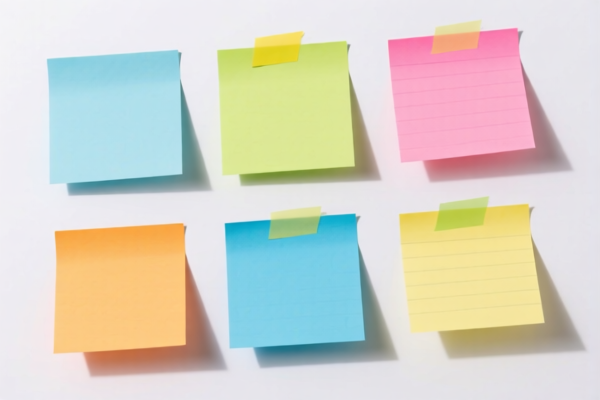
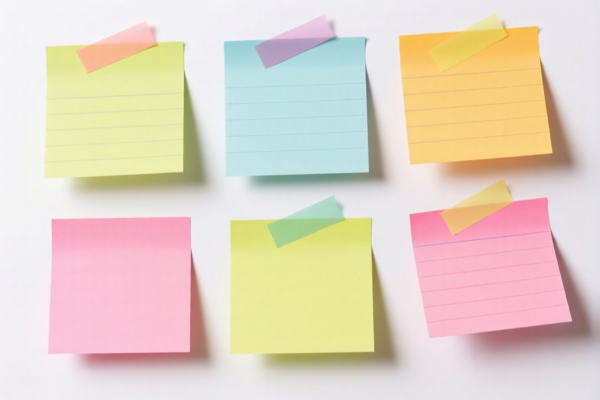
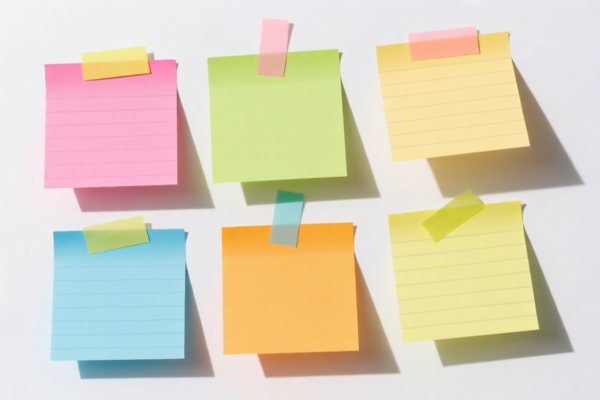

AI Analysis
📝 Sticky Notes (Tear-Off Pads)
🌐 HS Code Reference & Customs Clearance Guide | 2026 Latest Tariff Analysis | Professional Clearance Strategy
📌 I. Product Definition & Classification: Do You Really Understand "Sticky Notes"?
Sticky Notes (Tear-off pads), commonly known as memo pads or self-adhesive pads, are essential stationery items used for temporary messaging, reminders, and brainstorming. In international trade, they are strictly classified under Chapter 48 (Paper and Paperboard) as articles of stationery.
It is critical to distinguish them from: 1. Slates/Boards (HS 9610): Physical writing surfaces (chalkboards/whiteboards) are NOT sticky notes. 2. Loose Leaf Binders/Folders (HS 4820.10.40/90): While similar in function (organization), sticky notes are classified specifically under "Diaries, notebooks and address books, bound; memorandum pads..." due to their specific format of attached sheets.
⚠️ Key Distinction Point:
- If it is a pad of paper sheets (even if self-adhesive) → Chapter 48 (Stationery)
- If it is a hard slate/board with a writing surface → HS 9610 (Slates/Boards)
- Most "Sticky Notes" fall under HS 4820.10.
📦 II. HS Code Classification Details (2026 Latest Tariff Authority对照)
Based on the provided data, here are the specific HS Codes and Tax Rates. Note: There are two primary codes for sticky notes/memo pads under HS 4820.10, both carrying the same high tariff rate due to Section 301 measures.
| HS Code | Product Description | Scenario | Tax Rate (US Import from China) |
|---|---|---|---|
9610.00.00.00 |
Slates and boards, with writing or drawing surfaces, whether or not framed | ⚠️ INCORRECT for Sticky Notes. Only applies if the product is a rigid slate/board. | 3.5% (Low) |
4820.10.40.00 |
Registers, account books... Diaries, notebooks and address books, bound... Other | General memo pads, notebooks, other stationery items not explicitly listed in 4820.10.20. | 25.0% (High) |
4820.10.20.60 |
Diaries, notebooks and address books, bound; memorandum pads, letter pads and similar articles Other | ✅ CORRECT for Sticky Notes. Specifically covers "memorandum pads" (which includes tear-off sticky note pads). | 25.0% (High) |
🔍 Important Note:
- Most standard Sticky Notes (Tear-off Pads) should be classified under4820.10.20.60because they fall under "memorandum pads."
- If the product is a simple notebook without a specific "sticky" feature but used for notes, it might also fall under4820.10.40.00.
- Both 4820.10 codes carry a 25% total tax.
- HS 9610 (3.5%) is ONLY for slates/boards, NOT paper-based sticky notes.
💰 III. 2026 Latest Tariff Rate Details (Including Additional Taxes & Policy Surcharge)
✅ Applicable Country: United States (US)
✅ Country of Origin: China (CN)
✅ Effective Time: 2025/2026 (Current Section 301 Measures)
🎯 1. 4820.10.20.60 —— Memorandum Pads (Sticky Notes)
| Item | Content |
|---|---|
| Base Tariff | 0.0% (ad valorem) |
| Additional Tax (Section 301) | +25.0% |
| Total Tax Rate | 25.0% |
| Tax Calculation | CIF Value × 25% |
| De Minimis Exemption | ❌ Not Applicable for Section 301 goods from China (if valued over $800, standard rules apply; but note: many de minimis exemptions were restricted for Section 301 items in recent policy updates). Check current CBP enforcement. |
| Legal Basis | USITC:4820.10.20.60 → Section 301 Footnote |
📌 Explanation:
- The base tariff for paper stationery is often 0% or very low.
- However, due to US-China trade tensions, 25% additional tariff is applied to most Chinese-origin paper products under HTS 4820.10.
- Total Effective Rate: 25%. This is a significant cost driver.
🎯 2. 4820.10.40.00 —— Other Notebooks/Stationery
| Item | Content |
|---|---|
| Base Tariff | 0.0% |
| Additional Tax | +25.0% |
| Total Tax Rate | 25.0% |
| Tax Calculation | CIF Value × 25% |
| Legal Basis | USITC:4820.10.40.00 → Section 301 Footnote |
📌 Note:
- If your sticky notes are packaged loosely or considered "other" memorandum pads, they may fall here.
- Rate is identical to 4820.10.20.60.
🎯 3. 9610.00.00.00 —— Slates/Boards (For Comparison)
| Item | Content |
|---|---|
| Base Tariff | 3.5% |
| Additional Tax | 0.0% (No Section 301 surcharge for this specific code) |
| Total Tax Rate | 3.5% |
| Warning | DO NOT misclassify sticky notes as slates. This is fraud if done intentionally. Customs will reclassify and penalize. |
🛠️ IV. Customs Clearance Practical Advice (Pitfall Avoidance Guide)
✅ 1. Documentation Checklist (Must-Haves)
| Document | Required? | Description |
|---|---|---|
| ✅ Product Description | ✔️ | "Sticky Notes, Yellow, 3x3 inch, 100 sheets/pad, Self-adhesive, Tear-off" |
| ✅ Material Composition | ✔️ | Paper (70gsm), Adhesive (acrylic-based), Cardboard backing |
| ✅ HS Code Declaration | ✔️ | Recommend 4820.10.20.60 for memorandum pads |
| ✅ Invoice | ✔️ | Clearly state "Stationery - Memo Pads" |
| ✅ Certificate of Origin | ✔️ | For China origin verification |
| ✅ Photos | ✔️ | Show the product, packaging, and adhesive side (to prove it's not a slate) |
✅ 2. Classification Tips (Key Mantra)
🔥 "Paper is Paper, Slate is Slate. Sticky Notes = Stationery (4820)!"
| Scenario | Correct HS Code | Wrong HS Code | Consequence |
|---|---|---|---|
| Standard Sticky Notes (Tear-off) | 4820.10.20.60 |
9610.00.00.00 |
Misclassification → Audit + Back Taxes + Penalties |
| Notebook/Diary | 4820.10.40.00 or .20 |
4820.10.20.60 |
Minor, same rate, but accuracy matters |
| Hard Slates (Chalkboards) | 9610.00.00.00 |
4820.10.20.60 |
Overpayment (3.5% vs 25%? No, 3.5% is lower, but if you declare paper as slate, you underpay!) |
✅ 3. Special Cases
| Case | Handling Advice |
|---|---|
| Sticky Notes with Logo | Still 4820.10.20.60. Advertising material doesn't change HS code. |
| Bulk Loose Sheets (Not Padded) | May fall under 4810 or 4816. Check if they are "sheets of a kind used for taking copies." But "Tear-off" implies pads → 4820. |
| Import from Vietnam/Mexico | Crucial! If origin is NOT China, you may qualify for 0% or lower tariffs under USMCA (Mexico) or GSP (Vietnam, if eligible). Always check Origin! |
🌍 V. Global Market Clearance Comparison (2026 Latest)
| Country/Region | Recommended HS Code | Tariff (China Origin) | Certification | Remarks |
|---|---|---|---|---|
| 🇺🇸 USA | 4820.10.20.60 |
25% | None | High tariff due to Section 301 |
| 🇨🇳 China | 4820.10.20.60 |
0-5% | None | Low import duty |
| 🇪🇺 EU | 4820.10.20.60 |
6.5% | REACH | Standard EU duty |
| 🇦🇺 Australia | 4820.10.20.60 |
5% | None | Low duty |
| 🇬🇧 UK | 4820.10.20.60 |
6.5% | None | Post-Brexit tariffs similar to EU |
📌 Conclusion:
- USA is the most expensive market for Chinese-made sticky notes due to the 25% additional tariff.
- EU and Australia have moderate tariffs (~5-6.5%).
- Strategy: Consider sourcing sticky notes from Vietnam or Thailand to avoid the 25% US tariff (if rules of origin are met).
📌 VI. Common Mistakes & Pitfall Guide (Lessons from Tears)
❌ Mistake 1: Classifying Sticky Notes as 9610.00.00.00 (Slates)
👉 Consequence: You think you pay 3.5%, but Customs reclassifies to 4820.10.20.60 → You owe 21.5% back taxes + penalties.
Why? Sticky notes are paper, not slate/wood/plastic boards.
❌ Mistake 2: Assuming "De Minimis" ($800 exemption) applies
👉 Consequence: Recent CBP enforcement has tightened on Section 301 goods. Some brokers are flagging paper goods for audit. Do not assume tax-free.
❌ Mistake 3: Using vague descriptions like "Paper Pad"
👉 Consequence: Customs officer has to guess → Delay in clearance → Storage fees.
Fix: Use "Memo Pad, Tear-off, Self-Adhesive, 3x3 inch, 100 sheets/pad, Model XYZ".
✅ Correct Declaration Example:
"Sticky Notes, Tear-off Pads, Self-Adhesive, Paper, 3x3 Inches, 100 Sheets per Pad, Yellow, Model SN-100, HS 4820.10.20.60"
🎯 VII. Conclusion: Professional Classification Saves Money!
🎯 Key Takeaway:
🔹 Sticky Notes = Paper Stationery = HS 4820.10
🔹 US Tariff = 25% (High)
🔹 Origin Matters: China (25%), Vietnam/Mexico (0-5%)
📌 Pro Tip:
If you are importing sticky notes into the US from China, budget for 25% tariff. Consider:
1. Sourcing from Vietnam (if you have supply chain options).
2. Applying for Advance Ruling to confirm 4820.10.20.60 vs 4820.10.40.00 (rate is same, but accuracy matters).
3. Checking De Minimis Rules carefully, as CBP is scrutinizing Section 301 items.
📣 Immediate Action:
📞 Consult your customs broker before shipping.
📄 Provide product photos and material specs.
🚀 Avoid 25% tariff shocks by planning your supply chain wisely!
✨ Professional Clearance Starts with Precise Classification!
💼 Your Bottom Line Depends on the First 8 Digits!
Customer Reviews
About HS Code Classification
The Harmonized System (HS) is an internationally standardized nomenclature developed by the World Customs Organization (WCO) to classify traded products. Over 200 countries use the HS system as the basis for customs tariffs, trade statistics, and import/export regulations.
Each HS code follows a hierarchical structure:
- Chapter (2 digits) — Broad category of goods (e.g., Chapter 84: Machinery and Mechanical Appliances)
- Heading (4 digits) — More specific grouping within the chapter
- Subheading (6 digits) — Internationally standardized breakdown, used by all WCO member countries
- National subdivisions (8-10 digits) — Country-specific extensions for further classification, such as US HTSUS 10-digit codes
Correct HS code classification is essential for smooth customs clearance, accurate duty payment, and compliance with trade regulations. Misclassification can lead to customs delays, overpayment of duties, or penalties.
When importing from CN to US, the applicable tariff rates may include:
- Most-Favored-Nation (MFN) rate — The standard duty rate applied to WTO members
- General rate — Applied to countries without trade agreements
- Trade remedy duties — Additional tariffs such as Section 301 (anti-dumping), Section 232 (national security), or countervailing duties
The information provided on this page is for reference purposes only. For official classification, please consult with your local customs authority or a licensed customs broker.