Stone Bowl
CN → US| HS Code | Tariff Rate | Origin | Destination | Doc |
|---|---|---|---|---|
| 6810990080 | 35.0% | CN | US | Official Doc |
| 6810990020 | 35.0% | CN | US | Official Doc |
| 6912005000 | 16.0% | CN | US | Official Doc |
| 6912004400 | 20.0% | CN | US | Official Doc |
Product Images
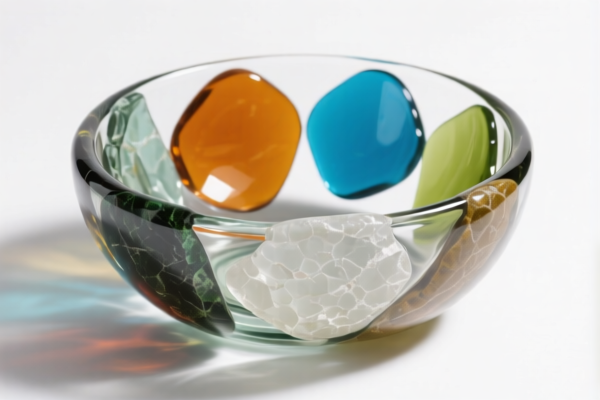
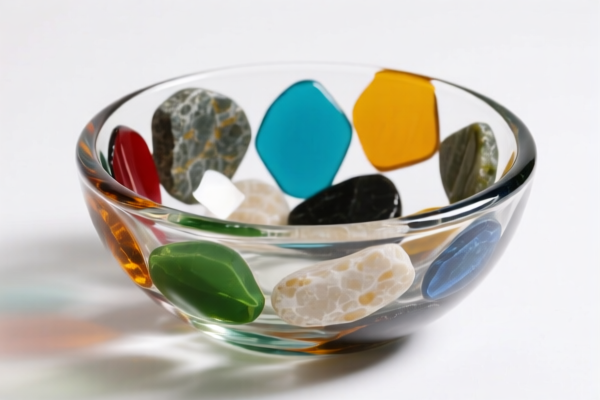
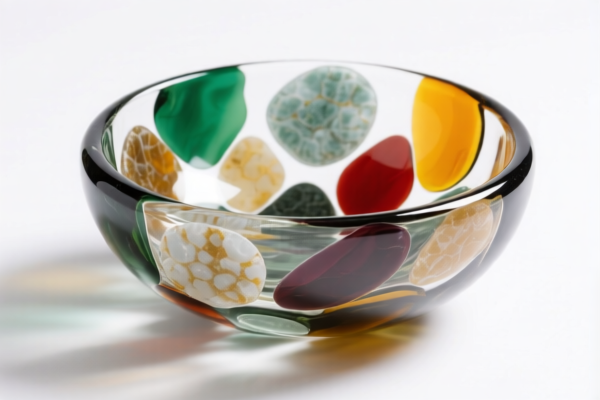
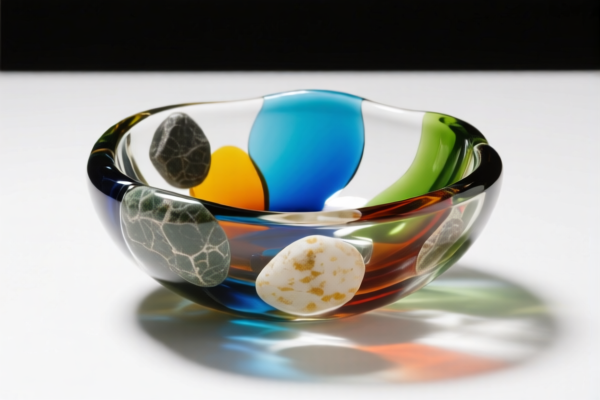
AI Analysis
🍽️ Stone Bowl (Ceramic/Artificial Stone & Cement-based)
🌐 HS Code Reference & Customs Clearance Guide | 2026 Latest Tariff Analysis | Professional Clearance Strategy
📌 I. Product Definition & Classification: Is It "Stone" or "Ceramic"?
The term "Stone Bowl" in international trade is ambiguous. Customs does not classify based on the colloquial name "Stone," but rather on the material composition and manufacturing process.
There are two distinct categories for "Stone Bowls":
- Ceramic Stoneware/Tableware: If the bowl is made from clay, feldspar, quartz, and other ceramic materials, fired at high temperatures, it is classified as Ceramic Tableware. This is the most common form of "stone-like" tableware (e.g., "artificial stone" bowls made from ceramic composites).
- Cement/Concrete/Artificial Stone Articles: If the bowl is made from cement, concrete, or unreinforced artificial stone (not ceramicized), it is classified under Articles of Cement, Concrete, or Artificial Stone.
⚠️ Critical Distinction:
- If it is fired, glazed, or vitrified (hard, non-porous, typical for eating/drinking) → It is Ceramic (HS 6912).
- If it is cement-based, cast, or unvitrified artificial stone (often heavier, rougher texture, or industrial-grade) → It is Cement/Artificial Stone (HS 6810).
- Note: Many "Artificial Stone" bowls used for decor or heavy-duty utility may fall under 6810, while dining bowls usually fall under 6912.
📦 II. HS Code Classification Details (2026 Latest Tariff Alignment)
Based on the provided data, here are the applicable HS Codes for "Stone Bowls" depending on their specific material nature:
| HS Code | Product Description | Material/Type | Typical Application |
|--------|--------------------------|-----------------|
| 6912.00.50.00 | Ceramic tableware, kitchenware, other household articles and toilet articles, other than of porcelain or china: Other | Ceramic Stoneware | Dining bowls, salad bowls, decorative ceramic "stone-look" bowls |
| 6810.99.00.80 | Articles of cement, of concrete or of artificial stone, whether or not reinforced: Other articles: Other Other | Cement/Unreinforced Artificial Stone | Decorative planters, heavy-duty utility basins, non-ceramic artificial stone bowls |
| 6810.99.00.20 | Articles of cement, of concrete or of artificial stone... Other articles: Other: Agglomerated quartz slabs... In slabs of rectangular shape... | Agglomerated Quartz (Slabs) | Not applicable for bowls. This code is for slabs ≥3m x 1.25m, typically used for countertops. |
| 6912.00.44.00 | Ceramic tableware... Tableware and kitchenware... Mugs and other steins | Ceramic Mugs/Steins | Not applicable for bowls. This is for drinking vessels with handles. |
🔍 Key Insight:
- For most consumer "Stone Bowls" used for dining or kitchen,6912.00.50.00is the correct classification if they are ceramic-based.
- If the bowl is explicitly made of cement or non-ceramic artificial stone (e.g., for outdoor decor or industrial use), use6810.99.00.80.
- Exclude6810.99.00.20: This is for large rectangular quartz slabs, not bowls.
- Exclude6912.00.44.00: This is for mugs, not bowls.
💰 III. 2026 Latest Tariff Rate Breakdown (Including Surcharges)
✅ Applicable Country: United States (US)
✅ Origin: China (CN)
✅ Effective Time: 2025/2026 (Current Rates)
🎯 1. 6912.00.50.00 —— Ceramic Tableware (Most Common for Dining Bowls)
| Item | Content |
|---|---|
| Base Tariff | 6.0% (ad valorem) |
| Section 301 Surcharge | 0.0% |
| Total Tariff | 6.0% |
| Tax Calculation | CIF Value × 6.0% |
| De Minimis Exemption | ❌ Not Applicable (Section 321 only applies to $800 or less; for commercial imports, full duty applies) |
| Legal Basis | HTSUS 6912.00.50.00 |
📌 Explanation:
- Ceramic tableware has a relatively low base tariff (6%).
- No additional 25% Section 301 tariff applies to ceramic tableware from China in this specific subheading.
- This is a cost-effective category compared to electronic or steel products.
🎯 2. 6810.99.00.80 —— Articles of Cement/Artificial Stone (Non-Ceramic)
| Item | Content |
|---|---|
| Base Tariff | 0.0% |
| Section 301 Surcharge | 25.0% |
| Total Tariff | 25.0% |
| Tax Calculation | CIF Value × 25.0% |
| De Minimis Exemption | ❌ Not Applicable |
| Legal Basis | HTSUS 6810.99.00.80 + Section 301 Footnote |
📌 Explanation:
- Although the base tariff is 0%, the 25% Section 301 surcharge significantly increases the cost.
- This applies to bowls made of cement, concrete, or non-ceramic artificial stone.
- Total Cost Impact: 25% is much higher than the 6% for ceramic bowls.
🛠️ IV. Customs Clearance Practical Advice (Avoid Pitfalls)
✅ 1. Document Preparation Checklist
| Document | Required | Notes |
|---|---|---|
| ✅ Product Specification Sheet | ✔️ | Must clearly state material: "Ceramic Stoneware" vs. "Cement/Artificial Stone" |
| ✅ Material Composition Statement | ✔️ | Detail: Clay content, firing temperature, glaze type (if ceramic) |
| ✅ Commercial Invoice | ✔️ | Description should match HS Code: e.g., "Ceramic Stoneware Bowls" or "Cement Art Deco Bowls" |
| ✅ Product Photos | ✔️ | Show texture, glaze, and any markings (e.g., "Porcelain," "Ceramic," or "Cement") |
| ✅ Packing List | ✔️ | Detail weights and dimensions for freight calculation |
✅ 2. Declaration Tips (Key Mantra)
🔥 "Material is King! Ceramic = 6%, Cement = 25%"
| Scenario | Correct Declaration | Incorrect Declaration | Consequence |
|---|---|---|---|
| Ceramic Dining Bowl | 6912.00.50.00 (Ceramic) |
6810.99.00.80 (Cement) |
Overpaying 19% (25% vs 6%) |
| Cement Decorative Bowl | 6810.99.00.80 (Cement) |
6912.00.50.00 (Ceramic) |
Underpayment Risk: Customs may reclassify and charge 25% + penalties |
| Quartz Countertop Slab | 6810.99.00.20 |
6912.00.50.00 |
Wrong HS Code: Slabs are not tableware |
📌 Critical Reminder:
- Do NOT use the term "Stone" in the HS Code description alone. Specify "Ceramic" or "Cement".
- If the bowl is made of quartz agglomerate but is shaped into a bowl (not a slab), it likely falls under6810.99.00.80(Artificial Stone), NOT6810.99.00.20(Slabs).
✅ 3. Special Cases
| Case | Handling Advice |
|---|---|
| "Artificial Stone" Bowl | If it is vitrified/ceramicized → Use 6912.00.50.00 (6%). If it is non-vitrified/cement-based → Use 6810.99.00.80 (25%). |
| Decorative vs. Functional | Customs focuses on material, not function. A ceramic decorative bowl is still 6912. A cement flower pot is 6810. |
| Set of Bowls | Declare as a set. The primary material determines the HS Code. |
🌍 V. Global Market Comparison (2026)
| Country/Region | Recommended HS Code | Tariff (China Origin) | Notes |
|---|---|---|---|
| 🇺🇸 USA | 6912.00.50.00 |
6.0% | Best for Ceramic. Cement bowls face 25% surcharge. |
| 🇺🇸 USA | 6810.99.00.80 |
25.0% | High cost for cement/artificial stone. |
| 🇪🇺 EU | 6912.00.50.00 |
0% - 6% | Often 0% for ceramic tableware from many origins, but check FTAs. |
| 🇬🇧 UK | 6912.00.50.00 |
6.0% | Post-Brexit tariff similar to EU base. |
| 🇨🇳 China | 6912.00.50.00 |
6.0% | Import duty into China. |
📌 Conclusion:
- For US imports, Ceramic Bowls (6912) are significantly cheaper (6%) than Cement/Artificial Stone Bowls (6810) (25%).
- Ensure your product is genuinely ceramic to claim the lower rate. Misclassification can lead to audits and back taxes.
📌 VI. Common Errors & Pitfalls (Lessons Learned)
❌ Error 1: Calling a ceramic bowl a "Stone Bowl" and declaring it as 6810.99.00.80
👉 Result: You pay 25% instead of 6%. Overpayment of 19%!
❌ Error 2: Declaring a cement bowl as 6912.00.50.00 to avoid the 25% surcharge
👉 Result: Customs inspection reveals cement material. Reclassification to 25% + Penalty!
❌ Error 3: Using 6810.99.00.20 for a bowl
👉 Result: This code is for slabs ≥3m long. Wrong classification!
✅ Correct Practice:
"Ceramic Stoneware Bowls, Glazed, Non-Portable Heating, Model XYZ" →
6912.00.50.00
"Cement Decorative Bowls, Unreinforced, Model ABC" →6810.99.00.80
🎯 VII. Conclusion: Precision in Classification Saves Money
🎯 Remember the Mantra:
🔹 "Ceramic is 6%, Cement is 25%. Material defines the code!"
🔹 "Stone" is not an HS Code. Specify "Ceramic" or "Cement"."
📌 Pro Tip:
If you are selling artisanal "stone-look" bowls, ensure they are ceramic-stoneware to benefit from the 6% rate. If they are truly cement-based, factor in the 25% tariff in your pricing model.
📣 Immediate Action:
📞 Contact your customs broker with material samples for pre-classification.
📄 Prepare a Material Declaration signed by your manufacturer.
🚀 Clarify the HS Code to avoid unexpected costs at US ports.
✨ Professional Clearance Starts with Accurate Classification!
💼 Your Bottom Line Depends on This 19% Difference!
Customer Reviews
About HS Code Classification
The Harmonized System (HS) is an internationally standardized nomenclature developed by the World Customs Organization (WCO) to classify traded products. Over 200 countries use the HS system as the basis for customs tariffs, trade statistics, and import/export regulations.
Each HS code follows a hierarchical structure:
- Chapter (2 digits) — Broad category of goods (e.g., Chapter 84: Machinery and Mechanical Appliances)
- Heading (4 digits) — More specific grouping within the chapter
- Subheading (6 digits) — Internationally standardized breakdown, used by all WCO member countries
- National subdivisions (8-10 digits) — Country-specific extensions for further classification, such as US HTSUS 10-digit codes
Correct HS code classification is essential for smooth customs clearance, accurate duty payment, and compliance with trade regulations. Misclassification can lead to customs delays, overpayment of duties, or penalties.
When importing from CN to US, the applicable tariff rates may include:
- Most-Favored-Nation (MFN) rate — The standard duty rate applied to WTO members
- General rate — Applied to countries without trade agreements
- Trade remedy duties — Additional tariffs such as Section 301 (anti-dumping), Section 232 (national security), or countervailing duties
The information provided on this page is for reference purposes only. For official classification, please consult with your local customs authority or a licensed customs broker.