Stone and other mineral materials for road paving
CN → US| HS Code | Tariff Rate | Origin | Destination | Doc |
|---|---|---|---|---|
| 6802100000 | 39.8% | CN | US | Official Doc |
| 6802990030 | 41.5% | CN | US | Official Doc |
| 6802990050 | 41.5% | CN | US | Official Doc |
| 6802230000 | 38.7% | CN | US | Official Doc |
| 6802100000 | 39.8% | CN | US | Official Doc |
Product Images
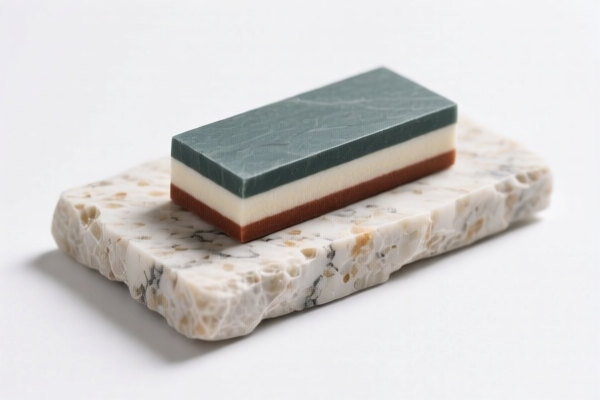
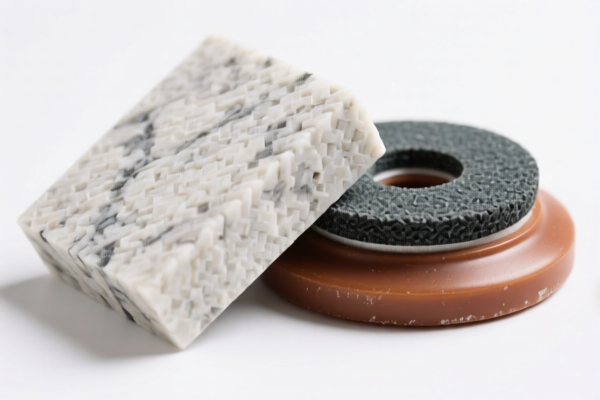
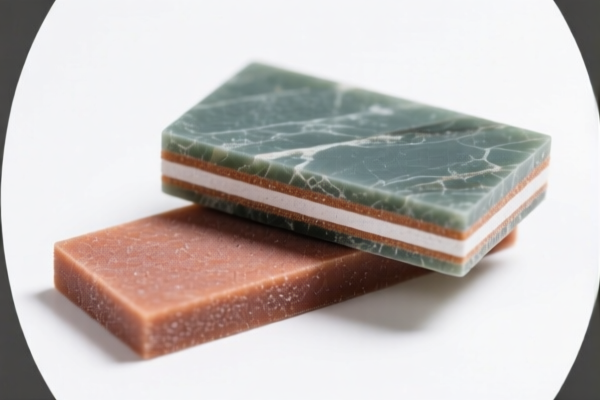
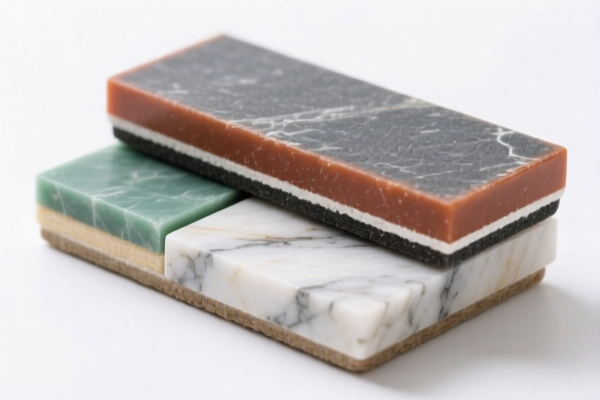
AI Analysis
🛣️ Stone & Mineral Materials for Road Paving
🌐 HS Code Reference & Customs Clearance Guide | 2026 Latest Tariff Analysis | Professional Clearance Strategy
📌 I. Product Definition & Classification: Do You Really Understand "Paving Stones"?
Stone and mineral materials intended for road paving are fundamental construction components used in infrastructure development. In international trade, these materials are classified based on their material origin, physical form, and processing level.
Natural Stone Slabs/Pavers (6802.10): Natural stone (granite, marble, limestone) worked into pavers or blocks suitable for surfacing. Worked Stone Articles (6802.99): Other stone products, including those that are partially worked or assembled, where the primary function is paving or structural. Building Stone (6802.23): Stone used specifically for construction purposes, including foundations and paving.
⚠️ Key Distinction Points:
- If the stone is natural, unworked or simply cut into pavers → Classify under 6802.10.00.00
- If the stone is worked, shaped, or fabricated into specific paving units or aggregates → Classify under 6802.99.00.30 or 6802.99.00.50
- If the material is explicitly defined as building stone for general construction (including paving) → Classify under 6802.23.00.00
📦 II. HS Code Classification Details (2026 Latest Tariff Authority Comparison)
| HS Code | Product Description | Application Scenario | Processing Level |
|---|---|---|---|
6802.10.00.00 |
Worked monumental or building stone (excluding slate) and articles thereof; natural stone (excluding slate) cut or shaped into pavers or blocks for road surfacing | Natural stone pavers, granite slabs for sidewalks, cobblestones | ✅ Natural, cut/shaped |
6802.99.00.30 |
Other worked stone and articles of stone; other | Processed stone products for paving, where specific sub-heading is not listed; fits "worked stone articles" | ✅ Worked/Fabricated |
6802.99.00.50 |
Other worked stone and articles of stone; other | Stone articles for paving or construction not elsewhere specified; fits "potential use" category | ✅ Worked/Fabricated |
6802.23.00.00 |
Granite, worked or simply sawn or partly worked, whether or not polished, and articles thereof; other natural stone (excluding slate) worked or simply sawn or partly worked | Construction-grade stone, including paving stones derived from general building stone definitions | ✅ Worked/Sawn |
🔍 Key Reminder:
- Natural Pavers: If the product is simply cut from natural rock without further fabrication, 6802.10.00.00 is the most precise fit.
- Fabricated Stone Products: If the stone has been processed beyond simple cutting (e.g., textured, assembled, or specialized shapes), consider 6802.99 series.
- General Building Stone: If the stone is used broadly for construction (including paving) and fits the "building stone" definition, 6802.23.00.00 may apply, often resulting in lower base duties.
💰 III. 2026 Latest Tariff Rate Breakdown (Including Additional Taxes, Policy Surcharges)
✅ Applicable Country: United States (US)
✅ Origin: China (CN)
✅ Effective Date: From November 10, 2025 onwards (including subsequent imports)
🎯 1. 6802.10.00.00 —— Worked Building Stone / Natural Pavers
| Item | Content |
|---|---|
| Base Duty Rate | 4.8% |
| Section 301 Additional Duty | +25.0% |
| Section 122 Duty | +10.0% |
| Total Effective Rate | 39.8% |
| Tax Calculation | CIF Value × 39.8% |
| De Minimis Eligibility | ❌ Not Eligible (deny_de_minimis) |
| Legal Basis Path | Base: 6802.10.00.00 → Section 301: 25% → Section 122: 10% |
📌 Explanation:
- This is the most direct classification for natural stone pavers.
- The base rate of 4.8% is relatively low, but the 35% additional duties (25% + 10%) significantly increase the landed cost.
- Total 39.8% applies to the CIF value.
🎯 2. 6802.99.00.30 & 6802.99.00.50 —— Other Worked Stone Articles
| Item | Content |
|---|---|
| Base Duty Rate | 6.5% |
| Section 301 Additional Duty | +25.0% |
| Section 122 Duty | +10.0% |
| Total Effective Rate | 41.5% |
| Tax Calculation | CIF Value × 41.5% |
| De Minimis Eligibility | ❌ Not Eligible (deny_de_minimis) |
| Legal Basis Path | Base: 6802.99.00.30/50 → Section 301: 25% → Section 122: 10% |
📌 Note:
- These codes are used for worked stone products that do not fall under the specific "paver" sub-heading or are considered general "articles of stone."
- The base rate is higher (6.5%) compared to6802.10, leading to a higher total tax (41.5%).
- Use this classification only if the product is more complex than simple natural pavers.
🎯 3. 6802.23.00.00 —— Granite / Natural Stone for Building Purposes
| Item | Content |
|---|---|
| Base Duty Rate | 3.7% |
| Section 301 Additional Duty | +25.0% |
| Section 122 Duty | +10.0% |
| Total Effective Rate | 38.7% |
| Tax Calculation | CIF Value × 38.7% |
| De Minimis Eligibility | ❌ Not Eligible (deny_de_minimis) |
| Legal Basis Path | Base: 6802.23.00.00 → Section 301: 25% → Section 122: 10% |
📌 Explanation:
- This code is applicable if the stone is defined as building stone (e.g., granite) and is simply sawn or worked.
- It offers the lowest total tax rate (38.7%) among the options.
- Suitable for large slabs or blocks used in paving where the primary intent is structural building material.
🛠️ IV. Customs Clearance Practical Advice (Real-World Pitfall Guide)
✅ 1. Required Documentation Checklist (Missing Items Will Delay Clearance)
| Document | Mandatory | Notes |
|---|---|---|
| ✅ Product Specification Sheet | ✔️ | Must include dimensions, material type (granite/limestone/etc.), finish (polished/rough) |
| ✅ Product Photos | ✔️ | Clear images of the pavers/blocks, showing texture and shape |
| ✅ Commercial Invoice | ✔️ | Clearly state "Natural Stone Pavers" or "Worked Stone for Paving" |
| ✅ Packing List | ✔️ | Detail weight, volume, and palletization |
| ✅ Certificate of Origin (CO) | ✔️ | Required to verify CN origin for Section 301/122 duties |
| ✅ HS Code Pre-Ruling | ⚠️ Recommended | Highly recommended due to complex tariff structure |
✅ 2. Declaration Strategy (Key Tips)
🔥 “Be Specific, Don’t Guess! ‘Stone’ is too vague!”
| Scenario | Correct Declaration | Incorrect Declaration |
|---|---|---|
| Natural Granite Pavers | 6802.10.00.00 – "Natural Granite Pavers, Unworked/Simply Cut" |
"Building Material" → High Risk of Misclassification |
| Fabricated Stone Blocks | 6802.99.00.30 – "Worked Stone Articles for Paving" |
"Road Stones" → Ambiguous |
| General Construction Stone | 6802.23.00.00 – "Granite, Sawn, for Building Use" |
"Mineral Material" → Too Broad |
📌 Important:
- Avoid using generic terms like "mineral material" or "paving rocks."
- Clearly specify material type (e.g., Granite, Limestone) and processing level (e.g., Sawn, Polished, Unworked).
✅ 3. Special Cases
| Situation | Handling Advice |
|---|---|
| Mixed Loads | If stone pavers are shipped with other goods, declare them separately to avoid misclassification of the entire shipment. |
| Custom-Shaped Pavers | If the shapes are unique (e.g., interlocking), use 6802.99 series. |
| Aggregates/Gravel | If the material is crushed stone or gravel (not pavers), it does not fall under HS 6802. Check HS 2517 instead. |
🌍 V. Global Market Comparison (2026 Latest)
| Country/Region | Recommended HS Code | Tariff (China Origin) | Certification | Notes |
|---|---|---|---|---|
| 🇺🇸 USA | 6802.10.00.00 |
39.8% | No specific certification required for stone | High additional duties apply |
| 🇨🇳 China | 6802.10.00.00 |
~2-5% | None | Low import duties for building materials |
| 🇪🇺 EU | 6802.10.00 |
0-2% | CE Marking (if applicable) | Generally low tariffs for stone |
| 🇦🇺 Australia | 6802.10.00 |
5% | None | Moderate duties |
| 🇯🇵 Japan | 6802.10.00 |
0-3% | None | Low duties |
📌 Conclusion:
- USA is the most expensive market due to Section 301 and Section 122 duties.
- EU, China, and Japan offer significantly lower tariff burdens.
- Consider supply chain diversification if exporting to the US to mitigate high duty costs.
📌 VI. Common Mistakes & Pitfall Guide (Lessons Learned)
❌ Mistake 1: Declaring "Stone Pavers" as "Building Materials" under HS 6810
👉 Consequence: Misclassification → Penalty + Back Taxes. HS 6810 is for cement/concrete, not natural stone.
❌ Mistake 2: Using "Mineral Material" without specifying processing
👉 Consequence: Customs may apply the highest possible duty rate or hold the shipment for inspection.
❌ Mistake 3: Ignoring Section 122 Duties
👉 Consequence: Unexpected 10% surcharge on top of Section 301 duties → Profit margin erosion.
❌ Mistake 4: Confusing Pavers with Gravel
👉 Consequence: Gravel falls under HS 2517 (different tariff structure). Misdeclaration leads to delays.
✅ Correct Practice:
“Natural Granite Pavers, 10x10x5cm, Rough Finish, For Road Surfacing, HS 6802.10.00.00”
🎯 VII. Conclusion: Precision in Classification, Savings in Cost!
🎯 Key Takeaway:
🔹 “Natural Pavers: 6802.10 (39.8%) | Worked Articles: 6802.99 (41.5%) | Building Stone: 6802.23 (38.7%)”
🔹 “Specify Material & Processing! Vague Terms Lead to High Costs!”
📌 Tips:
- If your stone pavers are processed in Vietnam, India, or Thailand, they may qualify for different tariff rates under US trade policies.
- Consider pre-classification rulings from US Customs and Border Protection (CBP) to ensure correct HS code assignment.
📣 Immediate Action:
📞 Consult a Licensed Customs Broker + Provide Product Photos + Apply for HS Code Pre-Ruling
🚀 Ensure Smooth Clearance, Maximize Profit Margins!
✨ Professional Classification, Starting from Accurate HS Codes!
💼 Every Percent of Duty Saved is Pure Profit!
Customer Reviews
About HS Code Classification
The Harmonized System (HS) is an internationally standardized nomenclature developed by the World Customs Organization (WCO) to classify traded products. Over 200 countries use the HS system as the basis for customs tariffs, trade statistics, and import/export regulations.
Each HS code follows a hierarchical structure:
- Chapter (2 digits) — Broad category of goods (e.g., Chapter 84: Machinery and Mechanical Appliances)
- Heading (4 digits) — More specific grouping within the chapter
- Subheading (6 digits) — Internationally standardized breakdown, used by all WCO member countries
- National subdivisions (8-10 digits) — Country-specific extensions for further classification, such as US HTSUS 10-digit codes
Correct HS code classification is essential for smooth customs clearance, accurate duty payment, and compliance with trade regulations. Misclassification can lead to customs delays, overpayment of duties, or penalties.
When importing from CN to US, the applicable tariff rates may include:
- Most-Favored-Nation (MFN) rate — The standard duty rate applied to WTO members
- General rate — Applied to countries without trade agreements
- Trade remedy duties — Additional tariffs such as Section 301 (anti-dumping), Section 232 (national security), or countervailing duties
The information provided on this page is for reference purposes only. For official classification, please consult with your local customs authority or a licensed customs broker.