Stopper
CN → US| HS Code | Tariff Rate | Origin | Destination | Doc |
|---|---|---|---|---|
| 3923500000 | 40.3% | CN | US | Official Doc |
| 3923109000 | 38.0% | CN | US | Official Doc |
| 8309100000 | 35.0% | CN | US | Official Doc |
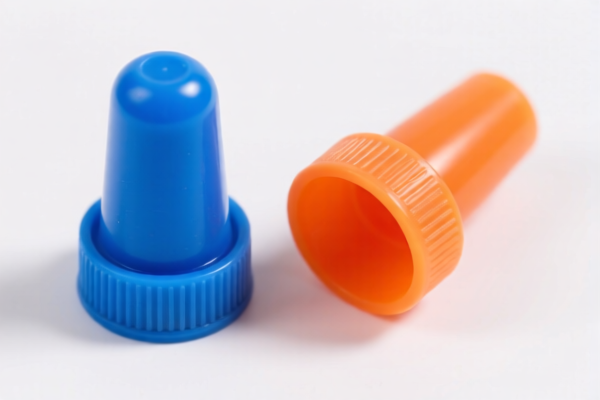
Product Images



AI Analysis
🛡️ Stopper (Plastic & Metal Caps & Plugs)
🌐 HS Code Reference & Customs Clearance Guide | 2026 Latest Tariff Breakdown | Professional Clearance Strategy
📌 I. Product Definition & Classification: Do You Really Know "Stopper"?
In the world of packaging, logistics, and industrial fluid control, a Stopper is a critical component designed to seal, close, or obstruct an opening in a container, vessel, or pipe. In international trade, its classification is highly sensitive to material composition and specific form/function.
Plastic Stopper:
- Used for bottles, chemical drums, and industrial containers.
- Key Distinction: If it's a specific shape for a specific bottle (matching use) → Plastic Plugs/Stopper (3923.50.00); If it's a generic plug with no specific shape → Other Plugs (3923.10.90).
Metal Stopper:
- Used for high-pressure vessels, wine barrels, or industrial fittings.
- Key Distinction: Made of non-precious metals (base metals like steel, aluminum, zinc) → Base Metal Tops/Stopper (8309.10).
⚠️ Critical Classification Point:
- If the stopper is Plastic and specifically shaped for a container mouth (e.g., bottle cap plug) → HS 3923.50.00 (Tax: 40.3%).
- If the stopper is Plastic but generic (e.g., a simple plug not specific to a container shape) → HS 3923.10.90 (Tax: 38.0%).
- If the stopper is Base Metal (Steel/Aluminum/Zinc) regardless of shape (cork-style or screw-on) → HS 8309.10.00 (Tax: 35.0%).
- Do not confuse with "Lids" (8309) vs "Plugs" (3923).
📦 II. HS Code Classification Details (2026 Latest Tariff Reference)
| HS Code | Product Description | Scenario Application | Material Type |
|---|---|---|---|
3923.50.00.00 |
Plastic Stopper, Plug, or Cap (Specific Use) | Matching bottle necks, chemical drum openings, specific sealing shapes. | Plastic |
3923.10.90.00 |
Plastic Stopper/Plug, Other (Catch-all) | Generic plugs,堵头, non-matching shapes, industrial sealing plugs. | Plastic |
8309.10.00.00 |
Base Metal Tops, Stopper, and Plugs | Metal caps, wine barrel bungs, industrial valves, sealing covers. | Base Metal (Steel, Aluminum, etc.) |
🔍 Key Insight:
- 3923.50.00 is for "Plastic Stoppers, Plugs, and Caps" matched to specific uses (e.g., the specific shape of a soda bottle neck).
- 3923.10.90 is the "Dip" category for plastic plugs not covered by the specific sub-category (i.e., generic plugs).
- 8309.10.00 strictly applies to Base Metal (non-precious) items. If your stopper is "Metal" (even if coated), it falls here.
💰 III. 2026 Latest Tariff Rate Breakdown (Including Surcharges & Policy Add-ons)
✅ Applicable Country: United States (US)
✅ Country of Origin: China (CN)
✅ Effective Date: 2025/2026 (Subject to Section 232, 301, and 122 measures)
🎯 1. 3923.50.00.00 — Plastic Stopper (Specific Match)
| Item | Detail |
|---|---|
| Base Tariff | 5.3% (Ad Valorem) |
| Section 232/301 Surtax | +25.0% (US Import Restrictions) |
| Section 122 Surcharge | +10.0% (Targeted China Import) |
| Total Tax Rate | 40.3% |
| Tax Calculation | CIF Value × 40.3% |
| De Minimis Exemption | ❌ No (Not eligible for small parcel tax breaks) |
| Legal Basis Path | 301:3923.50.00.00 → Section 232 → Section 122 |
📌 Explanation:
- Base Tariff (5.3%): Standard Most-Favored-Nation (MFN) rate for plastic stoppers.
- Section 232/301 (25%): US imposes a 25% tariff on many Chinese plastic goods to protect domestic manufacturing.
- Section 122 (10%): Additional punitive tariff specifically targeting Chinese imports in this category.
- Total Impact: Nearly 40% of the goods' value is tax, significantly reducing profit margins.
🎯 2. 3923.10.90.00 — Plastic Stopper (Other/Generic)
| Item | Detail |
|---|---|
| Base Tariff | 3.0% |
| Section 232/301 Surtax | +25.0% |
| Section 122 Surcharge | +10.0% |
| Total Tax Rate | 38.0% |
| Tax Calculation | CIF Value × 38.0% |
| De Minimis Exemption | ❌ No |
| Legal Basis Path | 301:3923.10.90.00 → Section 232 → Section 122 |
📌 Note:
- This category has a slightly lower base rate (3.0%) compared to3923.50(5.3%), but the surcharges are identical.
- Total Tax Difference: Only 2.3% lower than3923.50. The savings on base tariff are negligible against the heavy surcharges.
- Strategy: Do not over-invest in reclassifying from3923.50to3923.10for tax savings; the cost of compliance might outweigh the 2.3% saving.
🎯 3. 8309.10.00.00 — Base Metal Stopper
| Item | Detail |
|---|---|
| Base Tariff | 0.0% |
| Section 232/301 Surtax | +25.0% |
| Section 122 Surcharge | +10.0% |
| Total Tax Rate | 35.0% |
| Tax Calculation | CIF Value × 35.0% |
| De Minimis Exemption | ❌ No |
| Legal Basis Path | 301:8309.10.00.00 → Section 232 → Section 122 |
📌 Critical Advantage:
- Base Tariff is 0%: Unlike plastic stoppers, metal stoppers have no standard import duty.
- Total Tax: 35.0% (Only surcharges apply).
- Comparison: Metal stoppers are 3% cheaper to import than plastic stoppers (3923.10.90) and 5.3% cheaper than specific plastic stoppers (3923.50) due to the 0% base rate.
- Strategy: If design allows, switch to metal or metal-plated stoppers to save on base tariffs.
🛠️ IV. Customs Clearance Practical Advice (Pitfall Avoidance Guide)
✅ 1. Preparation Checklist (Must-Haves)
| Document | Required? | Explanation |
|---|---|---|
| ✅ Product Spec Sheet | ✔️ | Must detail material (Plastic vs. Metal), diameter, length, and sealing type. |
| ✅ Photos (Clear) | ✔️ | Show the stopper's shape (specific vs. generic) and material texture. |
| ✅ Material Certificates | ✔️ | Proof of plastic type (e.g., HDPE, PP) or metal alloy (e.g., Steel, Aluminum). |
| ✅ Function Description | ✔️ | "Matching bottle neck" vs. "Generic industrial plug". Crucial for 3923.50 vs 3923.10. |
| ✅ Commercial Invoice | ✔️ | Clearly state "Plastic Stopper" or "Metal Stopper" to avoid ambiguity. |
✅ 2. Declaration Tips (Key Mnemonics)
🔥 "Material First, Shape Second, Avoid Ambiguity!"
| Situation | Correct Declaration | Wrong Practice |
|---|---|---|
| Plastic stopper for specific bottle neck | 3923.50.00.00 |
Declare as "Plastic Plug" → Risk of 3923.10 dispute |
| Plastic plug generic shape | 3923.10.90.00 |
Declare as "Cap" → Might trigger 3923.50 audit |
| Metal stopper (any shape) | 8309.10.00.00 |
Declare as "Plastic" (even if painted) → Severe penalty |
| Plastic + Metal combo | Check dominant material | Split declaration without justification → Delays |
✅ 3. Special Circumstances Handling
| Scenario | Recommendation |
|---|---|
| OEM Custom Stopper | Provide mold design drawings to prove "specific shape" for 3923.50. |
| Plastic-coated Metal | If metal is dominant, declare as 8309.10.00.00 (0% base). |
| Small Batch Imports | Still subject to full tariffs; no de minimis for commercial cargo. |
| Anti-Dumping Measures | Check if specific plastic polymers are under AD/CVD (unlikely for generic stoppers, but verify). |
🌍 V. Global Market Clearance Comparison (2026)
| Country/Region | Recommended HS Code | Tariff (China Origin) | Certification | Note |
|---|---|---|---|---|
| 🇺🇸 USA | 3923.50.00 / 8309.10.00 |
35% - 40.3% | None specific | High Surcharge (35%) due to Section 301/122 |
| 🇪🇺 EU | 3923.50.00 / 8309.10.00 |
4% - 6% | CE (if food contact) | No Section 301 surcharges; lower overall cost |
| 🇨🇳 China | 3923.50.00 / 8309.10.00 |
5% - 10% | CCC (if applicable) | Base rates apply; no export restrictions |
| 🇦🇺 Australia | 3923.50.00 / 8309.10.00 |
5% | None | Moderate tariff; no surcharges |
📌 Conclusion:
- USA is the most expensive market for stoppers due to 35%–40.3% total tariffs.
- EU and Australia offer significantly better rates (approx. 5–10%) without the punitive surcharges.
- Metal stoppers (8309.10.00) are consistently cheaper to import into the US due to the 0% base rate.
📌 VI. Common Mistakes & Pitfalls (Lessons Learned)
❌ Mistake 1: Declaring a plastic stopper as "Plastic Cap" without specifying shape.
👉 Consequence: Customs may classify it as generic 3923.10 (38%) or specific 3923.50 (40.3%), causing delays.
👉 Fix: Always specify "Matching" or "Generic" in the description.
❌ Mistake 2: Declaring a metal stopper as "Plastic" (to avoid metal tariffs).
👉 Consequence: Severe penalty, possible seizure, and audit.
👉 Fix: Be honest about material. Metal (8309.10) actually has lower base tax (0%) than plastic.
❌ Mistake 3: Ignoring Section 122 (10%) surcharge in cost calculation.
👉 Consequence: Profit margins disappear unexpectedly.
👉 Fix: Include 40.3% in your pricing model for US imports.
✅ Best Practice:
"Plastic Stopper, HDPE, Diameter 20mm, Matching 500ml Bottle Neck" →
3923.50.00.00
"Metal Stopper, Aluminum, Threaded, Generic Industrial Plug" →8309.10.00.00
🎯 VII. Conclusion: Strategic Classification, Cost Optimization!
🎯 Remember the Rules:
🔹 "Metal = 0% Base, Plastic = 3-5% Base, Both +35% Surcharge"
🔹 "Matching Shape = 3923.50, Generic = 3923.10, Both High Tax"
🔹 "USA = 35-40% Tax, Plan Ahead!"
📌 Pro Tip:
If your product is metal-based, consider shifting to Metal Stoppers (8309.10.00.00) to save 3-5.3% base tariff (Total 35% vs 38-40.3%).
If you must use Plastic, ensure the shape matches to avoid misclassification risks, but be prepared for the 40.3% tax.
📣 Immediate Action:
📞 Contact Customs Broker + Provide Material Specs + Verify "Matching" Status
🚀 Optimize your Supply Chain, Reduce Tax Burden, Secure Profit!
✨ Professional Customs Clearance Starts with Accurate Classification!
💼 Every cent of tax matters!
Customer Reviews
About HS Code Classification
The Harmonized System (HS) is an internationally standardized nomenclature developed by the World Customs Organization (WCO) to classify traded products. Over 200 countries use the HS system as the basis for customs tariffs, trade statistics, and import/export regulations.
Each HS code follows a hierarchical structure:
- Chapter (2 digits) — Broad category of goods (e.g., Chapter 84: Machinery and Mechanical Appliances)
- Heading (4 digits) — More specific grouping within the chapter
- Subheading (6 digits) — Internationally standardized breakdown, used by all WCO member countries
- National subdivisions (8-10 digits) — Country-specific extensions for further classification, such as US HTSUS 10-digit codes
Correct HS code classification is essential for smooth customs clearance, accurate duty payment, and compliance with trade regulations. Misclassification can lead to customs delays, overpayment of duties, or penalties.
When importing from CN to US, the applicable tariff rates may include:
- Most-Favored-Nation (MFN) rate — The standard duty rate applied to WTO members
- General rate — Applied to countries without trade agreements
- Trade remedy duties — Additional tariffs such as Section 301 (anti-dumping), Section 232 (national security), or countervailing duties
The information provided on this page is for reference purposes only. For official classification, please consult with your local customs authority or a licensed customs broker.