Storage Bowl
CN → US| HS Code | Tariff Rate | Origin | Destination | Doc |
|---|---|---|---|---|
| 6912004400 | 20.0% | CN | US | Official Doc |
| 6911108010 | 38.3% | CN | US | Official Doc |
| 6911104500 | 24.0% | CN | US | Official Doc |
| 3924102000 | 24.0% | CN | US | Official Doc |
| 3924104000 | 13.4% | CN | US | Official Doc |
| 6912004810 | 19.8% | CN | US | Official Doc |
Product Images

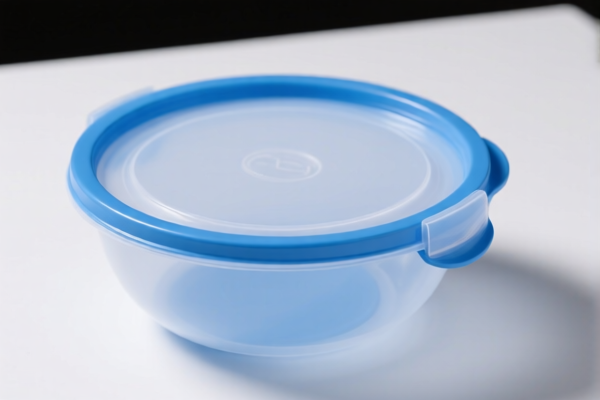
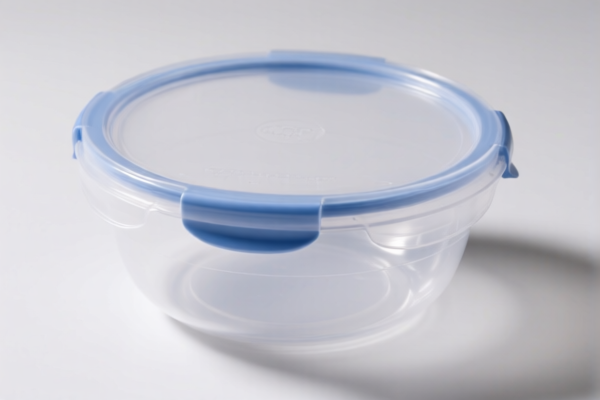
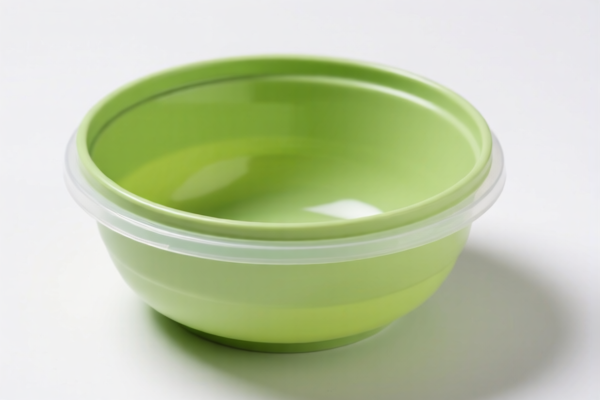
AI Analysis
🥣 Storage Bowl (Tableware & Kitchenware)
🌐 HS Code Reference & Customs Clearance Guide | 2026 Latest Tariff Analysis | Professional Clearance Strategy
📌 I. Product Definition & Classification: Do You Really Understand "Storage Bowls"?
Storage bowls are essential containers for food preservation and serving in both household and commercial settings. In international trade, they are classified based on their material composition. The two primary categories are:
Ceramic/Porcelain Bowls: Made from clay, fired at high temperatures, often glazed. Suitable for serving hot/cold food, microwaving, and dishwasher use.
Plastic Bowls: Made from polypropylene (PP) or other food-grade plastics. Lightweight, shatter-resistant, suitable for cold/room temperature storage.
⚠️ Key Distinction:
- If made of ceramic or porcelain (even if used for storage) → Classified under Chapter 69 (Ceramic Products).
- If made of plastic (even if used for food) → Classified under Chapter 39 (Plastics and Articles Thereof).
- Do NOT mix materials in a single HS Code declaration if they are distinct items; each material type has a different duty structure.
📦 II. HS Code Classification Details (2026 Latest Tariff Authority Comparison)
Based on the provided data, here are the specific HS Codes for Storage Bowls, categorized by material:
| HS Code | Product Description | Material | Tax Detail Breakdown | Total Tax Rate |
|---|---|---|---|---|
6912.00.44.00 |
Ceramic or similar material tableware, used for serving food | Ceramic | Base: 10.0% Section 122: 10.0% Additional: 0.0% |
20.0% |
6911.10.80.10 |
Porcelain tableware, meeting bowl usage requirements | Porcelain | Base: 20.8% Section 122: 10.0% Additional: 7.5% |
38.3% |
6911.10.45.00 |
Porcelain tableware, suitable for kitchen or dining table | Porcelain | Base: 14.0% Section 122: 10.0% Additional: 0.0% |
24.0% |
3924.10.20.00 |
Plastic soup bowls, used for holding liquids or food | Plastic | Base: 6.5% Section 122: 10.0% Additional: 7.5% |
24.0% |
3924.10.40.00 |
Plastic tableware, meeting bowl usage requirements | Plastic | Base: 3.4% Section 122: 10.0% Additional: 0.0% |
13.4% |
🔍 Important Note:
- Ceramic vs. Porcelain: Although both are ceramics, Porcelain (HS 6911) often carries higher base tariffs than Earthenware/Other Ceramic (HS 6912). Always check the fineness and composition.
- Plastic Variants: Simple plastic bowls (HS 3924.10.40) have the lowest total tax (13.4%), while more specific "soup bowls" (HS 3924.10.20) have higher taxes (24.0%) due to additional duties.
💰 III. 2026 Latest Tariff Rate Details (Including Surcharges)
✅ Applicable Context: Based on the provided data, which includes "122 Section Tariffs" and "Additional Tariffs," this analysis assumes imports into a market (likely the US) with specific trade remedies against Chinese origin goods.
✅ Origin: China (CN)
✅ Effective Time: As per 2026 tariff schedules.
🎯 1. 6912.00.44.00 —— Ceramic Tableware (Other)
| Item | Content |
|---|---|
| Base Rate | 10.0% |
| Section 122 Tariff | +10.0% |
| Additional Tariff | 0.0% |
| Total Rate | 20.0% |
| Tax Calculation | CIF Value × 20.0% |
| Legal Basis | HS 6912.00.44.00 + Section 122 Adjustment |
📌 Explanation:
- This is the most cost-effective ceramic option among the listed codes.
- The "Section 122" tariff appears to be a fixed 10% add-on, possibly related to specific trade agreements or retaliatory measures.
- No additional tariffs apply, making it a stable choice for ceramic storage bowls.
🎯 2. 6911.10.80.10 —— Porcelain Tableware (High Tariff)
| Item | Content |
|---|---|
| Base Rate | 20.8% |
| Section 122 Tariff | +10.0% |
| Additional Tariff | +7.5% |
| Total Rate | 38.3% |
| Tax Calculation | CIF Value × 38.3% |
| Legal Basis | HS 6911.10.80.10 + Section 122 + Additional Tariff |
📌 Warning:
- This is the highest tax rate for ceramic products in the dataset.
- Likely applies to high-end, finely made porcelain items.
- Avoid this classification unless absolutely necessary for product description accuracy. Consider if the product can be classified under6912or6911.10.45.00instead.
🎯 3. 6911.10.45.00 —— Porcelain Tableware (Kitchen/Dining)
| Item | Content |
|---|---|
| Base Rate | 14.0% |
| Section 122 Tariff | +10.0% |
| Additional Tariff | 0.0% |
| Total Rate | 24.0% |
| Tax Calculation | CIF Value × 24.0% |
| Legal Basis | HS 6911.10.45.00 + Section 122 |
📌 Tip:
- If your porcelain bowls are explicitly for kitchen or dining table use, this code offers a moderate rate (24.0%).
- Ensure your product description clearly states "for kitchen or dining table" to justify this code over6911.10.80.10.
🎯 4. 3924.10.20.00 —— Plastic Soup Bowls
| Item | Content |
|---|---|
| Base Rate | 6.5% |
| Section 122 Tariff | +10.0% |
| Additional Tariff | +7.5% |
| Total Rate | 24.0% |
| Tax Calculation | CIF Value × 24.0% |
| Legal Basis | HS 3924.10.20.00 + Section 122 + Additional Tariff |
📌 Note:
- Despite a low base rate (6.5%), the additional tariffs push the total to 24.0%.
- Use this code only if the product is specifically designed as a "soup bowl" (e.g., deep, lidded containers for liquids).
🎯 5. 3924.10.40.00 —— Plastic Tableware (Best for Plastic)
| Item | Content |
|---|---|
| Base Rate | 3.4% |
| Section 122 Tariff | +10.0% |
| Additional Tariff | 0.0% |
| Total Rate | 13.4% |
| Tax Calculation | CIF Value × 13.4% |
| Legal Basis | HS 3924.10.40.00 + Section 122 |
📌 Recommendation:
- This is the most economical option overall (13.4%).
- Ideal for general-purpose plastic storage bowls.
- Ensure the product is not marketed specifically as a "soup bowl" to avoid the higher3924.10.20.00classification.
🛠️ IV. Customs Clearance Practical Advice (Battle-Tested Pitfall Guide)
✅ 1. Preparation Checklist (Non-Negotiable)
| Document | Required | Purpose |
|---|---|---|
| ✅ Product Specification Sheet | ✔️ | Must state material (Ceramic/Plastic), capacity, and intended use (Kitchen/Dining). |
| ✅ Material Composition Certificate | ✔️ | Proves whether it's "Porcelain" (HS 6911) or "Other Ceramic" (HS 6912). |
| ✅ Product Photos | ✔️ | Show shape, glaze, and any markings. Crucial for differentiating "Soup Bowl" vs. "General Bowl". |
| ✅ Food Contact Compliance Test | ✔️ | FDA (US), LFGB (EU) certificates for both ceramic glaze and plastic material. |
| ✅ Commercial Invoice | ✔️ | Clearly describe the item: e.g., "Plastic Storage Bowl, PP Material, 500ml" |
| ✅ Packing List | ✔️ | List quantities and weights per box. |
✅ 2. Declaration Tips (Key Mantra)
🔥 “Material First, Use Specific, Avoid High Tax!”
| Scenario | Correct Declaration | Incorrect Declaration | Consequence |
|---|---|---|---|
| General Plastic Bowl | 3924.10.40.00 (13.4%) |
3924.10.20.00 (24.0%) |
Overpay 10.6% tax |
| High-End Porcelain | 6911.10.80.10 (38.3%) |
6912.00.44.00 (20.0%) |
Under-declare → Fine & Penalty |
| Mid-Range Porcelain | 6911.10.45.00 (24.0%) |
6911.10.80.10 (38.3%) |
Overpay 14.3% tax |
| Ceramic Storage | 6912.00.44.00 (20.0%) |
6911.10.45.00 (24.0%) |
Overpay 4.0% tax |
📌 Key Strategy:
- If the bowl is plastic, always aim for3924.10.40.00unless it's specifically a "soup bowl".
- If ceramic, determine if it's "porcelain" (fine, white, translucent) or "earthenware/other" (HS 6912). If it can be argued as "other ceramic", save 4-14% in taxes.
✅ 3. Special Cases
| Situation | Handling Advice |
|---|---|
| Set of Bowls (Mixed Materials) | Declare separately. Plastic parts under HS 39, Ceramic under HS 69. Do NOT combine. |
| Bowl with Lid | If the lid is plastic and bowl is ceramic, the set is usually classified by the principal component (the bowl). Provide separate values if possible. |
| Custom Printed Bowls | Ensure the ink/paint is food-safe. Provide MSDS if required by customs. |
| "Soup Bowl" Specifics | If the bowl has a narrow neck and deep body, customs may classify it as 3924.10.20.00. Use general shapes for 3924.10.40.00. |
🌍 V. Global Market Comparison (2026 Latest)
| Country/Region | Recommended HS Code | Total Tax (China Origin) | Notes |
|---|---|---|---|
| 🇺🇸 United States | 3924.10.40.00 (Plastic) |
13.4% | Most economical for plastic. Ceramic ~20-38%. |
| 🇺🇸 United States | 6912.00.44.00 (Ceramic) |
20.0% | Best for non-porcelain ceramic. |
| 🇪🇺 European Union | 6912.00.44.00 |
Varies | EU often has lower base tariffs but higher VAT. |
| 🇨🇳 China (Import) | 6912.00.44.00 |
Varies | China imports ceramics, but domestic production is high. |
📌 Conclusion:
- Plastic bowls (HS 3924.10.40.00) offer the lowest duty (13.4%) for the US market.
- Ceramic bowls are significantly more expensive in duties, especially if classified as fine porcelain.
- Optimize by Material: If feasible, switch from ceramic to high-quality plastic to reduce tax burden by up to 25%.
📌 VI. Common Errors & Pitfall Guide (Blood-Tested Lessons)
❌ Error 1: Classifying a plastic soup bowl as 3924.10.40.00 (13.4%) when it should be 3924.10.20.00 (24.0%).
👉 Consequence: Under-declaration → Back taxes + Penalties.
✅ Fix: If the bowl is specifically for soup (deep, narrow), use the 24.0% code. Otherwise, use 13.4%.
❌ Error 2: Classifying earthenware ceramic as porcelain (HS 6911).
👉 Consequence: Higher tax (24-38%) instead of 20%.
✅ Fix: Test the material. If not fine porcelain, use HS 6912 (20%).
❌ Error 3: Not providing food contact compliance.
👉 Consequence: Goods held at customs until certificates are produced → Demurrage fees.
✅ Fix: Always include FDA/LFGB test reports with the shipment.
🎯 VII. Conclusion: Precise Classification Saves Money!
🎯 Remember the Mantra:
🔹 “Plastic General, 13.4% Best. Soup Bowl 24%. Ceramic 20-38% Test.”
🔹 “Material is King, Use is Queen, Tax is the Goal!”
📌 Pro Tip:
- For plastic storage bowls, ensure the description is "General Purpose" to qualify for the 13.4% rate.
- For ceramic, verify if it can be classified as "Other Ceramic" (HS 6912) to avoid the 24-38% porcelain rates.
- Always request an Advance Ruling from customs if unsure about the material distinction (Porcelain vs. Other Ceramic).
📣 Immediate Action:
📞 Contact your customs broker with product photos and material certificates.
🚀 Declare accurately, avoid penalties, and maximize profit margins!
✨ Professional Clearance Starts with Accurate Classification!
💼 Every Percentage Point Counts!
Customer Reviews
About HS Code Classification
The Harmonized System (HS) is an internationally standardized nomenclature developed by the World Customs Organization (WCO) to classify traded products. Over 200 countries use the HS system as the basis for customs tariffs, trade statistics, and import/export regulations.
Each HS code follows a hierarchical structure:
- Chapter (2 digits) — Broad category of goods (e.g., Chapter 84: Machinery and Mechanical Appliances)
- Heading (4 digits) — More specific grouping within the chapter
- Subheading (6 digits) — Internationally standardized breakdown, used by all WCO member countries
- National subdivisions (8-10 digits) — Country-specific extensions for further classification, such as US HTSUS 10-digit codes
Correct HS code classification is essential for smooth customs clearance, accurate duty payment, and compliance with trade regulations. Misclassification can lead to customs delays, overpayment of duties, or penalties.
When importing from CN to US, the applicable tariff rates may include:
- Most-Favored-Nation (MFN) rate — The standard duty rate applied to WTO members
- General rate — Applied to countries without trade agreements
- Trade remedy duties — Additional tariffs such as Section 301 (anti-dumping), Section 232 (national security), or countervailing duties
The information provided on this page is for reference purposes only. For official classification, please consult with your local customs authority or a licensed customs broker.