Storage Boxes
CN → US| HS Code | Tariff Rate | Origin | Destination | Doc |
|---|---|---|---|---|
| 4202999000 | 55.0% | CN | US | Official Doc |
| 3923102000 | 35.0% | CN | US | Official Doc |
| 3926908700 | 40.3% | CN | US | Official Doc |
| 4421999880 | 38.3% | CN | US | Official Doc |
| 4823908680 | 35.0% | CN | US | Official Doc |
Product Images
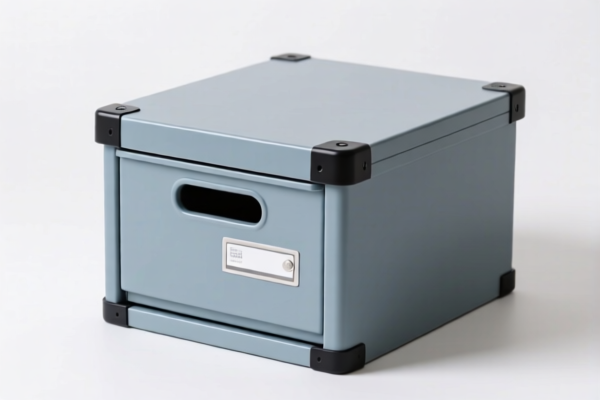
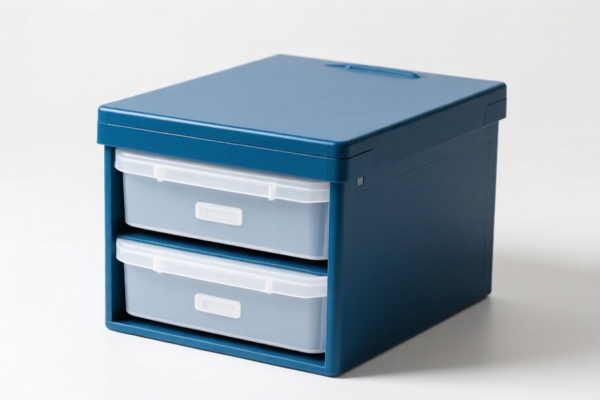
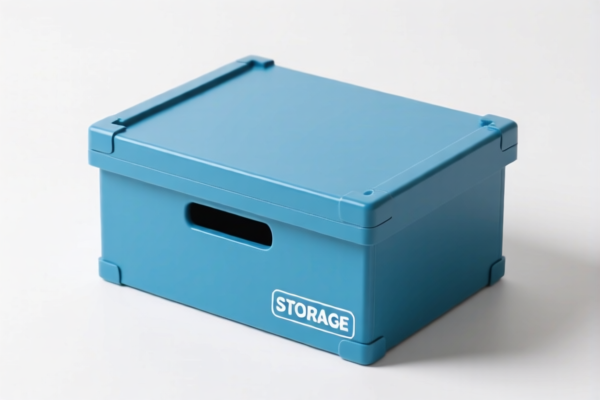
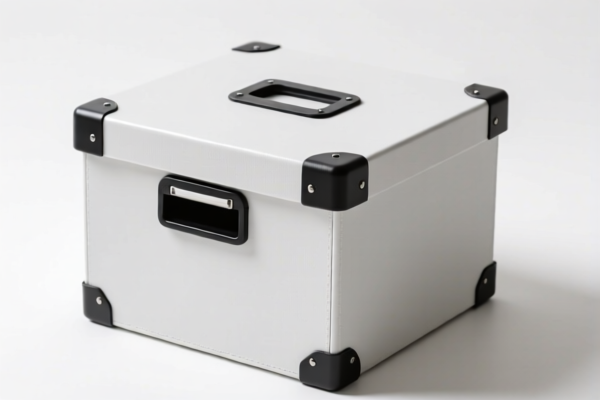
AI Analysis
📦 Storage Boxes (Containers for General Use)
🌐 HS Code Reference & Customs Clearance Guide | 2026 Latest Tariff Analysis | Strategic Classification Strategy
📌 I. Product Definition & Classification: What Exactly is a "Storage Box"?
Storage boxes are versatile containers used for organizing, protecting, and transporting goods. In international trade, they are not a single unified category but are classified based on material composition and specific function. Misclassification is the most common cause of overpayment or customs delays for this item.
⚠️ Key Distinction Point:
- Plastic/Paper/Wood/Textile: The material dictates the primary HS Code.
- Specific Use: If used for specific items (e.g., photo cards, documents), it may fall under "articles for office use" rather than general packaging.
- Packaging vs. Container: Is it a disposable package or a durable storage unit? This affects classification in some jurisdictions, but primarily drives the material-based HS code here.
📊 II. HS Code Classification Matrix (Based on Provided Data)
| HS Code | Material/Feature Profile | Summary Reasoning | Total Tax Rate |
|---|---|---|---|
4202.99.90.00 |
Plastic, Textile, or Cardboard | General article of plastics or textile materials, not elsewhere specified. "Catch-all" for bags/boxes not made of metal/wood. | 55.0% |
3923.10.20.00 |
Plastic Packaging | Explicitly classified as plastic articles for the conveyance or packing of goods (e.g., plastic crates, bins). | 35.0% |
3926.90.87.00 |
Plastic Office/Stationery | Specifically for card storage or document organization. Classified as other plastic articles for office use. | 40.3% |
4421.99.98.80 |
Wooden | Wooden storage containers. Classified under other wooden articles. | 38.3% |
4823.90.86.80 |
Paper/Cardboard | Boxes made primarily of paper or paperboard. Classified as other paper articles. | 35.0% |
🔍 Critical Insight:
- Plastic boxes have three different tax outcomes depending on whether they are deemed "Packaging" (3923.10.20.00), "Office Stationery" (3926.90.87.00), or "General Plastic Article" (4202.99.90.00).
- Wood vs. Paper: Wood (4421) is taxed higher than Paper (4823) in this dataset, despite both being natural/material-based.
💰 III. 2026 Latest Tariff Rate Breakdown (Detailed Policy Analysis)
✅ Applicable Country: United States (US)
✅ Origin: China (CN)
✅ Effective Time: Post-2025 Policies (Section 301 & IEEPA)
🎯 1. 4202.99.90.00 – General Plastic/Textile Storage Containers
Highest Risk Category
| Item | Detail |
|---|---|
| Base Duty | 20.0% |
| Section 301 (Add-on) | +25.0% |
| Section 122 (IEEPA) | +10.0% |
| Total Effective Rate | 55.0% |
| Calculation Base | CIF Value × 55% |
| De Minimis Eligibility | ❌ Denied (High risk for small shipments) |
📌 Explanation:
This code is often used when the material mix is ambiguous or when the box is considered a "general purpose container" not strictly for packing perishables. The 20% base duty is unusually high for plastic goods, making this the most expensive classification.
🎯 2. 3923.10.20.00 – Plastic Packaging/Boxes
Optimal Low-Rate Option for Plastic
| Item | Detail |
|---|---|
| Base Duty | 0.0% |
| Section 301 (Add-on) | +25.0% |
| Section 122 (IEEPA) | +10.0% |
| Total Effective Rate | 35.0% |
| Calculation Base | CIF Value × 35% |
| De Minimis Eligibility | ❌ Denied |
📌 Explanation:
If your storage box is clearly plastic and used for holding/packing goods (even if reusable), it qualifies for 0% base duty. The total tax is driven entirely by punitive tariffs (35%). This is a 20% savings compared to4202.99.90.00.
🎯 3. 3926.90.87.00 – Plastic Card/Document Storage
Niche Use Case
| Item | Detail |
|---|---|
| Base Duty | 5.3% |
| Section 301 (Add-on) | +25.0% |
| Section 122 (IEEPA) | +10.0% |
| Total Effective Rate | 40.3% |
| Calculation Base | CIF Value × 40.3% |
| De Minimis Eligibility | ❌ Denied |
📌 Explanation:
Applies specifically to card holders, photo albums, or document organizers made of plastic. The base duty (5.3%) is low, but the punitive tariffs push the total to 40.3%. Do not use this for general bulk storage boxes.
🎯 4. 4421.99.98.80 – Wooden Storage Boxes
Mid-Range Cost
| Item | Detail |
|---|---|
| Base Duty | 3.3% |
| Section 301 (Add-on) | +25.0% |
| Section 122 (IEEPA) | +10.0% |
| Total Effective Rate | 38.3% |
| Calculation Base | CIF Value × 38.3% |
| De Minimis Eligibility | ❌ Denied |
📌 Explanation:
Wooden storage boxes (e.g., cedar chests, wooden crates) attract a small base duty (3.3%). However, wood products often face strict phytosanitary inspections in addition to tariffs.
🎯 5. 4823.90.86.80 – Paper/Cardboard Storage Boxes
Competitive Rate for Paper
| Item | Detail |
|---|---|
| Base Duty | 0.0% |
| Section 301 (Add-on) | +25.0% |
| Section 122 (IEEPA) | +10.0% |
| Total Effective Rate | 35.0% |
| Calculation Base | CIF Value × 35% |
| De Minimis Eligibility | ❌ Denied |
📌 Explanation:
Similar to plastic packaging (3923.10.20.00), paper-based storage boxes enjoy 0% base duty. The total tax is 35%. Ensure the product is predominantly paper/cardboard (e.g., gift boxes, file organizers).
🛠️ IV. Customs Clearance Operational Advice (Practical Pitfall Avoidance)
✅ 1. Material Declaration is Key
| Material | Recommended HS Code | Tax Rate | Action |
|---|---|---|---|
| Plastic (General) | 3923.10.20.00 |
35.0% | Declare as "Plastic Storage Container for Packing" |
| Plastic (Card/Organizer) | 3926.90.87.00 |
40.3% | Declare as "Plastic Card Holder/Document Organizer" |
| Wood | 4421.99.98.80 |
38.3% | Declare as "Wooden Storage Box"; Include IPPC Stamp |
| Paper/Cardboard | 4823.90.86.80 |
35.0% | Declare as "Paper/Cardboard Storage Box" |
| Mixed/Unknown | 4202.99.90.00 |
55.0% | ❌ AVOID unless you cannot prove material |
💡 Pro Tip:
If your box is plastic, always aim for3923.10.20.00(35%) or3926.90.87.00(40.3%). Avoid4202.99.90.00(55%) unless you are unsure of the material, as it is a massive cost sink.
✅ 2. Documentation Requirements
| Document | Requirement | Notes |
|---|---|---|
| Commercial Invoice | Must specify material (e.g., "PP Plastic", "Solid Wood", "Cardboard") | Vague terms like "Container" trigger higher duties |
| Material Certificates | Optional but recommended | Helps prove if a "composite" box is primarily plastic or paper |
| IPPC Mark | Mandatory for Wood | For HS 4421, ensure the wooden box has the ISPM 15 stamp |
| Product Photos | Highly Recommended | Show the box empty and filled to demonstrate use (packing vs. display) |
✅ 3. Common Errors & Consequences
❌ Error 1: Classifying a Plastic Box as 4202.99.90.00
👉 Consequence: Paying 55% tax instead of 35%. Loss of 20% margin.
👉 Fix: Declare material as "Plastic" and function as "Packing/Storage".
❌ Error 2: Mixing Wooden and Plastic components without clarification
👉 Consequence: Customs may classify based on the "essential character," which could be the more expensive component or lead to random assessment.
👉 Fix: If >50% by weight/value is wood, use 4421. If plastic, use 3923.
❌ Error 3: Using "Gift Box" terminology for Paper Boxes
👉 Consequence: May be misclassified as textile or other goods if not specified as paper.
👉 Fix: Explicitly state "Paper/Cardboard Storage Box" in the description.
🌍 V. Global Market Comparison (Contextual Note)
| Region | Typical HS Code for Plastic Box | Base Duty | Notes |
|---|---|---|---|
| 🇺🇸 USA | 3923.10.20.00 |
0% | High punitive tariffs (35% total) |
| 🇪🇺 EU | 3923.10.00 |
0% - 4% | No Section 301/IEEPA penalties. Lower total cost. |
| 🇨🇳 China (Import) | 3923.10.00 |
3.5% - 6% | Lower base duties, no punitive tariffs. |
📌 Strategic Takeaway:
The high tariffs in the US dataset (301/122) make material selection critical.
- Plastic and Paper boxes share the lowest total rate (35%) due to 0% base duty.
- Wood is slightly higher (38.3%).
- Generic/Mixed classifications jump to 55%.
📌 VI. Conclusion: Professional Declaration, Cost Savings
🎯 Key Takeaway:
🔹 "Know Your Material: Plastic & Paper are Cheapest (35%), Wood is Mid (38.3%), Generic is Expensive (55%)."
🔹 "Avoid '4202' for Plastic Boxes unless necessary; it's a 55% tax trap."
📣 Immediate Action:
📞 Verify Material: Confirm if your storage box is plastic, wood, or paper.
📝 Precise Description: Use "Plastic Storage Container (Packing Type)" for3923.10.20.00.
🚀 Optimize Costs: Shift from ambiguous classifications (4202) to specific material codes (3923or4823) to save up to 20% in tariffs.
✨ Precision Classification Starts Here!
💼 Every percentage point of duty is a percentage point of profit. Don't let misclassification eat your margins.
Customer Reviews
About HS Code Classification
The Harmonized System (HS) is an internationally standardized nomenclature developed by the World Customs Organization (WCO) to classify traded products. Over 200 countries use the HS system as the basis for customs tariffs, trade statistics, and import/export regulations.
Each HS code follows a hierarchical structure:
- Chapter (2 digits) — Broad category of goods (e.g., Chapter 84: Machinery and Mechanical Appliances)
- Heading (4 digits) — More specific grouping within the chapter
- Subheading (6 digits) — Internationally standardized breakdown, used by all WCO member countries
- National subdivisions (8-10 digits) — Country-specific extensions for further classification, such as US HTSUS 10-digit codes
Correct HS code classification is essential for smooth customs clearance, accurate duty payment, and compliance with trade regulations. Misclassification can lead to customs delays, overpayment of duties, or penalties.
When importing from CN to US, the applicable tariff rates may include:
- Most-Favored-Nation (MFN) rate — The standard duty rate applied to WTO members
- General rate — Applied to countries without trade agreements
- Trade remedy duties — Additional tariffs such as Section 301 (anti-dumping), Section 232 (national security), or countervailing duties
The information provided on this page is for reference purposes only. For official classification, please consult with your local customs authority or a licensed customs broker.