Storage Card Book
CN → US| HS Code | Tariff Rate | Origin | Destination | Doc |
|---|---|---|---|---|
| 3926904800 | 13.4% | CN | US | Official Doc |
| 3926908800 | 0.0% | CN | US | Official Doc |
| 4202329100 | 52.6% | CN | US | Official Doc |
| 4202328000 | 40.7% | CN | US | Official Doc |
| 4820102010 | 35.0% | CN | US | Official Doc |
| 4820102060 | 35.0% | CN | US | Official Doc |
Product Images
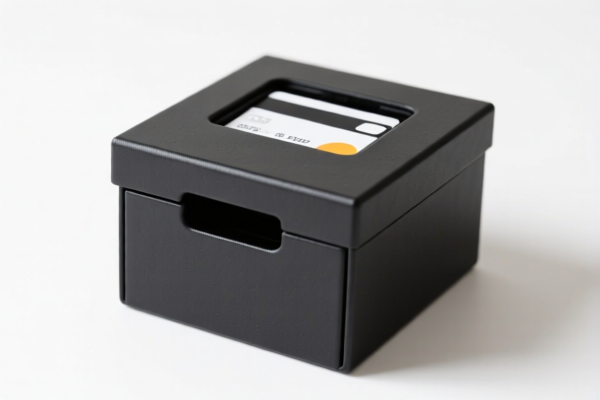
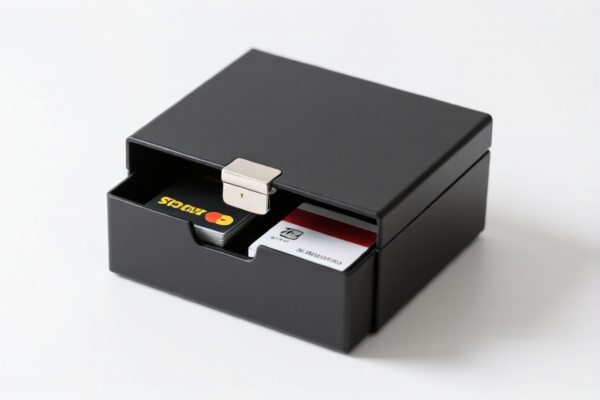
AI Analysis
📚 Storage Card Book (SD/TF Card Protectors)
🌐 HS Code Reference & Customs Clearance Guide | 2026 Latest Tariff Analysis | Professional Compliance Strategy
📌 I. Product Definition & Classification: What Exactly is a "Storage Card Book"?
A Storage Card Book (also known as an SD Card Album, Memory Card Holder, or TF Card Organizer) is a stationary or accessory item used to organize, store, and protect memory cards (SD, microSD/TF, CF, etc.).
In international trade, these products are primarily classified based on their material composition. The two main categories are: 1. Paper/Paperboard Products: Made of paper, cardboard, or mixed materials with paper as the primary surface. These are classified under Chapter 48. 2. Plastic Products: Made entirely or predominantly of plastics (e.g., PVC, PP, PET sheets). These are classified under Chapter 39.
⚠️ Key Distinction Point:
- If the product is made of paper/cardboard with plastic pockets glued on, or primarily paper-based structure → It falls under 4820.10 (Stationery).
- If the product is made of plastic sheets (folded or bound) → It falls under 3926.90 (Other articles of plastics).
📦 II. HS Code Classification Details (2026 Latest Tariff Authority)
Based on the provided data, here are the relevant HS Codes and their applications:
| HS Code | Product Description | Material Type | Tax Rate (US Import from CN) |
|---|---|---|---|
4820.10.20.10 |
Diaries, notebooks, and address books, bound; memorandum pads, letter pads and similar articles: Diaries, notebooks, address books | Paper/Paperboard | 25.0% |
4820.10.20.60 |
Diaries, notebooks, and address books, bound; memorandum pads, letter pads and similar articles: Other | Paper/Paperboard | 25.0% |
3926.90.48.00 |
Other articles of plastics: Photo albums | Plastics | 0.0% |
3926.90.88.00 |
Other articles of plastics: Flexible plastic document binders with tabs, rolled or flat | Plastics | Error (See Note Below) |
🔍 Critical Note on
3926.90.88.00:
The provided data showsErrorfor tax retrieval. However, historically, flexible plastic binders often fall under this code. Caution: If the system cannot retrieve tax info, it may indicate a complex classification or a need for an Advance Ruling. In many cases, plastic card holders might also compete with3926.90.98(Other) depending on specific USITC rulings, but based strictly on the provided data, we must address theErrorstatus.
💰 III. 2026 Latest Tariff Rate Details (Detailed Breakdown)
✅ Applicable Country: United States (US)
✅ Origin: China (CN)
✅ Effective Time: 2025+ (Including subsequent imports)
🎯 1. Paper-Based Storage Card Books (HS Code: 4820.10.20.10 / 4820.10.20.60)
These codes fall under Chapter 48: Paper and Paperboard. The description "Registers, account books, notebooks... Diaries, notebooks and address books" is broadly interpreted by customs to include paper-based organizational books. If a storage card book is made of paper/cardboard, it is treated as a form of "notebook" or "register."
| Item | Content |
|---|---|
| Base Tariff | 0.0% |
| Section 301 Additional Tariff | +25.0% |
| Total Tariff | 25.0% |
| Tax Calculation | CIF Value × 25% |
| De Minimis Exemption | ❌ Not Applicable (Section 301 goods are generally excluded from de minimis) |
| Legal Basis | USITC Heading 4820.10 + Section 301 Footnotes |
📌 Explanation:
- Although a "Storage Card Book" is not a traditional diary, if it is made of paper, customs often groups it under "notebooks" or "stationery" unless a specific exception exists. - The 25% tariff is significant. Importers must calculate this cost carefully.
🎯 2. Plastic Storage Card Books (HS Code: 3926.90.48.00)
This code specifically covers Photo Albums made of plastics. Many plastic storage card books are structurally similar to photo albums (clear plastic pockets bound or stapled together).
| Item | Content |
|---|---|
| Base Tariff | 0.0% |
| Section 301 Additional Tariff | 0.0% |
| Total Tariff | 0.0% |
| Tax Calculation | None |
| De Minimis Exemption | ✅ Applicable (if under $800) |
| Legal Basis | USITC Heading 3926.90.48 |
📌 Explanation:
- If the product is made of plastic and can be classified as a "photo album" (or similar protective album), it enjoys a 0% tariff. - This is a major advantage for plastic-based organizers.
🎯 3. Flexible Plastic Document Binders (HS Code: 3926.90.88.00)
| Item | Content |
|---|---|
| Base Tariff | ? |
| Additional Tariff | ? |
| Total Tariff | Error (Data Retrieval Failed) |
⚠️ Risk Alert:
- The tax information for3926.90.88.00is missing/error in the provided data. - This code typically covers "Other" plastic articles. If this code applies to your plastic card book, the tariff could vary (often 2.9% base + potential Section 301 duties). - Recommendation: Do not rely on this code without verification. Prefer3926.90.48.00(0% tariff) if structurally similar to a photo album, or consult a customs broker for an Advance Ruling.
🛠️ IV. Customs Clearance Practical Advice
✅ 1. Material Determination is Key
| Material | Recommended HS Code | Tariff | Strategy |
|---|---|---|---|
| Paper/Cardboard | 4820.10.20.10 / 4820.10.20.60 |
25% | High cost. Consider if plastic alternative is feasible. |
| Plastic (Album Style) | 3926.90.48.00 |
0% | Preferred. Classify as "Photo Album" or "Memory Card Album" made of plastic. |
| Plastic (Binder Style) | 3926.90.88.00 |
Uncertain | High Risk. Avoid unless legally verified. |
💡 Pro Tip:
- If your storage card book is made of plastic, explicitly describe it as "Plastic Memory Card Album" or "Photographic Storage Album" in your commercial invoice. This supports the classification under3926.90.48.00(0% tariff). - If it is made of paper, describe it as "Paper Notebook for Memory Cards". Expect the 25% duty.
✅ 2. Documentation Checklist
| Document | Required | Notes |
|---|---|---|
| Commercial Invoice | ✅ | Clearly state: "Material: Plastic/Paper", "Function: Storage/Organization", "Type: Album/Notebook". |
| Product Photos | ✅ | Show the clear pockets, binding method, and material texture. |
| Material Declaration | ✅ | Explicitly state the percentage of plastic vs. paper if mixed. |
| Packaging List | ✅ | Ensure no mixed materials in one shipment that confuse the classifier. |
✅ 3. Common Mistakes & Pitfalls
❌ Mistake 1: Classifying plastic card books under 4820 (Paper)
👉 Result: You pay 25% duty unnecessarily. If it's plastic, use 3926.90.48.00 for 0% duty.
❌ Mistake 2: Classifying paper card books under 3926 (Plastic)
👉 Result: Customs Penalty. If it's paper, it cannot be classified as plastic. You will face fines and back taxes.
❌ Mistake 3: Using 3926.90.88.00 without verification
👉 Result: Uncertain Duty. The data shows "Error". This could lead to delays or unexpected high duties if the code is deemed incorrect.
🌍 V. Market Comparison
| Market | Recommended HS Code | Tariff (China Origin) | Notes |
|---|---|---|---|
| 🇺🇸 USA | 3926.90.48.00 (Plastic) |
0% | Best Option. Avoid 4820 (25%) if possible. |
| 🇺🇸 USA | 4820.10.20.10 (Paper) |
25% | High cost. |
| 🇪🇺 EU | Varies by Material | Low/0% | EU has different nomenclature. Plastic albums often 0-2%. |
| 🇨🇳 China | Varies | 0-5% | Low import duty. |
📌 Conclusion:
- For the US Market, Plastic Storage Card Books classified as Photo Albums (3926.90.48.00) are the most cost-effective (0% tariff). - Paper-based products are subject to 25% additional tariffs.
📌 VI. Actionable Advice for Importers
- Check Material: Is your product plastic or paper?
- Choose Code Wisely:
- Plastic: Use
3926.90.48.00("Photo Album"). Ensure the design resembles an album (bound pages with pockets). - Paper: Use
4820.10.20.60("Other Notebooks").
- Plastic: Use
- Avoid
3926.90.88.00: Due to the "Error" in tax data, it poses a compliance risk. - Labeling: Clearly mark the material in the invoice. "100% Plastic Memory Card Album" vs. "Paper Card Organizer".
🎯 VII. Conclusion
🎯 Remember the Golden Rule:
🔹 "Plastic Album = 0% Duty (3926.90.48.00)"
🔹 "Paper Notebook = 25% Duty (4820.10.20.x0)"
🔹 "Avoid Uncertain Codes (Error)"
📌 Final Tip:
If your product is a hybrid (e.g., plastic pockets on a cardboard cover), customs may still classify it as paper if the cardboard is the primary structure. To secure the 0% tariff, consider using a 100% plastic construction if feasible, and describe it as a "Plastic Photo/Memory Card Album".
📣 Immediate Action:
📞 Confirm material composition with your supplier.
📄 Update your commercial invoice description to match the preferred HS Code.
🚀 Save 25% on duties by choosing the right classification!
✨ Smart Classification, Maximum Savings!
💼 Your profit margin depends on precise HS Codes!
Customer Reviews
About HS Code Classification
The Harmonized System (HS) is an internationally standardized nomenclature developed by the World Customs Organization (WCO) to classify traded products. Over 200 countries use the HS system as the basis for customs tariffs, trade statistics, and import/export regulations.
Each HS code follows a hierarchical structure:
- Chapter (2 digits) — Broad category of goods (e.g., Chapter 84: Machinery and Mechanical Appliances)
- Heading (4 digits) — More specific grouping within the chapter
- Subheading (6 digits) — Internationally standardized breakdown, used by all WCO member countries
- National subdivisions (8-10 digits) — Country-specific extensions for further classification, such as US HTSUS 10-digit codes
Correct HS code classification is essential for smooth customs clearance, accurate duty payment, and compliance with trade regulations. Misclassification can lead to customs delays, overpayment of duties, or penalties.
When importing from CN to US, the applicable tariff rates may include:
- Most-Favored-Nation (MFN) rate — The standard duty rate applied to WTO members
- General rate — Applied to countries without trade agreements
- Trade remedy duties — Additional tariffs such as Section 301 (anti-dumping), Section 232 (national security), or countervailing duties
The information provided on this page is for reference purposes only. For official classification, please consult with your local customs authority or a licensed customs broker.