Storage Jar
CN → US| HS Code | Tariff Rate | Origin | Destination | Doc |
|---|---|---|---|---|
| 4420902000 | 17.5% | CN | US | Official Doc |
| 4202999000 | 55.0% | CN | US | Official Doc |
| 3923102000 | 35.0% | CN | US | Official Doc |
| 4202929315 | 52.6% | CN | US | Official Doc |
| 4420908000 | 38.2% | CN | US | Official Doc |
| 3923109000 | 38.0% | CN | US | Official Doc |
Product Images
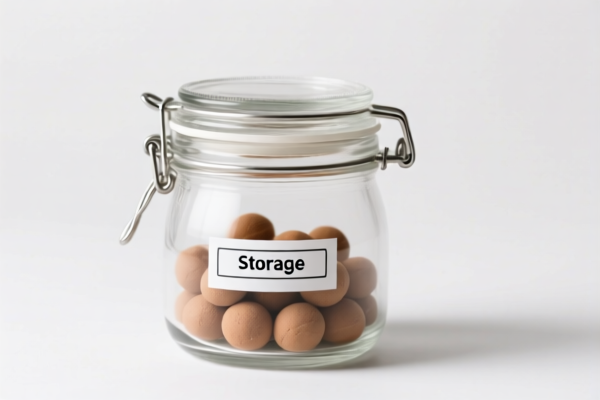

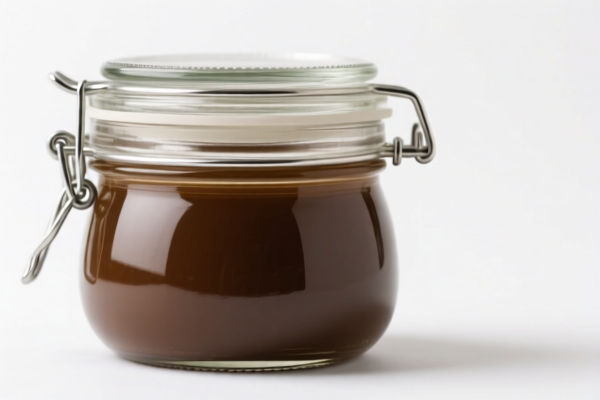
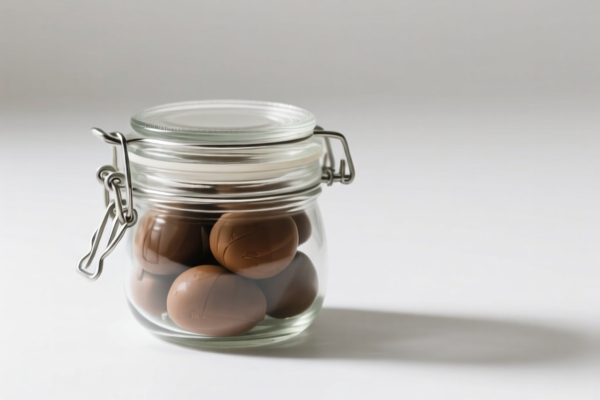
AI Analysis
🏺 Storage Jar (Aluminum, Ceramic & Glass Containers)
🌐 HS Code Reference & Customs Clearance Guide | 2026 Latest Tariff Analysis | Professional Clearance Strategy
📌 I. Product Definition & Classification: Do You Really Know "Storage Jar"?
"Storage Jar" is a generic term in international trade that covers containers made of various materials for storing food, chemicals, or other goods. The key to correct classification lies in the material, capacity, and purpose.
In this analysis, based on the provided <DATA>, the products fall into three main categories:
1. Aluminum Containers: Rigid/collapsible tubular containers for any material (non-gas), ≤300L.
2. Ceramic Tableware/Kitchenware: Household articles not made of porcelain or china.
3. Glassware: Table/kitchen/office use, non-drinking glasses, classified by value.
⚠️ Key Distinction Point:
- If it's an industrial/storage drum (Aluminum) → Look at Chapter 76.
- If it's for household dining/kitchen use (Ceramic) → Look at Chapter 69.
- If it's for table/dining use (Glass) → Look at Chapter 70.
📦 II. HS Code Classification Details (Based on Provided Data)
| HS Code | Material & Description | Capacity/Value Criteria | Key Characteristics |
|---|---|---|---|
7612.90.50.00 |
Aluminum Casks, Drums, Cans, Boxes | ≤ 300 Liters | Any material (except gas); No mechanical/thermal equipment. "Other" category. |
7612.90.10.90 |
Aluminum Casks, Drums, Cans, Boxes | ≤ 20 Liters | Small capacity aluminum containers. "Other" category. |
6912.00.48.90 |
Ceramic Tableware/Kitchenware | N/A (Household Use) | Not porcelain/china. Tableware/kitchenware. "Other: Other: Other: Other". |
6912.00.50.00 |
Ceramic Other Household Articles | N/A (Household Use) | Not tableware/kitchenware (e.g., decorative jars). "Other". |
7013.49.20.90 |
Glass Table/Kitchenware | Value ≤ $3 each | Non-drinking glassware (e.g., storage jars). Valued not over $3. |
7013.49.60.90 |
Glass Table/Kitchenware | Value > $5 each | Non-drinking glassware. Valued over $5 each. |
🔍 Important Note:
- Aluminum Containers (7612): The distinction between7612.90.10.90(≤20L) and7612.90.50.00(>20L up to 300L) is critical for duty calculation.
- Ceramic (6912): Distinguish between "Tableware/Kitchenware" (6912.00.48.90) and "Other Household Articles" (6912.00.50.00). A jar used for storing food at the table is tableware; a jar used for storing coffee beans in the pantry might still be kitchenware, but a decorative ceramic jar is "Other".
- Glass (7013): The tariff depends heavily on the transaction value per unit. Ensure your invoice clearly states the unit price to avoid reclassification by customs.
💰 III. 2026 Latest Tariff Rate Details (Including Additional Duties)
✅ Applicable Country: United States (US)
✅ Origin: China (CN) (Inferred from tax details in DATA)
✅ Effective Time: Current rates as per<DATA>
🎯 1. Aluminum Containers (Chapter 76)
| HS Code | Product Description | Base Duty | Additional Duty (Section 301/USITC) | Total Tax Rate | Legal Basis Path |
|---|---|---|---|---|---|
7612.90.10.90 |
Aluminum Containers ≤ 20L | 5.7% | +25.0% | 30.7% | USITC:7612.90.10.90 + Footnote for 301 Tariffs |
7612.90.50.00 |
Aluminum Containers > 20L (up to 300L) | 0.0% | +25.0% | 25.0% | USITC:7612.90.50.00 + Footnote for 301 Tariffs |
📌 Explanation:
- Aluminum containers are subject to Section 301 additional tariffs (25%).
- Small containers (≤20L) have a base duty of 5.7%, resulting in a higher total burden (30.7%).
- Larger containers (>20L) have a base duty of 0%, resulting in a lower total burden (25%).
- Strategy: If possible, design packaging to exceed 20 liters (if volume allows) or verify if the product is strictly "tableware" (Ceramic/Glass) which may have different duty structures.
🎯 2. Ceramic Storage Jars (Chapter 69)
| HS Code | Product Description | Base Duty | Additional Duty (Section 301/USITC) | Total Tax Rate | Legal Basis Path |
|---|---|---|---|---|---|
6912.00.48.90 |
Ceramic Tableware/Kitchenware (Other) | 9.8% | 0.0% | 9.8% | USITC:6912.00.48.90 (No 301 tariff listed in DATA) |
6912.00.50.00 |
Ceramic Other Household Articles | 6.0% | 0.0% | 6.0% | USITC:6912.00.50.00 (No 301 tariff listed in DATA) |
📌 Explanation:
- Ceramic items generally have lower tariffs than aluminum containers in this dataset.
- Tableware/Kitchenware (48.90) is taxed at 9.8%.
- Other Household Articles (50.00) is taxed at 6.0%.
- Strategy: If the ceramic jar is not primarily for table service (e.g., it's a pantry storage jar), arguing for classification under6912.00.50.00("Other") could save 3.8% in duties.
🎯 3. Glass Storage Jars (Chapter 70)
| HS Code | Product Description | Value Criteria | Base Duty | Additional Duty (Section 301/USITC) | Total Tax Rate | Legal Basis Path |
|---|---|---|---|---|---|---|
7013.49.20.90 |
Glass Table/Kitchenware (Non-drinking) | ≤ $3 each | 22.5% | +7.5% | 30.0% | USITC:7013.49.20.90 + Footnote for 301 Tariffs |
7013.49.60.90 |
Glass Table/Kitchenware (Non-drinking) | > $5 each | 7.2% | +7.5% | 14.7% | USITC:7013.49.60.90 + Footnote for 301 Tariffs |
📌 Explanation:
- Glass jars are subject to Section 301 additional tariffs (7.5%).
- Low-value jars (≤$3) have a high base duty (22.5%), totaling 30.0%.
- High-value jars (>$5) have a low base duty (7.2%), totaling 14.7%.
- ⚠️ Critical Risk: There is a "Gap" between $3 and $5.
- If valued at $3.01–$5.00, customs may reclassify to the higher bracket or apply an intermediate rate not shown here.
- Strategy: Either price below $3.00 (risking "de minimis" scrutiny) or price above $5.00 to benefit from the lower 14.7% rate. Avoid pricing in the middle if possible.
🛠️ IV. Customs Clearance Practical Advice (Battle-Tested Pitfall Guide)
✅ 1. Preparation Checklist (Must-Have Documents)
| Document | Required | Notes |
|---|---|---|
| Product Specifications | ✔️ | Clearly state material (Aluminum/Ceramic/Glass), capacity (Liters), and usage. |
| Unit Price Declaration | ✔️ | Crucial for Glassware (7013). Invoice must clearly show price per piece. |
| Photos of Labels/Packaging | ✔️ | Show capacity markings, food-safe labels, or "For Decorative Use Only" if applicable. |
| Material Certificate | ✔️ | Prove it's Aluminum, Ceramic, or Glass. Avoid misclassification. |
| Commercial Invoice | ✔️ | Description must match HS Code precisely (e.g., "Aluminum Drum, 25L, Non-Gas"). |
| Packing List | ✔️ | Show net weight and volume to verify capacity claims. |
✅ 2. Declaration Tips (Key Mantras)
🔥 "Material First, Capacity Next, Value Matters for Glass!"
| Scenario | Correct Declaration | Wrong Practice | Consequence |
|---|---|---|---|
| Aluminum Jar ≤ 20L | 7612.90.10.90 |
Declare as >20L (7612.90.50.00) |
Underpayment Penalty + 5.7% extra duty |
| Aluminum Jar > 20L | 7612.90.50.00 |
Declare as ≤20L (7612.90.10.90) |
Overpayment (You paid 5.7% extra base duty) |
| Ceramic Jar | 6912.00.48.90 or 50.00 |
Declare as Glass or Metal | Misclassification Audit |
| Glass Jar ($2.50) | 7013.49.20.90 |
Declare as >$5 (7013.49.60.90) |
Fraud Alert + 15.3% duty back + Penalties |
| Glass Jar ($6.00) | 7013.49.60.90 |
Declare as ≤$3 (7013.49.20.90) |
Overpayment (You paid 15.3% extra) |
✅ 3. Special Cases & Mitigation
| Scenario | Handling Advice |
|---|---|
| Mixed Materials | If a jar has an aluminum lid and ceramic body, consult the "Essential Character" rule. Usually, the main container body dictates classification. |
| "Decorative" Jars | If a ceramic or glass jar is purely decorative (not for food/table), argue for 6912.00.50.00 (Ceramic) or potentially other headings, but be prepared for customs scrutiny. |
| Food vs. Non-Food | Aluminum containers for "any material" are broad. Ensure you declare the specific content if it affects safety regulations (FDA/USDA), though duty remains the same. |
| Glassware Price Gap | If your glass jar costs $4, consider adjusting the invoice value (if arm's length) to <$3 or >$5 to optimize duty, but do not undervalue fraudulently. |
🌍 V. Global Market Comparison (2026 Update)
| Region | Recommended HS Code (Example) | Estimated Duty | Notes |
|---|---|---|---|
| 🇺🇸 USA | See above (Varies by Material) | 6% - 30.7% | High Section 301 tariffs on Aluminum & Glass. |
| 🇨🇳 China | 7612 / 6912 / 7013 | 0% - 9% | Import duties may be lower; VAT applies separately. |
| 🇪🇺 EU | 7612 / 6912 / 7013 | 0% - 4% | Generally lower base duties; watch for anti-dumping on aluminum. |
| 🇬🇧 UK | 7612 / 6912 / 7013 | 0% - 5% | Post-Brexit rates may vary; check UK Tariff Calculator. |
📌 Conclusion:
- USA is the most expensive market for these goods due to Section 301 tariffs.
- Aluminum containers >20L offer the best duty rate (25%) among aluminum options.
- Ceramic jars are the most tariff-efficient (6-9.8%).
- Glass jars require careful pricing strategy to avoid the 30% trap.
📌 VI. Common Mistakes & Pitfalls (Lessons Learned)
❌ Mistake 1: Confusing "Aluminum Drum" with "Aluminum Can".
👉 Result: If it's a rigid container >20L, it's 7612.90.50.00, not a beverage can. Misclassification leads to audit.
❌ Mistake 2: Ignoring Unit Value for Glassware.
👉 Result: Declaring a $4 jar as "under $3" to save duty is customs fraud. If audited, you pay back taxes + penalties.
❌ Mistake 3: Assuming All Ceramic is Tableware.
👉 Result: A decorative ceramic jar is 6912.00.50.00 (6.0%), not 6912.00.48.90 (9.8%). Proper description saves money.
✅ Correct Approach:
"Aluminum Storage Drum, 25L, Non-Gas, Rigid, No Thermal Equipment, Model ABC"
"Ceramic Storage Jar, Food-Grade Interior, Not for Table Service"
"Glass Storage Jar, 500ml, Unit Value $6.50, For Kitchen Use"
🎯 VII. Conclusion: Precision in Classification Saves Money!
🎯 Remember the Mantras:
🔹 "Aluminum: 20L is the Line. Under is 30.7%, Over is 25%!"
🔹 "Ceramic: Decorative is Cheaper (6%) than Kitchen (9.8%)!"
🔹 "Glass: Price is King. Stay <$3 or >$5 to save 15%!"
📌 Pro Tip:
If your glass storage jars are valued between $3 and $5, consult a customs broker to determine if any intermediate subheadings or exemptions apply, or consider adjusting the product value legitimately to fall outside the "gap."
📣 Immediate Action:
📞 Verify your unit price and capacity.
🚀 Choose the correct HS Code to minimize duty and ensure smooth clearance!
✨ Professional Customs Clearance Starts with Accurate Classification!
💼 Every Percentage Point of Duty Saves You Profit!
Customer Reviews
About HS Code Classification
The Harmonized System (HS) is an internationally standardized nomenclature developed by the World Customs Organization (WCO) to classify traded products. Over 200 countries use the HS system as the basis for customs tariffs, trade statistics, and import/export regulations.
Each HS code follows a hierarchical structure:
- Chapter (2 digits) — Broad category of goods (e.g., Chapter 84: Machinery and Mechanical Appliances)
- Heading (4 digits) — More specific grouping within the chapter
- Subheading (6 digits) — Internationally standardized breakdown, used by all WCO member countries
- National subdivisions (8-10 digits) — Country-specific extensions for further classification, such as US HTSUS 10-digit codes
Correct HS code classification is essential for smooth customs clearance, accurate duty payment, and compliance with trade regulations. Misclassification can lead to customs delays, overpayment of duties, or penalties.
When importing from CN to US, the applicable tariff rates may include:
- Most-Favored-Nation (MFN) rate — The standard duty rate applied to WTO members
- General rate — Applied to countries without trade agreements
- Trade remedy duties — Additional tariffs such as Section 301 (anti-dumping), Section 232 (national security), or countervailing duties
The information provided on this page is for reference purposes only. For official classification, please consult with your local customs authority or a licensed customs broker.