Storage Organizer Shelf
CN → US| HS Code | Tariff Rate | Origin | Destination | Doc |
|---|---|---|---|---|
| 4421919880 | 38.3% | CN | US | Official Doc |
| 7326908630 | 87.9% | CN | US | Official Doc |
| 4421999880 | 38.3% | CN | US | Official Doc |
| 7326908688 | 87.9% | CN | US | Official Doc |
| 9403200082 | 85.0% | CN | US | Official Doc |
Product Images
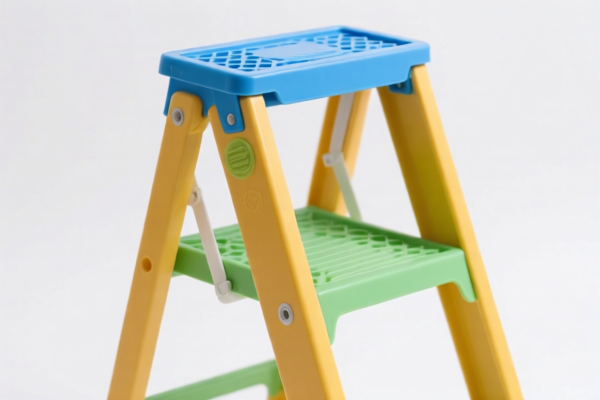


AI Analysis
🗄️ Storage Organizer Shelf (储物架)
🌐 HS Code Reference & Customs Clearance Guide | 2026 Latest Tariff Analysis | Professional Strategy for Metal & Wood Storage Units
📌 I. Product Definition & Classification: Wooden vs. Metal
A "Storage Organizer Shelf" is a versatile household or commercial item used for organizing goods. In international trade, the HS Code classification hinges entirely on the MATERIAL of construction. There are two distinct pathways:
-
Wooden/Shelving Units (Wood/Bamboo):
- Constructed primarily of wood, bamboo, or other vegetable materials.
- Falls under Chapter 44 (Wood and articles of wood).
- Specifically classified as "Other articles of wood."
-
Metal Shelving Units (Iron/Steel):
- Constructed primarily of iron, steel, aluminum, or other metals.
- Falls under Chapter 73 (Articles of iron or steel) or Chapter 94 (Furniture).
- Often classified as "Other articles of iron or steel" or "Other metal furniture."
⚠️ Critical Distinction Point:
- If the shelf is Wooden →归入 4421 (Chapter 44).
- If the shelf is Metal (Iron/Steel) → 归入 7326 (Chapter 73) or 9403 (Chapter 94).
- Misclassification leads to severe penalties due to vastly different tax rates (38.3% vs. 85-88%).
📦 II. HS Code Classification Details (2026 Latest Tariff Authority)
Based on the provided data, here are the four possible HS Codes and their logical justifications:
| HS Code | Material Basis | Logical Justification (Why this code?) | Total Tax Rate |
|---|---|---|---|
4421.91.98.80 |
Wood/Bamboo | "Wooden Other Articles": The summary infers wooden material based on the common name "Storage Organizer Shelf." It fits the "Other" category under wooden articles with no material conflict. | 38.3% |
4421.99.98.80 |
Wood/Bamboo | "Other Wooden Articles": Similar to above, this is the fallback "Other" category for wooden items not specifically listed elsewhere. It assumes wooden material with no conflict. | 38.3% |
7326.90.86.30 |
Iron/Steel | "Pipes & Supports": Common sense suggests many industrial/commercial shelves are metal. This code covers "other articles of iron/steel," including support structures. No material conflict if made of steel. | 87.9% |
7326.90.86.88 |
Iron/Steel | "Other Iron/Steel Articles": A general "catch-all" for metal items. If the shelf is made of iron/steel, this code applies as it is a non-specific metal article with no obvious conflict. | 87.9% |
9403.20.00.82 |
Metal Furniture | "Metal Furniture": If the shelf is considered "furniture" rather than just an "article," this code applies to "Other metal furniture." Common sense infers metal construction for sturdy storage units. | 85.0% |
🔍 Key Insight:
- Wooden Shelves are taxed at ~38.3%.
- Metal Shelves (Steel/Iron) are taxed at ~85-88% due to heavy surcharges.
- The difference is nearly 50%, making material declaration critical!
💰 III. 2026 Latest Tariff Rate Breakdown (Including Surcharges & Policy Add-ons)
✅ Applicable Country: United States (US)
✅ Origin: China (CN)
✅ Effective Date: Post-2025 (Current Trade Environment)
🎯 1. Wooden Storage Shelves (4421.91.98.80 / 4421.99.98.80)
| Item | Detail |
|---|---|
| Base Tariff | 3.3% (Ad Valorem) |
| Section 301 Surcharge | +25.0% (USITC Footnote for Chinese Wood Products) |
| IEEPA Surcharge | +10.0% (2234 Section/Section 122 Equivalent for Chinese Imports) |
| Total Tax Rate | 38.3% |
| Calculation Basis | CIF Value × 38.3% |
| De Minimis Exemption? | ❌ No (High tax rate prevents de minimis entry under $800) |
| Legal Path | USITC:4421.91.98.80 → Section 301: 25% → IEEPA: 10% |
📌 Explanation:
- Wood products from China face significant tariffs.
- 38.3% is high but significantly lower than metal equivalents.
- Strategy: If possible, ensure the product is not made of solid wood if avoiding this tariff is critical, but note that wood is often preferred for consumer goods.
🎯 2. Metal Storage Shelves (7326.90.86.30 / 7326.90.86.88)
| Item | Detail |
|---|---|
| Base Tariff | 2.9% (Ad Valorem) |
| Section 301 Surcharge | +25.0% (USITC Footnote for Chinese Metal Products) |
| IEEPA Surcharge | +10.0% (2234 Section/Section 122 Equivalent for Chinese Imports) |
| Steel/Aluminum/Copper Surcharge | +50.0% (Specific additional tariff for Steel/Aluminum/Copper articles) |
| Total Tax Rate | 87.9% |
| Calculation Basis | CIF Value × 87.9% |
| De Minimis Exemption? | ❌ No |
| Legal Path | USITC:7326.90.86.30 → Section 301: 25% → IEEPA: 10% → Steel Surcharge: 50% |
📌 Explanation:
- 87.9% is an extremely high tariff.
- The +50% surcharge is specific to steel/aluminum/copper products, adding a massive penalty.
- Result: Metal shelves from China are prohibitively expensive to import into the US unless mitigated.
🎯 3. Metal Furniture (9403.20.00.82)
| Item | Detail |
|---|---|
| Base Tariff | 0.0% (Ad Valorem) |
| Section 301 Surcharge | +25.0% |
| IEEPA Surcharge | +10.0% |
| Steel/Aluminum/Copper Surcharge | +50.0% |
| Total Tax Rate | 85.0% |
| Calculation Basis | CIF Value × 85.0% |
| Legal Path | USITC:9403.20.00.82 → Section 301: 25% → IEEPA: 10% → Steel Surcharge: 50% |
📌 Explanation:
- Even though the base tariff is 0%, the surcharges push the total to 85.0%.
- This is still slightly cheaper than7326(87.9%) but still very high.
🛠️ IV. Customs Clearance Practical Advice (Real-World Pitfall Guide)
✅ 1. Preparation Checklist (Non-Negotiable)
| Document | Required? | Purpose |
|---|---|---|
| ✅ Product Specifications | ✔️ | Must clearly state Material (e.g., "100% Steel," "Solid Pine Wood"). |
| ✅ Material Declaration | ✔️ | Explicitly declare "Steel," "Iron," "Wood," or "Bamboo." Vague terms like "Mixed Material" will cause delays. |
| ✅ Product Photos | ✔️ | Show construction joints, labels, and overall structure to prove material. |
| ✅ Commercial Invoice | ✔️ | Must match HS Code and accurately describe material. |
| ✅ Packing List | ✔️ | Confirm weight and dimensions for accurate tariff calculation. |
✅ 2. Declaration Strategy (Key Tactics)
🔥 “Material is King: Declare it right, save 50%!”
| Scenario | Correct Declaration | Incorrect Declaration | Consequence |
|---|---|---|---|
| Wooden Shelf | "Wooden Storage Rack" → 4421.91.98.80 |
"Metal Rack" or "Steel Shelf" | ❌ Penalty for Misclassification + High Tax (87.9%) |
| Metal Shelf | "Steel Storage Shelf" → 7326.90.86.88 |
"Wooden Rack" | ❌ Penalty for Misclassification + Audit Risk |
| Mixed Material | Declare Primary Structural Material | Vague "Organizer" | ❌ Customs Detention for clarification |
✅ 3. Special Case Handling
| Situation | Recommendation |
|---|---|
| Bamboo Shelves | Classify under Wood (4421). Bamboo is treated as wood in US tariffs. Tax: 38.3%. |
| Plastic-Coated Metal | Still classified as Metal (7326/9403). The coating does not change the primary material. Tax: 85-88%. |
| Import from Non-China Origin | If manufactured in Vietnam, Thailand, or Mexico, apply for Country of Origin Certificate. May avoid Section 301/IEEPA surcharges. Tax could drop to Base Rate (0-3%). |
| Drop Shipping (De Minimis) | ❌ Not Applicable. Due to high tariffs (>25%), packages under $800 cannot use de minimis entry. Must declare fully. |
🌍 V. Global Market Comparison (2026 Latest)
| Country/Region | Recommended HS Code | Est. Total Tax (China Origin) | Certification Required |
|---|---|---|---|
| 🇺🇸 USA | 4421.91.98.80 (Wood) or 7326.90.86.88 (Metal) |
38.3% (Wood) vs 87.9% (Metal) | None specific (but ensure safety standards) |
| 🇨🇳 China (Export) | 4421.91.98.80 or 7326.90.86.88 |
Low/0% (Export tax may apply) | GB Standards (if domestic) |
| 🇪🇺 EU | 4421.99 (Wood) or 7326.90 (Metal) |
Varies (Look up TARIC) | CE Marking (if applicable), FSC for Wood |
| 🇬🇧 UK | 4421.99 (Wood) or 7326.90 (Metal) |
Varies | UKCA Marking (post-Brexit) |
📌 Conclusion:
- The US market is the most challenging due to the 50% steel surcharge and 25-30% political tariffs.
- Wooden/Bamboo shelves (38.3%) are significantly more competitive than Steel shelves (87.9%).
- Recommendation: If sourcing from China, avoid steel storage shelves for the US market unless you have a tariff engineering strategy. Consider bamboo or wood alternatives, or sourcing from non-China origins.
📌 VI. Common Mistakes & Pitfalls (Lessons Learned)
❌ Mistake 1: Declaring a Steel Shelf as "Wooden" to save taxes.
👉 Consequence: Customs inspection will reveal the metal. Heavy fines + back taxes + seizure risk.
❌ Mistake 2: Using "Storage Rack" without specifying material.
👉 Consequence: Customs will assign the higher tax rate or hold the shipment for clarification, causing delay and demurrage costs.
❌ Mistake 3: Assuming "Bamboo" is plastic or separate category.
👉 Consequence: Bamboo is Wood. Ensure you use the 4421 codes, not metal codes. If misclassified as metal, you pay 87.9% instead of 38.3%.
❌ Mistake 4: Ignoring the 50% Steel Surcharge.
👉 Consequence: Even with a 0% base tariff, the 50% add-on makes metal imports unprofitable. Always calculate Total Landed Cost.
✅ Best Practice:
"Be Specific: 'Solid Wood Bamboo Rack' or 'Steel Wire Shelving Unit'. Never just 'Shelf'."
🎯 VII. Conclusion: Smart Sourcing, Lower Costs!
🎯 Key Takeaway:
🔹 Wood/Bamboo = 38.3%
🔹 Steel/Iron = 87.9%
🔹 Difference = 49.6% Tax Gap!
📌 Actionable Advice:
1. If you can switch to Wood/Bamboo, do it for the US market.
2. If you must use Steel, consider sourcing from Vietnam, Thailand, or Mexico to avoid the 25-30% political surcharges.
3. Always declare Material Explicitly on the Commercial Invoice.
4. Apply for Advance Ruling if unsure about mixed-material products.
📣 Immediate Next Steps:
📞 Consult a Customs Broker to verify the material composition.
📝 Update Product Listings with precise material descriptions.
🌍 Explore Non-China Supply Chains for steel products to reduce tariff exposure.
✨ Precision Classification = Profit Preservation!
💼 Every percentage point in tax is pure margin lost!
Customer Reviews
About HS Code Classification
The Harmonized System (HS) is an internationally standardized nomenclature developed by the World Customs Organization (WCO) to classify traded products. Over 200 countries use the HS system as the basis for customs tariffs, trade statistics, and import/export regulations.
Each HS code follows a hierarchical structure:
- Chapter (2 digits) — Broad category of goods (e.g., Chapter 84: Machinery and Mechanical Appliances)
- Heading (4 digits) — More specific grouping within the chapter
- Subheading (6 digits) — Internationally standardized breakdown, used by all WCO member countries
- National subdivisions (8-10 digits) — Country-specific extensions for further classification, such as US HTSUS 10-digit codes
Correct HS code classification is essential for smooth customs clearance, accurate duty payment, and compliance with trade regulations. Misclassification can lead to customs delays, overpayment of duties, or penalties.
When importing from CN to US, the applicable tariff rates may include:
- Most-Favored-Nation (MFN) rate — The standard duty rate applied to WTO members
- General rate — Applied to countries without trade agreements
- Trade remedy duties — Additional tariffs such as Section 301 (anti-dumping), Section 232 (national security), or countervailing duties
The information provided on this page is for reference purposes only. For official classification, please consult with your local customs authority or a licensed customs broker.