Storage Rack
CN → US| HS Code | Tariff Rate | Origin | Destination | Doc |
|---|---|---|---|---|
| 7326908630 | 87.9% | CN | US | Official Doc |
| 4421919880 | 38.3% | CN | US | Official Doc |
| 4421999880 | 38.3% | CN | US | Official Doc |
| 7326908688 | 87.9% | CN | US | Official Doc |
| 9403200082 | 85.0% | CN | US | Official Doc |
| 4823908680 | 35.0% | CN | US | Official Doc |
Product Images

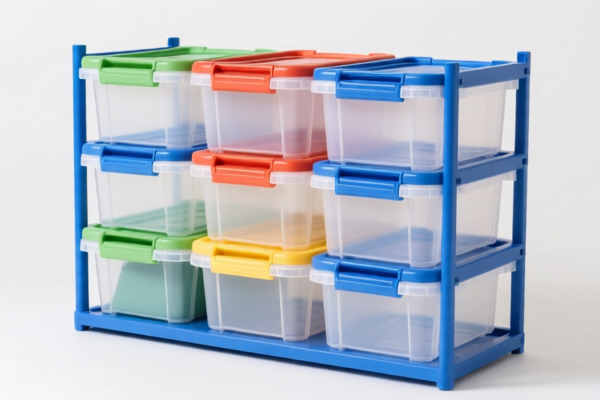
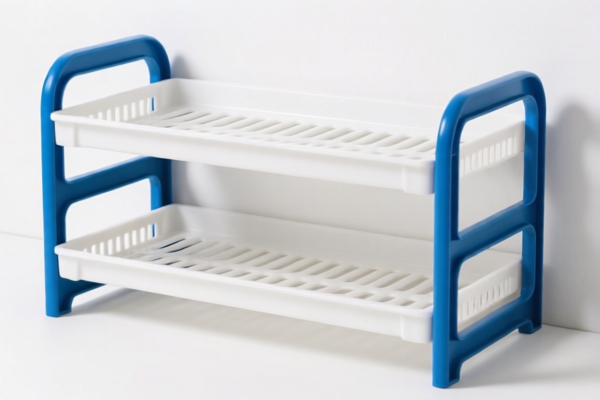
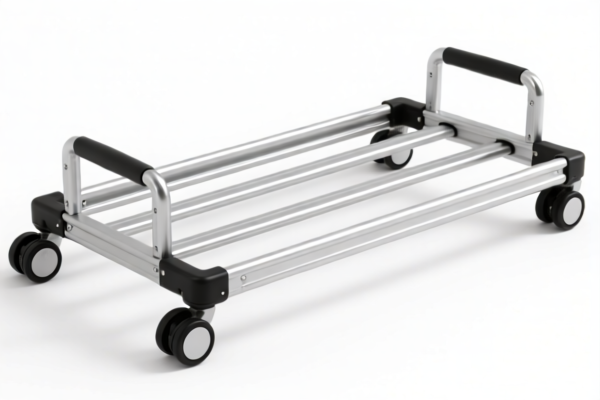
AI Analysis
🏗️ Storage Racks (Shelving & Storage Units)
🌐 HS Code Reference & Clearance Guide | 2026 Tax Rules Breakdown | Strategic Shipping Tactics
📌 1. Product Definition: Is It Metal, Wood, or Paper?
Storage racks are versatile utility items used for organizing, stacking, and storing goods in warehouses, homes, retail stores, and industrial facilities. In international trade, the HS Code classification depends strictly on the primary material of construction.
Misclassification here is dangerous: a "metal rack" reported as "wooden furniture" to save costs could lead to confiscation, heavy fines, or a 50% duty hike.
⚠️ Key Classification Logic:
- Iron/Steel Structure → 7326.90 or 9403.20 (Metal Category)
- Wood/Bamboo Structure → 4421.91 or 4421.99 (Wood Category)
- Paper/Cardboard Structure → 4823.90 (Paper Category)🚨 Critical Warning:
Metal racks attract the highest combined tax rates (up to 87.9%) due to multiple US tariffs (Section 301, Section 232, and IEEPA).
Wooden and Paper racks have significantly lower rates (~35-38%) but require strict material verification.
📦 2. HS Code Breakdown & Tax Analysis (2026 Data)
Based on current 2026 trade data for US imports from China, here is the precise breakdown of your five potential HS Codes.
🏷️ Category A: Iron & Steel Storage Racks (High Tax Risk)
Most common for heavy-duty warehouses, but hits the "Steel/Aluminum/Copper" surcharge.
| HS Code | Product Summary | Applicable Scenario | Total Tax Rate | Tax Composition |
|---|---|---|---|---|
| 7326.90.86.30 | Metal (Iron/Steel) racks; Pipe-like support structure | Industrial pipe racks, heavy-duty shelving with tubular steel | 87.9% | Base: 2.9% + Sec 301: 25% + Steel/Alum/Copper Sec 232: 50% |
| 7326.90.86.88 | Metal (Iron/Steel) racks; General "Other" metal category | Standard wire shelving, open-frame metal racks not fitting other sub-codes | 87.9% | Base: 2.9% + Sec 301: 25% + Steel/Alum/Copper Sec 232: 50% |
| 9403.20.00.82 | Metal Storage Racks; "Other Metal Furniture" | Retail display racks, office filing racks, metal shelving units | 85.0% | Base: 0.0% + Sec 301: 25% + Steel/Alum/Copper Sec 232: 50% |
🔍 Why the High Tax?
- Section 301 (25%): Standard tariff on most Chinese goods.
- Section 232 (50%): Crucial! This applies specifically to Steel/Aluminum/Copper products. Since these are metal racks, the海关 (Customs) applies this massive surcharge.
- Note:9403.20.00.82saves 2.9% in base duty compared to7326, but the 50% steel surcharge keeps the total near 85-88%.
🏷️ Category B: Wood & Bamboo Storage Racks (Lower Tax)
Suitable for home decor, retail display, or lightweight shelving.
| HS Code | Product Summary | Applicable Scenario | Total Tax Rate | Tax Composition |
|---|---|---|---|---|
| 4421.91.98.80 | Wood (Bamboo/Wood) racks; "Other Wooden Articles" | Bamboo shelving, finished wooden units, decorative storage | 38.3% | Base: 3.3% + Sec 301: 25% + IEEPA 122 Clause: 10% |
| 4421.99.98.80 | Wooden Storage Racks; "Other" wood products | Unfinished wood racks, generic wood storage, non-specific wood items | 38.3% | Base: 3.3% + Sec 301: 25% + IEEPA 122 Clause: 10% |
🔍 Why Lower Tax?
- These fall under Chapter 44 (Wood). They do not attract the "Steel/Aluminum/Copper 50% surcharge."
- Instead, they pay the standard 25% Section 301 + 10% IEEPA (122 Clause) + Base duty.
- Total ~38.3% is significantly better than the 87.9% for steel.
🏷️ Category C: Paper Storage Racks (Lowest Tax)
Lightweight, disposable, or temporary storage solutions.
| HS Code | Product Summary | Applicable Scenario | Total Tax Rate | Tax Composition |
|---|---|---|---|---|
| 4823.90.86.80 | Paper Storage Racks; "Other Paper/Board Articles" | Cardboard folding racks, temporary warehouse dividers, paper organizers | 35.0% | Base: 0.0% + Sec 301: 25% + IEEPA 122 Clause: 10% |
🔍 Why Lowest Tax?
- Base Duty is 0%.
- No "Steel" surcharge.
- Only pays 25% (Sec 301) + 10% (IEEPA).
- Total: 35.0%.
💰 3. Detailed Tax Clause Breakdown (The "Math" Behind the Rates)
To understand the cost, you must deconstruct the Total Tax into its three components.
🛡️ For Metal Racks (7326 / 9403)
The "Steel Penalty" is the killer.
- Base Tariff:
7326.90.86.xx: 2.9% (General duty for "Other articles of iron/steel").9403.20.00.82: 0.0% (Furniture duty is often duty-free, but...).
- Section 301 Tariff (Trade War):
- 25.0% (Flat surcharge on almost all Chinese goods).
- Section 232 Tariff (Steel/Aluminum):
- 50.0% (The "Steel, Aluminum, Copper" surcharge).
- Applies ONLY to
7326and9403because they are metal.
- Calculation:
- Scenario A (7326): 2.9% + 25% + 50% = 87.9%
- Scenario B (9403): 0.0% + 25% + 50% = 85.0% (Savings on base duty only).
🌿 For Wood/Paper Racks (4421 / 4823)
The "Wood Bonus" applies.
- Base Tariff:
4421: 3.3%4823: 0.0%
- Section 301 Tariff:
- 25.0% (Flat surcharge).
- Section 122 / IEEPA Tariff:
- 10.0% (Specific to non-steel/non-wood items, or general IEEPA surcharge).
- Calculation:
- Wood: 3.3% + 25% + 10% = 38.3%
- Paper: 0.0% + 25% + 10% = 35.0%
🛠️ 4. Customs Clearance Strategy & Recommendations
✅ Strategy 1: Material Verification (The Most Critical Step)
- Action: Clearly define the primary material in your Commercial Invoice and Packing List.
- Risk: If you declare a "Steel Rack" as "Wood" to avoid the 50% surcharge:
- Customs will perform a physical inspection.
- If found, you face seizure, fraud penalties, and back-taxes + interest.
- Solution: If your rack has a steel frame (even if it has wooden shelves), it is generally classified under 7326 (Metal), not 4421. The structural material dictates the HS Code.
✅ Strategy 2: Optimize for 9403.20.00.82 (If Possible)
- Logic: If your metal rack fits the definition of "Furniture" (e.g., home shelving, retail display), try to classify under 9403 instead of 7326.
- Benefit: Saves 2.9% in base duty (Total 85.0% vs 87.9%).
- Condition: The item must be designed as "Furniture" (finished, aesthetic, for domestic/retail use) rather than "Industrial Steel Artifacts".
✅ Strategy 3: Consider Wood Alternatives
- Logic: If your budget allows, switch from Steel to Bamboo or Wood.
- Benefit: Reduces tax from ~87% to ~38%.
- Impact: A $10,000 shipment of Steel Racks = $8,790 tax. Same shipment of Wood Racks = $3,830 tax. Savings: $4,960 (56% reduction in tax cost).
✅ Strategy 4: Documentation Requirements
| Document | Requirement | Why It Matters |
|---|---|---|
| Commercial Invoice | Must state Material (e.g., "Solid Oak", "Stainless Steel") | Customs uses this to verify if the 50% steel surcharge applies. |
| Packing List | Must match invoice quantities | Prevents random spot checks. |
| Material Test Report | (Optional but recommended) | If declaring "Wood" but the frame is metal, provide proof to avoid fraud accusations. |
| Origin Certificate (CO) | Mandatory for Section 301/122 | Proves country of origin (China) to apply correct rates. |
🚨 5. Common Pitfalls & How to Avoid Them
| ❌ Pitfall | ⚠️ Consequence | 🛡️ Correct Action |
|---|---|---|
| Mixing Materials | Declaring a "Wooden Rack" when it has a steel core. | Rule: If steel is the structural frame, declare as Metal (7326/9403). |
| Generic Description | Using "Storage Rack" without specifying material. | Rule: Use "Steel Storage Rack" or "Bamboo Storage Rack" explicitly. |
| Ignoring Section 232 | Assuming "Furniture" (9403) means low tax. | Reality Check: 9403.20 (Metal Furniture) STILL attracts the 50% Steel surcharge! |
| Confusing Paper vs. Cardboard | Declaring cardboard boxes as "Paper Racks". | Rule: Ensure it is a structural "Rack" (folding/support) to qualify for 4823, not just a box. |
🌍 6. Market Comparison Summary
| Product Type | Best HS Code | Base Rate | Sec 301 | Steel Surcharge | Total Tax | Verdict |
|---|---|---|---|---|---|---|
| Heavy Duty Steel | 7326.90.86.30/88 |
2.9% | 25% | 50% | 87.9% | 🚩 Extremely High Cost |
| Metal Furniture | 9403.20.00.82 |
0.0% | 25% | 50% | 85.0% | 🚩 High Cost (Best for Metal) |
| Wood/Bamboo | 4421.91.98.80 |
3.3% | 25% | 0% | 38.3% | ✅ Low Cost (Recommended) |
| Paper/Cardboard | 4823.90.86.80 |
0.0% | 25% | 0% | 35.0% | ✅ Lowest Cost |
🎯 Conclusion: Strategic Shipping Advice
- If you must ship Metal: Accept the 85-88% tax reality. Try to negotiate prices with suppliers who can absorb some cost, or classify under 9403 to save the 2.9% base duty.
- If you have flexibility: Switch to Wood or Bamboo. The tax difference is massive ($50k savings on a $100k shipment!).
- If shipping Paper: Ensure the product is actually a structural rack, not just a box, to qualify for the 35% rate.
- Never Misclassify: Do not try to pass off a steel rack as wood to avoid the 50% surcharge. US Customs is aggressive on "Steel" classification.
🚀 Final Tip: Always consult a licensed Customs Broker before shipping. Ask them: "Does my product fall under the Section 232 Steel/Aluminum surcharge?" The answer will determine your profit margin.
✨ Precise Classification = Maximized Profit ✨ 💼 Don't let a 50% surcharge eat your entire margin!
Customer Reviews
About HS Code Classification
The Harmonized System (HS) is an internationally standardized nomenclature developed by the World Customs Organization (WCO) to classify traded products. Over 200 countries use the HS system as the basis for customs tariffs, trade statistics, and import/export regulations.
Each HS code follows a hierarchical structure:
- Chapter (2 digits) — Broad category of goods (e.g., Chapter 84: Machinery and Mechanical Appliances)
- Heading (4 digits) — More specific grouping within the chapter
- Subheading (6 digits) — Internationally standardized breakdown, used by all WCO member countries
- National subdivisions (8-10 digits) — Country-specific extensions for further classification, such as US HTSUS 10-digit codes
Correct HS code classification is essential for smooth customs clearance, accurate duty payment, and compliance with trade regulations. Misclassification can lead to customs delays, overpayment of duties, or penalties.
When importing from CN to US, the applicable tariff rates may include:
- Most-Favored-Nation (MFN) rate — The standard duty rate applied to WTO members
- General rate — Applied to countries without trade agreements
- Trade remedy duties — Additional tariffs such as Section 301 (anti-dumping), Section 232 (national security), or countervailing duties
The information provided on this page is for reference purposes only. For official classification, please consult with your local customs authority or a licensed customs broker.