Storage Tank
CN → US| HS Code | Tariff Rate | Origin | Destination | Doc |
|---|---|---|---|---|
| 7309000030 | 85.0% | CN | US | Official Doc |
| 7309000090 | 85.0% | CN | US | Official Doc |
| 8419909580 | 39.0% | CN | US | Official Doc |
| 8419903000 | 35.0% | CN | US | Official Doc |
| 3925100000 | 41.3% | CN | US | Official Doc |
| 3925900000 | 40.3% | CN | US | Official Doc |
Product Images


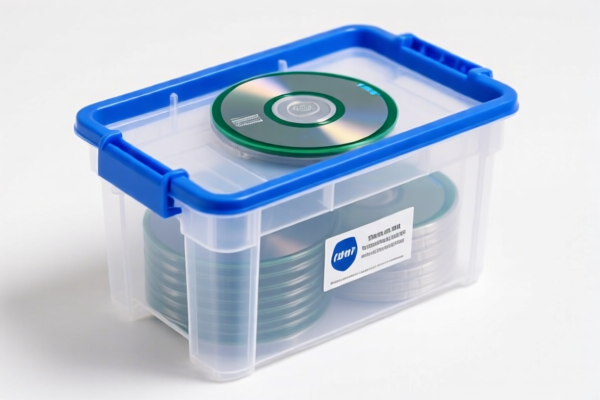

AI Analysis
🏭 Storage Tanks (Industrial & Commercial Reservoirs)
🌐 HS Code Reference & Customs Clearance Guide | 2026 Latest Tariff Analysis | Professional Clearance Strategy
📌 I. Product Definition & Classification: Do You Really Understand "Storage Tanks"?
In international trade, "Storage Tanks" are not a single unified category. They are strictly divided by Material (Plastics, Iron/Steel) and Capacity (specifically whether it exceeds 300 Liters). Misclassification leads to severe tariff penalties, especially for steel products currently subject to additional duties.
⚠️ Key Distinction Points: - Plastic Tanks: If capacity > 300L, they are classified under Heading 3925. Small plastic tanks may fall under "Other" builders' ware. - Steel/Iron Tanks: If capacity > 300L, they are classified under Heading 7309. - Critical Threshold: The 300-Liter mark is the decisive factor for most "Builders' Ware" classifications.
📦 II. HS Code Classification Details (2026 Latest Tariff Authority Comparison)
Based on the provided data, here are the specific classifications for Storage Tanks:
| HS Code | Product Description | Applicable Scenario | Material & Capacity |
|--------|----------|--------------------------|
| 3925.10.00.00 | Builders' ware of plastics: Reservoirs, tanks, vats and similar containers > 300L | Large plastic water tanks, chemical storage (non-hazardous gas), industrial vats | Plastic | Capacity > 300 Liters |
| 3925.90.00.00 | Builders' ware of plastics: Other | Small plastic tanks (< 300L), or other plastic containers not fitting 3925.10 | Plastic | Capacity ≤ 300L or "Other" |
| 7309.00.00.30 | Reservoirs, tanks, vats (Steel/Iron) > 300L: Tanks | Large steel industrial tanks, water towers, silos (not for compressed gas) | Steel | Capacity > 300 Liters |
| 7309.00.00.90 | Reservoirs, tanks, vats (Steel/Iron) > 300L: Other | Large steel tanks with fittings, linings, or specific structures categorized as "Other" | Steel | Capacity > 300 Liters |
🔍 Important Note: - Tanks for compressed or liquefied gas are excluded from HS Code 7309. - Tanks with mechanical or thermal equipment (heating/cooling systems) might fall under different headings (e.g., Chapter 84), but the provided data focuses on simple structural tanks.
💰 III. 2026 Latest Tariff Rate Breakdown (Including Additional Duties)
✅ Applicable Country: United States (US)
✅ Origin: China (CN)
✅ Effective Time: Current trade war tariffs (Section 301 & IEEPA) apply.
🎯 1. 3925.10.00.00 – Plastic Storage Tanks (> 300L)
| Item | Details |
|---|---|
| Base Tariff | 6.3% (Ad Valorem) |
| Additional Tariff (Section 301) | +25.0% |
| Total Tariff | 31.3% |
| Tax Calculation | CIF Value × 31.3% |
| De Minimis Exemption? | ❌ No (Value usually exceeds $800 threshold; even if under, de minimis does not apply to certain Chinese goods under specific rules, but typically for bulk industrial goods, it's fully taxable). |
| Legal Basis | Section 301 Tariffs on Chinese Imports. |
📌 Explanation: - Plastic builders' ware is subject to a moderate base tariff plus the standard 25% trade war surcharge. - Cost Impact: Significant. A $10,000 shipment incurs ~$3,130 in duties.
🎯 2. 3925.90.00.00 – Other Plastic Containers
| Item | Details |
|---|---|
| Base Tariff | 0.0% |
| Additional Tariff | 0.0% |
| Total Tariff | 0.0% |
| Tax Calculation | None |
| De Minimis Exemption? | N/A (Already 0%) |
📌 Explanation: - This code applies to smaller plastic containers or those not meeting the ">300L" criteria for 3925.10. - Strategic Advantage: If your product can be technically described or designed to fit under "Other" (e.g., smaller capacity or different form), this is a 0% tariff option. However, ensure accurate capacity declaration.
🎯 3. 7309.00.00.30 – Steel Tanks (> 300L) "Tanks"
| Item | Details |
|---|---|
| Base Tariff | 0.0% |
| Additional Tariff (Section 301) | +25.0% |
| Steel/Aluminum/Copper Surcharge | +50.0% |
| Total Tariff | 75.0% |
| Tax Calculation | CIF Value × 75.0% |
| De Minimis Exemption? | ❌ No |
| Legal Basis | USITC:7309.00.00.30 + Section 301 (25%) + Specific Steel Surcharge (50%). |
📌 Explanation: - This is a high-risk category. Steel products face a cumulative tariff of 75%. - The 50% surcharge is specifically for steel, aluminum, and copper products imported from China. - Cost Impact: Extreme. A $10,000 shipment incurs ~$7,500 in duties.
🎯 4. 7309.00.00.90 – Steel Tanks (> 300L) "Other"
| Item | Details |
|---|---|
| Base Tariff | 0.0% |
| Additional Tariff (Section 301) | +25.0% |
| Steel/Aluminum/Copper Surcharge | +50.0% |
| Total Tariff | 75.0% |
| Tax Calculation | CIF Value × 75.0% |
| De Minimis Exemption? | ❌ No |
| Legal Basis | USITC:7309.00.00.90 + Section 301 (25%) + Specific Steel Surcharge (50%). |
📌 Explanation: - Even if classified as "Other" within the steel tank heading, the 75% total tariff applies. - No tariff advantage between sub-headings
.30and.90for steel tanks in this context.
🛠️ IV. Customs Clearance Practical Advice (Real-World Pitfall Avoidance)
✅ 1. Preparation Checklist (Mandatory)
| Document | Required? | Notes |
|---|---|---|
| ✅ Technical Specifications Sheet | ✔️ | Must explicitly state Material (Plastic/Steel) and Capacity (in Liters). |
| ✅ Product Photographs | ✔️ | Show the tank, label, and any fittings to confirm "no mechanical/thermal equipment." |
| ✅ Commercial Invoice | ✔️ | Clearly describe as "Storage Tank" or "Reservoir," specify capacity >300L or ≤300L. |
| ✅ Packing List | ✔️ | Include weight and dimensions. |
| ✅ Origin Certificate | ✔️ | If claiming preferential rates (not applicable here due to high duties), but essential for verification. |
| ✅ Structural Diagram | ✔️ | For steel tanks, prove no heating/cooling coils are integrated (to avoid Chapter 84). |
✅ 2. Declaration Tips (Key Mantras)
🔥 "Material First, Capacity Second, No Heat, No Gas!"
| Scenario | Correct Declaration | Wrong Declaration | Consequence |
|---|---|---|---|
| Plastic Tank, 400L | 3925.10.00.00 |
"Plastic Container" | May be misclassified as 3925.90 (0%) → Audit Risk & Back Tax + Penalty. |
| Steel Tank, 350L | 7309.00.00.30 or .90 |
"Industrial Vessel" | If misclassified as generic steel → 75% Duty still likely, but description must match. |
| Tank with Heater | Chapter 84 (e.g., 8419.90...) |
7309... |
If fitted with thermal equipment, it is NOT a simple tank. Using 7309 will lead to rejection. |
| Gas Cylinder | Chapter 73 or 74 (Different Heading) | 7309... |
7309 explicitly excludes compressed/liquefied gas. |
✅ 3. Special Handling Strategies
| Situation | Recommendation |
|---|---|
| Plastic vs. Steel | If possible, consider Plastic alternatives. 31.3% tariff vs. 75% is a massive savings. Evaluate material feasibility for your application. |
| Capacity Borderline | If a steel tank is 301L, it is taxed at 75%. If you can reduce capacity to 299L (and it still meets user needs), it may fall under a different, potentially lower-tariff category. Consult a customs broker for precise capacity-based classification. |
| "Builders' Ware" Definition | Ensure the tank is intended for fixed installation (e.g., water storage, agricultural). Portable containers may have different codes. |
| Lining/Insulation | Steel tanks that are "lined or heat insulated" are still included in 7309. Do not assume insulation removes the 75% duty. |
🌍 V. Global Market Comparison (2026 Snapshot)
| Region | Preferred HS Code | Approx. Tariff (China Origin) | Notes |
|---|---|---|---|
| 🇺🇸 USA | 3925.10 or 7309 |
31.3% (Plastic) / 75% (Steel) | Highest barriers. Steel is heavily penalized. |
| 🇨🇳 China | Same HS Codes | 0-6% | Import into China is cheap; this guide focuses on export. |
| 🇪🇺 EU | Similar Codes | 0-6% | No Section 301 or Steel Surcharge. Much more competitive. |
| 🇬🇧 UK | Similar Codes | 0-6% | Post-Brexit tariffs similar to EU for many goods. |
📌 Conclusion: - USA Market: Extremely expensive for steel storage tanks due to the 75% combined tariff. - Plastic Option: Significantly more cost-effective (31.3%) if material strength allows. - Strategy: For US-bound steel tanks, consider supply chain diversification (e.g., manufacturing in Southeast Asia) to avoid US-specific punitive tariffs, if possible.
📌 VI. Common Errors & Pitfall Guide (Lessons Learned)
❌ Error 1: Ignoring the 300-Liter threshold.
👉 Consequence: Declaring a 350L plastic tank as "Other" (3925.90) leads to underpayment of duties and potential seizures.
❌ Error 2: Including Heating Elements in simple tank declaration.
👉 Consequence: If the tank has an electric heating coil, it is Chapter 84 machinery (8419), not a simple tank. Misclassification can lead to different duty rates and regulatory failures (e.g., UL/ETL certification).
❌ Error 3: Confusing Compressed Gas tanks with simple reservoirs. 👉 Consequence: Gas tanks are pressurized vessels with strict safety regulations (ASME, DOT). Declaring them as 7309 is illegal and dangerous.
✅ Correct Approach:
"Stainless Steel Storage Tank, Capacity: 500 Liters, Non-Pressurized, No Thermal Equipment, For Industrial Water Storage, Model XYZ, CE/ISO Certified"
🎯 VII. Conclusion: Precise Classification Saves Money
🎯 Remember the Mantra:
🔹 "Steel is 75%, Plastic is 31% (over 300L). Capacity is Key. No Heat, No Gas." 🔹 "Check the Liter Volume. If >300L, Plastic wins on cost. If Steel, expect heavy taxes."
📌 Pro Tip:
For US-bound Steel Tanks, the 75% tariff is a major barrier. 1. Evaluate Material: Can you switch to Plastic or FRP (Fiberglass)? 2. Evaluate Origin: Can production be moved to a non-China location to avoid Section 301? 3. Pre-Ruling: Apply for a Binding Tariff Information (BTI) or Advance Ruling from CBP if the classification is ambiguous (e.g., partially lined tanks).
📣 Immediate Action:
📞 Contact a Customs Broker: Provide technical specs and photos. 🚀 Optimize Supply Chain: Consider material substitution to mitigate tariff risks.
✨ Professional Clearance Starts with Accurate Classification! 💼 Your Bottom Line Depends on These Percentages!
Customer Reviews
About HS Code Classification
The Harmonized System (HS) is an internationally standardized nomenclature developed by the World Customs Organization (WCO) to classify traded products. Over 200 countries use the HS system as the basis for customs tariffs, trade statistics, and import/export regulations.
Each HS code follows a hierarchical structure:
- Chapter (2 digits) — Broad category of goods (e.g., Chapter 84: Machinery and Mechanical Appliances)
- Heading (4 digits) — More specific grouping within the chapter
- Subheading (6 digits) — Internationally standardized breakdown, used by all WCO member countries
- National subdivisions (8-10 digits) — Country-specific extensions for further classification, such as US HTSUS 10-digit codes
Correct HS code classification is essential for smooth customs clearance, accurate duty payment, and compliance with trade regulations. Misclassification can lead to customs delays, overpayment of duties, or penalties.
When importing from CN to US, the applicable tariff rates may include:
- Most-Favored-Nation (MFN) rate — The standard duty rate applied to WTO members
- General rate — Applied to countries without trade agreements
- Trade remedy duties — Additional tariffs such as Section 301 (anti-dumping), Section 232 (national security), or countervailing duties
The information provided on this page is for reference purposes only. For official classification, please consult with your local customs authority or a licensed customs broker.