Stove Wood Pellets
CN → US| HS Code | Tariff Rate | Origin | Destination | Doc |
|---|---|---|---|---|
| 4401310000 | 35.0% | CN | US | Official Doc |
| 4401394210 | 35.0% | CN | US | Official Doc |
Product Images
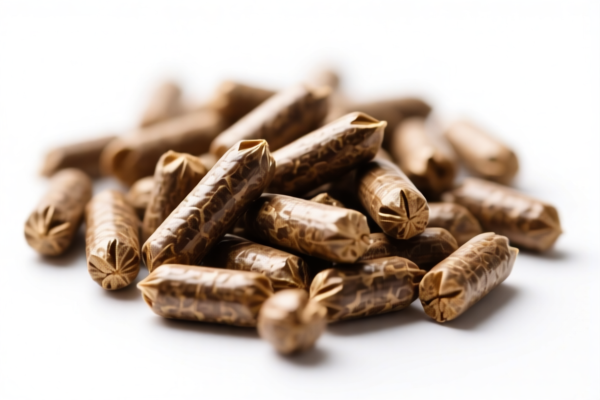
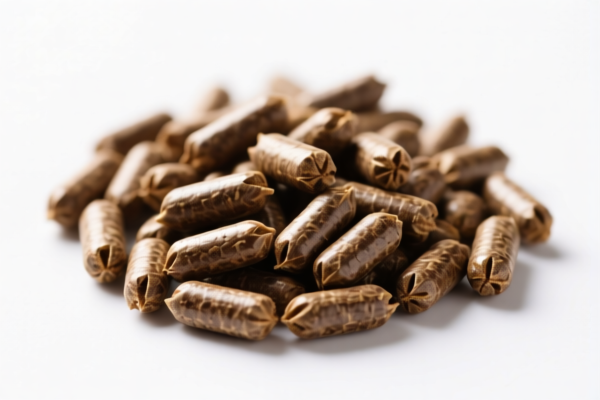
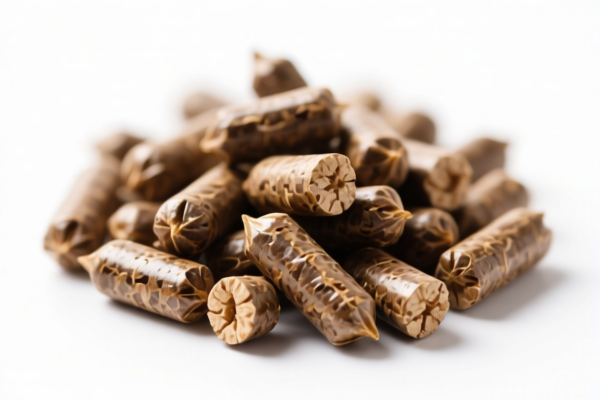
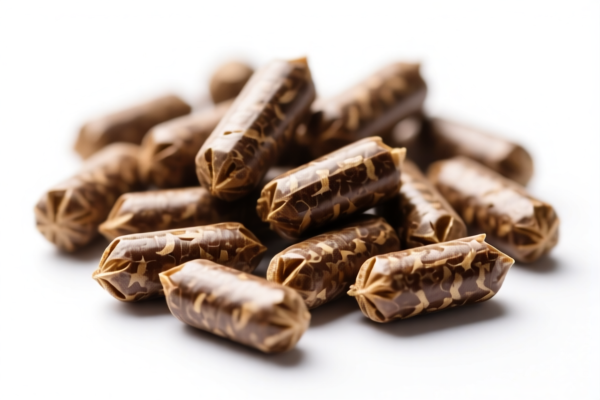
AI Analysis
🔥 Stove Wood Pellets (Fuel Wood & Agglomerated Biomass)
🌐 HS Code Reference & Customs Clearance Guide | 2026 Tariff Breakdown | Strategic Import Strategy
📌 I. Product Definition & Classification: Do You Know What "Wood Pellets" Really Are?
Stove Wood Pellets are a form of biomass fuel derived from compressed wood waste, sawdust, or wood chips. In international trade, they fall under the broad category of "Fuel Wood" but are specifically distinguished by their physical state: agglomerated.
They are primarily categorized into two distinct sub-forms based on their composition and density: 1. Standard Wood Pellets (4401.31.00.00): Agglomerated wood waste/scrap, typically made from 100% wood or high-wood content. These are the standard "stove pellets" used for residential heating. 2. Other Sawdust/Agglomerates (4401.39.42.10): This includes other forms of agglomerated sawdust or wood waste that do not fit the strict definition of standard pellets, often referring to different densities, binders, or specific industrial uses.
⚠️ Key Distinction:
- If the product is standard biomass fuel pellets (logs, briquettes, or cylindrical pellets made of wood waste) → It falls under 4401.31.00.00.
- If the product is other agglomerated sawdust or non-standard forms of wood waste → It may fall under 4401.39.42.10.
- Crucial Note: Both categories are subject to significant trade restrictions. Do not confuse these with raw wood chips (4401.40) or untreated firewood (4401.10/10.90), as the HS codes and tax implications differ drastically.
📦 II. HS Code Classification Details (2026 Latest Tariff Authority Comparison)
| HS Code | Product Description | Application Scenario | Tax Status (China Origin) |
|---|---|---|---|
4401.31.00.00 |
Sawdust and wood waste, agglomerated in logs, briquettes, pellets or similar forms: Wood Pellets | Standard residential stove pellets, biomass heating fuel | ⚠️ High Risk |
4401.39.42.10 |
Sawdust and wood waste, agglomerated... : Other: Other Sawdust | Non-standard agglomerated sawdust, specialized industrial biomass | ⚠️ High Risk |
🔍 Important Reminder:
- Both codes fall under Chapter 44 (Wood and Articles of Wood).
- The key differentiator is often the manufacturer's specification and the physical form. "Wood Pellets" (4401.31) is the most common for consumer stove fuel. "Other Sawdust" (4401.39) is a residual category.
- Do not mix these HS codes incorrectly, as misclassification can lead to severe penalties and detention.
💰 III. 2026 Latest Tariff Rate Breakdown (Including Surcharges)
✅ Applicable Country: United States (US)
✅ Country of Origin: China (CN)
✅ Effective Time: Ongoing (Since Section 301 & IEEPA Impositions)
🎯 1. 4401.31.00.00 —— Wood Pellets (Standard Agglomerated)
| Item | Content |
|---|---|
| Base Duty Rate | 0.0% (Ad Valorem) |
| Section 301 Surcharge | +25.0% |
| Total Tax Rate | 25.0% |
| Tax Calculation | CIF Value × 25% |
| De Minimis Eligibility | ❌ Not Applicable (Section 301 goods generally excluded from 80/81 exemption unless specific exclusions apply, which are rare for wood products) |
| Legal Basis | HTSUS:4401.31.00 → USITC Footnote: Section 301 |
📌 Explanation:
- Although the base duty for wood products is often 0%, wood pellets from China are heavily targeted by trade policies.
- The 25% additional duty is applied under Section 301 of the Trade Act of 1974, targeting specific Chinese imports to address unfair trade practices.
- Total Cost Impact: For every $10,000 CIF shipment, you pay $2,500 in additional tariffs. This significantly impacts the margin of biomass fuel imports.
🎯 2. 4401.39.42.10 —— Other Agglomerated Sawdust
| Item | Content |
|---|---|
| Base Duty Rate | 0.0% (Ad Valorem) |
| Section 301 Surcharge | +25.0% |
| Total Tax Rate | 25.0% |
| Tax Calculation | CIF Value × 25% |
| De Minimis Eligibility | ❌ Not Applicable |
| Legal Basis | HTSUS:4401.39.42.10 → USITC Footnote: Section 301 |
📌 Note:
- This code carries the same 25% surcharge as standard pellets.
- Importers cannot exploit this code to lower taxes; it is simply a different classification for non-standard agglomerates, but the trade penalty remains identical.
🛠️ IV. Customs Clearance Practical Advice (Real-World Pitfall Avoidance)
✅ 1. Required Documentation Checklist (Non-Negotiable)
| Document | Must Provide | Explanation |
|---|---|---|
| ✅ Commercial Invoice | ✔️ | Must clearly state "Wood Pellets" or "Agglomerated Sawdust" and include HS Code. |
| ✅ Packing List | ✔️ | Detail net/gross weight. Wood pellets are voluminous; accurate weight is critical for duty calculation. |
| ✅ Phytosanitary Certificate | ✔️ | Critical! Imported wood products require proof of freedom from pests. Without this, goods will be rejected or fumigated at buyer's expense. |
| ✅ Certificate of Origin (CO) | ✔️ | Must declare origin as China. May be required for anti-dumping/countervailing duty checks (though none currently specific to pellets, general origin rules apply). |
| ✅ Product Specification Sheet | ✔️ | Define moisture content (<20% is standard), ash content, and diameter. This helps distinguish between "pellets" and other wood waste. |
✅ 2. Declaration Tips (Key Mantra)
🔥 "Accurate Description, Phytosanitary Proof, No Hiding from 301!"
| Scenario | Correct Declaration | Wrong Action |
|---|---|---|
| Standard Stove Pellets | HS 4401.31.00.00 Description: "Wood Pellets, Biomass Fuel" |
Misdeclaring as "Raw Wood Chips" (4401.40) to avoid 301 → High Risk of Penalty |
| Agglomerated Sawdust | HS 4401.39.42.10 Description: "Agglomerated Wood Waste" |
Misdeclaring as "Paper Products" or "Recycled Materials" → Severe Fraud Risk |
| Bulk vs. Bagged | Declare both cases/bags accurately | Hiding bagged units under bulk weight → Customs Audit Trigger |
💡 Pro Tip:
- Ensure the HS Code matches the physical product. If you ship standard 6mm wood pellets, use4401.31.00.00. Do not try to force it into4401.40(Chips) because the density and binding agents differ.
- Moisture Content: Ensure moisture is below 10-15% for optimal shipping and to avoid被视为 "rotten" or non-compliant agricultural goods.
✅ 3. Special Situations Handling
| Situation | Handling Advice |
|---|---|
| Transshipment via Third Country | ❌ Do Not Attempt. US Customs aggressively checks for origin laundering. If the origin is China, the 25% tariff still applies unless a substantial transformation occurs (which is hard to prove for simple repacking). |
| Mixed Shipments (Pellets + Wood Chips) | Separate HS Codes! Declare 4401.31.00.00 for pellets and 4401.40 for chips. Mixing them can lead to classification errors and duty underpayment claims. |
| Small Sample Shipments | Even small samples (<$800) may be subject to scrutiny if flagged for Section 301. Check current de minimis exclusions for Chapter 44. |
🌍 V. Global Market Comparison (2026 Update)
| Country/Region | Recommended HS Code | Tariff (China Origin) | Certification Required | Remarks |
|---|---|---|---|---|
| 🇺🇸 USA | 4401.31.00.00 |
25% (Section 301) | Phytosanitary Cert | High tariff barrier. |
| 🇨🇳 China | 4401.31.00.00 |
0% - 5% | Depends on import type | Major producer, low import duty. |
| 🇪🇺 EU | 4401.31.00.00 |
0% | ENplus Certification (Quality) | No 301-style tariff, but strict quality/quality control. |
| 🇬🇧 UK | 4401.31.00.00 |
0% | UKCA/Phytosanitary | Post-Brexit, generally free of charge for wood pellets. |
📌 Conclusion:
- The US is the only major market imposing a 25% surcharge on Chinese wood pellets due to trade wars.
- EU and UK markets are tariff-free but have strict quality (ENplus) and phytosanitary requirements.
- If your target market is the US, consider sourcing pellets from non-China origins (e.g., Canada, Europe, Vietnam) to avoid the 25% tariff, if possible.
📌 VI. Common Errors & Pitfalls (Blood and Tears Lessons)
❌ Error 1: Misdeclaring Wood Pellets as "Wood Chips" (4401.40) to avoid Section 301.
👉 Consequence: Customs inspection reveals agglomerated form. 25% back-duty + 20% penalty + storage fees.
❌ Error 2: Missing Phytosanitary Certificate.
👉 Consequence: Port Rejection or Fumigation. Wood pellets can carry bark/beetles. US Customs and Border Protection (CBP) and USDA will block entry.
❌ Error 3: Ignoring Moisture Content.
👉 Consequence: If moisture >20%, pellets may degrade, generate heat (fire hazard), or be classified as "damaged goods," leading to inspection delays.
❌ Error 4: Incorrect Description on Invoice.
👉 Consequence: "Biomass Fuel" is vague. Use "Wood Pellets, Agglomerated, 6mm, 0.65g/cm³" to ensure smooth classification.
✅ Correct Practice:
"Wood Pellets, Biomass Fuel, 6mm Diameter, Agglomerated Wood Waste, Moisture <10%, Made in China, HS Code 4401.31.00.00"
🎯 VII. Conclusion: Professional Declaration, Cost Control, Risk Mitigation
🎯 Remember the Mantra:
🔹 "Wood Pellets = 25% US Tax"
🔹 "Phytosanitary Cert is Mandatory"
🔹 "Don't Hide Origin, Don't Mix Codes"
📌 Pro Tip:
If you are importing into the US, calculate the total landed cost including the 25% tariff.
For large volumes, consider bonded warehouses or foreign trade zones (FTZs) to defer duties, but note that they cannot eliminate the 301 tariff permanently.
Alternative: Explore suppliers from Canada or Europe, which may have 0% tariff and better quality standards (ENplus).
📣 Immediate Action:
📞 Contact a licensed customs broker in the US.
📄 Request a Phytosanitary Certificate from the exporter's national plant protection organization (NPPO) before shipment.
🚀 Clear, Compliant, Cost-Effective: Your pellets will arrive smoothly if you respect the 25% reality and phytosanitary rules.
✨ Professional Customs Clearance Starts with Accurate Classification!
💼 Your Bottom Line Depends on the Details!
Customer Reviews
About HS Code Classification
The Harmonized System (HS) is an internationally standardized nomenclature developed by the World Customs Organization (WCO) to classify traded products. Over 200 countries use the HS system as the basis for customs tariffs, trade statistics, and import/export regulations.
Each HS code follows a hierarchical structure:
- Chapter (2 digits) — Broad category of goods (e.g., Chapter 84: Machinery and Mechanical Appliances)
- Heading (4 digits) — More specific grouping within the chapter
- Subheading (6 digits) — Internationally standardized breakdown, used by all WCO member countries
- National subdivisions (8-10 digits) — Country-specific extensions for further classification, such as US HTSUS 10-digit codes
Correct HS code classification is essential for smooth customs clearance, accurate duty payment, and compliance with trade regulations. Misclassification can lead to customs delays, overpayment of duties, or penalties.
When importing from CN to US, the applicable tariff rates may include:
- Most-Favored-Nation (MFN) rate — The standard duty rate applied to WTO members
- General rate — Applied to countries without trade agreements
- Trade remedy duties — Additional tariffs such as Section 301 (anti-dumping), Section 232 (national security), or countervailing duties
The information provided on this page is for reference purposes only. For official classification, please consult with your local customs authority or a licensed customs broker.