Straight Plug
CN → US| HS Code | Tariff Rate | Origin | Destination | Doc |
|---|---|---|---|---|
| 8536698000 | 37.7% | CN | US | Official Doc |
Product Images
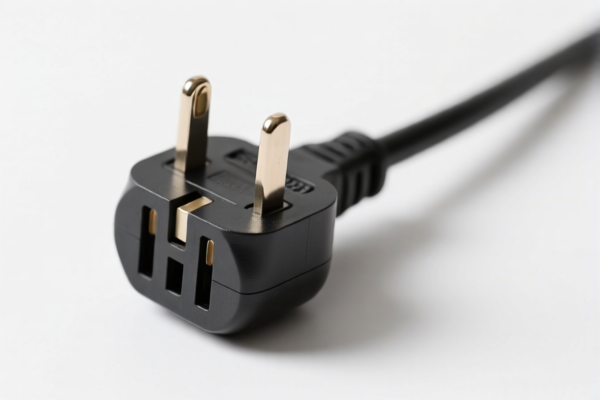
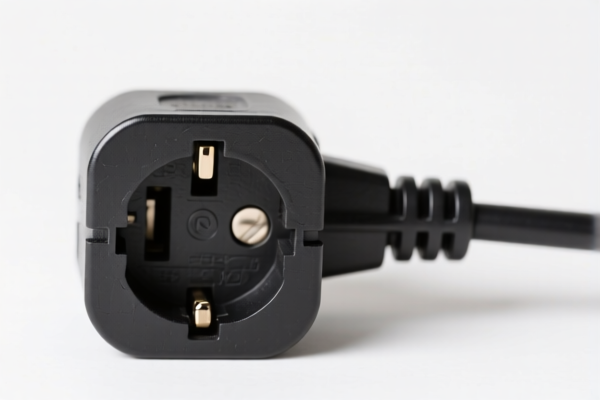
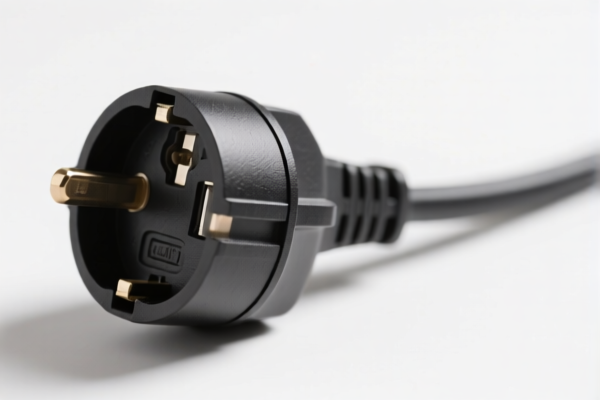
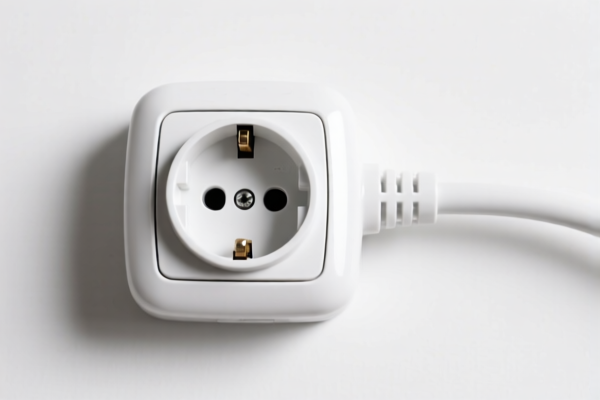
AI Analysis
🔌 Straight Plug (Electrical Connectors)
🌐 HS Code Reference & Customs Clearance Guide | 2026 Latest Tariff Analysis | Professional Clearance Strategy
📌 I. Product Definition and Classification: Do You Really Understand "Straight Plugs"?
A "Straight Plug" refers to a basic electrical connector designed for direct insertion into a socket or circuit. In international trade, these fall under electrical apparatus for making connections to electrical circuits, specifically for voltages not exceeding 1,000 V.
These are distinct from switches, fuses, or circuit breakers. They are categorized as:
Standard Straight Plugs: Simple connectors (e.g., NEMA 5-15P, IEC C13/C14 male ends) without integrated switching or protection mechanisms. Specialized Connectors: If the plug includes integrated surge suppression, fusing, or switching capabilities, it may fall under different headings (e.g., 8536.30 for fuses or 8536.50 for switches).
⚠️ Key Distinction:
- If the device is only a connector (no fuse, no switch, no surge protector) → Go to 8536.69
- If the device includes a fuse or surge suppressor → Go to 8536.30 or 8536.50
- If the voltage exceeds 1,000 V → This HS Code does not apply (would fall under Chapter 85 or 90 depending on type)
📦 II. HS Code Classification Details (2026 Latest Tariff Authority Comparison)
Based on the provided data, the relevant classification is:
| HS Code | Product Description | Applicable Scenario | Voltage Limit | Included Protections? |
|---|---|---|---|---|
8536.69.80.00 |
Lamp-holders, plugs and sockets: Other: Other | Standard electrical plugs, power cords with straight plugs, connector blocks for low voltage | ≤ 1,000 V | ❌ No (Pure connectors only) |
🔍 Critical Note:
- This code specifically covers "Other" plugs and sockets that do not fall under more specific subheadings (like lamp-holders or specific socket types).
- Voltage Constraint: Must not exceed 1,000 V. If your plug is for high-voltage industrial equipment (>1,000 V), this classification is invalid.
- Exclusions: If the plug is part of a surge protector or has a built-in fuse, it is not classified here.
💰 III. 2026 Latest Tariff Rate Breakdown (Detailed Tax Provisions)
✅ Applicable Origin: China (CN)
✅ Target Market: United States (US) (Implied by the 27.7% total tax structure common in recent US-China trade data)
✅ Valid Period: 2025–2026
🎯 1. 8536.69.80.00 —— Straight Plugs (Voltage ≤ 1,000 V)
| Item | Detail |
|---|---|
| Base Tariff Rate | 2.7% (Standard MFN rate) |
| Additional Tariff (Section 301) | +25.0% (Retaliatory tariffs on Chinese goods) |
| Total Effective Tax Rate | 27.7% |
| Tax Calculation Method | Ad Valorem (Based on CIF Value) |
| De Minimis Exemption | ❌ Not Applicable for China-origin goods under current enforcement policies |
| Legal Basis Path | HTSUS 8536.69.80.00 → Section 301 Footnote 3 |
📌 Explanation:
- The 2.7% is the standard duty for electrical connectors under the Harmonized Tariff Schedule.
- The 25.0% is the critical Section 301 tariff, imposed on specific Chinese-origin electrical components.
- Total Cost Impact: For every $10,000 CIF value, you must pay $2,770 in duties alone. This significantly impacts profit margins for low-value connector imports.
🛠️ IV. Customs Clearance Practical Advice (Avoiding Pitfalls)
✅ 1. Documentation Checklist (Mandatory)
| Document | Required? | Purpose |
|---|---|---|
| ✅ Commercial Invoice | ✔️ | Must clearly state "Electrical Plug, Voltage ≤ 1,000V, No Fuse/Switch" |
| ✅ Product Specification Sheet | ✔️ | Proof of voltage rating and material (e.g., copper terminals, PVC insulation) |
| ✅ Manufacturer List | ✔️ | CBP requires detailed manufacturer info for Section 301 compliance |
| ✅ Certificate of Origin (CO) | ✔️ | Must confirm Made in China to apply correct 25% duty; misdeclaration leads to penalties |
| ✅ FCC Declaration | ✔️ | If the plug is part of a larger electronic assembly, FCC ID may be required for compliance |
✅ 2. Declaration Tips (Crucial for Accuracy)
🔥 "Specify Voltage, Exclude Fuse, Declare Origin!"
| Scenario | Correct Declaration | Wrong Declaration | Risk |
|---|---|---|---|
| Standard Power Plug | 8536.69.80.00 - "Straight Plug, 125V/60Hz" |
8536.69.80.00 - "Electrical Accessory" |
Misleading description → Delay |
| Plug with Built-in Fuse | 8536.30 (Fuses) |
8536.69.80.00 |
Wrong Classification → 27.7% vs. potential different rate + penalties |
| Surge Protector Plug | 8536.50 (Surge Suppressors) |
8536.69.80.00 |
Wrong Classification → Higher duty rate likely |
| High Voltage (>1,000V) | Not 8536.69 | 8536.69.80.00 |
Severe Penalty → Goods held, reclassification, fines |
✅ 3. Special Cases Handling
| Situation | Recommendation |
|---|---|
| Plug + Cable Assemblies | Declared together if permanently attached. Use 8536.69.80.00 for the plug component. |
| Mixed Containers | If containers contain both exempt and non-exempt goods, ensure clear separation in documentation to avoid blanket penalties. |
| Re-export from Third Country | If shipped via Mexico/Vietnam, ensure substantial transformation occurs. Simply transshipping Chinese plugs does not avoid the 25% tariff. |
🌍 V. Global Market Comparison (2026 Outlook)
| Country/Region | Recommended HS Code | Total Duty | Notes |
|---|---|---|---|
| 🇺🇸 USA | 8536.69.80.00 |
27.7% | 2.7% Base + 25% Section 301 |
| 🇨🇳 China | 8536.69.80.00 |
Varies | Import duties may differ; check local tariff schedule |
| 🇪🇺 EU | 8536.69 |
0% - 4% | Generally lower duties; no Section 301 equivalent |
| 🇯🇵 Japan | 8536.69 |
0% - 3% | Favorable for electrical components |
📌 Conclusion:
- The USA remains the most costly market for Chinese-made straight plugs due to the 25% additional duty.
- Consider supply chain diversification (e.g., sourcing from Southeast Asia) if tariffs erode margins, but ensure genuine transformation.
📌 VI. Common Errors & Pitfalls (Blood Lessons)
❌ Error 1: Declaring "Plug" without specifying voltage.
👉 Consequence: CBP may apply a higher duty rate for high-voltage equipment or request additional info, causing delays.
❌ Error 2: Failing to declare "No Fuse/Switch" when the plug is part of a complex device.
👉 Consequence: If the item is misclassified as a switch/fuse, it may face different duties or regulatory requirements (e.g., UL testing).
❌ Error 3: Ignoring Section 301 in cost calculations.
👉 Consequence: Underestimating landed cost by 25%, leading to unexpected financial loss.
❌ Error 4: Using generic terms like "Electrical Part" on the invoice.
👉 Consequence: CBP may assign a worst-case HS code or impose penalties for insufficient specificity.
✅ Correct Practice:
"Straight Electrical Plug, Copper Terminals, PVC Insulation, 125V/15A, No Integrated Fuse or Switch, Made in China"
🎯 VII. Conclusion: Precision in Classification, Savings in Costs
🎯 Remember:
🔹 "Voltage ≤ 1kV, No Fuse, No Switch → 8536.69.80.00"
🔹 "27.7% is the price, plan your supply chain accordingly!"
🔹 "Declarations must be precise; vague descriptions invite audits."
📌 Pro Tip:
If your business volume is high, consider applying for a Binding Ruling from CBP to confirm the HS Code and tariff rate in advance. This provides legal certainty and protects against future duty changes.
📣 Take Action:
📞 Consult a licensed customs broker
📄 Review product specs for voltage and component details
🚀 Optimize your supply chain to mitigate 27.7% duty impact
✨ Professional clearance starts with accurate classification!
💼 Every percentage point in duty affects your bottom line!
Customer Reviews
About HS Code Classification
The Harmonized System (HS) is an internationally standardized nomenclature developed by the World Customs Organization (WCO) to classify traded products. Over 200 countries use the HS system as the basis for customs tariffs, trade statistics, and import/export regulations.
Each HS code follows a hierarchical structure:
- Chapter (2 digits) — Broad category of goods (e.g., Chapter 84: Machinery and Mechanical Appliances)
- Heading (4 digits) — More specific grouping within the chapter
- Subheading (6 digits) — Internationally standardized breakdown, used by all WCO member countries
- National subdivisions (8-10 digits) — Country-specific extensions for further classification, such as US HTSUS 10-digit codes
Correct HS code classification is essential for smooth customs clearance, accurate duty payment, and compliance with trade regulations. Misclassification can lead to customs delays, overpayment of duties, or penalties.
When importing from CN to US, the applicable tariff rates may include:
- Most-Favored-Nation (MFN) rate — The standard duty rate applied to WTO members
- General rate — Applied to countries without trade agreements
- Trade remedy duties — Additional tariffs such as Section 301 (anti-dumping), Section 232 (national security), or countervailing duties
The information provided on this page is for reference purposes only. For official classification, please consult with your local customs authority or a licensed customs broker.