Strainer
CN → US| HS Code | Tariff Rate | Origin | Destination | Doc |
|---|---|---|---|---|
| 7326908688 | 87.9% | CN | US | Official Doc |
| 7326190080 | 87.9% | CN | US | Official Doc |
| 8421390115 | 35.0% | CN | US | Official Doc |
| 5603110070 | 35.0% | CN | US | Official Doc |
| 8421290065 | 35.0% | CN | US | Official Doc |
Product Images

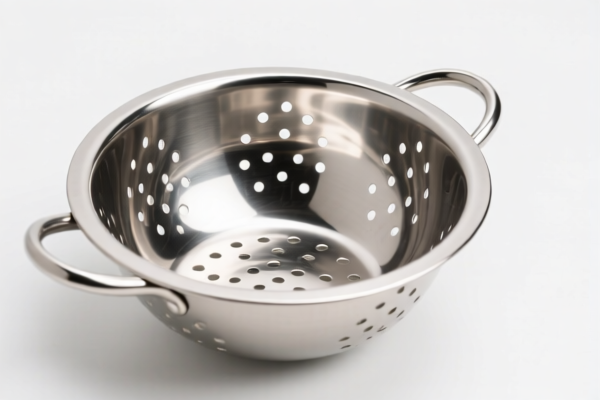


AI Analysis
🧺 Strainers / Filters (Industrial & Household)
🌐 HS Code Reference & Clearance Guide | 2026 Latest Tariff Breakdown | Professional Level Strategy
📌 I. Product Definition & Classification: Do You Really Know a "Strainer"?
In international trade, the term "Strainer" is highly ambiguous. It is not a single technical classification but a functional description. It can range from a simple metal wire mesh screen to a complex liquid/gas purification unit.
Key Distinction: * Metal Mesh/Frame Strainers: Purely mechanical filtration components made of steel/iron. → Classified as Articles of Iron or Steel. * Filtration Units/Components: Devices specifically designed for gas or liquid purification. → Classified as Machinery/Parts of Machinery. * Non-Woven Fabric Filters: Soft, textile-like filters. → Classified as Non-wovens.
⚠️ Critical Classification Point: * If it is a rigid metal frame with wire mesh → Chapter 73 * If it is a functional part of a filtration machine → Chapter 84 * If it is a soft fabric/non-woven pad → Chapter 56
📦 II. HS Code Classification Details (Based on Provided Data)
| HS Code | Product Description | Material/Type | Logic Summary |
|---|---|---|---|
7326.90.86.88 |
Other articles of iron or steel (Non-specified) | Iron/Steel | Based on common sense, the strainer material is likely iron or steel. Falls under general "other" category for steel products. No material conflict. |
7326.19.00.80 |
Other articles of iron or steel (Wire) | Iron/Steel | Product name doesn't specify material. Assuming standard metal wire mesh or frame construction. Fits the "catch-all" logic for other metal articles. |
8421.39.01.15 |
Part of Gas Filtering/Purifying Machinery | Machinery Part | Core functional component for Gas filtration or purification. Treated as a consumable/part. No material conflict. Fits air purification logic. |
5603.11.00.70 |
Non-woven Fabric Article (Low GSM) | Non-woven Fabric | Based on morphological features, inferred as non-woven or textile structure. Matches material attributes for non-woven products. |
8421.29.00.65 |
Part of Liquid/Gas Filtering Machinery | Machinery Part | Used as a component for Liquid or Gas filtration devices. Material usually metal or fiber. No conflict with liquid filtration classification. |
🔍 Key Insight: * Metals (7326) attract HIGH tariffs (87.9%) due to Section 232/301 tariffs on steel/aluminum. * Machinery Parts (8421) and Non-wovens (5603) attract LOWER tariffs (35.0%) but still carry the 25% additional tariff.
💰 III. 2026 Latest Tariff Rate Breakdown (Detailed Tax Clauses)
✅ Applicable Market: United States (US) ✅ Origin: China (CN) ✅ Effective Date: Current Trade Rules (Including Section 301 & 232)
🎯 1. 7326.90.86.88 & 7326.19.00.80 —— Metal Strainers/Filters
⚠️ HIGH RISK / HIGH COST CATEGORY
| Item | Content |
|---|---|
| Base Duty | 2.9% |
| Section 301 Additional Duty | +25.0% |
| Section 232 Duty (Steel/Aluminum) | +50.0% (Specifically applied to Steel, Aluminum, Copper products under Clause 122) |
| Total Effective Tax Rate | 77.9% (2.9 + 25.0 + 50.0 = 77.9%) |
| Tax Calculation | CIF Value × 77.9% |
| De Minimis Exemption | ❌ NOT Available (Section 321 de minimis does not apply to Section 232/301 goods) |
📌 Explanation: * Base 2.9%: Standard Most Favored Nation (MFN) rate for steel articles. * 25% Additional: Under US Trade Law Section 301, targeting Chinese goods. * 50% Additional (Clause 122): This is the critical killer. Under Section 232 (National Security), steel and aluminum products face an additional 50% tariff. Even if the strainer is minor, if it is classified as "Steel Article," this 50% applies. * Total Cost Impact: For every $100 of goods, you pay $77.90 in taxes.
🎯 2. 8421.39.01.15 (Gas) & 8421.29.00.65 (Liquid) —— Filtration Machinery Parts
| Item | Content |
|---|---|
| Base Duty | 0.0% |
| Section 301 Additional Duty | +25.0% |
| Section 232 Duty | 0% (These are classified as Machinery Parts, not raw Steel/Aluminum articles) |
| Total Effective Tax Rate | 25.0% |
| Tax Calculation | CIF Value × 25.0% |
| De Minimis Exemption | ❌ NOT Available |
📌 Explanation: * Base 0%: Machinery parts often have lower base duties. * 25% Additional: Still subject to Section 301 tariffs on Chinese machinery parts. * Savings: By classifying as
8421instead of7326, you avoid the 50% Section 232 Steel Tariff. This saves 52.9% in total tax burden compared to the steel classification.
🎯 3. 5603.11.00.70 —— Non-Woven Strainers
| Item | Content |
|---|---|
| Base Duty | 0.0% |
| Section 301 Additional Duty | +25.0% |
| Section 232 Duty | 0% |
| Total Effective Tax Rate | 25.0% |
| Tax Calculation | CIF Value × 25.0% |
📌 Explanation: * Fabric/non-woven materials are not subject to Section 232 Steel/Aluminum tariffs. * They are only subject to the standard Section 301 25% surcharge. * This is a cost-effective classification if the product is indeed made of non-woven material.
🛠️ IV. Clearance Practical Advice (Risk Avoidance Guide)
✅ 1. Material Verification is Key
| Material Type | Recommended HS Code | Est. Tax Rate | Why? |
|---|---|---|---|
| Iron/Steel Mesh | 7326.90.86.88 / 7326.19.00.80 |
77.9% | ❌ Avoid if possible. High duty. |
| Gas Filter Core | 8421.39.01.15 |
25.0% | ✅ Better. Functional part. |
| Liquid Filter Core | 8421.29.00.65 |
25.0% | ✅ Better. Functional part. |
| Non-Woven Pad | 5603.11.00.70 |
25.0% | ✅ Good. No steel tariff. |
📌 Strategy: * Do NOT declare a metal filter simply as "Steel Wire Mesh" if it is a replaceable cartridge for a machine. Use 8421. * Do NOT declare a plastic or fabric filter as "Steel Article" to save time. It will lead to customs audits and penalties.
✅ 2. Documentation Requirements
| Document | Requirement | Note |
|---|---|---|
| Product Description | Must specify "Filter Element," "Strainer Cartridge," or "Mesh Screen" | Be specific. Avoid generic "Strainer." |
| Material Declaration | Explicitly state: "Made of [Steel/Plastic/Non-woven Fabric]" | Crucial for distinguishing Chapter 73 vs 56/84. |
| Function Statement | "Used for filtering [Gas/Liquid] in [Machine Name]" | Supports Chapter 84 classification. |
| Photo | Clear image of structure | Distinguish between loose mesh (7326) and enclosed cartridge (8421). |
✅ 3. Common Pitfalls
❌ Pitfall 1: Misclassifying Metal Filter Cartridges as Steel Articles * Result: Tax jumps from 25% to 77.9%. * Fix: Prove it is a "part of filtration machinery" (HS 8421), not just "steel wire."
❌ Pitfall 2: Declaring Non-Woven Filters as Steel * Result: Unnecessary 77.9% tax. * Fix: Verify material. If it's paper/fabric, use HS 5603.
❌ Pitfall 3: Ignoring Section 232 * Result: Customs flags the shipment for steel content. * Fix: If it's steel, budget for the 50% surcharge. If it's not steel, provide material proof immediately.
🌍 V. Global Market Comparison (2026)
| Market | HS Code Strategy | Estimated Duty | Comment |
|---|---|---|---|
| 🇺🇸 USA | 7326 → 77.9% 8421 → 25.0% |
High (US) | Section 232/301 are the main cost drivers. |
| 🇨🇳 China | Varies | 0-9% | No Section 301/232. Much cheaper. |
| 🇪🇺 EU | Varies | 0-4% | No additional punitive tariffs. |
📌 Conclusion: The US market is the most challenging due to layered tariffs (Base + 301 + 232). Classification Accuracy = Profit Margin. Choosing
8421or5603over7326can save 52.9% in taxes.
📌 VI. Final Checklist for Importers
- Identify Material: Is it Steel, Plastic, or Fabric?
- Identify Function: Is it a standalone screen or a replaceable cartridge?
- Select HS Code:
- Steel Mesh + Standalone →
7326(77.9% Tax) ⚠️ - Filter Cartridge (Steel/Plastic) →
8421(25% Tax) ✅ - Non-Woven Pad →
5603(25% Tax) ✅
- Steel Mesh + Standalone →
- Prepare Docs: Ensure material declaration matches HS Code.
- Consult: If value is high, consider a Pre-Ruling from CBP to confirm Chapter 84 eligibility.
✨ Pro Tip:
"Steel is Heavy, Tax is Heavier. Move to Machinery Parts (8421) or Non-Wovens (5603) to Slash Taxes by 52.9%!"
💼 Your Bottom Line Matters. Don't let misclassification eat your profits. Classify wisely.
Customer Reviews
About HS Code Classification
The Harmonized System (HS) is an internationally standardized nomenclature developed by the World Customs Organization (WCO) to classify traded products. Over 200 countries use the HS system as the basis for customs tariffs, trade statistics, and import/export regulations.
Each HS code follows a hierarchical structure:
- Chapter (2 digits) — Broad category of goods (e.g., Chapter 84: Machinery and Mechanical Appliances)
- Heading (4 digits) — More specific grouping within the chapter
- Subheading (6 digits) — Internationally standardized breakdown, used by all WCO member countries
- National subdivisions (8-10 digits) — Country-specific extensions for further classification, such as US HTSUS 10-digit codes
Correct HS code classification is essential for smooth customs clearance, accurate duty payment, and compliance with trade regulations. Misclassification can lead to customs delays, overpayment of duties, or penalties.
When importing from CN to US, the applicable tariff rates may include:
- Most-Favored-Nation (MFN) rate — The standard duty rate applied to WTO members
- General rate — Applied to countries without trade agreements
- Trade remedy duties — Additional tariffs such as Section 301 (anti-dumping), Section 232 (national security), or countervailing duties
The information provided on this page is for reference purposes only. For official classification, please consult with your local customs authority or a licensed customs broker.