Straw Brush
CN → US| HS Code | Tariff Rate | Origin | Destination | Doc |
|---|---|---|---|---|
| 9603109000 | 27.5% | CN | US | Official Doc |
| 9603105000 | 0.0% | CN | US | Official Doc |
| 3926909989 | 22.8% | CN | US | Official Doc |
| 3926903500 | 16.5% | CN | US | Official Doc |
| 4601990500 | 37.7% | CN | US | Official Doc |
| 4601999000 | 38.3% | CN | US | Official Doc |
Product Images
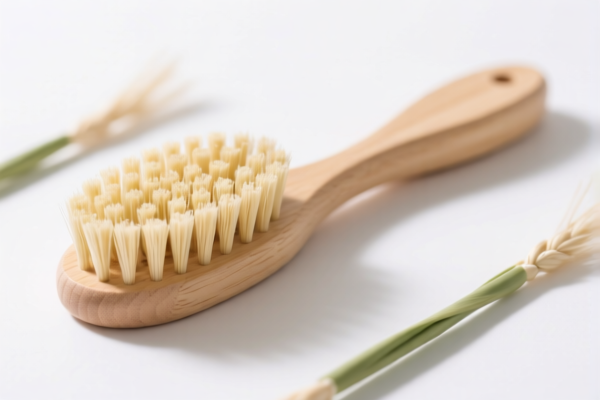
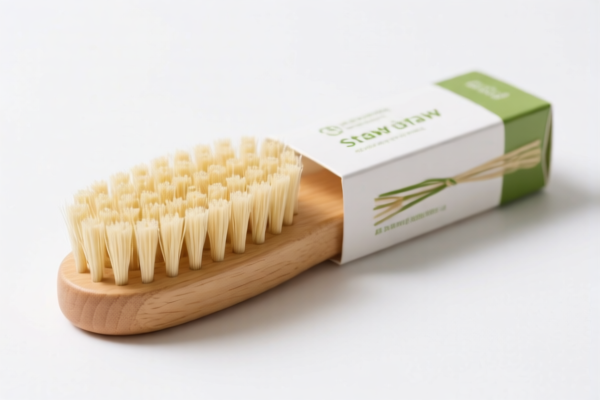
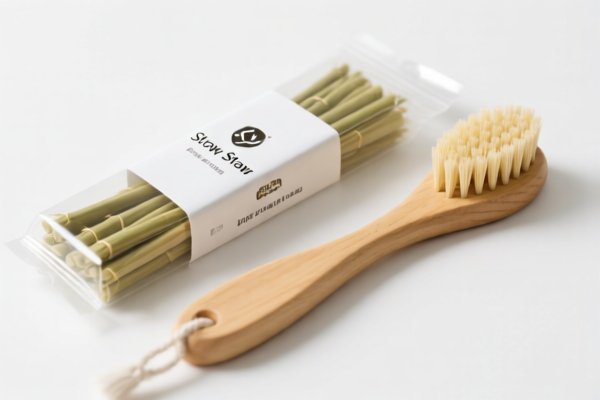
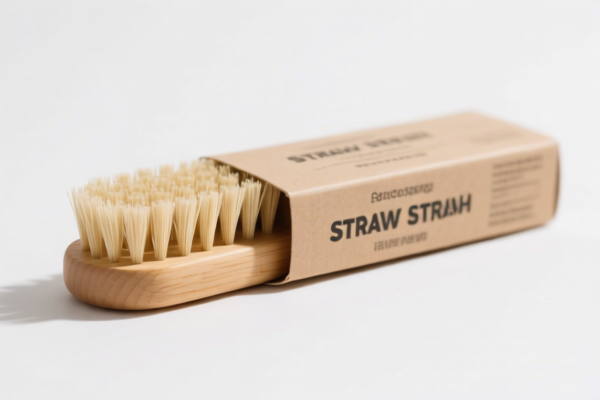
AI Analysis
🧹 Straw Brush (Vegetable Material Brooms/Brushes)
🌐 HS Code Reference & Customs Clearance Guide | 2026 Latest Tariff Analysis | Professional Clearance Strategy
📌 I. Product Definition & Classification: Do You Truly Understand "Straw Brushes"?
A "Straw Brush" in international trade typically refers to brooms, brushes, or plaiting materials made from vegetable materials (such as broom corn, twigs, straw, or similar plant fibers). These are distinct from plastic, wire, or synthetic fiber brushes.
In customs classification, they are generally divided into two main categories based on their form:
- Finished Brooms/Brushes: Assembled products with handles or bound together, ready for use (e.g., cleaning brooms).
- Plaiting Materials/Strips: Raw or semi-finished materials, such as braided strips or sheets, not yet assembled into a finished broom or other article.
⚠️ Key Distinction Point:
- If it is a finished cleaning tool (with bound twigs/straw and potentially a handle) → Classified under Chapter 96 (Brooms and Brushes).
- If it is raw material/plaits (strips, sheets, or bundles of braided vegetable fibers) → Classified under Chapter 46 (Plaits and Similar Products).
📦 II. HS Code Classification Details (2026 Latest Tariff Authority Comparison)
| HS Code | Product Description | Application Scenario | Is it a Finished Article? |
|---|---|---|---|
9603.10.90.00 |
Brooms and brushes, consisting of twigs or other vegetable materials bound together, with or without handles: Other | Generic vegetable fiber brooms (not broom corn), or mixed vegetable material brooms. | ✅ Yes (Finished) |
9603.10.50.00 |
Brooms and brushes, consisting of twigs or other vegetable materials bound together, with or without handles: Other brooms, wholly or in part of broom corn; Valued not over 96¢ each: Other | Standard corn straw brooms (broom corn) valued at $0.96 or less per unit. | ✅ Yes (Finished) |
4601.99.05.00 |
Plaits and similar products of plaiting materials...: Plaits and similar products of plaiting materials, whether or not assembled into strips | Braided straw strips, mats, or prepared bundles of vegetable fibers ready for basketry or brush making. | ❌ No (Raw/Semi-finished) |
4601.99.90.00 |
Plaits and similar products of plaiting materials...: Other | Finished articles made of plaiting materials (e.g., mats, screens, other shaped items) not elsewhere specified. | ⚠️ Semi-finished/Other |
🔍 Key Reminder:
- "Broom Corn" vs. "Other Vegetable Materials": If the brush is made specifically of broom corn and is valued at ≤ $0.96, it falls under9603.10.50.00. Any other value or material falls under9603.10.90.00.
- Plaits vs. Brooms: If the item is sold as a "strip" or "matting" and not yet assembled into a handle/broom head, it is NOT a broom. It is a plaiting material under Chapter 46. Misclassification here leads to significant tariff differences.
💰 III. 2026 Latest Tariff Rate Details (Including Additional Taxes & Policy Surcharges)
✅ Applicable Country: United States (US)
✅ Origin: China (CN) (Assuming origin based on the complex tax structures in the data, typical for US-China trade data provided)
✅ Effective Time: Current US Trade Policy (Section 301 & IEEPA)
🎯 1. 9603.10.90.00 —— Vegetable Material Brooms (Other than Broom Corn ≤96¢)
| Item | Content |
|---|---|
| Base Tariff | 0.0% (ad valorem) |
| Additional Tax (Section 301) | +7.5% |
| Total Tariff Rate | 7.5% |
| Tax Calculation | CIF Value × 7.5% |
| De Minimis Eligibility | ❌ No (Generally subject to standard duties) |
| Legal Basis | USITC:9603.10.90.00 → Footnote 13 (Section 301 List 4B) |
📌 Explanation:
- The base duty for most brooms is 0%.
- However, due to US-China trade tensions, a 7.5% punitive tariff is applied to many Chapter 96 articles.
- Total Cost Impact: 7.5% is relatively moderate compared to electronics, but still significant for low-margin items.
🎯 2. 9603.10.50.00 —— Broom Corn Brooms (Valued ≤ $0.96)
| Item | Content |
|---|---|
| Base Tariff | 32¢ per each (Specific Duty) |
| Additional Tax (Section 301) | +7.5% (Ad Valorem on CIF) |
| Total Tariff Rate | 32¢/unit + 7.5% |
| Tax Calculation | (32¢ × Qty) + (CIF Value × 7.5%) |
| De Minimis Eligibility | ❌ No |
| Legal Basis | USITC:9603.10.50.00 → Footnote 13 |
📌 Explanation:
- This is a mixed duty structure. You pay a fixed cents-per-item fee PLUS a percentage tax.
- For high-value brooms (over $0.96), this code does not apply; they move to9603.10.90.00.
- Warning: If your broom is valued at $1.00, you lose the specific duty advantage but still pay the 7.5%.
🎯 3. 4601.99.05.00 —— Plaiting Materials (Strips/Assembled Strips)
| Item | Content |
|---|---|
| Base Tariff | 0.0% (ad valorem) |
| Additional Tax (Section 301) | +0.0% |
| Total Tariff Rate | 0.0% |
| Tax Calculation | $0 |
| De Minimis Eligibility | ✅ Potentially Yes (If under $800, see advice below) |
| Legal Basis | USITC:4601.99.05.00 |
📌 Explanation:
- Tariff-Free Import!
- Plaiting materials (raw braided strips) are often exempt from Section 301 tariffs in certain sub-codes.
- Strategy: If you import raw straw/plaits and assemble them into brooms inside the US or a free-trade zone, you can avoid the 7.5% duty entirely.
🎯 4. 4601.99.90.00 —— Other Plaiting Articles (Mats, Screens, etc.)
| Item | Content |
|---|---|
| Base Tariff | 3.3% (ad valorem) |
| Additional Tax (Section 301) | +25.0% |
| Total Tariff Rate | 28.3% |
| Tax Calculation | CIF Value × 28.3% |
| De Minimis Eligibility | ❌ No |
| Legal Basis | USITC:4601.99.90.00 → Footnote 13 |
📌 Explanation:
- This code applies to finished articles made of plaiting materials (like mats, screens, or other shaped items) that are not brooms.
- High Tariff Alert: The 25% punitive tax makes this category expensive.
- Do Not Misclassify: Do not try to declare a "Straw Broom" as a "Straw Mat" (4601.99.90.00) to save tax. Customs will detect the functional use and reassess to9603.10.90.00(7.5%), potentially with penalties.
🛠️ IV. Customs Clearance Practical Advice (Battle-Tested Pitfall Guide)
✅ 1. Preparation Checklist (Must-Haves)
| Document | Required | Note |
|---|---|---|
| ✅ Product Photos | ✔️ | Clear images of the handle, binding, and bristle material (vegetable vs. plastic). |
| ✅ Material Specification | ✔️ | Explicitly state: "100% Natural Broom Corn" or "Coconut Coir" or "Synthetic Plastic". If plastic, it goes to Chapter 39! |
| ✅ Unit Value | ✔️ | Must clearly state value per unit (especially for 9603.10.50.00 cutoff at $0.96). |
| ✅ Commercial Invoice | ✔️ | Description must match HS Code logic (e.g., "Straw Broom" vs. "Braided Straw Strips"). |
✅ 2. Declaration Tips (Critical Mantra)
🔥 "Brooms are Chapter 96, Strips are Chapter 46. If it has a handle, it's a Broom!"
| Scenario | Correct HS Code | Wrong Code (Risk) |
|---|---|---|
| Standard Broom with Handle | 9603.10.90.00 or 9603.10.50.00 |
4601.99.90.00 (28.3% Tax!) |
| Broom Corn Broom < $0.96 | 9603.10.50.00 |
9603.10.90.00 (Misses specific duty) |
| Bundles of Braided Straw (No Handle) | 4601.99.05.00 |
9603.10.90.00 (Pays 7.5% unnecessarily) |
| Straw Mat/Rug | 4601.99.90.00 |
9603.10.90.00 (Underpaying) |
✅ 3. Special Case Handling
| Situation | Advice |
|---|---|
| Mixed Materials | If the brush head is 50% straw, 50% plastic → It is NO LONGER a vegetable material broom. It falls under Plastics (Chapter 39)! → Check 3926.90.99.89 (12.8% Total Tax) or 3926.90.35.00 (0% Tax). ⚠️ Critical: Mixed material brushes often shift from Chapter 96 to Chapter 39. |
| Beads/Spangles | If the "straw brush" is actually decorative beads made of plastic → 3926.90.35.00 (0% Tax). Do not declare as broom. |
| Plastic Plaits | If the plait is plastic → 3926.90.99.89 (12.8% Total Tax). |
🌍 V. Global Market Clearance Comparison (2026 Latest)
| Country/Region | Recommended HS Code | Tariff Rate | Certification | Note |
|---|---|---|---|---|
| 🇺🇸 USA | 9603.10.90.00 (Broom) |
7.5% | None usually | High scrutiny on "Vegetable" vs "Plastic". |
| 🇺🇸 USA | 4601.99.05.00 (Plait) |
0% | None | Best for raw material importers. |
| 🇨🇳 China | 9603.10.90.00 |
Low/0% | CCC (if electronic/industrial) | Import duties are generally low for natural materials. |
| 🇪🇺 EU | 9603.10.90.00 |
Varies | CE (if applicable) | EU often has lower duties on natural brooms than US. |
📌 Conclusion:
- USA is the hardest market for vegetable brooms due to the 7.5% add-on.
- Plastic/Plaiting materials have very different tax profiles (0% to 12.8%).
- Material Composition is King: A 5% plastic blend can change the entire classification and tax bill.
📌 VI. Common Errors & Pitfall Guide (Blood & Tears Lessons)
❌ Error 1: Declaring a Plastic Bristle Broom as a Straw Broom (9603.10.90.00)
👉 Consequence: Misdeclaration. Customs may seize goods or apply higher duties for plastics (3926.90.99.89 - 12.8%). Plus, you lose the "Natural Product" marketing angle.
❌ Error 2: Declaring Finished Brooms as Plaiting Materials (4601.99.05.00) to get 0% tax
👉 Consequence: 28.3% Retaxation + Penalties. If it has a handle, it is a broom. Period. Customs inspectors are trained to spot handles.
❌ Error 3: Ignoring the $0.96 Value Threshold for Broom Corn
👉 Consequence: If you declare 9603.10.50.00 for a $1.50 broom, you pay 32¢/unit + 7.5%. If you correctly declare 9603.10.90.00, you only pay 7.5%. You might overpay specific duties if you don't calculate correctly. Conversely, if you are under $0.96, failing to use the specific duty code might result in ad-valorem errors.
❌ Error 4: Not specifying Material in Description
👉 Consequence: Customs asks for clarification → Delays → Demurrage charges.
✅ Correct Description: "Natural Broom Corn Broom, 12-inch, With Wooden Handle, Value $1.20/ea."
🎯 VII. Conclusion: Professional Declaration, Save Money, Avoid Delays!
🎯 Remember the Mantra:
🔹 "Handle = Broom (Ch 96). No Handle = Plait (Ch 46). Plastic = Plastic (Ch 39)."
🔹 "Check Value: < $0.96 = Specific Duty. > $0.96 = Ad Valorem."
🔹 "Mixed Materials? Think Chapter 39!"
📌 Pro Tip:
If you are importing raw braided straw strips (4601.99.05.00) to assemble into brooms domestically, you pay 0% Duty. This is a powerful supply chain strategy for US-based assemblers.
📣 Immediate Action:
📞 Confirm material composition (100% vegetable vs. synthetic blend).
📞 Measure unit value (Is it < $0.96?).
📞 Decide: Finished Good or Raw Material?
🚀 Choose the correct HS Code to minimize tax and ensure smooth clearance!
✨ Professional Clearance Starts with Accurate Classification!
💼 Your Cost Savings Are in the Details!
Customer Reviews
About HS Code Classification
The Harmonized System (HS) is an internationally standardized nomenclature developed by the World Customs Organization (WCO) to classify traded products. Over 200 countries use the HS system as the basis for customs tariffs, trade statistics, and import/export regulations.
Each HS code follows a hierarchical structure:
- Chapter (2 digits) — Broad category of goods (e.g., Chapter 84: Machinery and Mechanical Appliances)
- Heading (4 digits) — More specific grouping within the chapter
- Subheading (6 digits) — Internationally standardized breakdown, used by all WCO member countries
- National subdivisions (8-10 digits) — Country-specific extensions for further classification, such as US HTSUS 10-digit codes
Correct HS code classification is essential for smooth customs clearance, accurate duty payment, and compliance with trade regulations. Misclassification can lead to customs delays, overpayment of duties, or penalties.
When importing from CN to US, the applicable tariff rates may include:
- Most-Favored-Nation (MFN) rate — The standard duty rate applied to WTO members
- General rate — Applied to countries without trade agreements
- Trade remedy duties — Additional tariffs such as Section 301 (anti-dumping), Section 232 (national security), or countervailing duties
The information provided on this page is for reference purposes only. For official classification, please consult with your local customs authority or a licensed customs broker.