Straw Handbags
CN → US| HS Code | Tariff Rate | Origin | Destination | Doc |
|---|---|---|---|---|
| 4602191800 | 39.5% | CN | US | Official Doc |
| 6504003000 | 41.0% | CN | US | Official Doc |
| 6504006000 | 0.0% | CN | US | Official Doc |
| 4602198000 | 37.3% | CN | US | Official Doc |
Product Images
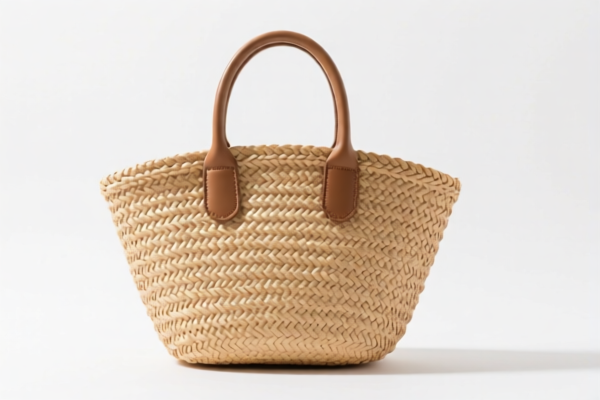
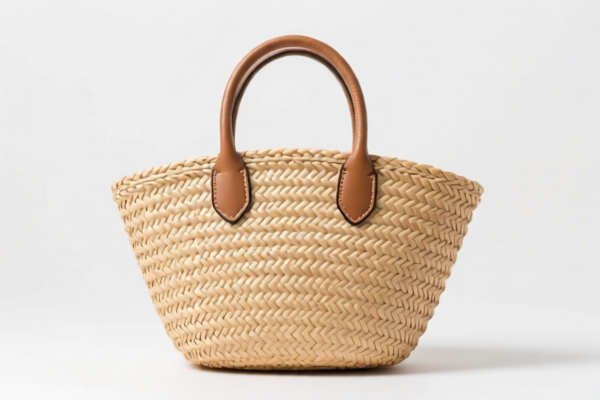
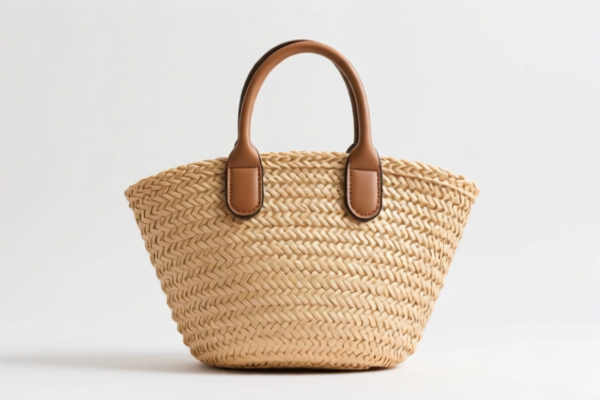
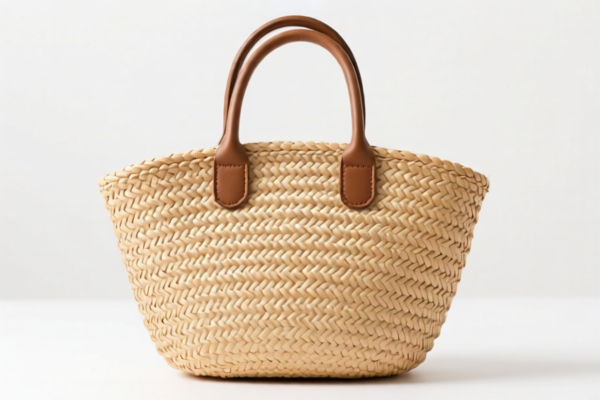
AI Analysis
🎒 Straw Handbags: The Ultimate Guide to HS Codes, Tariffs & Clearance Strategy
🌐 HS Code Classification & Customs Clearance Guide | 2026 Latest Tariff Analysis | Professional Strategy for Handmade Accessories
📌 I. Product Definition & Classification: Do You Really Know "Straw Bags"?
Straw handbags are fashion accessories made from woven plant materials (such as straw, rattan, bamboo, or esparto). In international trade, the classification depends heavily on material origin, manufacturing method, and intended use. Misclassification is a common pitfall that leads to unexpected tax liabilities.
⚠️ Key Distinction Point:
- If it is a woven article made of vegetable plaiting materials (straw, etc.) → Often falls under Chapter 46 (Articles of Plaiting Materials).
- If it is a headgear or specifically structured as a hat but repurposed → May fall under Chapter 65 (Headgear).
- Note: The provided data suggests specific classifications based on summaries linking "straw hats" to "handbags," implying a broad or specific customs interpretation where woven plant materials used for accessories are grouped.
📦 II. HS Code Classification Details (Based on Provided Data)
The following HS codes are derived from the provided dataset, which links straw products (originally described as hats in some contexts) to handbag classifications or similar woven plant material articles.
| HS Code | Summary/Description | Tax Rate (Total) | Tax Breakdown |
|---|---|---|---|
| 4602.19.18.00 | Straw hat classified as plant material woven product, applicable to similar material handbags. | 39.5% | Base: 4.5% Add-on: 25.0% Section 122: 10% |
| 6504.00.30.00 | Straw hat as plant fiber headgear, extendable to similar material handbags. | 41.0% | Base: 6.0% Add-on: 25.0% Section 122: 10% |
| 6504.00.60.00 | Straw hat as non-sewn woven product, applicable to similar material handbags. | 94¢/doz. + 4.6% + 35.0% | Base: 94¢/doz. + 4.6% Add-on: 25.0% Section 122: 10% |
| 4602.19.80.00 | Straw hat belongs to plant material woven product, classifiable as similar material handbags. | 37.3% | Base: 2.3% Add-on: 25.0% Section 122: 10% |
🔍 Key Insight:
- The dataset explicitly links "Straw Hats" to "Handbags" under specific HS codes. This suggests that in certain customs jurisdictions or interpretations, woven straw accessories (including bags) may be classified under Chapter 46 (Plaiting Materials) or Chapter 65 (Headgear) if they share structural or material similarities with headwear.
- Section 122 Tariff (10%): This is a critical additional tax, likely related to recent trade policies or specific country-of-origin rules (e.g., US-China trade tensions).
- Add-on Tariff (25%): Consistently applied across all codes, indicating a significant surcharge (likely Section 301 or similar trade remedy).
💰 III. 2026 Latest Tariff Rate Analysis (Including Add-ons)
✅ Applicable Country: USA (US)
✅ Origin: China (CN)
✅ Effective Time: As per dataset (current trade policy)
🎯 1. 4602.19.18.00 – Plant Material Woven Product
| Item | Detail |
|---|---|
| Base Tariff | 4.5% |
| Add-on Tariff | 25.0% |
| Section 122 Tariff | 10% |
| Total Tariff | 39.5% |
| Calculation | CIF Value × 39.5% |
| Legal Basis | Likely USITC Chapter 46 + Section 301 + Section 122 |
📌 Explanation:
- 4.5% Base: Standard duty for woven plant articles.
- 25% Add-on: High surcharge due to trade restrictions (e.g., Section 301).
- 10% Section 122: Additional tariff applicable to specific goods from China.
- Total 39.5%: A substantial cost increase. Pre-calculation is essential!
🎯 2. 6504.00.30.00 – Plant Fiber Headgear / Woven Bag
| Item | Detail |
|---|---|
| Base Tariff | 6.0% |
| Add-on Tariff | 25.0% |
| Section 122 Tariff | 10% |
| Total Tariff | 41.0% |
| Calculation | CIF Value × 41.0% |
| Legal Basis | USITC Chapter 65 + Section 301 + Section 122 |
📌 Note:
- Slightly higher total rate than4602.19.18.00due to a higher base rate (6.0% vs 4.5%).
- Use this code if the bag is classified as "headgear" or closely related in structure.
🎯 3. 6504.00.60.00 – Non-Sewn Woven Product (Mixed Rate)
| Item | Detail |
|---|---|
| Base Tariff | 94¢/doz. + 4.6% |
| Add-on Tariff | 25.0% |
| Section 122 Tariff | 10% |
| Total Tariff | 94¢/doz. + 4.6% + 35.0% (Total effective rate varies by value/quantity) |
| Calculation | (94¢ × Dozens) + (CIF Value × 4.6%) + (CIF Value × 35%) |
| Legal Basis | USITC Chapter 65 (Specific subheading) + Section 301 + Section 122 |
📌 Complexity Alert:
- This code has a mixed duty (specific + ad valorem).
- 35% Total Ad Valorem Add-on: 25% (Add-on) + 10% (Section 122).
- High Risk: If the item's value per dozen is low, the specific duty (94¢/doz.) may dominate. If value is high, the ad valorem rate kicks in. Accurate valuation is critical.
🎯 4. 4602.19.80.00 – Plant Material Woven Product (Other)
| Item | Detail |
|---|---|
| Base Tariff | 2.3% |
| Add-on Tariff | 25.0% |
| Section 122 Tariff | 10% |
| Total Tariff | 37.3% |
| Calculation | CIF Value × 37.3% |
| Legal Basis | USITC Chapter 46 (Other) + Section 301 + Section 122 |
📌 Optimal Code?:
- Lowest Base Rate (2.3%) among all options.
- Lowest Total Rate (37.3%).
- Use this if the product fits the "Other" category under Chapter 46. Always verify if your specific bag design qualifies for this subheading.
🛠️ IV. Customs Clearance Practical Advice (Real-World Pitfall Guide)
✅ 1. Documentation Checklist (Mandatory)
| Document | Required | Notes |
|---|---|---|
| ✅ Product Specification Sheet | ✔️ | Material composition (e.g., 100% natural straw), weaving technique, dimensions. |
| ✅ Photos of Product | ✔️ | Show the bag’s structure, handles, lining, and any non-straw components (zippers, leather). |
| ✅ Commercial Invoice | ✔️ | Clearly state "Straw Handbag" or "Woven Plant Material Bag." Avoid vague terms like "Accessory." |
| ✅ Packing List | ✔️ | Quantity per carton, gross/net weight. |
| ✅ Original Certificate of Origin | ✔️ | Essential for proving China origin (triggers Section 122 & 301). |
| ✅ Third-Party Testing Report | ✔️ | If using dyes or treatments, ensure compliance with CPSIA (if for children) or REACH (EU). |
✅ 2. Declaration Tips (Key Mantras)
🔥 “Material is King, Structure is Queen, Code Choice Saves Money!”
| Scenario | Correct Declaration | Wrong Action | Consequence |
|---|---|---|---|
| Pure Straw Weave | 4602.19.80.00 (Lowest Tax: 37.3%) |
Misclassify as 6504.00.30.00 (Higher Tax: 41.0%) |
Overpay ~3.7% |
| Bag with Leather Handles | Disclose all materials. May shift to Chapter 42 or remain in 46/65 depending on predominant character. | Hide leather parts | Customs seizure or penalty |
| Woven Bag shaped like a Hat | 6504.00.60.00 or 6504.00.30.00 |
Declare as 4602.19.18.00 |
Risk of misclassification audit |
| Mixed Material (Straw + Fabric) | Determine "essential character." If fabric dominates, may go to Chapter 42. | Declare as pure straw | Incorrect tariff application |
✅ 3. Special Handling Cases
| Case | Handling Advice |
|---|---|
| OEM Custom Bags | Provide design drawings to prove it’s not a standard hat. Emphasize "Handbag" function. |
| Bundled Sales (Bag + Hat) | Declare separately if possible. If bundled, consider the primary item. |
| Small Quantity (De Minimis) | ❌ Not Eligible: Due to Section 122 and Add-on tariffs, small shipments from China do not qualify for de minimis exemption (Section 321). |
| Supply Chain Diversification | If sourcing from Vietnam or Thailand, check if IEEPA exemptions apply. China-origin goods face highest tariffs. |
🌍 V. Global Market Clearance Comparison (2026)
| Country/Region | Recommended HS Code | Est. Tariff (China Origin) | Certification | Notes |
|---|---|---|---|---|
| 🇺🇸 USA | 4602.19.80.00 or 6504.00.60.00 |
37.3% – 41% (incl. 35% add-ons) | No specific cert for straw | High Tariff Zone. Section 122 & 301 apply. |
| 🇨🇳 China | 4602.19.18.00 |
~5-10% | No major barriers | Domestic production benefits |
| 🇪🇺 EU | 4602.11.00 (Example) |
0% - 5% | CE (if applicable) | Lower tariffs than US. No Section 122. |
| 🇬🇧 UK | 4602.19.10 |
5% - 10% | UKCA | Post-Brexit rules apply. |
| 🇯🇵 Japan | 4602.19.900 |
5% - 8% | No major barriers | FTA benefits if applicable. |
📌 Conclusion:
- USA is the most expensive market for Chinese straw bags due to Section 122 and 301 tariffs.
- EU and Japan offer significantly lower duty burdens.
- Consider supply chain relocation if US tariffs erode profit margins.
📌 VI. Common Mistakes & Pitfalls (Lessons Learned)
❌ Mistake 1: Declaring a Straw Handbag as a Hat (6504) without justification.
👉 Consequence: If customs disagrees with the "headgear" classification, they may reclassify to 4602, potentially causing delays. Or vice versa.
❌ Mistake 2: Ignoring Section 122 (10%) in cost calculations.
👉 Consequence: Profit margin erosion. Many sellers only factor in base + 301 tariffs, forgetting Section 122.
❌ Mistake 3: Failing to disclose non-straw components (e.g., metal clasps, fabric lining).
👉 Consequence: Customs may deem the "essential character" to be fabric/metal, shifting classification to Chapter 42 or 71, with different duties.
❌ Mistake 4: Using De Minimis for small China-origin shipments.
👉 Consequence: Seizure and Penalty. Section 122 explicitly removes de minimis eligibility for many Chinese goods.
✅ Best Practice:
"Natural Straw Woven Handbag, Model XYZ, 100% Vegetable Plaiting Material, No Liner, Handmade. CIF $100. HS Code: 4602.19.80.00. Origin: China."
🎯 VII. Conclusion: Professional Declaration, Cost Optimization
🎯 Remember the Mantra:
🔹 "Base Tax + 25% Add-on + 10% Sec 122 = Reality Check!"
🔹 "Code 4602.19.80.00 is often the cheapest (37.3%) for pure straw weaves."
🔹 "No De Minimis for China. Plan ahead!"
📌 Pro Tip:
- If your straw bags are handmade and have high artistic value, consider declaring them as "Articles of Art" if possible, though this is difficult.
- Always apply for an Advance Ruling from US Customs (CBP) to lock in the HS code and avoid post-import audits.
- Diversify Suppliers: If US tariffs remain high, explore sourcing from Vietnam or India to mitigate costs.
📣 Immediate Action:
📞 Consult a Customs Broker + Provide Detailed Product Photos + Calculate Total Landed Cost (Including 37-41% Tariffs)
🚀 Ensure Compliance, Avoid Seizures, Maximize Profits!
✨ Expert Customs Clearance Starts with Accurate Classification!
💼 Every Dollar Saved in Tariffs is Pure Profit!
Customer Reviews
About HS Code Classification
The Harmonized System (HS) is an internationally standardized nomenclature developed by the World Customs Organization (WCO) to classify traded products. Over 200 countries use the HS system as the basis for customs tariffs, trade statistics, and import/export regulations.
Each HS code follows a hierarchical structure:
- Chapter (2 digits) — Broad category of goods (e.g., Chapter 84: Machinery and Mechanical Appliances)
- Heading (4 digits) — More specific grouping within the chapter
- Subheading (6 digits) — Internationally standardized breakdown, used by all WCO member countries
- National subdivisions (8-10 digits) — Country-specific extensions for further classification, such as US HTSUS 10-digit codes
Correct HS code classification is essential for smooth customs clearance, accurate duty payment, and compliance with trade regulations. Misclassification can lead to customs delays, overpayment of duties, or penalties.
When importing from CN to US, the applicable tariff rates may include:
- Most-Favored-Nation (MFN) rate — The standard duty rate applied to WTO members
- General rate — Applied to countries without trade agreements
- Trade remedy duties — Additional tariffs such as Section 301 (anti-dumping), Section 232 (national security), or countervailing duties
The information provided on this page is for reference purposes only. For official classification, please consult with your local customs authority or a licensed customs broker.