Straw Woven Baskets
CN → US| HS Code | Tariff Rate | Origin | Destination | Doc |
|---|---|---|---|---|
| 4602121600 | 40.0% | CN | US | Official Doc |
| 4602191800 | 39.5% | CN | US | Official Doc |
| 4602191700 | 35.0% | CN | US | Official Doc |
| 9403893010 | 35.0% | CN | US | Official Doc |
Product Images
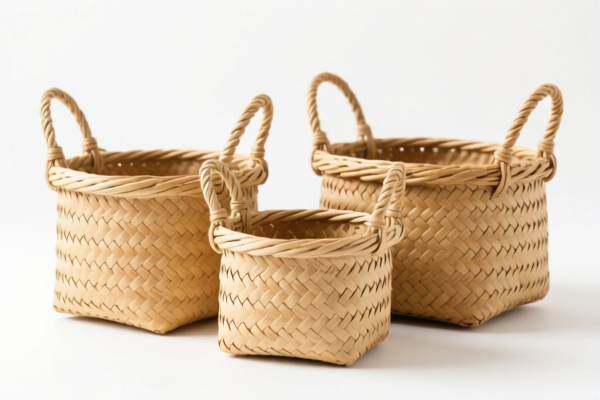
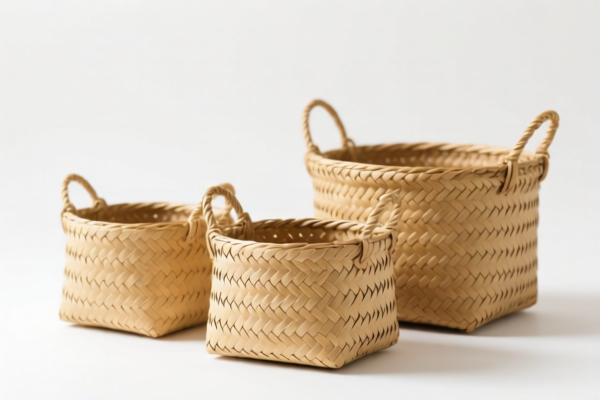
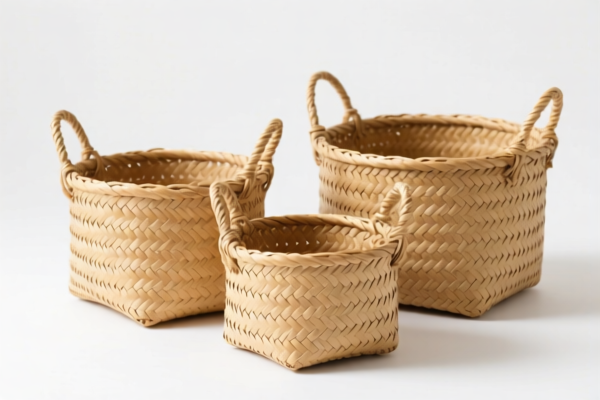
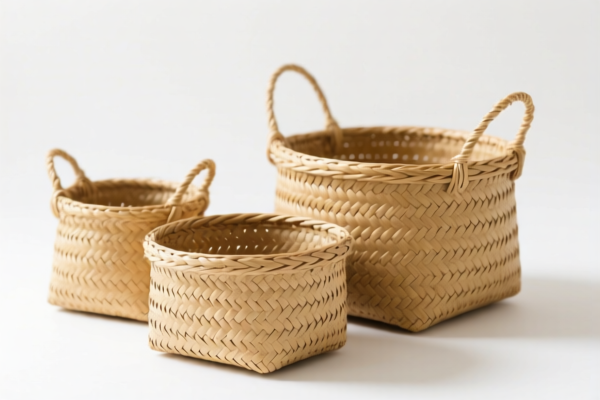
AI Analysis
🧺 Straw Woven Baskets (Grass & Rattan Storage Solutions)
🌐 HS Code Reference & Customs Clearance Guide | 2026 Latest Tariff Analysis | Professional Clearance Strategy
📌 I. Product Definition & Classification: Do You Really Understand "Straw Baskets"?
Straw woven baskets, including those made from rattan, grass, or similar plant materials, are categorized based on their material composition, form (basket structure), and specific use. In international trade, these items fall primarily under Chapter 46 (Woven Materials) or Chapter 94 (Furniture/Storage), depending on the degree of processing and specific labeling.
Key Classification Criteria:
* Material: Is it pure rattan (4602.12) or other plant materials like grass (4602.19)?
* Form: Is it a classic "basket" shape?
* Use: Is it for general storage, cosmetics, or household use?
* Origin/Trade Context: The provided data indicates significant US-specific tariffs (Section 301 & Section 122), suggesting these goods are likely exported to the United States from China.
⚠️ Critical Distinction:
- If the item is strictly a woven basket made of rattan, it falls under 4602.12.
- If the item is made of grass/plant fibers but retains a basket shape, it falls under 4602.19.
- If the item is marketed specifically as a cosmetic organizer or home storage unit and may be considered more "finished furniture" or "similar material," it might be pushed to 9403.89.
📦 II. HS Code Classification Details (2026 Latest Tariff Authority Comparison)
Based on the provided data, here are the four potential HS Codes and their rationales:
| HS Code | Product Description | Classification Logic | Material Focus |
|---|---|---|---|
4602.12.16.00 |
Rattan Woven Basket | Primary Choice for Rattan: Specifically covers baskets made of rattan. If your material is clearly identified as "Rattan" (藤), this is the most accurate classification. | 🌿 Rattan (藤) |
4602.19.18.00 |
Grass-Woven Cosmetic Storage Basket | Specific Use Variant: Covers baskets made of other plant materials (like grass) used specifically for cosmetic storage. If the label emphasizes "Cosmetic Organizer" and the material is grass-like. | 🌾 Grass/Plant (草编) |
4602.19.17.00 |
Grass Woven Cosmetic Basket (Plant Material) | General Plant Material Basket: Covers baskets made of plant materials (other than rattan) in basket form. A broader category for grass/plant baskets if the specific "cosmetic" nuance is less critical than the material. | 🌱 Plant Material (植物材料) |
9403.89.30.10 |
Grass Cosmetic Storage Basket (Household Storage) | Furniture/Storage Alternative: If customs determines the item is more akin to "furniture" or "storage furniture" made of "similar materials" rather than a woven basket, it may be classified here. Often used for broader "household storage" claims. | 🏠 Household Storage (家用收纳) |
🔍 Key Insight:
-4602.12and4602.19are preferred for genuine woven baskets.
-9403.89is a risky alternative if the product is heavily styled as "furniture" or if the material is ambiguous.
- Cosmetic use is a key differentiator for the4602.19.18vs4602.19.17split.
💰 III. 2026 Latest Tariff Rate Breakdown (US Market, China Origin)
✅ Applicable Country: United States (US)
✅ Origin: China (CN)
✅ Effective Time: Current rates apply (Section 301 + Section 122)
🎯 1. 4602.12.16.00 – Rattan Woven Basket (Material: Rattan)
| Item | Content |
|---|---|
| Base Tariff Rate | 5.0% |
| Section 301 Additional Tariff | +25.0% |
| Section 122 Tariff | +10.0% |
| Total Tariff Rate | 40.0% |
| Tax Calculation | CIF Value × 40% |
| De Minimis Exemption | ❌ Not Eligible (Section 122 items are generally excluded from de minimis) |
| Legal Basis Path | HTSUS:4602.12.16.00 → USITC:301_Footnote → Section122:Tariff |
📌 Explanation:
- This is the highest tariff among the options.
- The 25% is due to Section 301 (Trade War).
- The 10% is due to Section 122 (National Security/Supply Chain restrictions on certain Chinese goods).
- Base 5% is standard for woven rattan items.
🎯 2. 4602.19.18.00 – Grass-Woven Cosmetic Storage Basket (Material: Grass)
| Item | Content |
|---|---|
| Base Tariff Rate | 4.5% |
| Section 301 Additional Tariff | +25.0% |
| Section 122 Tariff | +10.0% |
| Total Tariff Rate | 39.5% |
| Tax Calculation | CIF Value × 39.5% |
| De Minimis Exemption | ❌ Not Eligible |
| Legal Basis Path | HTSUS:4602.19.18.00 → USITC:301_Footnote → Section122:Tariff |
📌 Explanation:
- Very close to the rattan rate, but 0.5% lower.
- The lower base rate (4.5% vs 5.0%) reflects the slightly different material classification for "other plant materials."
- Still heavily impacted by both Section 301 and 122.
🎯 3. 4602.19.17.00 – Grass Woven Cosmetic Basket (Plant Material)
| Item | Content |
|---|---|
| Base Tariff Rate | 0.0% |
| Section 301 Additional Tariff | +25.0% |
| Section 122 Tariff | +10.0% |
| Total Tariff Rate | 35.0% |
| Tax Calculation | CIF Value × 35.0% |
| De Minimis Exemption | ❌ Not Eligible |
| Legal Basis Path | HTSUS:4602.19.17.00 → USITC:301_Footnote → Section122:Tariff |
📌 Explanation:
- Lowest Total Tariff in the dataset!
- The Base Rate is 0%, which is a significant advantage.
- However, the Section 301 (25%) and Section 122 (10%) still apply, bringing the total to 35%.
- Risk: Ensure the product description accurately reflects "Plant Material" and not "Rattan" to qualify for this lower base rate.
🎯 4. 9403.89.30.10 – Grass Cosmetic Storage Basket (Household Storage)
| Item | Content |
|---|---|
| Base Tariff Rate | 0.0% |
| Section 301 Additional Tariff | +25.0% |
| Section 122 Tariff | +10.0% |
| Total Tariff Rate | 35.0% |
| Tax Calculation | CIF Value × 35.0% |
| De Minimis Exemption | ❌ Not Eligible |
| Legal Basis Path | HTSUS:9403.89.30.10 → USITC:301_Footnote → Section122:Tariff |
📌 Explanation:
- Tied for Lowest Total Tariff (35%).
- Base rate is 0%.
- Risk: This classification is less common for "baskets" and more for "furniture." If customs inspectors view the item as a simple woven basket, they may reject9403.89and reclassify it to4602, potentially leading to additional duties and penalties.
- Only use if the product is clearly marketed as "Household Storage Furniture" and not a traditional basket.
🛠️ IV. Customs Clearance Practical Advice (Battle-Tested Pitfall Guide)
✅ 1. Preparation Checklist (Mandatory)
| Document | Must Provide | Description |
|---|---|---|
| ✅ Product Specification Sheet | ✔️ | Detail material (Rattan vs. Grass), dimensions, weight. |
| ✅ Photos | ✔️ | Clear images of the weave, handle, and any branding. |
| ✅ Material Composition Statement | ✔️ | Explicitly state: "100% Rattan" or "100% Grass/Plant Fiber." |
| ✅ Commercial Invoice | ✔️ | Accurate description: "Grass Woven Cosmetic Basket" vs "Rattan Basket." |
| ✅ Packing List | ✔️ | Net/Gross weight, quantity per box. |
| ✅ Section 122 Compliance Info | ✔️ | Proof of origin and material sourcing (if audited). |
✅ 2. Declaration Strategy (Key Mantra)
🔥 “Material Truth, Use Specific, Tariff Minimized!”
| Scenario | Recommended HS Code | Risk Level | Notes |
|---|---|---|---|
| Product is 100% Rattan | 4602.12.16.00 |
Medium | Highest base rate (5%), but accurate. |
| Product is Grass, labeled "Cosmetic" | 4602.19.18.00 |
Low-Medium | Accurate for cosmetic grass baskets. |
| Product is Grass, general "Basket" | 4602.19.17.00 |
Lowest Risk/Cost | Best for cost savings if material is indeed plant-based grass. |
| Product is "Storage Furniture" | 9403.89.30.10 |
High Risk | Only if clearly furniture-like. High chance of reclassification. |
📌 Critical Warning:
- Do NOT lie about the material. If you declare "Grass" but it is "Rattan," you face fraud penalties.
- Section 122 is Non-Negotiable: All four codes are subject to the 10% Section 122 tariff. Ensure your supply chain complies with US import restrictions on Chinese goods.
✅ 3. Special Handling
| Situation | Advice |
|---|---|
| Mixed Materials | If a basket has plastic handles or metal accents, ensure the primary material (by weight/volume) determines the HS Code. |
| Cosmetic vs. General Use | If the basket is generic, use 4602.19.17.00 (0% base). If specifically sold for cosmetics, 4602.19.18.00 (4.5% base) may be required. |
| De Minimis (Section 321) | ❌ Not Eligible: Section 122 goods are excluded from the $800 de minimis threshold. Full duties apply even for small parcels. |
🌍 V. Global Market Comparison (2026 Overview)
| Country/Region | Recommended HS Code | Tariff (Approx.) | Notes |
|---|---|---|---|
| 🇺🇸 United States | 4602.19.17.00 or 9403.89.30.10 |
35% Total | Includes 25% (Sec 301) + 10% (Sec 122). Best to use 0% base codes. |
| 🇪🇺 European Union | 4602.19.10 |
~5-8% | No Section 301/122. Lower overall cost. |
| 🇨🇳 China | 4602.19.10 |
0% (Import) | Duty-free imports of woven baskets for domestic use. |
| 🇬🇧 United Kingdom | 4602.19.10 |
~5% | Post-Brexit tariffs similar to EU. |
📌 Conclusion:
- The US market is the most expensive due to dual tariffs (Sec 301 + Sec 122).
- Optimize for4602.19.17.00(35% total) or9403.89.30.10(35% total) to minimize costs, provided the product description is accurate.
- Avoid4602.12.16.00(40%) unless the product is explicitly Rattan.
📌 VI. Common Mistakes & Pitfalls (Lessons Learned)
❌ Mistake 1: Declaring "Rattan" when the material is "Grass"
👉 Consequence: Customs reclassification → Back duties + Penalties.
✅ Fix: Test material composition if unsure. Use "Plant Material" if ambiguous.
❌ Mistake 2: Ignoring Section 122
👉 Consequence: Goods detained, seized, or denied entry under de minimis.
✅ Fix: Always budget for the 10% Section 122 tariff. Do not expect $800 exemption.
❌ Mistake 3: Using 9403 for a simple basket
👉 Consequence: Customs rejects "Furniture" classification → Reverts to 4602 → Audit.
✅ Fix: Only use 9403 if the item is clearly a storage unit/furniture, not a hand-woven basket.
🎯 VII. Conclusion: Professional Declaration, Cost Optimization!
🎯 Remember the Mantra:
🔹 "Material First, Use Second, Tariff Third."
🔹 "Rattan pays 40%, Grass pays 35% (if 0% base)."
🔹 "Section 122 is the Silent Killer – It’s always 10% extra."
📌 Pro Tip:
If you are exporting to the US, prioritize
4602.19.17.00for grass/plant baskets. It offers the lowest total tariff (35%) while remaining compliant with Chapter 46.
Avoid4602.12(Rattan) unless necessary, as it adds 5% to the base.
Never rely on de minimis for these items due to Section 122.
📣 Immediate Action:
📞 Consult Customs Broker: Verify material classification before shipment.
📄 Label Clearly: "Made of Grass/Plant Fiber," not just "Woven Basket."
🚀 Plan for 35% Total Duty: Include this in your pricing model.
✨ Clear Classification, Clear Savings!
💼 Every Percentage Point Counts in International Trade!
Customer Reviews
About HS Code Classification
The Harmonized System (HS) is an internationally standardized nomenclature developed by the World Customs Organization (WCO) to classify traded products. Over 200 countries use the HS system as the basis for customs tariffs, trade statistics, and import/export regulations.
Each HS code follows a hierarchical structure:
- Chapter (2 digits) — Broad category of goods (e.g., Chapter 84: Machinery and Mechanical Appliances)
- Heading (4 digits) — More specific grouping within the chapter
- Subheading (6 digits) — Internationally standardized breakdown, used by all WCO member countries
- National subdivisions (8-10 digits) — Country-specific extensions for further classification, such as US HTSUS 10-digit codes
Correct HS code classification is essential for smooth customs clearance, accurate duty payment, and compliance with trade regulations. Misclassification can lead to customs delays, overpayment of duties, or penalties.
When importing from CN to US, the applicable tariff rates may include:
- Most-Favored-Nation (MFN) rate — The standard duty rate applied to WTO members
- General rate — Applied to countries without trade agreements
- Trade remedy duties — Additional tariffs such as Section 301 (anti-dumping), Section 232 (national security), or countervailing duties
The information provided on this page is for reference purposes only. For official classification, please consult with your local customs authority or a licensed customs broker.