Stress Ball
CN → US| HS Code | Tariff Rate | Origin | Destination | Doc |
|---|---|---|---|---|
| 3926909989 | 22.8% | CN | US | Official Doc |
| 3926400090 | 15.3% | CN | US | Official Doc |
| 9504909080 | 17.5% | CN | US | Official Doc |
| 9504904000 | 10.0% | CN | US | Official Doc |
| 4016100000 | 35.0% | CN | US | Official Doc |
| 4016996050 | 37.5% | CN | US | Official Doc |
Product Images



AI Analysis
🏀 Stress Ball: The Ultimate Stress-Relief Companion
🌐 HS Code Classification & Customs Clearance Guide | 2026 Tariff Breakdown | Expert Strategies
📌 I. Product Definition & Classification: What is a Stress Ball?
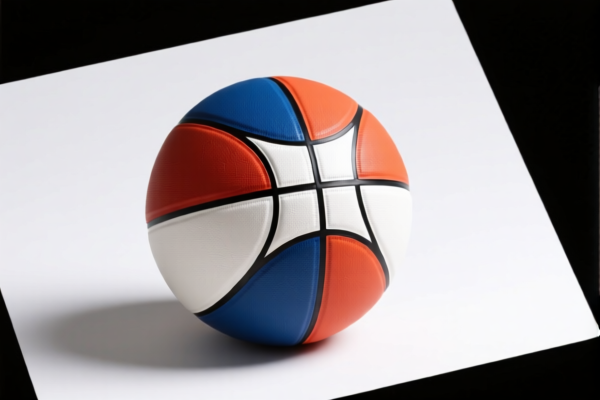
A Stress Ball is a small, squeezable toy designed to relieve stress, improve hand strength, and serve as a fidget tool. It is typically made of vulcanized rubber (soft, flexible, non-hard rubber) or plastic, and comes in various shapes, colors, and textures.
In international trade, stress balls fall under two primary categories:
- Vulcanized Rubber Articles (soft, flexible rubber): Most common for classic squeezable stress balls.
- Plastic Articles: Used for novelty or decorative stress balls with printed designs or rigid parts.
⚠️ Key Distinction:
- If made of soft, flexible vulcanized rubber →归类 to Chapter 40 (Vulcanized Rubber).
- If made of plastic with decorative elements →归类 to Chapter 39 (Plastics).
- If it's a game accessory or part of a toy set →归类 to Chapter 95 (Toys, Games, Amusement Equipment).
📦 II. HS Code Classification Breakdown (2026 Tariff Reference)
| HS Code | Product Description | Application Scenario | Material |
|---|---|---|---|
4016.10.00.00 |
Other articles of vulcanized rubber (other than hard rubber): Of cellular rubber | Classic squeezable stress balls, cellular foam texture | ✅ Vulcanized Rubber (Cellular) |
4016.99.60.50 |
Other articles of vulcanized rubber (other than hard rubber): Other: Other: Other: Other | Solid rubber stress balls, non-cellular, no specific subheading | ✅ Vulcanized Rubber (Solid) |
3926.90.99.89 |
Other articles of plastics and articles of other materials: Other: Other | Plastic stress balls, printed designs, decorative | ✅ Plastic |
3926.40.00.90 |
Other articles of plastics: Statuettes and other ornamental articles | Decorative stress balls with sculpted designs | ✅ Plastic (Ornamental) |
9504.90.90.80 |
Video game consoles and machines, table or parlor games...: Other: Other | Stress balls marketed as game accessories (e.g., with branding for tournaments) | ⚠️ Context-dependent |
9504.90.40.00 |
Game machines, other than those operated by coins...: Parts and accessories thereof | Stress balls sold as parts of game sets (e.g., promotional items) | ⚠️ Context-dependent |
🔍 Critical Reminder:
- Vulcanized rubber stress balls must not be classified under plastics (Chapter 39) if they meet the definition of rubber (flexible, elastic, cured with sulfur).
- Decorative stress balls with ornamental designs may fall under3926.40.00.90instead of3926.90.99.89.
- If a stress ball is sold as part of a game set (e.g., a stress ball included in a casino game kit), it may be misclassified as a game accessory (Chapter 95).
💰 III. 2026 Tariff Rate Breakdown (Including Surcharges & Policy Add-ons)
✅ Applicable Country: United States (US)
✅ Country of Origin: China (CN)
✅ Effective Date: November 10, 2025 (and subsequent imports)
🎯 1. 4016.10.00.00 —— Cellular Rubber Stress Balls
| Item | Content |
|---|---|
| Base Duty | 0% (ad valorem) |
| Additional Duty (USITC) | +25% (Section 301, China-origin rubber articles) |
| Additional Duty (IEEPA) | +0% (No specific IEEPA surcharge for this code) |
| Total Duty | 25% |
| Duty Calculation | CIF Value × 25% |
| De Minimis Exemption | ❌ No (Section 301 applies to rubber articles) |
| Legal Basis Path | USITC:4016.10.00.00 → Footnote:9903.88.01 (Section 301) |
📌 Explanation:
- "25% Additional Duty" is imposed under Section 301 of the U.S. Trade Act of 1974 targeting Chinese-origin rubber products.
- No IEEPA surcharge applies here, as this code is not explicitly listed under the IEEPA 10% surcharge.
- Total 25% is a moderate-to-high tariff for rubber stress balls.
🎯 2. 4016.99.60.50 —— Solid Rubber Stress Balls (Non-Cellular)
| Item | Content |
|---|---|
| Base Duty | 2.5% |
| Additional Duty (USITC) | +25% (Section 301, China-origin rubber articles) |
| Additional Duty (IEEPA) | +0% |
| Total Duty | 27.5% |
| Duty Calculation | CIF Value × 27.5% |
| De Minimis Exemption | ❌ No |
| Legal Basis Path | USITC:4016.99.60.50 → Footnote:9903.88.01 (Section 301) |
📌 Note:
- This code applies to solid rubber stress balls without cellular structure.
- The 2.5% base duty + 25% Section 301 surcharge = 27.5% total.
- Same as above: No IEEPA surcharge for this code.
🎯 3. 3926.90.99.89 —— Plastic Stress Balls
| Item | Content |
|---|---|
| Base Duty | 5.3% |
| Additional Duty (USITC) | +7.5% (Section 301, China-origin plastic articles) |
| Additional Duty (IEEPA) | +0% |
| Total Duty | 12.8% |
| Duty Calculation | CIF Value × 12.8% |
| De Minimis Exemption | ❌ No |
| Legal Basis Path | USITC:3926.90.99.89 → Footnote:9903.88.01 (Section 301) |
📌 Explanation:
- Plastic stress balls face a lower total tariff (12.8%) compared to rubber versions.
- The 5.3% base duty + 7.5% Section 301 surcharge = 12.8% total.
- No IEEPA surcharge applies here either.
🎯 4. 3926.40.00.90 —— Ornamental Plastic Stress Balls
| Item | Content |
|---|---|
| Base Duty | 5.3% |
| Additional Duty (USITC) | +0% (No Section 301 surcharge for ornamental items) |
| Additional Duty (IEEPA) | +0% |
| Total Duty | 5.3% |
| Duty Calculation | CIF Value × 5.3% |
| De Minimis Exemption | ❌ No |
| Legal Basis Path | USITC:3926.40.00.90 (No additional surcharges) |
📌 Note:
- Ornamental stress balls (e.g., shaped like animals, with intricate designs) are exempt from Section 301 surcharges.
- This is the most cost-effective option for plastic stress balls.
🎯 5. 9504.90.90.80 —— Stress Balls as Game Accessories
| Item | Content |
|---|---|
| Base Duty | 0% |
| Additional Duty (USITC) | +7.5% (Section 301, China-origin game accessories) |
| Additional Duty (IEEPA) | +0% |
| Total Duty | 7.5% |
| Duty Calculation | CIF Value × 7.5% |
| De Minimis Exemption | ❌ No |
| Legal Basis Path | USITC:9504.90.90.80 → Footnote:9903.88.01 (Section 301) |
📌 Warning:
- If a stress ball is marketed as a game accessory (e.g., "Official Stress Ball for Casino Tournaments"), it may be misclassified under9504.90.90.80.
- 7.5% total is lower than rubber or plastic categories, but requires proof that it is part of a game system.
🎯 6. 9504.90.40.00 —— Stress Balls as Parts of Game Sets
| Item | Content |
|---|---|
| Base Duty | 0% |
| Additional Duty (USITC) | +0% (No Section 301 surcharge for game parts) |
| Additional Duty (IEEPA) | +0% |
| Total Duty | 0% |
| Duty Calculation | CIF Value × 0% |
| De Minimis Exemption | ❌ No |
| Legal Basis Path | USITC:9504.90.40.00 (No additional surcharges) |
📌 Critical Note:
- This 0% duty applies only if the stress ball is sold as a part of a game set (e.g., included in a "Casino Game Kit" or "Pinball Machine Accessory Pack").
- Must provide documentation (e.g., packaging, invoices) proving it is not sold separately.
🛠️ IV. Customs Clearance Practical Tips (Pitfall Avoidance Guide)
✅ 1. Documentation Checklist (All Required)
| Document | Must Provide | Explanation |
|---|---|---|
| Product Specification Sheet | ✔️ | Material type (rubber/plastic), dimensions, texture, intended use |
| Product Photos (Clear) | ✔️ | Show shape, color, branding, and packaging |
| Commercial Invoice | ✔️ | Clearly state "Stress Ball" + HS Code |
| Packing List | ✔️ | Specify if sold separately or as part of a game set |
| Origin Certificate (CO) | ✔️ | For non-China origin (to claim lower tariffs) |
| Third-Party Test Report | ✔️ | If marketed as "non-toxic" or "eco-friendly" |
✅ 2. Classification Strategy (Key Rules)
🔥 "Material First, Use Second, Game Context Third!"
| Scenario | Correct Classification | Incorrect Classification |
|---|---|---|
| Standard rubber stress ball | 4016.10.00.00 (25%) or 4016.99.60.50 (27.5%) |
3926.90.99.89 (12.8%) → Over-declaration |
| Plastic stress ball with design | 3926.90.99.89 (12.8%) |
4016.10.00.00 (25%) → Under-declaration |
| Ornamental plastic stress ball | 3926.40.00.90 (5.3%) |
3926.90.99.89 (12.8%) → Over-declaration |
| Stress ball as game accessory | 9504.90.90.80 (7.5%) |
3926.90.99.89 (12.8%) → Over-declaration |
| Stress ball as part of game set | 9504.90.40.00 (0%) |
3926.90.99.89 (12.8%) → Over-declaration |
✅ 3. Special Cases & Solutions
| Scenario | Handling Recommendation |
|---|---|
| OEM Custom Stress Balls | Provide customer order + design specs to prove material & use |
| Stress Balls with Branding | Still classified by material, not branding |
| Stress Balls for Medical/Therapy Use | No special tariff, but需提供 medical device certification if claimed |
| Stress Balls for Corporate Gifts | No special tariff, but avoid "game accessory" claims unless part of a set |
🌍 V. Global Market Comparison (2026 Latest)
| Country/Region | Recommended HS Code | Tariff | Certification Requirements | Notes |
|---|---|---|---|---|
| 🇺🇸 USA | 4016.10.00.00 (25%) / 3926.40.00.90 (5.3%) |
25% (rubber) / 5.3% (ornamental) | No specific certs | Section 301 applies to rubber/plastic |
| 🇨🇳 China | 4016.10.00.00 (0%) / 3926.40.00.90 (5.3%) |
0% (rubber) / 5.3% (ornamental) | CCC (if applicable) | No Section 301 surcharges |
| 🇪🇺 EU | 4016.10.00.00 (0%) / 3926.40.00.90 (0%) |
0% (if compliant with CE) | CE + RoHS | No Section 301 surcharges |
| 🇦🇺 Australia | 4016.10.00.00 (5%) / 3926.40.00.90 (5%) |
5% | RCM | No Section 301 surcharges |
| 🇯🇵 Japan | 4016.10.00.00 (0%) / 3926.40.00.90 (0%) |
0% | PSE | No Section 301 surcharges |
📌 Conclusion:
- USA is the only market with Section 301 surcharges (25% for rubber, 12.8% for plastic).
- Ornamental plastic stress balls (3926.40.00.90) are the most cost-effective for USA imports (5.3%).
- Game-related stress balls (9504.90.90.80or9504.90.40.00) may qualify for lower tariffs if properly documented.
📌 VI. Common Mistakes & Pitfalls (Lessons Learned)
❌ Mistake 1: Classifying rubber stress balls as plastic (3926.90.99.89)
👉 Consequence: Over-declaration → 12.8% vs. 25% → Potential audit risk.
❌ Mistake 2: Misclassifying game accessory stress balls as plastic (3926.90.99.89)
👉 Consequence: 12.8% vs. 7.5% → Overpayment of duties.
❌ Mistake 3: Failing to provide game set documentation for 9504.90.40.00
👉 Consequence: 0% tariff denied → 12.8% or 25% applied.
❌ Mistake 4: Using "Stress Ball" as generic description without material details
👉 Consequence: Customs delays → Potential reclassification.
✅ Best Practice:
"Vulcanized Rubber Stress Ball (Cellular), 5cm diameter, non-slip texture, Model XYZ, for Office Use"
🎯 VII. Conclusion: Accurate Classification Saves Time & Money!
🎯 Remember the Rules:
🔹 "Rubber = Chapter 40 (25%+), Plastic = Chapter 39 (5.3%-12.8%), Game = Chapter 95 (0%-7.5%)"
🔹 "Material First, Use Second, Documentation Third!"
📌 Pro Tip:
- If your stress balls are from Vietnam, Mexico, Thailand, or Malaysia, you may qualify for Section 301 exemptions (0% tariff).
- Apply for Advance Ruling before shipping to avoid clearance delays.
📣 Act Now:
📞 Contact a customs broker + Provide product photos + specs + Request HS Code Pre-Ruling
🚀 Ensure your stress balls clear customs smoothly, minimize costs, and maximize profits!
✨ Professional Classification Starts with Precision!
💼 Every dollar saved on duties counts!
Customer Reviews
About HS Code Classification
The Harmonized System (HS) is an internationally standardized nomenclature developed by the World Customs Organization (WCO) to classify traded products. Over 200 countries use the HS system as the basis for customs tariffs, trade statistics, and import/export regulations.
Each HS code follows a hierarchical structure:
- Chapter (2 digits) — Broad category of goods (e.g., Chapter 84: Machinery and Mechanical Appliances)
- Heading (4 digits) — More specific grouping within the chapter
- Subheading (6 digits) — Internationally standardized breakdown, used by all WCO member countries
- National subdivisions (8-10 digits) — Country-specific extensions for further classification, such as US HTSUS 10-digit codes
Correct HS code classification is essential for smooth customs clearance, accurate duty payment, and compliance with trade regulations. Misclassification can lead to customs delays, overpayment of duties, or penalties.
When importing from CN to US, the applicable tariff rates may include:
- Most-Favored-Nation (MFN) rate — The standard duty rate applied to WTO members
- General rate — Applied to countries without trade agreements
- Trade remedy duties — Additional tariffs such as Section 301 (anti-dumping), Section 232 (national security), or countervailing duties
The information provided on this page is for reference purposes only. For official classification, please consult with your local customs authority or a licensed customs broker.