Stress Relief Wristband
CN → US| HS Code | Tariff Rate | Origin | Destination | Doc |
|---|---|---|---|---|
| 3926909989 | 22.8% | CN | US | Official Doc |
| 3926209050 | 15.0% | CN | US | Official Doc |
| 7117199000 | 28.5% | CN | US | Official Doc |
| 7117909000 | 28.5% | CN | US | Official Doc |
Product Images
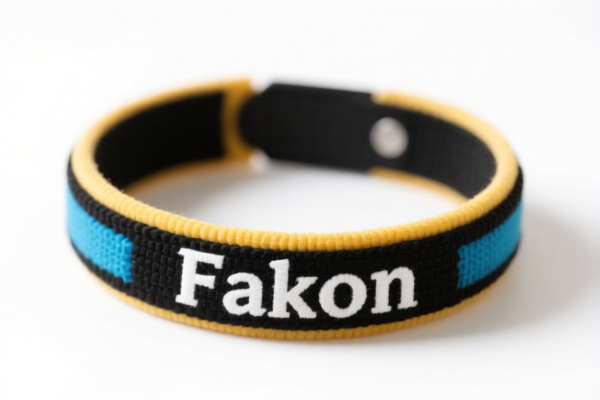
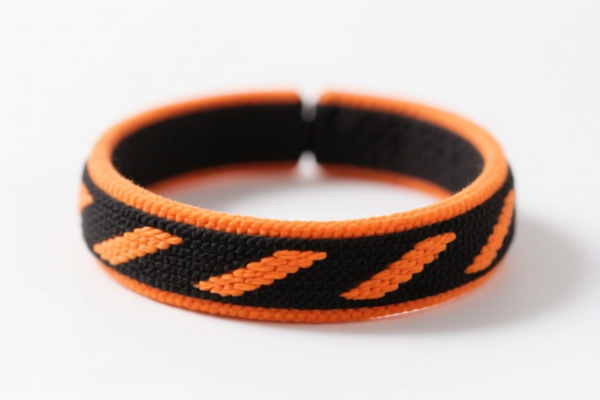
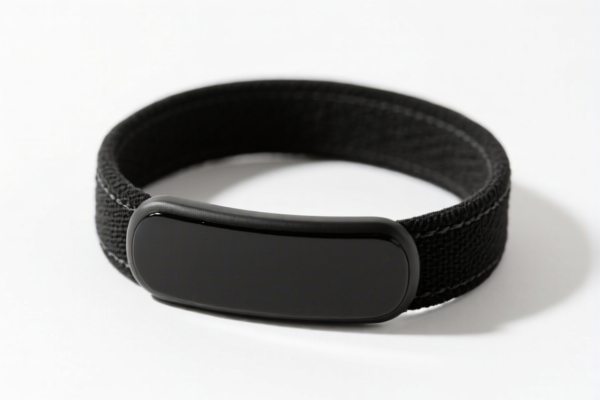
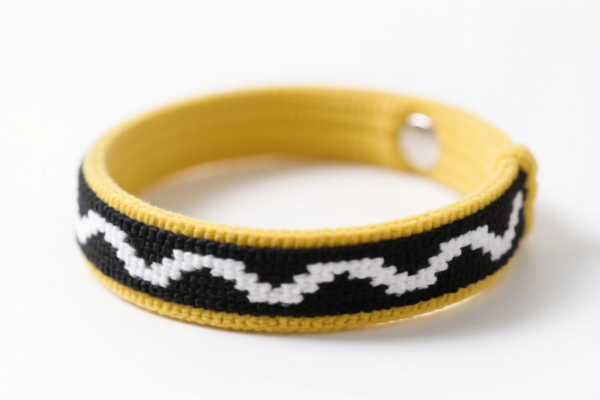
AI Analysis
🧘♀️ Stress Relief Wristband (Fidget Band)
🌐 HS Code Reference & Customs Clearance Guide | 2026 Latest Tariff Analysis | Strategic Compliance Strategy
📌 I. Product Definition & Classification: Do You Really Understand "Stress Relief Wristbands"?
Stress relief wristbands (often called "fidget bands" or "squishy toys") are silicone or rubber accessories designed for tactile stimulation, anxiety reduction, and motor skill improvement. In international trade, these items are highly volatile in classification because they can fall under Imitation Jewelry, Plastics Articles, or Apparel Accessories depending on their material composition, design, and intended use.
Key Classification Paths: 1. Jewelry-Like: If designed primarily as a fashion accessory or "bracelet" (even if soft/squishy), it often falls under Chapter 71 (Imitation Jewelry). 2. Plastic Articles: If made of rubber/silicone without metallic elements, it may fall under Chapter 39 (Articles of Plastics). 3. Apparel Accessories: If explicitly marketed as a "bracelet" for clothing enhancement, it might fall under Chapter 39 Heading 39.20 (Apparel Accessories).
⚠️ Critical Distinction Point:
- If the product has metal plating, charms, or is structured like a traditional bracelet → Chapter 71 (Jewelry).
- If it is a simple silicone/rubber band with no metal → Chapter 39 (Plastics).
- If marketed strictly as an accessory to clothing (e.g., "fashion wristband") → Heading 39.20.
📦 II. HS Code Classification Details (2026 Latest Tariff Authority Match)
Based on the provided <DATA>, here are the four potential HS Codes with corresponding tax implications:
| HS Code | Product Description | Classification Logic | Applicable Tax Rate |
|---|---|---|---|
7117.19.90.00 |
Imitation Jewelry: Of base metal, whether or not plated with precious metal: Other: Other: Other | ✅ Fit: Used if the wristband is made of base metal (e.g., stainless steel, zinc alloy) and plated with gold/silver, or designed as a fashion jewelry piece. Even if "soft," if it's metal-based jewelry, it goes here. | 0.0% (Base: 0%, Add-on: 0%) |
7117.90.90.00 |
Imitation Jewelry: Other: Other: Valued over 20 cents per dozen pieces or parts: Other: Other | ✅ Fit: Used if the item is classified as "Other Imitation Jewelry" (non-metal or mixed material) and the value exceeds $0.20 per dozen. This is a common fallback for non-standard jewelry items. | 18.5% (Base: 11%, Add-on: 7.5%) |
3926.90.99.89 |
Other articles of plastics: Other: Other Other | ✅ Fit: Used for silicone/rubber wristbands that are not considered apparel accessories. This is the default for generic "fidget toys" or "stress balls" made of plastic/rubber. | 12.8% (Base: 5.3%, Add-on: 7.5%) |
3926.20.90.50 |
Other articles of plastics: Articles of apparel and clothing accessories (including gloves...): Other: Other Other | ✅ Fit: Used if the wristband is explicitly classified as a "clothing accessory" (e.g., a silicone fashion bracelet worn as part of an outfit). This heading specifically captures "articles of apparel and clothing accessories" made of plastic. | 0.0% (Base: 0%, Add-on: 0%) |
🔍 Key Insight:
-7117.19.90.00and3926.20.90.50offer 0% tariff. This is the ideal goal.
-7117.90.90.00(18.5%) and3926.90.99.89(12.8%) carry significant duties.
- Misclassification Risk: Declaring a plastic fidget band as "jewelry" without metal elements may trigger scrutiny. Declaring a metal-plated bracelet as "plastic" will lead to penalties.
💰 III. 2026 Tariff Rate Breakdown (Detailed Tax Clauses)
✅ Applicable Country: United States (US)
✅ Origin: China (CN)
✅ Effective Time: Post-2025 Tariff Structure
🎯 1. 7117.19.90.00 — Imitation Jewelry (Base Metal)
| Item | Detail |
|---|---|
| Base Tariff | 0.0% |
| Additional Tariff | 0.0% |
| Total Tax | 0.0% |
| Tax Clause Logic | Base metal imitation jewelry is currently under Section 301 Exclusion or 0% MFN rate. No additional surcharges apply. |
| Eligibility | Must be base metal (stainless steel, copper alloy, etc.). Not solid gold/silver (which are Chapter 71.13). |
📌 Why 0%?
- Many base metal fashion accessories are exempt from additional tariffs to encourage fashion imports.
- Condition: The item must be clearly identified as "Imitation Jewelry" and made of base metal.
🎯 2. 7117.90.90.00 — Other Imitation Jewelry
| Item | Detail |
|---|---|
| Base Tariff | 11.0% |
| Additional Tariff | 7.5% |
| Total Tax | 18.5% |
| Tax Clause Logic | This falls under "Other Imitation Jewelry" not specified elsewhere. Subject to Section 301 Additional Duty (7.5%). |
| Eligibility | Non-metal jewelry or mixed materials where value > $0.20/dozen. |
📌 Why 18.5%?
- 11% Base Rate: Standard MFN rate for non-specified imitation jewelry.
- 7.5% Add-on: Applies to Chinese-origin goods under current trade policy.
- Risk: Higher cost; avoid if possible.
🎯 3. 3926.90.99.89 — Other Plastic Articles
| Item | Detail |
|---|---|
| Base Tariff | 5.3% |
| Additional Tariff | 7.5% |
| Total Tax | 12.8% |
| Tax Clause Logic | Generic plastic articles not classified elsewhere. Subject to Section 301 Additional Duty (7.5%). |
| Eligibility | Silicone/rubber fidget bands not considered "apparel accessories." |
📌 Why 12.8%?
- 5.3% Base Rate: Standard for other plastic articles.
- 7.5% Add-on: Applies to Chinese-origin plastics.
- Common Mistake: Importers often use this code for silicone bands, but if it can be classified as "apparel accessory," a better rate may exist.
🎯 4. 3926.20.90.50 — Apparel & Clothing Accessories (Plastic)
| Item | Detail |
|---|---|
| Base Tariff | 0.0% |
| Additional Tariff | 0.0% |
| Total Tax | 0.0% |
| Tax Clause Logic | Section 301 Exclusion applies to certain plastic apparel accessories. No additional duty. |
| Eligibility | Must be classified as "Article of Apparel and Clothing Accessory". |
📌 Why 0%?
- This is the best-case scenario for silicone/rubber wristbands.
- Condition: The product must be marketed and described as a "clothing accessory" or "fashion bracelet", not just a "toy" or "stress reliever."
- Strategy: Use keywords like "Fashion Silicone Bracelet," "Wearable Stress Relief Accessory," "Clothing Accessory" in your commercial invoice.
🛠️ IV. Customs Clearance Practical Advice (Pitfall Avoidance Guide)
✅ 1. Preparation Checklist (Non-Negotiable)
| Document | Required | Purpose |
|---|---|---|
| ✅ Product Photos | ✔️ | Show material (silicone vs. metal), design (jewelry-like vs. simple band). |
| ✅ Commercial Invoice | ✔️ | Critical: Use precise description. Avoid "Toy." Use "Silicone Fashion Wristband" or "Base Metal Imitation Jewelry." |
| ✅ Product Description | ✔️ | Highlight intended use: "Worn as accessory for anxiety relief," not "For children's play." |
| ✅ Material Certificate | ✔️ | Prove if it’s 100% silicone, rubber, or base metal. |
| ✅ HS Code Pre-Ruling | ✔️ | If unsure, apply for an CBP Advance Ruling before shipment. |
✅ 2. Declaration Strategy (Key Keywords)
| Scenario | Recommended HS Code | Declaration Keywords | Risk Level |
|---|---|---|---|
| Silicone/Rubber Band | 3926.20.90.50 |
"Silicone Fashion Wristband," "Clothing Accessory," "Stress Relief Bracelet" | ✅ Low (0%) |
| Base Metal Plated Bracelet | 7117.19.90.00 |
"Stainless Steel Imitation Jewelry Bracelet," "Gold-Plated Wristband" | ✅ Low (0%) |
| Simple Silicone Band (Not Accessory) | 3926.90.99.89 |
"Silicone Fidget Band," "Rubber Stress Relief Toy" | ⚠️ Medium (12.8%) |
| Unknown/Mixed Material | 7117.90.90.00 |
"Mixed Material Imitation Jewelry" | ❌ High (18.5%) |
🔥 Golden Rule:
"If it’s plastic, call it an accessory. If it’s metal, call it jewelry. Never call it a toy!"
- Calling it a "toy" may trigger CPSC regulations and higher tariffs.
- Calling it an "accessory" or "jewelry" aligns with 0% tariff codes.
✅ 3. Special Cases
| Case | Recommendation |
|---|---|
| Custom Printed Logos | Still fits 3926.20.90.50 if it remains a clothing accessory. |
| Packaged with Toys | If shipped with children’s toys, do not mix declarations. Declare separately to avoid misclassification. |
| Metal Core + Silicone Cover | Likely Chapter 71 (Jewelry) if the metal is prominent. Use 7117.19.90.00. |
| 100% Silicone, No Metal | Best to use 3926.20.90.50 with "Clothing Accessory" description. |
🌍 V. Global Market Comparison (2026)
| Market | Recommended HS Code | Tax Rate | Notes |
|---|---|---|---|
| 🇺🇸 USA | 3926.20.90.50 or 7117.19.90.00 |
0% | Avoid 3926.90.99.89 (12.8%) if possible. |
| 🇨🇳 China | 3926.90.99.89 |
5% | Import duties may apply, but lower than US. |
| 🇪🇺 EU | 3926.90.99 |
0-4.5% | No additional tariffs, but VAT applies. |
| 🇬🇧 UK | 3926.90.99 |
0-4.5% | Post-Brexit tariffs may vary. |
| 🇦🇺 Australia | 3926.90.99 |
5% | GST applies on CIF + Duty. |
📌 Conclusion:
- USA is the most critical market for tariff optimization.
- 0% rate is achievable for both plastic (as accessory) and metal (as jewelry).
- Avoid "Toy" classification to prevent 12.8%-18.5% tariffs.
📌 VI. Common Errors & Pitfalls (Lessons Learned)
❌ Error 1: Declaring a silicone bracelet as "Plastic Toy"
👉 Consequence: Classified under 3926.90.99.89 → 12.8% Duty instead of 0%.
❌ Error 2: Declaring a metal-plated bracelet as "Plastic Accessory"
👉 Consequence: Customs rejects claim → Penalties + Retreatment under 7117.19.90.00 (still 0%, but delay) or 7117.90.90.00 (18.5%).
❌ Error 3: Vague Description: "Stress Reliever"
👉 Consequence: Customs ambiguity → Audit Risk → Possible reclassification to highest duty bracket.
❌ Error 4: Mixing Metal and Plastic without specifying
👉 Consequence: If metal is <50%, may still be plastic. If >50%, may be metal. Be precise.
✅ Correct Declaration Example:
"Silicone Fashion Wristband, Pink, 22mm Width, Designed as Clothing Accessory for Stress Relief, 100% Silicone, No Metal Components"
🎯 VII. Conclusion: Professional Classification Saves Money!
🎯 Remember This Mantra:
🔹 "Plastic as Accessory = 0% | Metal as Jewelry = 0% | Plastic as Toy = 12.8% | Jewelry = 18.5%"
🔹 "Keywords matter: 'Accessory' > 'Toy'. 'Jewelry' > 'Trinket'."
📌 Pro Tip:
If you are importing silicone wristbands, ensure your Commercial Invoice explicitly states:
"Product: Silicone Fashion Wristband. Classification: Article of Apparel and Clothing Accessory. HS Code: 3926.20.90.50."
This simple wording can save you 12.8% on every shipment.
📣 Immediate Action:
📞 Review your product photos and descriptions.
🚀 Align your declaration with3926.20.90.50(for plastic) or7117.19.90.00(for metal).
💼 Avoid "Toy" keywords at all costs!
✨ Smart Classification, Zero Duty, Happy Customs!
💰 Every Percentage Point Counts!
Customer Reviews
About HS Code Classification
The Harmonized System (HS) is an internationally standardized nomenclature developed by the World Customs Organization (WCO) to classify traded products. Over 200 countries use the HS system as the basis for customs tariffs, trade statistics, and import/export regulations.
Each HS code follows a hierarchical structure:
- Chapter (2 digits) — Broad category of goods (e.g., Chapter 84: Machinery and Mechanical Appliances)
- Heading (4 digits) — More specific grouping within the chapter
- Subheading (6 digits) — Internationally standardized breakdown, used by all WCO member countries
- National subdivisions (8-10 digits) — Country-specific extensions for further classification, such as US HTSUS 10-digit codes
Correct HS code classification is essential for smooth customs clearance, accurate duty payment, and compliance with trade regulations. Misclassification can lead to customs delays, overpayment of duties, or penalties.
When importing from CN to US, the applicable tariff rates may include:
- Most-Favored-Nation (MFN) rate — The standard duty rate applied to WTO members
- General rate — Applied to countries without trade agreements
- Trade remedy duties — Additional tariffs such as Section 301 (anti-dumping), Section 232 (national security), or countervailing duties
The information provided on this page is for reference purposes only. For official classification, please consult with your local customs authority or a licensed customs broker.