Stretch Plastic Film
CN → US| HS Code | Tariff Rate | Origin | Destination | Doc |
|---|---|---|---|---|
| 3920991000 | 41.0% | CN | US | Official Doc |
| 3920992000 | 39.2% | CN | US | Official Doc |
| 3921905050 | 39.8% | CN | US | Official Doc |
| 3005905090 | 10.0% | CN | US | Official Doc |
| 3921190090 | 41.5% | CN | US | Official Doc |
Product Images
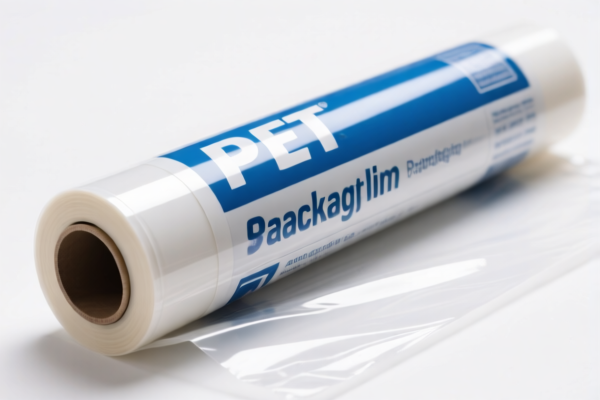


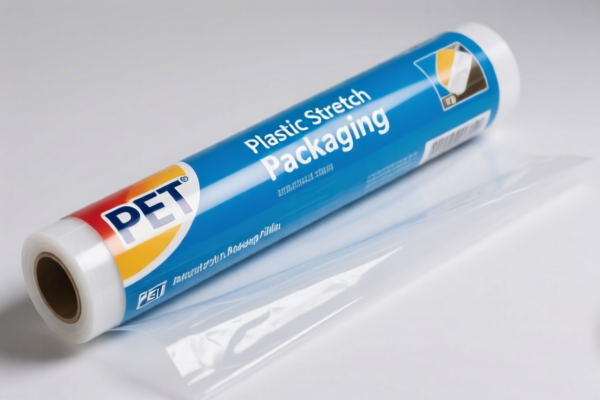
AI Analysis
📦 Stretch Plastic Film (柔性塑料拉伸材料)
🌐 HS Code Reference & Customs Clearance Guide | 2026 Latest Tariff Analysis | Professional Clearance Strategy
📌 I. Product Definition & Classification: Understanding "Stretch Plastic Film"
Stretch Plastic Film refers to flexible plastic materials characterized by their elasticity, transparency, and ability to stretch, commonly used for packaging, wrapping, and industrial protection. In international trade, the classification depends heavily on the specific material composition, physical form (film, foil, strip), and end-use (general vs. medical).
⚠️ Key Distinction Points:
- General Packaging/Industrial Use: Classified under Chapter 39 (Plastics and Articles Thereof).
- Medical Use: If specifically designed as a dressing or wound care material, it may fall under Chapter 30 (Pharmaceutical Products).
- Form Factor: Must distinguish between "films," "foils," "strips," and "sheets" as defined in HS codes.
📊 II. HS Code Classification Details (2026 Latest Tariff Authority Mapping)
| HS Code | Product Description | Application Scenario | Taxation Logic (China Origin → US) |
|---|---|---|---|
3920.99.10.00 |
Flexible Plastic Stretch Material, matching plastic material & film/foil/strip morphology | General packaging, industrial wrapping | Base 6% + 25% (Sec 301) + 10% (122) = 41.0% |
3920.99.20.00 |
Flexible Plastic Stretch Material, conforming to plastic material & flexible film/strip/sheet form | Alternative general wrapping materials | Base 4.2% + 25% (Sec 301) + 10% (122) = 39.2% |
3921.90.50.50 |
Plastic Film, conforming to "other" category of plastic plates, sheets, films, foils | General plastic films not elsewhere specified | Base 4.8% + 25% (Sec 301) + 10% (122) = 39.8% |
3005.90.50.90 |
Medical Plastic Film, matching medical use & plastic material as dressing component | Wound dressings, medical wraps | Base 0% + 0% (Sec 301) + 10% (122) = 10.0% |
3921.19.00.90 |
Plastic Film, conforming to definition of plastic plates, sheets, films, foils/strips, other category | Standard industrial plastic films | Base 6.5% + 25% (Sec 301) + 10% (122) = 41.5% |
🔍 Critical Note:
- The 122-Clause Tariff (10%) applies to most plastic films from China under current trade policies.
- Medical films enjoy significant tax benefits (0% base/Sec 301), but strict proof of medical use is required.
- Misclassification between "General Plastic" (Chapter 39) and "Medical Device" (Chapter 30) can lead to severe penalties or seizure.
💰 III. 2026 Latest Tariff Rate Details (Detailed Breakdown)
✅ Applicable Country: United States (US)
✅ Country of Origin: China (CN)
✅ Effective Date: Current trade policy applies (including Section 301 & Section 122 measures)
🎯 1. 3920.99.10.00 —— Flexible Plastic Stretch Material (High-End General Use)
| Item | Detail |
|---|---|
| Base Tariff | 6.0% (ad valorem) |
| Section 301 Tariff | +25.0% (Trade Enforcement) |
| Section 122 Tariff | +10.0% (Specific to plastic films/straps) |
| Total Tariff | 41.0% |
| Calculation | CIF Value × 41.0% |
| De Minimis Exemption | ❌ Not Applicable |
| Legal Basis Path | Section 301: 9903.01.25 → Section 122 → USITC: 3920.99.10.00 |
📌 Explanation:
- This code applies to high-quality flexible stretch films with specific morphological features.
- The total burden of 41% is extremely high. Importers must consider cost absorption or price adjustments.
🎯 2. 3920.99.20.00 —— Flexible Plastic Stretch Material (Alternative General Use)
| Item | Detail |
|---|---|
| Base Tariff | 4.2% |
| Section 301 Tariff | +25.0% |
| Section 122 Tariff | +10.0% |
| Total Tariff | 39.2% |
| Calculation | CIF Value × 39.2% |
| De Minimis Exemption | ❌ Not Applicable |
| Legal Basis Path | Section 301: 9903.01.25 → Section 122 → USITC: 3920.99.20.00 |
📌 Note:
- Slightly lower base tariff than3920.99.10.00, but still subject to the same hefty surcharges.
- Suitable for films that do not meet the stricter criteria of the 10.00 code but are still flexible plastic materials.
🎯 3. 3921.90.50.50 —— Other Plastic Film ("Other" Category)
| Item | Detail |
|---|---|
| Base Tariff | 4.8% |
| Section 301 Tariff | +25.0% |
| Section 122 Tariff | +10.0% |
| Total Tariff | 39.8% |
| Calculation | CIF Value × 39.8% |
| De Minimis Exemption | ❌ Not Applicable |
| Legal Basis Path | Section 301: 9903.01.25 → Section 122 → USITC: 3921.90.50.50 |
📌 Explanation:
- Used for plastic films that do not fit specific subcategories like coated or laminated films.
- Common for generic stretch wraps, shrink films, or protective liners.
🎯 4. 3005.90.50.90 —— Medical Plastic Film (Dressing Material) ⭐ LOWEST TAX OPTION
| Item | Detail |
|---|---|
| Base Tariff | 0.0% |
| Section 301 Tariff | 0.0% |
| Section 122 Tariff | +10.0% |
| Total Tariff | 10.0% |
| Calculation | CIF Value × 10.0% |
| De Minimis Exemption | ❌ Not Applicable |
| Legal Basis Path | Section 122 → USITC: 3005.90.50.90 |
📌 Critical Warning:
- Must provide Proof of Medical Use: FDA registration, CE Marking (if applicable), and explicit labeling as "Medical Dressing" or "Wound Care Material."
- Misusing this code for general plastic film will result in fraud penalties and retroactive tax assessments.
- The 10% Section 122 tariff still applies, but the 25% Section 301 is waived for certain medical supplies (verify current exclusions).
🎯 5. 3921.19.00.90 —— Other Plastic Film (Standard Industrial)
| Item | Detail |
|---|---|
| Base Tariff | 6.5% |
| Section 301 Tariff | +25.0% |
| Section 122 Tariff | +10.0% |
| Total Tariff | 41.5% |
| Calculation | CIF Value × 41.5% |
| De Minimis Exemption | ❌ Not Applicable |
| Legal Basis Path | Section 301: 9903.01.25 → Section 122 → USITC: 3921.19.00.90 |
📌 Explanation:
- This is the "catch-all" for plastic films under heading 3921.
- Highest total tariff at 41.5%.
- Avoid this code if a more specific code (like 3920.99 or 3921.90) applies.
🛠️ IV. Customs Clearance Practical Advice (Field Guide)
✅ 1. Documentation Checklist (Mandatory)
| Document | Required | Purpose |
|---|---|---|
| ✅ Product Specification Sheet | ✔️ | Details material composition (e.g., LDPE, LLDPE), thickness, stretch ratio |
| ✅ Usage Declaration | ✔️ | Explicitly state end-use (General Packaging vs. Medical Dressing) |
| ✅ Product Photos | ✔️ | Show roll form, labeling, and any medical certifications |
| ✅ Certificate of Origin (CO) | ✔️ | Confirm China origin to apply correct tariffs |
| ✅ Commercial Invoice | ✔️ | Accurate description matching HS Code (e.g., "Stretch Wrap Film") |
| ✅ FDA Documentation | ✔️ | If claiming 3005.90.50.90: Must provide FDA establishment registration and device listing |
✅ 2. Declaration Tips (Key Mnemonics)
🔥 “Material Matters, Use Defines Code, Tax Varies Wildly!”
| Scenario | Correct Declaration | Incorrect Action | Consequence |
|---|---|---|---|
| General Wrap | 3920.99.10.00 or 3921.90.50.50 |
Declaring as medical | ❌ 41% vs 10% (Penalty for fraud) |
| Medical Dressing | 3005.90.50.90 |
Declaring as general plastic | ✅ Save 31% tax (with proof) |
| Mixed Batch | Separate invoices | Bundling general & medical | ❌ Customs may deny medical rate |
| Vague Description | "Plastic Film" | "Plastic Stuff" | ❌ Delayed clearance, random inspection |
✅ 3. Special Cases Handling
| Scenario | Handling Strategy |
|---|---|
| OEM Custom Film | Provide client contract specifying end-use (e.g., "For Medical Device Packaging") |
| Transparent vs. Printed | Printed films may still qualify under 3921 if printing is secondary to function |
| Biodegradable Plastic | Verify if it still qualifies under Chapter 39; some bio-plastics have different rules |
| Medical Claim | Strong Evidence Needed: Labels must say "STERILE," "DRESSING," or "WOUND CARE." Generic "plastic wrap" fails. |
🌍 V. Global Market Clearance Comparison (2026 Latest)
| Country/Region | Recommended HS Code | Tariff (China Origin) | Certification | Notes |
|---|---|---|---|---|
| 🇺🇸 USA | 3920.99.10.00 (General) |
41.0% | None | High tariffs due to Sec 301 & 122 |
| 🇺🇸 USA | 3005.90.50.90 (Medical) |
10.0% | FDA + CE | Significant savings if eligible |
| 🇨🇳 China | 3920.99.10.00 |
6.0% | RoHS | No additional trade war tariffs |
| 🇪🇺 EU | 3920.99.10.00 |
0% - 4.5% | REACH + CE | No Section 301 equivalent |
| 🇦🇺 Australia | 3920.99.10.00 |
5% | TGA (if medical) | Lower overall burden |
📌 Conclusion:
- USA is the most challenging market due to combined Sec 301 (25%) and Sec 122 (10%) tariffs.
- Medical classification (3005.90.50.90) offers the only viable tax reduction strategy (10% total), but compliance is strict.
- Consider supply chain diversification (Vietnam/Malaysia) to avoid China-origin tariffs if volumes are large.
📌 VI. Common Errors & Pitfalls (Blood Lessons)
❌ Error 1: Labeling general stretch film as "Medical" to save tax
👉 Consequence: Customs audit reveals no FDA approval → Seizure + Fine + Loss of Import Privileges
❌ Error 2: Using vague description "Plastic Material" on invoice
👉 Consequence: Customs assigns highest duty rate or delays shipment for classification review
❌ Error 3: Ignoring Section 122 Tariff
👉 Consequence: Underpayment of 10% → Back taxes + Interest + Penalties
❌ Error 4: Mixing medical and general goods in one container without separate invoices
👉 Consequence: Customs may deny medical rate for the entire shipment if documentation is not segregated
✅ Correct Approach:
“Stretch Film, LDPE, 1.5 Mil, Clear, For General Packaging Use”
OR
“Sterile Wound Dressing Film, Medical Grade, FDA Registered, For Clinical Use”
🎯 VII. Conclusion: Professional Declaration, Cost Optimization!
🎯 Key Takeaways:
🔹 “General Film = 41% Tax”
🔹 “Medical Film = 10% Tax (With Proof)”
🔹 “Do Not Guess HS Code; Consult Expert!”
📌 Pro Tip:
If your product is exported to the US, consider:
1. Advance Ruling (Ruling Letter): Apply to CBP for a binding HS Code determination before shipment.
2. Supply Chain Shift: If volumes are high, explore production in Vietnam or Malaysia to avoid US-China tariffs.
3. Medical Certification: Invest in FDA/CE certification if you can pivot to medical applications.
📣 Immediate Action:
📞 Engage a licensed Customs Broker
📄 Prepare precise Product Specs & End-Use Statements
🚀 Clearance Smoothly, Minimize Costs, Maximize Profit!
✨ Professional Clearance Starts with Accurate Classification!
💼 Every Percent of Tax Saved is Pure Profit!
Customer Reviews
About HS Code Classification
The Harmonized System (HS) is an internationally standardized nomenclature developed by the World Customs Organization (WCO) to classify traded products. Over 200 countries use the HS system as the basis for customs tariffs, trade statistics, and import/export regulations.
Each HS code follows a hierarchical structure:
- Chapter (2 digits) — Broad category of goods (e.g., Chapter 84: Machinery and Mechanical Appliances)
- Heading (4 digits) — More specific grouping within the chapter
- Subheading (6 digits) — Internationally standardized breakdown, used by all WCO member countries
- National subdivisions (8-10 digits) — Country-specific extensions for further classification, such as US HTSUS 10-digit codes
Correct HS code classification is essential for smooth customs clearance, accurate duty payment, and compliance with trade regulations. Misclassification can lead to customs delays, overpayment of duties, or penalties.
When importing from CN to US, the applicable tariff rates may include:
- Most-Favored-Nation (MFN) rate — The standard duty rate applied to WTO members
- General rate — Applied to countries without trade agreements
- Trade remedy duties — Additional tariffs such as Section 301 (anti-dumping), Section 232 (national security), or countervailing duties
The information provided on this page is for reference purposes only. For official classification, please consult with your local customs authority or a licensed customs broker.