Stretching Band
CN → US| HS Code | Tariff Rate | Origin | Destination | Doc |
|---|---|---|---|---|
| 9503000090 | 10.0% | CN | US | Official Doc |
| 9506996080 | 21.5% | CN | US | Official Doc |
| 9506910030 | 22.1% | CN | US | Official Doc |
Product Images
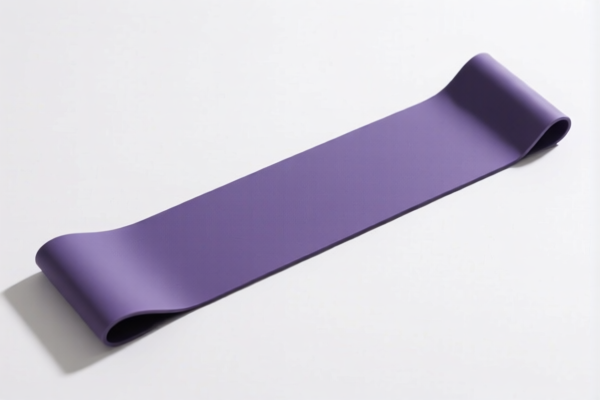
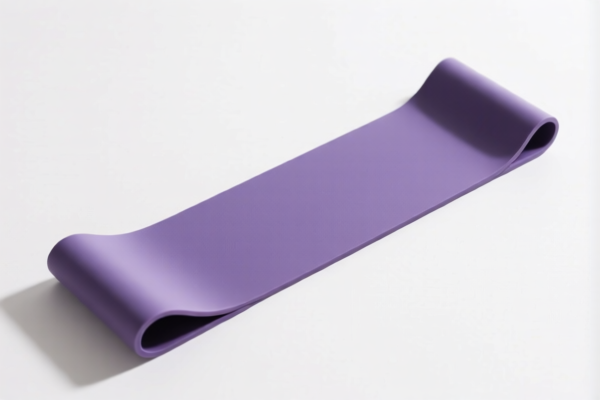
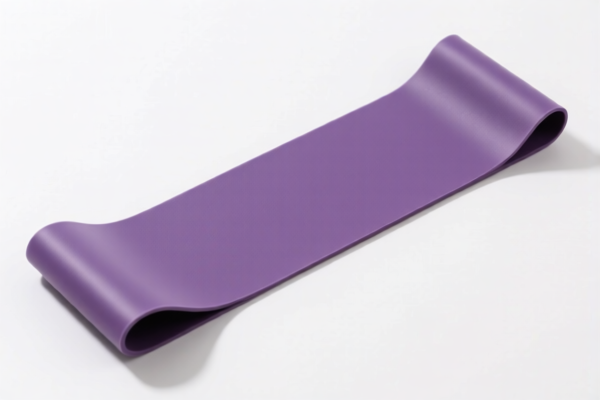
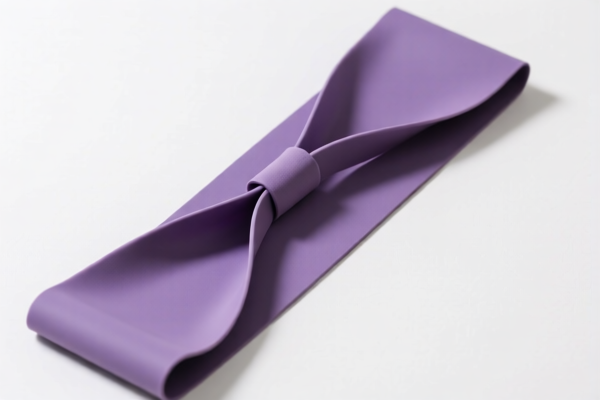
AI Analysis
🏋️♂️ Stretching Band (Resistance Band)
🌐 HS Code Reference & Customs Clearance Guide | 2026 Latest Tariff Analysis | Professional Strategy for US Imports
📌 I. Product Definition & Classification: Do You Really Understand "Stretching Bands"?
Stretching bands (commonly known as resistance bands) are elastic fitness tools used for strength training, physical therapy, and rehabilitation. In international trade, their classification varies significantly based on material composition and specific use case, leading to drastically different tariff outcomes.
⚠️ Key Distinction Point:
- If the band is made of non-metallic materials (latex, rubber, fabric) and categorized strictly as a toy or general fitness aid → It falls under 9503.00.00.90.
- If the band is considered a professional sports apparatus (often involving mixed materials like steel loops or heavy-duty rubber components), it falls under 9506 series codes (9506.99.60.80 or 9506.91.00.30).
📦 II. HS Code Classification Details (2026 Latest Tariff Authority)
| HS Code | Product Description | Applicable Scenario | Material/Type |
|---|---|---|---|
9503.00.00.90 |
Other toys; reduced-size ("scale") models; recreational models; puzzles | Classified as sports toys or general fitness aids. | Non-metallic focus (latex/rubber). |
9506.99.60.80 |
Other equipment for general physical exercise | Classified as sports apparatus. | May include metal components (steel/aluminum loops). |
9506.91.00.30 |
Equipment for table tennis? No, "Other Sports Goods" | Classified as general sports fitness equipment. | Often involves steel/aluminum/copper components. |
🔍 Critical Reminder:
- 9503.00.00.90 is the "low-risk, low-tax" option if the product is purely elastic (latex/rubber) and marketed as a toy or basic fitness accessory.
- 9506.99.60.80 and 9506.91.00.30 carry higher tariffs due to potential metal components (steel/aluminum/copper) and their classification as formal sports equipment.
💰 III. 2026 Latest Tariff Rate Breakdown (Including Surcharges & Policy Add-ons)
✅ Applicable Country: United States (US)
✅ Origin: China (CN)
✅ Effective Date: Current rates apply (Subject to 2025-2026 policy updates)
🎯 1. 9503.00.00.90 —— Stretching Band as Sports Toy/Fitness Aid
| Item | Content |
|---|---|
| Base Tariff | 0.0% |
| Section 301 Surcharge | 0.0% |
| Section 122 Surcharge | 10.0% |
| Steel/Aluminum/Copper Surcharge | Not Applicable |
| Total Tariff Rate | 10.0% |
| Tax Calculation | CIF Value × 10% |
| De Minimis Eligibility | ❌ No (Subject to strict scrutiny) |
| Legal Basis Path | HS:9503.00.00.90 → Section 122: 10% |
📌 Explanation:
- This is the most cost-effective classification if the band is purely elastic (latex/fabric).
- The 10% Section 122 tariff is the only additional levy.
- No steel/aluminum surcharge applies because this code assumes no significant metal content.
🎯 2. 9506.99.60.80 —— Stretching Band as Sports Apparatus
| Item | Content |
|---|---|
| Base Tariff | 4.0% |
| Section 301 Surcharge | 7.5% |
| Section 122 Surcharge | 10.0% |
| Steel/Aluminum/Copper Surcharge | 50.0% (If applicable) |
| Total Tariff Rate | 21.5% (Without metal) / 71.5% (With metal components) |
| Tax Calculation | CIF Value × 21.5% (or 71.5%) |
| De Minimis Eligibility | ❌ No |
| Legal Basis Path | HS:9506.99.60.80 → Section 301: 7.5% → Section 122: 10% → Steel/Alloy: 50% |
📌 Note:
- The 21.5% base rate applies if there are no steel/aluminum/copper components.
- If the band has metal clips, handles, or anchors, the 50% steel/aluminum surcharge is triggered, pushing the total to ~71.5%.
- This classification is riskier and more expensive.
🎯 3. 9506.91.00.30 —— Stretching Band as General Sports Goods
| Item | Content |
|---|---|
| Base Tariff | 4.6% |
| Section 301 Surcharge | 7.5% |
| Section 122 Surcharge | 10.0% |
| Steel/Aluminum/Copper Surcharge | 50.0% (If applicable) |
| Total Tariff Rate | 22.1% (Without metal) / 72.1% (With metal components) |
| Tax Calculation | CIF Value × 22.1% (or 72.1%) |
| De Minimis Eligibility | ❌ No |
| Legal Basis Path | HS:9506.91.00.30 → Section 301: 7.5% → Section 122: 10% → Steel/Alloy: 50% |
📌 Note:
- Similar to 9506.99.60.80, this code carries a 4.6% base tariff.
- The 50% metal surcharge is the critical risk factor. If your stretching bands have steel loops or metal D-rings, this code will attract the highest possible tax.
🛠️ IV. Customs Clearance Practical Advice (Real-World Pitfall Guide)
✅ 1. Documentation Checklist (Must-Have)
| Document | Required | Description |
|---|---|---|
| ✅ Product Specifications | ✔️ | Material composition (e.g., "100% Natural Latex," "TPE Fabric," "No Metal Components"). |
| ✅ Product Photos | ✔️ | Clear images showing no metal parts (for 9503.00.00.90) or metal parts (for 9506 codes). |
| ✅ Material Composition Statement | ✔️ | Explicitly state if steel/aluminum/copper is present. |
| ✅ Commercial Invoice | ✔️ | Description must match HS Code (e.g., "Latex Resistance Band" vs. "Steel-Loop Exercise Band"). |
| ✅ Packing List | ✔️ | Ensure no mixed shipments of metal and non-metal bands. |
✅ 2. Declaration Strategy (Key Mnemonic)
🔥 "No Metal = 9503 (10%); With Metal = 9506 (22%-72%)"
| Scenario | Correct HS Code | Tax Rate | Risk Level |
|---|---|---|---|
| Pure Latex/Rubber Band (No metal clips) | 9503.00.00.90 |
10.0% | ✅ Low |
| Fabric Band with Plastic Handles | 9503.00.00.90 |
10.0% | ✅ Low |
| Band with Steel Loops/Clips | 9506.99.60.80 |
71.5% | ❌ High |
| Band with Aluminum Handles | 9506.91.00.30 |
72.1% | ❌ High |
📌 Important:
- Misclassification Risk: If you declare a steel-loop band as9503.00.00.90, customs may audit and reclassify it to9506, leading to back taxes + penalties.
- Cost Optimization: If possible, design bands without metal components to qualify for the 10% tariff under9503.00.00.90.
✅ 3. Special Cases Handling
| Situation | Advice |
|---|---|
| OEM Custom Bands | Provide material specs to prove absence of steel/aluminum. |
| Mixed Materials | If only handles are metal, but band is latex, still risky. Best to declare as 9506 if metal content is significant. |
| Rehabilitation Devices | If marketed as medical devices, additional regulations may apply (FDA), but tariff classification remains based on material/use. |
| Set Bundles | If a set includes metal anchors, the entire set may be classified under the higher 9506 code. |
🌍 V. Global Market Comparison (2026 Latest)
| Country/Region | Recommended HS Code | Tariff (China Origin) | Certification | Notes |
|---|---|---|---|---|
| 🇺🇸 USA | 9503.00.00.90 |
10.0% | None | Lowest tax option. Avoid metal components. |
| 🇨🇳 China | 9503.00.00.90 |
5-10% | CCC (if applicable) | No surcharges. |
| 🇪🇺 EU | 9506.91.00.30 |
0-4.5% | CE | No Section 122/301. |
| 🇬🇧 UK | 9506.99.60.80 |
0-4.5% | UKCA | Post-Brexit rules apply. |
| 🇯🇵 Japan | 9503.00.00.90 |
0-6% | PSE | No surcharges. |
📌 Conclusion:
- USA is the only market with significant surcharges (Section 122 + 301 + Steel).
- China-origin products face the highest costs in the US.
- Strategy: Design bands without metal to utilize9503.00.00.90and reduce tariff from 22%-72% to 10%.
📌 VI. Common Errors & Pitfall Guide (Lessons from Experience)
❌ Error 1: Declaring a steel-loop band as 9503.00.00.90
👉 Consequence: Customs audit, reclassification to 9506, back taxes + penalties (Potential 70%+ rate).
❌ Error 2: Ignoring metal components in handles/clips
👉 Consequence: Triggering the 50% steel/aluminum surcharge, increasing total tax to 71.5%+.
❌ Error 3: Vague product description ("Fitness Band")
👉 Consequence: Customs may choose the worst-case classification (9506) for higher revenue.
✅ Correct Practice:
"Latex Resistance Band, 100% Natural Latex, No Metal Components, For Home Fitness Use, Model XYZ"
🎯 VII. Conclusion: Smart Classification, Lower Costs, Faster Clearance!
🎯 Remember the Mnemonic:
🔹 "No Metal = 9503 (10%); With Metal = 9506 (22%-72%)"
🔹 "HS Code determines your tax burden; a small change in design saves thousands!"
📌 Pro Tip:
- If your product contains steel/aluminum/copper, budget for 22%-72% tariffs.
- If you want to minimize costs, redesign the product to eliminate metal components and qualify for 9503.00.00.90 (10%).
- Apply for an Advance Ruling with US Customs (CBP) to confirm classification before shipment.
📣 Action Now:
📞 Consult a Customs Broker + Provide Product Specs + Design for 9503 Eligibility
🚀 Clear Customs Smoothly, Reduce Costs, Maximize Profit!
✨ Professional Clearance Starts with Precise Classification!
💼 Every Dollar Saved in Tariffs is Pure Profit!
Customer Reviews
About HS Code Classification
The Harmonized System (HS) is an internationally standardized nomenclature developed by the World Customs Organization (WCO) to classify traded products. Over 200 countries use the HS system as the basis for customs tariffs, trade statistics, and import/export regulations.
Each HS code follows a hierarchical structure:
- Chapter (2 digits) — Broad category of goods (e.g., Chapter 84: Machinery and Mechanical Appliances)
- Heading (4 digits) — More specific grouping within the chapter
- Subheading (6 digits) — Internationally standardized breakdown, used by all WCO member countries
- National subdivisions (8-10 digits) — Country-specific extensions for further classification, such as US HTSUS 10-digit codes
Correct HS code classification is essential for smooth customs clearance, accurate duty payment, and compliance with trade regulations. Misclassification can lead to customs delays, overpayment of duties, or penalties.
When importing from CN to US, the applicable tariff rates may include:
- Most-Favored-Nation (MFN) rate — The standard duty rate applied to WTO members
- General rate — Applied to countries without trade agreements
- Trade remedy duties — Additional tariffs such as Section 301 (anti-dumping), Section 232 (national security), or countervailing duties
The information provided on this page is for reference purposes only. For official classification, please consult with your local customs authority or a licensed customs broker.