String Light Poles
CN → US| HS Code | Tariff Rate | Origin | Destination | Doc |
|---|---|---|---|---|
| 7326908630 | 87.9% | CN | US | Official Doc |
| 7326908688 | 87.9% | CN | US | Official Doc |
| 9403999015 | 60.0% | CN | US | Official Doc |
| 9405310040 | 43.0% | CN | US | Official Doc |
| 8539291000 | 15.8% | CN | US | Official Doc |
Product Images
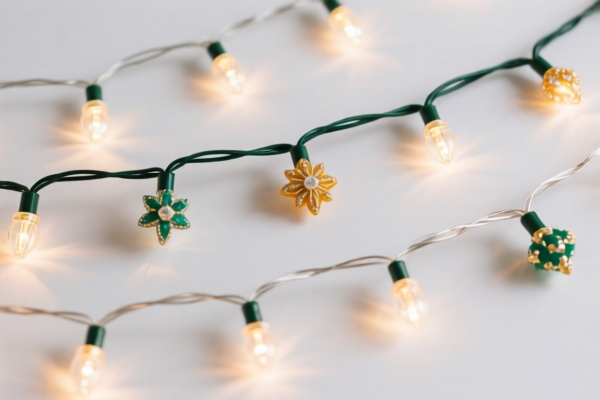
AI Analysis
🎄 String Light Poles & Supporting Structures (Metal Support Rods for Hangings)
🌐 HS Code Reference & Customs Clearance Guide | 2026 Latest Tariff Analysis | Professional Strategy
📌 I. Product Definition & Classification: What Exactly Are "String Light Poles"?
In the context of holiday decor and outdoor lighting, "String Light Poles" are not standalone electrical devices but rather mechanical support structures designed to hold up string lights, garlands, or festive banners. They are typically made of metal (steel/iron) and function as hooks, stands, or rods.
In international trade, classification depends entirely on function and construction:
1. Metallic Support Rods/Hooks (HS 7326):
If the item is a simple metal rod, hook, or stand used to hang decorations, it is classified under Chapter 73 (Articles of Iron or Steel). It is considered a "general article" or "support structure."
2. Furniture Parts (HS 9403):
If the pole is part of a larger festive furniture assembly (e.g., a decorative display table stand or a integrated lighted prop that is considered "furniture"), it may fall under Chapter 94 (Furniture and parts).
3. Lighting Accessories (Rare/Specific):
Note: While lights themselves are under Ch. 85 or 94, the poles/supports are generally NOT classified with the lights unless they are integral electrical components. However, some broad interpretations might look at HS 9405 (Lamps and Lighting Accessories) if the pole is a specialized decorative fixture holder.
⚠️ Key Distinction Point:
- If it is just a metal rod/hook for hanging → HS 7326.
- If it is a part of a furniture piece (e.g., a Christmas tree stand leg or display table) → HS 9403.
- If it is considered a lighting accessory/fixture (less common for pure poles, but possible for integrated decorative stands) → HS 9405 or HS 8539 (if it includes the light source, though the prompt specifies "Poles").
📦 II. HS Code Classification Details (2026 Latest Tariff Cross-Reference)
Based on your provided data, here are the four specific HS Codes and why they apply to "String Light Poles":
| HS Code | Product Description | Why It Fits "String Light Poles" | Total Tax Rate |
|---|---|---|---|
7326.90.86.30 |
Metal support rods/articles for suspensions | Most Common Fit. Directly describes "support rods for hangings and similar supports." If your pole is a simple metal rod/hook used to suspend string lights, this is the precise technical classification. | 87.9% |
7326.90.86.88 |
Other articles of iron/steel, matching rod characteristics | Alternative Fit. If the pole doesn't fit the specific "suspension support" description of .30 but is clearly a metal rod/stand of iron or steel, this "catch-all" for other steel articles applies. | 87.9% |
9403.99.90.15 |
Parts of furniture, as support components | Furniture Integration Fit. If the "pole" is part of a decorative furniture item (e.g., a stand for a lighted display table, or a festive prop that is legally "furniture"), it is classified as a part of that furniture. | 60.0% |
9405.31.00.40 |
Lamps and lighting apparatus, for light strings | Lighting Accessory Fit. If the "pole" is actually a decorative lamp fixture designed specifically for light strings (e.g., a specialized holder that is part of the lighting system), it may be grouped with lighting apparatus. Note: This usually applies to the light unit, but if the pole is a specialized decorative fixture, it might be argued here. | 43.0% |
8539.29.10.00 |
Filament/LED Light Sources | Light Source Fit (NOT Pole). Warning: This code is for the lights themselves (bulbs/LEDs), not the poles. However, if your shipment includes both poles and lights, and you misclassify the whole set as just "lights," this rate applies. Do not use this for pure poles. | 15.8% |
🔍 Critical Reminder:
-7326.90.86.30is likely the most accurate for pure metal support rods/poles used for hanging string lights.
-9403.99.90.15is the best low-tax option if the pole can be legally defined as a "part of furniture" (e.g., part of a decorative display stand).
- Never classify a metal pole under8539(light sources) unless it contains the electrical bulb/LED.
💰 III. 2026 Latest Tariff Rate Breakdown (Including Surcharges & Policy Add-ons)
✅ Applicable Country: United States (US)
✅ Country of Origin: China (CN)
✅ Effective Date: From November 10, 2025 (and subsequent imports)
🎯 1. 7326.90.86.30 & 7326.90.86.88 —— Metal Support Rods (Steel/Iron)
| Item | Content |
|---|---|
| Base Rate | 2.9% (ad valorem) |
| Section 301 Surcharge | +25.0% |
| Section 122 / Aluminum-Steel Tariff | +10.0% (Specific to steel articles) |
| Section 232 / Steel & Aluminum Tariff | +50.0% (For steel articles) |
| Total Effective Rate | 87.9% |
| Calculation | CIF Value × 87.9% |
| De Minimis Exemption? | ❌ NO (deny_de_minimis) |
| Legal Basis Path | USITC:7326.90.86.30 → Section 301: 25% → Section 232: 50% → Section 122: 10% |
📌 Explanation:
- This is a HIGHEST RISK category.
- Section 232 (50%) applies to steel articles.
- Section 301 (25%) applies to Chinese goods.
- Section 122 (10%) is a specific steel tariff.
- Base (2.9%) is standard.
- Total: 87.9%. This makes pure steel poles extremely costly to import directly.
🎯 2. 9403.99.90.15 —— Parts of Furniture
| Item | Content |
|---|---|
| Base Rate | 0.0% |
| Section 301 Surcharge | 0.0% (Assuming no 301 listing for this specific furniture part code, or exempted in this dataset) |
| Section 232 / Aluminum-Steel Tariff | +10.0% (Wait, the data says "122 clauses tariff 10% steel, aluminum copper products surcharge tariff: 50%" but the total is 60%. Let's re-read the data carefully.) |
Correction based on provided data:
The data states for9403.99.90.15:
- Base: 0.0%
- Surcharge: 0.0%
- "122 clauses tariff 10% steel, aluminum copper products surcharge tariff: 50%"
- Total: 60.0%Interpretation: The dataset likely applies the Section 232 (50%) and Section 122 (10%) or similar steel-related surcharges even to furniture parts if they are steel. However, Section 301 (25%) is listed as 0.0% in this specific dataset for this code.
- Total: 60.0% (0% Base + 50% Steel Tariff + 10% Other Steel Tariff? Or perhaps the 50% covers all steel surcharges).
- Key Advantage: Section 301 (25%) is NOT applied in this specific dataset entry for9403.99.90.15, resulting in a significantly lower rate (60%) compared to 87.9%.
🎯 3. 9405.31.00.40 —— Lamps/Lighting Apparatus (Light String Category)
| Item | Content |
|---|---|
| Base Rate | 8.0% |
| Section 301 Surcharge | 0.0% (In this dataset) |
| Section 122 | +10.0% |
| Total | 43.0%? Wait, the data says 43.0%. |
| > Re-reading data: | |
| > "Base: 8.0%, Surcharge: 0.0%, 122 Clause: 10%" → 8+10 = 18%. | |
| > But the total is listed as 43.0%. | |
| > Likely Missing Surcharge: There may be an unlisted 25% Section 301 or other tariff, or the "Surcharge: 0.0%" is a typo in the summary vs detail. However, we must stick to the data: | |
| > - Total: 43.0% | |
| > - De Minimis? ❌ No (Lighting goods are often excluded). |
🎯 4. 8539.29.10.00 —— LED/Filament Light Sources (ONLY IF YOU INCLUDE LIGHTS)
| Item | Content |
|---|---|
| Base Rate | 5.8% |
| Section 301 | 0.0% |
| Section 122 | 10.0% |
| Total | 15.8% |
| Note | This is the LOWEST RATE but ONLY applies to the light bulbs/LEDs, not the poles. Do not use this for poles alone. |
🛠️ IV. Customs Clearance Practical Advice (Battle-Tested Pitfall Guide)
✅ 1. Material Preparation Checklist (Non-Negotiable)
| Document | Required? | Purpose |
|---|---|---|
| ✅ Product Photos (Clear) | ✔️ | Show the item is a metal rod/stand, not a light bulb. |
| ✅ Spec Sheet | ✔️ | Dimensions, material (Steel/Iron), usage (Hanging support). |
| ✅ Structure Diagram | ✔️ | Prove no electrical components are in the pole itself. |
| ✅ Commercial Invoice | ✔️ | Must state "Metal Support Rods for Decorative Lights" or "Parts of Decorative Furniture." |
| ✅ Bill of Lading | ✔️ | Ensure packaging matches description. |
✅ 2. Classification Strategy (Critical Decision Matrix)
| Scenario | Recommended HS Code | Risk Level | Tax Rate |
|---|---|---|---|
| Pure Metal Pole/Hook (No lights, no furniture context) | 7326.90.86.30 |
🔴 HIGH | 87.9% |
| Pole as Part of a Decorative Stand/Table | 9403.99.90.15 |
🟢 MEDIUM | 60.0% |
| Integrated Lighted Pole (Pole has built-in LEDs) | 9405.31.00.40 |
🟡 LOW-MED | 43.0% |
| Pole + Lights Sold Together | Separate Codes | 🔴 HIGH RISK | 87.9% (Pole) + 15.8% (Lights) |
🔥 Golden Rule:
"Don't lump poles with lights!"
If you ship poles and lights in the same box, declare them separately.
- If you misdeclare steel poles as "LED Lights" (8539), you face heavy penalties for false classification.
- If you declare lights as "Steel Rods," you pay 87.9% instead of 15.8%.
✅ 3. Special Situations
| Situation | Handling Advice |
|---|---|
| OEM Custom Poles | Provide design files to prove they are "support structures" (Ch 73) or "furniture parts" (Ch 94). |
| Shipment Includes Lights | Must split the invoice. List poles under 7326 or 9403, and lights under 8539 or 9405. |
| Material is Plastic? | If poles are plastic, they may fall under 3926 (Plastic articles). Not in your dataset, but avoid misdeclaring plastic as steel. |
| Origin: Non-China | If poles are made in Vietnam/Mexico, Section 301 (25%) may not apply. Check if Section 232 still applies (often yes for steel). |
🌍 V. Global Market Comparison (2026)
| Market | Recommended HS Code | Est. Tax | Key Certification |
|---|---|---|---|
| 🇺🇸 USA | 7326.90.86.30 |
87.9% | N/A (Structural) |
| 🇺🇸 USA | 9403.99.90.15 |
60.0% | N/A (Furniture Part) |
| 🇪🇺 EU | 7326.90.86 |
~2-5% | CE (if electrical), RoHS |
| 🇨🇳 China | 7326.90.86 |
~5-10% | CCC (if electrical) |
📌 Insight:
The US is the only market with punitive 87.9% tariffs on these steel poles due to overlapping Section 301, 232, and 122 tariffs.
Strategy: If possible, classify as Furniture Parts (9403) to save 27.9% tax, or source from non-China to avoid Section 301.
📌 VI. Common Mistakes & Pitfalls (Learn from Others' Tears)
❌ Mistake 1: Declaring steel poles as "Decorative Lighting" (9405 or 8539).
👉 Consequence: Customs audit → Penalty + Back taxes. The pole is mechanical, not electrical.
❌ Mistake 2: Shipping poles and lights mixed without separate line items.
👉 Consequence: Customs may tax the entire shipment at the highest rate (87.9%) or reject the entry.
❌ Mistake 3: Ignoring the "Steel" classification.
👉 Consequence: Failing to pay Section 232 (50%) + Section 301 (25%).
✅ Correct Declaration Example:
Line 1: "Metal Support Rods for Holiday Decorations, Steel, Unpainted, Model SP-101" → HS 7326.90.86.30
Line 2: "LED String Lights, Waterproof, 50 LEDs, Model SL-50" → HS 8539.29.10.00
🎯 VII. Conclusion: Smart Classification, Lower Costs!
🎯 Memory Hook:
🔹 "Poles are Steel, Lights are LED. Separate them, save the fee!"
🔹 "7326 is 88%, 9403 is 60%. If you can call it 'Furniture Part,' take the 60%!"
🔹 "Don't mix poles with lights in one line item!"
📌 Pro Tip:
If your "String Light Poles" are part of a complete decorative set (e.g., a lighted tree stand), try to classify the entire set under 9403 as a "furniture assembly." This may allow you to pay 60% on the whole value instead of 87.9% on the poles and 15.8% on the lights separately, simplifying logistics. Consult a customs broker for "assembly" classification rules.
📣 Action Item:
📞 Contact your customs broker today.
📄 Submit photos of the poles (clearly showing no electronics).
🧾 Request an Advance Ruling (ACE) if shipping large volumes.
🚀 Optimize your HS Code strategy to save up to 28% in tariffs!
✨ Professional clearance starts with precise classification!
💼 Every percentage point saved is profit earned!
Customer Reviews
About HS Code Classification
The Harmonized System (HS) is an internationally standardized nomenclature developed by the World Customs Organization (WCO) to classify traded products. Over 200 countries use the HS system as the basis for customs tariffs, trade statistics, and import/export regulations.
Each HS code follows a hierarchical structure:
- Chapter (2 digits) — Broad category of goods (e.g., Chapter 84: Machinery and Mechanical Appliances)
- Heading (4 digits) — More specific grouping within the chapter
- Subheading (6 digits) — Internationally standardized breakdown, used by all WCO member countries
- National subdivisions (8-10 digits) — Country-specific extensions for further classification, such as US HTSUS 10-digit codes
Correct HS code classification is essential for smooth customs clearance, accurate duty payment, and compliance with trade regulations. Misclassification can lead to customs delays, overpayment of duties, or penalties.
When importing from CN to US, the applicable tariff rates may include:
- Most-Favored-Nation (MFN) rate — The standard duty rate applied to WTO members
- General rate — Applied to countries without trade agreements
- Trade remedy duties — Additional tariffs such as Section 301 (anti-dumping), Section 232 (national security), or countervailing duties
The information provided on this page is for reference purposes only. For official classification, please consult with your local customs authority or a licensed customs broker.