String Lights
CN → US| HS Code | Tariff Rate | Origin | Destination | Doc |
|---|---|---|---|---|
| 9505104020 | 10.0% | CN | US | Official Doc |
| 9505105020 | 10.0% | CN | US | Official Doc |
| 8544429090 | 87.6% | CN | US | Official Doc |
| 8544493080 | 40.3% | CN | US | Official Doc |
| 9405390040 | 43.0% | CN | US | Official Doc |
| 9405310040 | 43.0% | CN | US | Official Doc |
Product Images

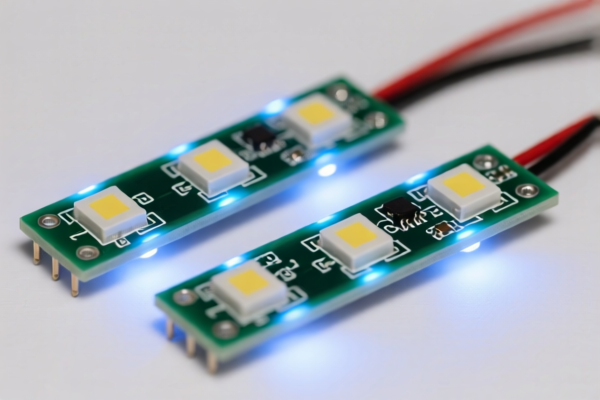


AI Analysis
🎄 String Lights: The Ultimate Holiday & Event Illumination Guide
🌐 HS Code Classification & US Customs Clearance Guide | 2026 Tax Analysis | Strategic Shipping Strategy
📌 I. Product Definition & Classification: Are You Sure You Know "String Lights"?
String Lights, the heart of festive ambiance, transform spaces from Christmas trees to weddings, and from corporate events to rooftop parties. In international trade, they face a critical bifurcation based on their primary function and physical construction:
- Category A: Festive Decorations (
9505.xxxx): Items primarily sold as Christmas or holiday ornaments. Even if they emit light, if the purpose is purely decorative celebration, they fall here. - Category B: Electrical Conductors (
8544.xxxx): Items classified as wiring assemblies with connectors, often treated as electrical components rather than finished decorative goods. - Category C: Lighting Fixtures (
9405.xxxx): Items viewed as permanent or semi-permanent lamps (e.g., LED strips, architectural lighting) with a standard electrical function.
⚠️ Critical Distinction Point:
- If the product is sold as a "Christmas Decoration" or "Party Supply" →归入 9505 (Low Tax).
- If the product is sold as a "Wiring Harness" or "Electrical Cable Assembly" →归入 8544 (High Tax due to 122 & 301 clauses).
- If the product is a "Light Fixture" (Lamp/Chandelier style) →归入 9405 (Moderate-High Tax).
📦 II. HS Code Classification Details (2026 Official Tariff Reference)
Based on the provided product analysis, here is the authoritative breakdown for String Lights:
| HS Code | Product Description | Classification Logic | Tax Rate (China -> US) |
|---|---|---|---|
9505.10.40.20 |
Christmas & Festival Decorations (Plastic-based Electric Strings) | Usage Match: Explicitly for holiday celebrations. Material: Plastic housing + wire. |
10.0% |
9505.10.50.20 |
Festive Decorations (General Holiday Strings) | Usage Match: General holiday/celebration use. Material: Plastic/Metal/LED mix (Standard). |
10.0% |
8544.42.90.90 |
Electric Conductors (Voltage ≤ 1000V, with connectors) | Core Attribute: Insulated electric conductors with connectors. Risk: High risk of being classified as "wiring" not "decoration". |
87.6% ⚠️ |
8544.49.30.80 |
Other Electric Conductors (Copper-based Wiring) | Inference: Core function is conduction. Classified under "Other" if voltage unclear. | 40.3% ⚠️ |
9405.39.00.40 |
Other Lighting Fixtures (General Lamps) | Usage: Lighting device. Material: Assumed Electrical/Plastic (Fallback "Other"). |
43.0% |
9405.31.00.40 |
Lighting Fixtures (LED Light Sources) | Usage: Lamps/Lighting devices. Inference: LED source assumed via "Other" fallback rules. |
43.0% |
🔍 Key Insight:
- The "10% Trap" vs. "87% Trap": The difference between classifying as a Holiday Decoration (9505) and an Electrical Wire (8544) is massive (77.6% tax difference!). - The 122 Clause: Notice that8544codes trigger additional 50% tariffs on steel, aluminum, and copper products, pushing the total to 87.6%. - The "Other" Loophole:9405codes often use "Other" logic, leading to a 25% Section 301 tariff + 10% IEEPA tax, totaling 43%.
💰 III. 2026 Detailed Tariff & Tax Analysis (China to US)
✅ Destination: United States (US)
✅ Origin: China (CN)
✅ Effective Date: Current & Projected 2026 (Including Section 301 & 122 Clauses)
🎯 1. The "Golden Route": Holiday Decorations (9505.10.40.20 / 9505.10.50.20)
| Item | Detail |
|---|---|
| Base Duty | 0.0% (Free for most holiday goods) |
| Section 301 (USITC) | 0.0% (Usually exempt for finished festive goods) |
| Section 122 / IEEPA | 10.0% (Specific "122 Clause" tax applies) |
| Total Duty Rate | 10.0% |
| Tax Calculation | CIF Value × 10% |
| Minimus Exemption | ❌ No (De minimis rules do not apply to this high-value category if shipped via bulk) |
| Legal Path | HTSUS:9505.10 → Subheading: .40/.50 → Section 122 Clause |
📌 Why it's the Best Option:
- This classification treats the lights as cultural/seasonal items, not industrial components. - Lowest Cost: You pay only the 10% IEEPA surcharge. No heavy 301 Section tariffs.
🎯 2. The "Electrical Wire" Route: Electric Conductors (8544.42.90.90)
| Item | Detail |
|---|---|
| Base Duty | 2.6% |
| Section 301 (USITC) | 25.0% |
| Section 122 / IEEPA | 10.0% |
| 122 Clause (Steel/Al/Cu) | +50.0% (Critical for copper wires!) |
| Total Duty Rate | 87.6% ⚠️ |
| Tax Calculation | CIF Value × 87.6% |
| Minimus Exemption | ❌ No |
| Legal Path | HTSUS:8544.42 → Section 301 → 122 Clause (Copper) |
📌 Why to Avoid:
- Customs officers often view "String Lights" as wiring assemblies if the packaging is generic or lacks holiday branding. - Copper Content: If the wires contain copper (which they do), the 50% steel/aluminum/copper surcharge kicks in, making this route financially disastrous.
🎯 3. The "Lighting Fixture" Route: Lamps & Fixtures (9405.31.00.40 / 9405.39.00.40)
| Item | Detail |
|---|---|
| Base Duty | 8.0% |
| Section 301 (USITC) | 25.0% |
| Section 122 / IEEPA | 10.0% |
| Total Duty Rate | 43.0% |
| Tax Calculation | CIF Value × 43.0% |
| Minimus Exemption | ❌ No |
| Legal Path | HTSUS:9405.31 / .39 → Section 301 → IEEPA |
📌 Why it's Risky:
- If the lights are sold as "LED Strip Lights" for home decor rather than "Christmas Ornaments," they may fall here. - Cost Impact: Nearly 4x the cost of the9505classification.
🛠️ IV. Customs Clearance Strategy & Action Plan
✅ 1. Preparation Checklist (Do Not Ship Without These)
| Document | Status | Critical Reason |
|---|---|---|
| Product Photos | ✔️ Must Have | Must clearly show festive branding (Santa, Christmas trees, "Happy Holiday") to prove 9505 intent. |
| Packaging Box | ✔️ Must Have | Avoid plain brown boxes. Use branded boxes with holiday imagery to prevent "generic wiring" classification. |
| Description Sheet | ✔️ Must Have | Explicitly state: "Christmas Decoration," "Holiday Ornament," "Festive Light." DO NOT use "Electrical Wire" or "Conductor." |
| Material Specs | ✔️ Must Have | Highlight Plastic casing. Avoid emphasizing "Copper wire" as the primary material in the description. |
| Commercial Invoice | ✔️ Must Have | Description must match the HS Code intent (e.g., "Christmas Tree Light Set"). |
✅ 2. Declaration "Golden Rules"
🔥 The Motto: "Sell the Holiday, Not the Wire!"
| Scenario | Correct Declaration (9505) |
Wrong Declaration (8544 or 9405) |
|---|---|---|
| Product Name | "Christmas String Lights" | "LED Wire Assembly" or "Electrical Cable" |
| Function | "For Holiday Decoration" | "For Lighting Circuit" or "Power Transmission" |
| Material Focus | "Plastic Housing" | "Copper Core" |
| Tax Outcome | 10% | 43% - 87.6% |
| Customs Risk | Low | High (Audit/Seizure) |
✅ 3. Special Case Handling
| Scenario | Strategy |
|---|---|
| Bulk Unbranded Lights | Risk: High chance of 8544 classification. Fix: Add a temporary holiday label or packaging insert before shipping. |
| LED Strip Lights (DIY) | If sold as "Adhesive Strip" for home use, it falls under 9405 (43%). If sold as "Christmas Tree Light," use 9505 (10%). |
| Copper Content | If the wire is heavily copper, Customs may flag 8544.42.90.90 (87.6%). Solution: Emphasize "Plastic" and "Decorative" in the commercial invoice. |
| OEM/Private Label | Ensure the label does not look like an industrial component. Use festive imagery. |
🌍 V. Market Comparison (2026 US vs. Others)
| Destination | Recommended HS Code | Estimated Duty | Key Requirement |
|---|---|---|---|
| 🇺🇸 USA | 9505.10.40.20 (Best) | 10% | Festive packaging is mandatory. |
| 🇪🇺 Europe | 9505.10.00 | ~2.6% (VAT excluded) | CE Marking + RoHS. |
| 🇨🇳 China | 9505.10.00 | ~5% (Export Duty) | CCC Certification (if applicable). |
| 🇯🇵 Japan | 9505.10.00 | ~8% (Import Tax) | PSE Marking required. |
📌 Conclusion: The US market is the most punitive regarding misclassification. A 10% rate can jump to 87.6% with a single word change in the HS Code.
📌 VI. Common Mistakes & Pitfalls (Learn from Them!)
❌ Mistake 1: Shipping "String Lights" in generic boxes without holiday branding.
👉 Consequence: Customs classifies as 8544 (Wiring) → 87.6% Tax.
❌ Mistake 2: Describing the product as "LED Wire" or "Conductor" on the Invoice.
👉 Consequence: Immediate trigger for Section 301 (25%) + Copper Surcharge (50%).
❌ Mistake 3: Claiming "Low Voltage" to avoid 9405 but ignoring 8544 rules.
👉 Consequence: If voltage is under 1000V but structure is wiring, it still falls under 8544.42.
✅ Correct Action:
Describe: "Christmas Tree String Lights, LED, Plastic Housing, Battery/AC Plug, Holiday Season Decoration."
Code:9505.10.40.20.
Result: 10% Tax.
🎯 VII. Final Verdict: Strategic Shipping for Maximum Profit
🎯 Remember the Rule:
🔹 "If it's for Christmas, call it Christmas!"
🔹 "If it's for a wire, you pay 87%."
🔹 "If it's for a lamp, you pay 43%."
The Bottom Line:
To save 70%+ in duties, you MUST ensure your product is clearly identified as a Festive Decoration (9505) in every single document, from the commercial invoice to the packing list. Do not let the internal structure (copper wires) override the external purpose (holiday celebration).
📌 Pro Tip:
If your product is a hybrid (e.g., "LED String Lights for General Home Decor"), consider rebranding the shipment specifically as "Holiday Season Stock" or include a holiday-themed marketing flyer in the shipment to prove the primary intent.
📣 Act Now:
📞 Contact your Customs Broker: Ask for a Pre-Ruling on HS Code
9505.10.40.20.
🚀 Optimize Packaging: Ensure every box screams "Christmas/Holiday".
💰 Save Money: Avoid the 87.6% trap today!
✨ Precision Classification = Profit Protection!
💼 Your String Lights deserve the lowest tax rate possible!
Customer Reviews
About HS Code Classification
The Harmonized System (HS) is an internationally standardized nomenclature developed by the World Customs Organization (WCO) to classify traded products. Over 200 countries use the HS system as the basis for customs tariffs, trade statistics, and import/export regulations.
Each HS code follows a hierarchical structure:
- Chapter (2 digits) — Broad category of goods (e.g., Chapter 84: Machinery and Mechanical Appliances)
- Heading (4 digits) — More specific grouping within the chapter
- Subheading (6 digits) — Internationally standardized breakdown, used by all WCO member countries
- National subdivisions (8-10 digits) — Country-specific extensions for further classification, such as US HTSUS 10-digit codes
Correct HS code classification is essential for smooth customs clearance, accurate duty payment, and compliance with trade regulations. Misclassification can lead to customs delays, overpayment of duties, or penalties.
When importing from CN to US, the applicable tariff rates may include:
- Most-Favored-Nation (MFN) rate — The standard duty rate applied to WTO members
- General rate — Applied to countries without trade agreements
- Trade remedy duties — Additional tariffs such as Section 301 (anti-dumping), Section 232 (national security), or countervailing duties
The information provided on this page is for reference purposes only. For official classification, please consult with your local customs authority or a licensed customs broker.