Strong Adhesive Insulation Tape
CN → US| HS Code | Tariff Rate | Origin | Destination | Doc |
|---|---|---|---|---|
| 3919102020 | 40.8% | CN | US | Official Doc |
| 3919905030 | 40.8% | CN | US | Official Doc |
| 3926909989 | 22.8% | CN | US | Official Doc |
| 3926904590 | 38.5% | CN | US | Official Doc |
| 3919102020 | 40.8% | CN | US | Official Doc |
Product Images
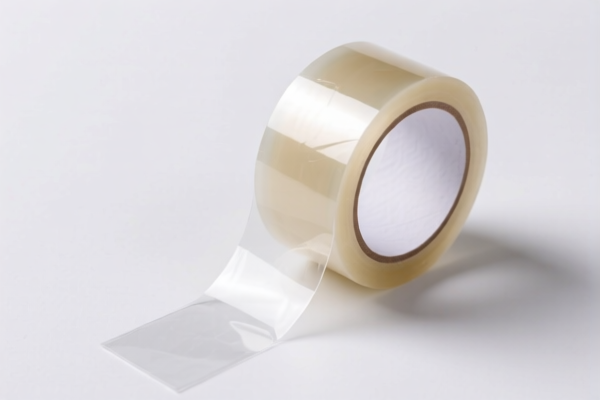


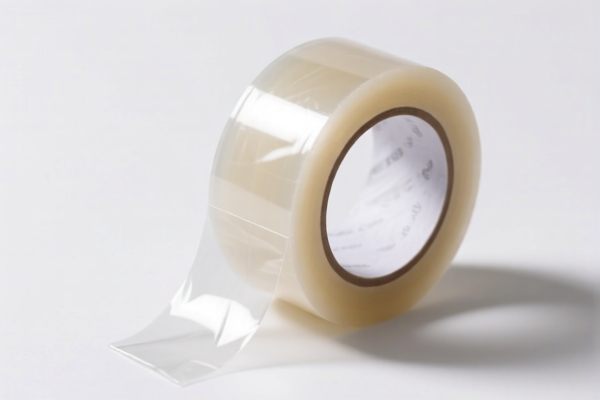
AI Analysis
🛡️ Strong Adhesive Insulation Tape
(Also referred to as PVC Electrical Tape / Plastic Self-Adhesive Insulation Tape)
🌐 HS Code Reference & Customs Clearance Guide | 2026 Latest Tariff Analysis | Professional Clearance Strategy
📌 I. Product Definition: What Exactly is "Insulation Tape"?
"Strong Adhesive Insulation Tape" is a flexible, self-adhesive strip used primarily for electrical insulation and wire bundling. In international trade, the classification depends heavily on the material composition (usually PVC or other plastics) and form (rolls of self-adhesive strips).
⚠️ Key Distinction:
- If it is a plastic film/strip, self-adhesive, designed for electrical insulation or general-purpose wrapping → Likely falls under Chapter 39 (Plastics).
- If it contains rubber or specific textile backing, it might fall under different subheadings, but for standard "Strong Adhesive" plastic tapes, Chapter 39 is the primary domain.
📦 II. HS Code Classification Details (Based on Provided Data)
The following HS codes are derived directly from the provided dataset for "Insulation Tape" or "Strong Adhesive Insulation Tape."
| HS Code | Product Description & Summary | Material/Feature | Total Tax Rate* |
|---|---|---|---|
| 3919.10.20.20 | Plastic Self-Adhesive Sheets/Foils/Rolls/Tape Applied to: Insulation tape, material is plastic (PVC, etc.), use: electrical tape, matches plastic self-adhesive characteristics. |
Plastic (PVC) Self-Adhesive |
40.8% |
| 3919.90.50.30 | Other Plates, Sheets, Film, Foil, Strip & Shapes of Plastics Applied to: Insulation tape, use: electrical insulation, material inferred as plastic self-adhesive strip, matches category attributes. |
Plastic Self-Adhesive |
40.8% |
| 3926.90.99.89 | Other Articles of Plastics and Articles of Other Materials of Chapter 39 Applied to: Insulation tape, material is plastic/polymer class, belongs to other plastic products not specifically listed elsewhere. |
Plastic/Polymer Not specifically listed |
22.8% |
| 3926.90.45.90 | Other Articles of Plastics: Gaskets, Washers, and Other Sealing Devices Applied to: Insulation tape, material is plastic/polymer class, form belongs to other plastic products related to gaskets/seals. |
Plastic/Polymer Gasket/Seal type |
38.5% |
📌 Note: The dataset lists
3919.10.20.20twice for "Strong Adhesive Insulation Tape" and generic "Insulation Tape." Both yield the same tax rate. The choice between3919(Self-adhesive) and3926(Other plastic articles) depends on how the customs authority views the primary function and form.3919is generally more accurate for rolls of tape, while3926is a "catch-all" if3919is rejected.
💰 III. 2026 Latest Tariff Rate Breakdown (Detailed)
✅ Applicable Country: United States (US)
✅ Origin: China (CN)
✅ Effective Date: Current trade policy (Subject to 301 & IEEPA provisions)
🎯 1. HS Code: 3919.10.20.20 & 3919.90.50.30
(Most Likely for Standard PVC Electrical Tape Rolls)
| Item | Detail |
|---|---|
| Base Duty | 5.8% (Ad Valorem) |
| Additional Duty (Section 301) | +25.0% |
| 122 Clause Tariff (IEEPA/China Specific) | +10.0% |
| Total Effective Tax Rate | 40.8% |
| Tax Calculation | CIF Value × 40.8% |
| De Minimis Exemption | ❌ Not Eligible (Denied under current Section 301/321 rules for China-origin goods in this category) |
| Legal Basis Path | HTSUS:3919.10.20 → USITC:301_Lookup → IEEPA:122_Provision |
📌 Explanation:
- Base 5.8%: Standard MFN rate for plastic adhesive tapes.
- 25% Section 301: Applied to a wide range of Chinese plastic articles.
- 10% 122 Clause: Specific additional tariff targeting certain Chinese imports (often associated with IEEPA authorities).
- Total 40.8%: This is a high-cost classification. Importers must budget for significant duty costs.
🎯 2. HS Code: 3926.90.99.89
(Alternative Classification: "Other Plastic Articles")
| Item | Detail |
|---|---|
| Base Duty | 5.3% (Ad Valorem) |
| Additional Duty (Section 301) | +7.5% |
| 122 Clause Tariff (IEEPA/China Specific) | +10.0% |
| Total Effective Tax Rate | 22.8% |
| Tax Calculation | CIF Value × 22.8% |
| De Minimis Exemption | ❌ Not Eligible |
| Legal Basis Path | HTSUS:3926.90.99 → USITC:301_Lookup → IEEPA:122_Provision |
📌 Strategy:
- If you can argue the tape is not primarily a "sheet/strip of plastic" (3919) but an "article of plastic" (3926), you might save 18% in duties (40.8% - 22.8%).
- Risk: Customs may challenge this, as electrical tape is explicitly a "strip" or "tape."3919is the more precise legal definition for tapes.3926is a fallback if3919is deemed incorrect for a specific formulation.
🎯 3. HS Code: 3926.90.45.90
(Classification as Gasket/Sealing Device)
| Item | Detail |
|---|---|
| Base Duty | 3.5% (Ad Valorem) |
| Additional Duty (Section 301) | +25.0% |
| 122 Clause Tariff (IEEPA/China Specific) | +10.0% |
| Total Effective Tax Rate | 38.5% |
| Tax Calculation | CIF Value × 38.5% |
| Legal Basis Path | HTSUS:3926.90.45 → USITC:301_Lookup → IEEPA:122_Provision |
📌 Note:
- This is less favorable than the3926.90.99.89option.
- Only applicable if the tape is being marketed or used specifically as a gasket or seal rather than an electrical insulator. For standard electrical tape, this classification is likely incorrect and risky.
🛠️ IV. Customs Clearance Practical Advice (Pitfall Avoidance Guide)
✅ 1. Documentation Checklist
| Document | Required? | Notes |
|---|---|---|
| Product Spec Sheet | ✅ | Must specify: Material (PVC, PE, etc.), Thickness, Width, Adhesive Type, Voltage Rating. |
| Commercial Invoice | ✅ | Clearly state: "Strong Adhesive Insulation Tape, PVC Material, For Electrical Insulation." |
| Packing List | ✅ | Number of rolls, weight, dimensions. |
| Certificate of Origin | ✅ | Essential for claiming any potential exemptions (though unlikely for CN origin here). |
| Test Reports | ✅ | UL, CE, or RoHS tests to prove safety and material composition. |
✅ 2. Classification Strategy & Tips
🔥 "PVC Self-Adhesive Tape = 3919 (High Tax), Other Plastic = 3926 (Varied)"
| Scenario | Recommended HS Code | Why? |
|---|---|---|
| Standard PVC Electrical Tape (Rolls) | 3919.10.20.20 |
Most accurate description: Plastic, self-adhesive, rolls. Expect 40.8% tax. |
| Non-PVC Plastic Tape (e.g., PET, PE) | 3919.10.20.20 |
Still fits "Plastic self-adhesive." High tax applies. |
| Tape as a Component in a Kit | 3919.10.20.20 |
Do not split; declare as part of the kit or separately. Same tax. |
| Attempted Cost Saving Strategy | 3926.90.99.89 |
Argue it is an "article" not a "strip." Risk: Audit. Potential Saving: 18%. |
✅ 3. Critical Warnings
| ❌ Error | ✅ Consequence |
|---|---|
| Misclassifying as Textile or Rubber | If the tape is PVC (plastic), declaring it as rubber (40) or textile (59) is fraud. Penalties apply. |
| Ignoring 301/122 Tariffs | Assuming standard duty (5.8%) will result in massive underpayment and penalties upon audit. |
| Claiming De Minimis Exemption | Small packages from China in this category do not qualify for $800 de minimis. Duties are due. |
| Vague Description | Using "Tape" only. Must specify "Insulation Tape, PVC, Self-Adhesive" to avoid misclassification. |
🌍 V. Global Market Comparison (2026)
| Market | Likely HS Code | Est. Total Duty (CN Origin) | Notes |
|---|---|---|---|
| 🇺🇸 USA | 3919.10.20.20 |
40.8% | High 301 + IEEPA tariffs. |
| 🇺🇸 USA | 3926.90.99.89 |
22.8% | Alternative, but higher audit risk. |
| 🇪🇺 EU | 3919.10.00 |
6.5% | No 301 tariffs. Standard EU duty. |
| 🇨🇳 China | 3919.10.00 |
5.0% | Lower import duty. |
| 🇬🇧 UK | 3919.10.00 |
6.5% | Post-Brexit standard duty. |
📌 Conclusion:
- USA is the most expensive market due to layered tariffs (Base + 301 + 122).
- EU/UK are more favorable for Chinese plastic tapes.
- Consider supply chain diversification (e.g., manufacturing in Vietnam/Mexico) if targeting the US market to avoid the 301/122 penalties.
📌 VI. Summary & Action Plan
- Confirm Material: Is it PVC? If yes,
3919.10.20.20is the safest, most accurate code. - Calculate Cost: Factor in 40.8% total duty for US imports.
- Risk Assessment: If cost is prohibitive, consult a customs broker about
3926.90.99.89(22.8%) but be prepared for potential challenges. - Documentation: Ensure invoices explicitly state "PVC Insulation Tape, Self-Adhesive" to match the HS code description.
🎯 Pro Tip:
💡 "Don't guess the HS Code. PVC Tape = 3919. Tax is 40.8%. Plan your margin accordingly!"
💡 "If you need to save 18%, argue for 3926, but expect scrutiny."
✨ Professional clearance starts with precise classification!
💼 Your duty cost is calculable. Protect your profit margin!
Customer Reviews
About HS Code Classification
The Harmonized System (HS) is an internationally standardized nomenclature developed by the World Customs Organization (WCO) to classify traded products. Over 200 countries use the HS system as the basis for customs tariffs, trade statistics, and import/export regulations.
Each HS code follows a hierarchical structure:
- Chapter (2 digits) — Broad category of goods (e.g., Chapter 84: Machinery and Mechanical Appliances)
- Heading (4 digits) — More specific grouping within the chapter
- Subheading (6 digits) — Internationally standardized breakdown, used by all WCO member countries
- National subdivisions (8-10 digits) — Country-specific extensions for further classification, such as US HTSUS 10-digit codes
Correct HS code classification is essential for smooth customs clearance, accurate duty payment, and compliance with trade regulations. Misclassification can lead to customs delays, overpayment of duties, or penalties.
When importing from CN to US, the applicable tariff rates may include:
- Most-Favored-Nation (MFN) rate — The standard duty rate applied to WTO members
- General rate — Applied to countries without trade agreements
- Trade remedy duties — Additional tariffs such as Section 301 (anti-dumping), Section 232 (national security), or countervailing duties
The information provided on this page is for reference purposes only. For official classification, please consult with your local customs authority or a licensed customs broker.