Student Exercise Book
CN → US| HS Code | Tariff Rate | Origin | Destination | Doc |
|---|---|---|---|---|
| 4820200000 | 35.0% | CN | US | Official Doc |
| 4820900000 | 35.0% | CN | US | Official Doc |
Product Images
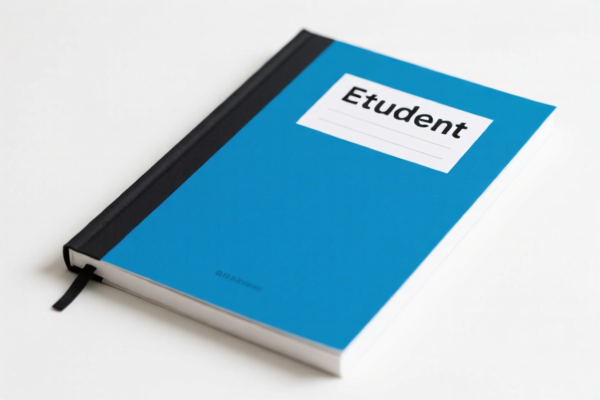
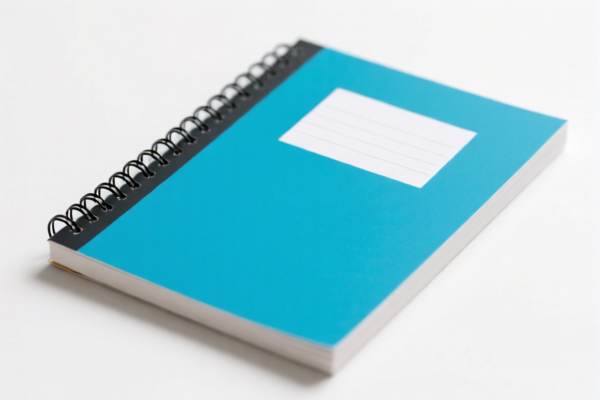
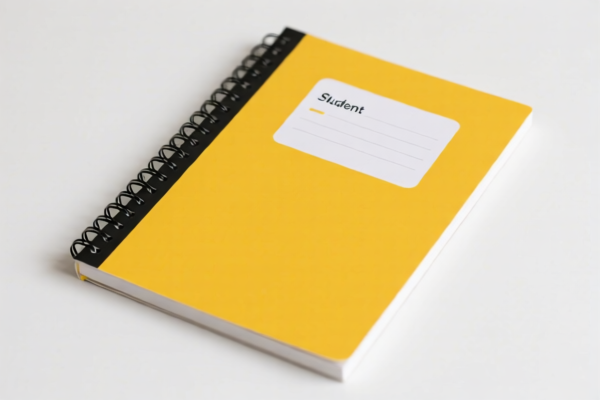

AI Analysis
📓 Student Exercise Book (Notebooks & Exercise Books)
🌐 HS Code Reference & Customs Clearance Guide | 2026 Latest Tariff Analysis | Professional Compliance Strategy
📌 I. Product Definition & Classification: Do You Really Understand "Exercise Books"?
Student Exercise Books are essential stationery items used primarily in educational settings for writing, note-taking, and homework. In international trade, they are strictly classified under Chapter 48 (Paper and Paperboard) because their primary value and function derive from the paper content and binding, not the cover or binding mechanism alone.
⚠️ Critical Distinction:
- If the item consists of multiple pages of paper bound together (looseleaf, spiral, stitched, or glued) and is used for writing → Classify under 4820.
- If it is a single blank pad of paper (e.g., tear-off notepad, blotting pad) without distinct "pages" or binding structure → It may fall under other paper articles, but standard "Exercise Books" are 4820.
- If it contains electronic components (e.g., smart notebooks with digitization) → It may shift to Chapter 85, but standard paper exercise books remain 4820.
📦 II. HS Code Classification Details (2026 Latest Tariff Authority对照)
Based on the provided <DATA>, standard Student Exercise Books fall into two main categories depending on specificity. However, for general "Exercise Books," the primary code is 4820.20.00.00.
| HS Code | Product Description | Application Scenario | Key Characteristics |
|--------|--------------------------|--------------------|
| 4820.20.00.00 | Exercise Books | Standard student notebooks, spiral-bound books, lined paper books for school use | Specifically named "Exercise Books" in the tariff description |
| 4820.90.00.00 | Other | Binders, looseleaf systems, manifolding forms, register books, account books | Items that are similar to exercise books but technically binders or other stationary items |
🔍 Key Reminder:
-4820.20.00.00is the correct and specific classification for "Exercise Books."
-4820.90.00.00is a residual category for other paper stationery (like binders or file covers). Do NOT misclassify standard exercise books as "Other" if4820.20is available.
- Paperboard Covers: Even if the cover is made of thick paperboard (cardboard), as long as it is an "exercise book" (multiple sheets bound), it stays in 4820.
💰 III. 2026 Latest Tariff Rate Breakdown (Including Additional Duties & Policy Surcharges)
✅ Applicable Country: United States (US)
✅ Country of Origin: China (CN)
✅ Effective Date: 2025/2026 Trade Terms
✅ Source Data: Based on provided<DATA>tax details
🎯 1. 4820.20.00.00 —— Exercise Books
| Item | Detail |
|---|---|
| Base Tariff Rate | 0.0% (Ad Valorem) |
| Additional Surcharge | +25.0% (Section 301 / Retaliatory Tariff) |
| Total Tax Rate | 25.0% |
| Tax Calculation | CIF Value × 25% |
| De Minimis Exemption | ❌ Not Eligible (Items subject to Section 301 tariffs generally do not qualify for the $800 de minimis exemption unless specifically exempted, but high-value commercial imports will pay full duty) |
| Legal Basis Path | USITC:4820.20.00.00 → Section 301 Tariff List → 25% Additional Duty |
📌 Explanation:
- "Base Tariff: 0.0%": The US generally imposes 0% duty on basic stationery items like exercise books under normal MFN (Most Favored Nation) treatment.
- "Additional Surcharge: 25.0%": This is the critical cost driver. Under Section 301 of the Trade Act, many Chinese-origin goods, including paper products and stationery, face a 25% additional tariff to address trade imbalances and intellectual property concerns.
- Total Cost Impact: Even though the base is 0%, the 25% additional tariff makes this a high-cost item for US importers from China.
🎯 2. 4820.90.00.00 —— Other (e.g., Binders, Account Books)
| Item | Detail |
|---|---|
| Base Tariff Rate | 0.0% |
| Additional Surcharge | +25.0% |
| Total Tax Rate | 25.0% |
| Tax Calculation | CIF Value × 25% |
| De Minimis Exemption | ❌ Not Eligible (Same as above) |
| Legal Basis Path | USITC:4820.90.00.00 → Section 301 Tariff List → 25% Additional Duty |
📌 Note:
- Even if misclassified or if the product is a "binder" or "account book," the tariff impact is identical (25%).
- Do not attempt to misclassify4820.20as4820.90to save costs; the rate is the same, but the risk of customs penalty remains.
🛠️ IV. Customs Clearance Practical Advice (Real-World Pitfall Avoidance)
✅ 1. Required Documentation Checklist (Non-Negotiable)
| Document | Must Provide? | Purpose |
|---|---|---|
| ✅ Product Specification Sheet | ✔️ | Detail: Number of pages, paper type (lined, graph, plain), binding method (spiral, glued), cover material |
| ✅ Commercial Invoice | ✔️ | Must clearly state: "Student Exercise Book, Paper Stationery, HS Code 4820.20.00.00" |
| ✅ Packing List | ✔️ | Show quantity per carton, gross/net weight, dimensions |
| ✅ Certificate of Origin (CO) | ✔️ | Proves Chinese origin for Section 301 tariff application |
| ✅ Photos of Product & Label | ✔️ | Clear view of binding, paper type, and any branding |
✅ 2. Declaration Tips (Key Mantras)
🔥 "Be Specific: 'Exercise Book' not 'Paper Product'! Accurate HS Code Saves Fines!"
| Scenario | Correct Declaration | Incorrect Declaration | Consequence |
|---|---|---|---|
| Standard Lined Notebook | 4820.20.00.00 - "Exercise Book" |
"Stationery" or "Notebook" | ✅ Correct |
| Spiral-bound Math Book | 4820.20.00.00 |
"Binders" (4820.90) |
⚠️ Same tax, but risk of inspection |
| Plain Paper Pad (Tear-off) | Check Chapter 48 other headings | 4820.20 |
❌ Misclassification risk |
| Smart Notebook with Digitizer | 9017 or 8517 |
4820.20 |
❌ High Penalty + Rejection |
📌 Critical Tip:
- Do NOT use vague terms like "Notebook" or "Diary" without specifying "Exercise Book" for school use.
- Do NOT claim "Free Duty" just because base rate is 0%. Always account for the 25% additional tariff.
✅ 3. Special Cases Handling
| Scenario | Recommendation |
|---|---|
| OEM Private Label | Provide authorization letters; ensure HS code matches the physical product, not the brand |
| Mixed Containers | If shipping exercise books with other goods, ensure the invoice clearly separates the 4820.20 items to calculate duty accurately |
| Gift Sets | If exercise books are part of a "School Supply Kit," the entire kit may be classified by its essential character, potentially triggering higher duties if other items have higher tariffs |
| De Minimis ($800 Rule) | For commercial shipments exceeding $800, Section 301 tariffs apply. For personal gifts under $800, check current CBP enforcement on Section 301 items via Section 321 (usually, Section 301 items are excluded from de minimis, but this is subject to change; verify with CBP) |
🌍 V. Global Market Comparison (2026 Latest)
| Country/Region | Recommended HS Code | Base Tariff | Additional Tariff (China) | Total Tariff | Certification Requirements |
|---|---|---|---|---|---|
| 🇺🇸 USA | 4820.20.00.00 |
0% | +25% | 25% | No special certs, but accurate origin declaration |
| 🇨🇳 China | 4820.20.00.00 |
0% | 0% | 0% | CCC (if applicable), GB Standards |
| 🇪🇺 EU | 4820.20.00 |
0% | 0% (MFN) | 0% | CE (if plastic components), FSC (sustainability) |
| 🇬🇧 UK | 4820.20.00 |
0% | 0% | 0% | UKCA (if applicable) |
| 🇨🇦 Canada | 4820.20.00 |
0% | 0% (CUSMA) | 0% | No special certs |
| 🇯🇵 Japan | 4820.20.00 |
0% | 0% | 0% | JIS Standards |
📌 Conclusion:
- The US is the only major market imposing a significant 25% additional tariff on Chinese-made exercise books under Section 301.
- EU, UK, Canada, Japan, and China impose 0% duty on these goods.
- Strategy: If targeting the US, consider cost-plus pricing to absorb the 25% tariff, or explore supply chain diversification (e.g., manufacturing in Vietnam or India) to avoid Section 301.
📌 VI. Common Mistakes & Pitfalls (Blood & Tears Lessons)
❌ Mistake 1: Ignoring the 25% Additional Tariff
👉 Consequence: Underestimating landed cost by 25% → Massive profit loss!
❌ Mistake 2: Misclassifying as "Other Stationery" (4820.90)
👉 Consequence: Same tax rate, but if customs determines it's clearly an "Exercise Book," you risk penalties for inaccurate declaration.
❌ Mistake 3: Claiming De Minimis for Large Commercial Shipments
👉 Consequence: Seizure or back-dated duties if the shipment exceeds $800 and is deemed commercial.
❌ Mistake 4: Vague Description "Notebook"
👉 Consequence: Customs may classify it under a different, higher-duty category if not clearly defined.
✅ Correct Practice:
"Student Exercise Book, Lined Paper, Spiral Bound, 100 Sheets, Paper Cover, Model XYZ, Made in China"
🎯 VII. Conclusion: Precision Classification, Cost Control, Compliance!
🎯 Remember the Mantra:
🔹 "Base 0%, Add 25%: Don't Be Fooled by 'Free'!"
🔹 "HS 4820.20 is King for Exercise Books!"
🔹 "US Imports from China: Budget 25% Extra for Tariffs!"
📌 Pro Tip:
If your shipment value is below $800 and qualifies as a gift/personal use, check current CBP rules on Section 301 exclusions. For commercial imports, the 25% tariff is mandatory.
Action Step:
📞 Contact Your Customs Broker to confirm the latest Section 301 status for HS4820.20.00.00.
📄 Prepare Accurate Invoices listing "Exercise Books" explicitly.
🚀 Optimize Your Supply Chain to mitigate US tariff risks!
✨ Professional Customs Clearance Starts with Accurate Classification!
💼 Every Percent Counts in Your Landed Cost!
Customer Reviews
About HS Code Classification
The Harmonized System (HS) is an internationally standardized nomenclature developed by the World Customs Organization (WCO) to classify traded products. Over 200 countries use the HS system as the basis for customs tariffs, trade statistics, and import/export regulations.
Each HS code follows a hierarchical structure:
- Chapter (2 digits) — Broad category of goods (e.g., Chapter 84: Machinery and Mechanical Appliances)
- Heading (4 digits) — More specific grouping within the chapter
- Subheading (6 digits) — Internationally standardized breakdown, used by all WCO member countries
- National subdivisions (8-10 digits) — Country-specific extensions for further classification, such as US HTSUS 10-digit codes
Correct HS code classification is essential for smooth customs clearance, accurate duty payment, and compliance with trade regulations. Misclassification can lead to customs delays, overpayment of duties, or penalties.
When importing from CN to US, the applicable tariff rates may include:
- Most-Favored-Nation (MFN) rate — The standard duty rate applied to WTO members
- General rate — Applied to countries without trade agreements
- Trade remedy duties — Additional tariffs such as Section 301 (anti-dumping), Section 232 (national security), or countervailing duties
The information provided on this page is for reference purposes only. For official classification, please consult with your local customs authority or a licensed customs broker.