Student Insulated Food Bag
CN → US| HS Code | Tariff Rate | Origin | Destination | Doc |
|---|---|---|---|---|
| 7323930060 | 62.0% | CN | US | Official Doc |
| 7615107125 | 63.1% | CN | US | Official Doc |
| 3924104000 | 13.4% | CN | US | Official Doc |
| 7615109100 | 70.6% | CN | US | Official Doc |
| 7323999030 | 88.4% | CN | US | Official Doc |
Product Images
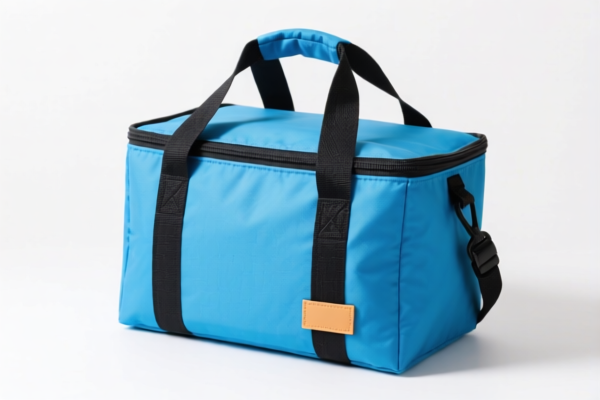
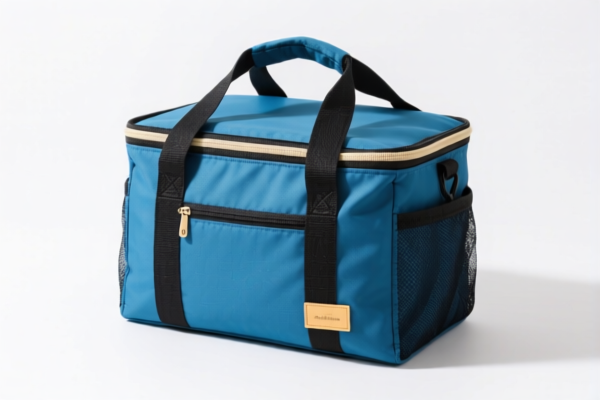
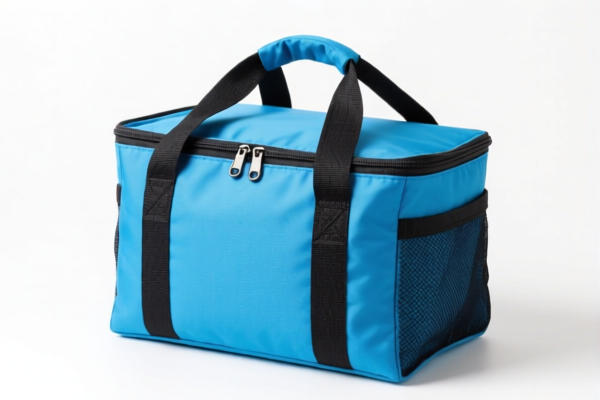
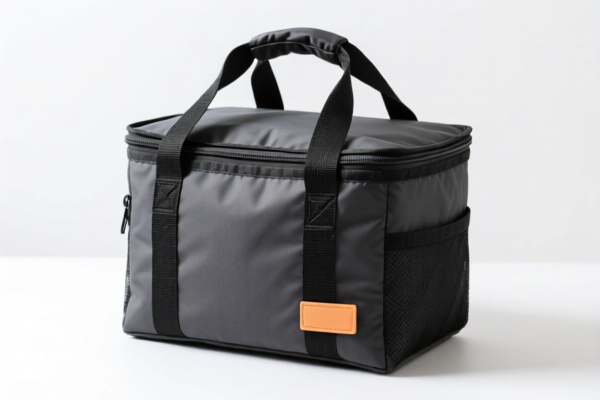
AI Analysis
🍱 Student Insulated Food Bag (Lunch Box)
🌐 HS Code Reference & Customs Clearance Guide | 2026 Latest Tariff Analysis | Professional Logistics Strategy
📌 I. Product Definition & Classification: Are You Putting Your Lunch in the Right Box?
A Student Insulated Food Bag is an essential item for schoolchildren, designed to maintain food temperature and hygiene during transit. In international trade, these bags are classified based on their primary material and construction. They are generally not treated as single "lunch boxes" but rather as containers or textiles depending on the outer layer.
The key to accurate classification lies in distinguishing between hard-shell plastic/metal containers and soft-sided insulated bags (often made of fabric with foam lining).
⚠️ Critical Distinction:
- If the bag is primarily made of Plastic (rigid or semi-rigid) → It falls under Chapter 39.
- If the bag is primarily made of Aluminum (rigid container) → It falls under Chapter 76.
- If the bag is primarily made of Steel/Iron (rigid container) → It falls under Chapter 73.
- Note: Soft-sided fabric bags (vinyl/nylon) often fall under Chapter 42 or 63, but the provided DATA focuses on rigid materials. We will strictly adhere to the provided HS Codes.
📦 II. HS Code Classification Details (Based on Provided DATA)
| HS Code | Material Basis | Product Description | Typical Use Case |
|---|---|---|---|
7323.93.00.60 |
Stainless Steel / Metal | Stainless Steel Kitchenware | Hard-shell stainless steel lunch containers; durable, heat-resistant. |
7615.10.71.25 |
Aluminum / Stainless Steel | Aluminum Kitchenware & Containers | Lightweight aluminum food storage/prep containers. |
3924.10.40.00 |
Plastic / Composite | Plastic Tableware & Cookware | Plastic lunch boxes, bento boxes, or food storage containers. |
7615.10.91.00 |
Aluminum / Aluminum Composite | Other Aluminum Kitchenware | Other aluminum-based kitchen items, possibly with composite layers. |
7323.99.90.30 |
Stainless Steel / Iron | Iron or Steel Tableware | Steel/Iron tableware items, often heavier duty steel containers. |
🔍 Key Insight:
- The "Insulated Bag" for students is often a plastic (Chapter 39) or stainless steel (Chapter 73) hard case with an insulating layer inside.
- If the outer shell is Aluminum, it falls under Chapter 76.
- Do not misclassify as textile bags (Chapter 42) if the primary function is rigid food containment; however, the provided data only covers rigid metal/plastic items.
💰 III. 2026 Latest Tariff Rate Breakdown (Including Additional Duties & Policies)
✅ Applicable Country: United States (US)
✅ Country of Origin: China (CN)
✅ Effective Date: Current tariffs apply as per provided DATA
🎯 1. 3924.10.40.00 —— Plastic Tableware & Cookware
Most Common for Student Lunch Boxes
| Item | Content |
|---|---|
| Basic Tariff | 3.4% |
| Additional Duty (Section 301) | 0.0% |
| Section 232 Tariff (Steel/Aluminum/Copper) | ❌ Not Applicable |
| Total Tax Rate | 13.4% |
| Tax Calculation | CIF Value × 13.4% |
| De Minimis Eligibility | ⚠️ Check Specifics: Generally, Section 301 duties apply. Ensure proper classification to avoid higher rates if misclassified as other plastics. |
| Legal Basis Path | USITC:3924.10.40.00 |
📌 Explanation:
- Plastic tableware has a relatively low base tariff (3.4%).
- No Section 232 tariff applies because it is not steel or aluminum.
- No Section 301 additional duty listed in this specific entry (0.0%), making it the most cost-effective option for plastic lunch boxes.
- Total: 13.4%.
🎯 2. 7615.10.71.25 —— Aluminum Kitchenware & Containers
| Item | Content |
|---|---|
| Basic Tariff | 3.1% |
| Additional Duty (Section 301) | 0.0% |
| Section 232 Tariff | 50% |
| Total Tax Rate | 63.1% |
| Tax Calculation | CIF Value × 63.1% |
| De Minimis Eligibility | ❌ Not Eligible |
| Legal Basis Path | IEEPA:9903.01.25 → USITC:7615.10.71.25 → FOOTNOTE:9903.88.01 |
📌 Explanation:
- Section 232 Tariff (50%) applies to aluminum products.
- Base tariff is low (3.1%), but the 50% Section 232 duty makes this very expensive.
- Total: 63.1%.
- Caution: Many "aluminum" lunch boxes are subject to this high rate.
🎯 3. 7323.93.00.60 —— Stainless Steel Kitchenware
| Item | Content |
|---|---|
| Basic Tariff | 2.0% |
| Additional Duty (Section 301) | 0.0% |
| Section 232 Tariff | 50% |
| Total Tax Rate | 62.0% |
| Tax Calculation | CIF Value × 62.0% |
| De Minimis Eligibility | ❌ Not Eligible |
| Legal Basis Path | IEEPA:9903.01.25 → USITC:7323.93.00.60 → FOOTNOTE:9903.88.01 |
📌 Explanation:
- Section 232 Tariff (50%) applies to steel products.
- Base tariff is very low (2.0%), but the 50% Section 232 duty applies.
- Total: 62.0%.
- Note: Stainless steel lunch boxes are popular but highly taxed due to Section 232.
🎯 4. 7615.10.91.00 —— Other Aluminum Kitchenware
| Item | Content |
|---|---|
| Basic Tariff | 3.1% |
| Additional Duty (Section 301) | 7.5% |
| Section 232 Tariff | 50% |
| Total Tax Rate | 70.6% |
| Tax Calculation | CIF Value × 70.6% |
| De Minimis Eligibility | ❌ Not Eligible |
| Legal Basis Path | IEEPA:9903.01.25 → USITC:7615.10.91.00 → FOOTNOTE:9903.88.01 |
📌 Explanation:
- This code has an additional Section 301 duty of 7.5% on top of the base.
- Plus 50% Section 232.
- Total: 70.6%.
- Avoid: This is the highest taxed aluminum category in the provided data.
🎯 5. 7323.99.90.30 —— Iron or Steel Tableware
| Item | Content |
|---|---|
| Basic Tariff | 3.4% |
| Additional Duty (Section 301) | 25.0% |
| Section 232 Tariff | 50% |
| Total Tax Rate | 88.4% |
| Tax Calculation | CIF Value × 88.4% |
| De Minimis Eligibility | ❌ Not Eligible |
| Legal Basis Path | IEEPA:9903.01.25 → USITC:7323.99.90.30 → FOOTNOTE:9903.88.01 |
📌 Explanation:
- This is the most expensive category.
- Combines 25% Section 301 + 50% Section 232 + 3.4% base.
- Total: 88.4%.
- Warning: Do not misclassify steel items into this "Other" category if a specific one (like7323.93.00.60) applies.
🛠️ IV. Customs Clearance Practical Advice (Avoid Pitfalls)
✅ 1. Document Preparation Checklist (Essential)
| Document | Required | Description |
|---|---|---|
| ✅ Product Specification Sheet | ✔️ | Must specify material (e.g., "BPA-free Plastic," "304 Stainless Steel"). |
| ✅ Material Composition | ✔️ | Detailed breakdown of layers (e.g., Outer: PEVA, Inner: Foil, Lining: Foam). |
| ✅ Product Photos | ✔️ | Clear images of the product, including labels and any "Food Safe" certifications. |
| ✅ Commercial Invoice | ✔️ | Must clearly state "Insulated Student Lunch Box" and HS Code. |
| ✅ FDA Compliance Letter | ✔️ | For plastic/metal food contact items, FDA compliance is often required. |
| ✅ Packing List | ✔️ | Show packaging details to avoid volume-based tariff confusion. |
✅ 2. Declaration Tips (Key Mantras)
🔥 "Material First, Function Second! Label Clearly, Taxes Less!"
| Scenario | Correct Declaration | Wrong Practice |
|---|---|---|
| Plastic Lunch Box | 3924.10.40.00 (13.4%) |
Misclassified as Steel → 62%+ |
| Stainless Steel Container | 7323.93.00.60 (62.0%) |
Misclassified as Plastic → 13.4% (Risk of Penalty) |
| Aluminum Container | 7615.10.71.25 (63.1%) |
Misclassified as Plastic → 13.4% (Risk of Penalty) |
| "Bag" vs. "Container" | If it has a rigid shell, use Chapter 39/73/76. | Declaring as "Textile Bag" (Chapter 42) when it's plastic/steel → Audit Risk |
✅ 3. Special Cases & Handling
| Scenario | Handling Advice |
|---|---|
| Multi-material Product | Declare based on primary material. If plastic is 70% of the weight, use Chapter 39. |
| Insulated Liner | If the insulation is separate (e.g., a fabric sleeve), it may be classified separately. Ensure the main container is declared correctly. |
| FDA Food Contact | Ensure plastic items comply with FDA 21 CFR for food contact surfaces. Non-compliance can lead to rejection. |
| BPA-Free Labeling | Marketing as "BPA-Free" is good, but ensure the material specification matches the HS code. |
🌍 V. Global Market Clearance Comparison (2026 Latest)
| Country/Region | Recommended HS Code | Tariff Rate | Certification | Notes |
|---|---|---|---|---|
| 🇺🇸 USA | 3924.10.40.00 (Plastic) |
13.4% | FDA | Lowest Tax among options |
| 🇺🇸 USA | 7323.93.00.60 (Steel) |
62.0% | FDA | High due to Section 232 |
| 🇺🇸 USA | 7615.10.71.25 (Aluminum) |
63.1% | FDA | High due to Section 232 |
| 🇪🇺 EU | 3924.10.40.00 |
~3-5% | LFGB/EC 1935/2004 | No Section 232/301 |
| 🇨🇳 China | 3924.10.40.00 |
~10% | GB 4806 | Import duty applies |
📌 Conclusion:
- Plastic (3924.10.40.00) is the most cost-effective for the US market among the provided options.
- Steel and Aluminum are heavily penalized due to Section 232 (50%) and potentially Section 301.
- Strategy: If possible, design lunch boxes using Plastic to minimize tariff costs.
📌 VI. Common Mistakes & Pitfalls (Blood & Tears Lessons)
❌ Mistake 1: Classifying a Plastic lunch box as Steel to avoid plastic regulations
👉 Consequence: 62% Tariff instead of 13.4% + Penalty for Misdeclaration.
❌ Mistake 2: Ignoring Section 232 for Aluminum/Steel items
👉 Consequence: Unexpected 50% Additional Duty upon clearance, leading to cash flow issues.
❌ Mistake 3: Declaring as "Food Bag" (Textile) for a Rigid Container
👉 Consequence: Customs audit, potential seizure, and reclassification to higher tariff codes.
❌ Mistake 4: Not providing FDA Compliance for Plastic/Metal food contact items
👉 Consequence: Detention at US Port, return or destruction of goods.
✅ Correct Approach:
"Plastic Insulated Lunch Box, BPA-Free, with Aluminum Foil Liner, Model XYZ, FDA Compliant"
🎯 VII. Conclusion: Smart Classification, Lower Costs!
🎯 Key Takeaways:
🔹 Plastic is King for Tariffs:
3924.10.40.00at 13.4% is the best option.
🔹 Steel/Aluminum are Expensive: Expect 62-88% tariffs due to Section 232/301.
🔹 Material Matters: Declare based on the primary structural material.
🔹 Compliance is Key: FDA compliance is mandatory for food contact items.
📌 Pro Tip:
If your product is 100% Fabric (e.g., neoprene or nylon insulated bag with no rigid shell), it may fall under Chapter 42 or 63, which are not covered in the provided DATA. However, if it has a rigid plastic/metal inner container, it must be classified as such.
Recommendation: Consult a customs broker to confirm if your "bag" qualifies as a textile bag (lower tariffs) or a rigid container (higher tariffs).
📣 Immediate Action:
📞 Contact Your Customs Broker: Provide material specs (Plastic vs. Steel vs. Aluminum).
📄 Prepare FDA Documentation: Especially for plastic components.
🚀 Optimize Design: Consider plastic materials to save on US import duties.
✨ Professional Clearance Starts with Accurate Classification!
💼 Every Percent Saved is Profit Gained!
Customer Reviews
About HS Code Classification
The Harmonized System (HS) is an internationally standardized nomenclature developed by the World Customs Organization (WCO) to classify traded products. Over 200 countries use the HS system as the basis for customs tariffs, trade statistics, and import/export regulations.
Each HS code follows a hierarchical structure:
- Chapter (2 digits) — Broad category of goods (e.g., Chapter 84: Machinery and Mechanical Appliances)
- Heading (4 digits) — More specific grouping within the chapter
- Subheading (6 digits) — Internationally standardized breakdown, used by all WCO member countries
- National subdivisions (8-10 digits) — Country-specific extensions for further classification, such as US HTSUS 10-digit codes
Correct HS code classification is essential for smooth customs clearance, accurate duty payment, and compliance with trade regulations. Misclassification can lead to customs delays, overpayment of duties, or penalties.
When importing from CN to US, the applicable tariff rates may include:
- Most-Favored-Nation (MFN) rate — The standard duty rate applied to WTO members
- General rate — Applied to countries without trade agreements
- Trade remedy duties — Additional tariffs such as Section 301 (anti-dumping), Section 232 (national security), or countervailing duties
The information provided on this page is for reference purposes only. For official classification, please consult with your local customs authority or a licensed customs broker.