Styrene Copolymer Waste
CN → US| HS Code | Tariff Rate | Origin | Destination | Doc |
|---|---|---|---|---|
| 3903110000 | 41.5% | CN | US | Official Doc |
| 3915900090 | 35.0% | CN | US | Official Doc |
| 3903190000 | 41.5% | CN | US | Official Doc |
| 3915200000 | 35.0% | CN | US | Official Doc |
| 3915100000 | 35.0% | CN | US | Official Doc |
Product Images

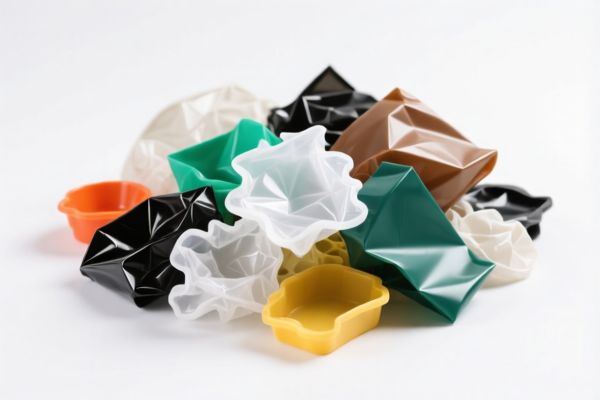
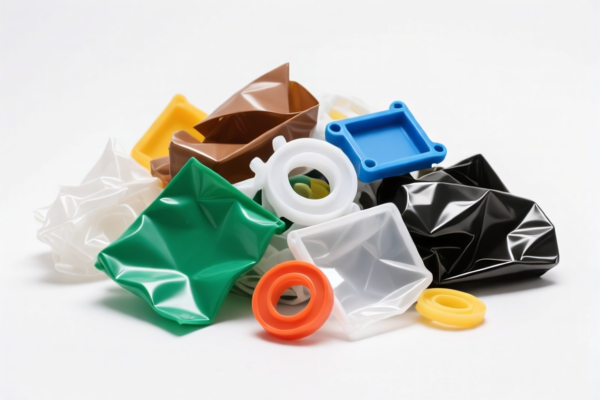
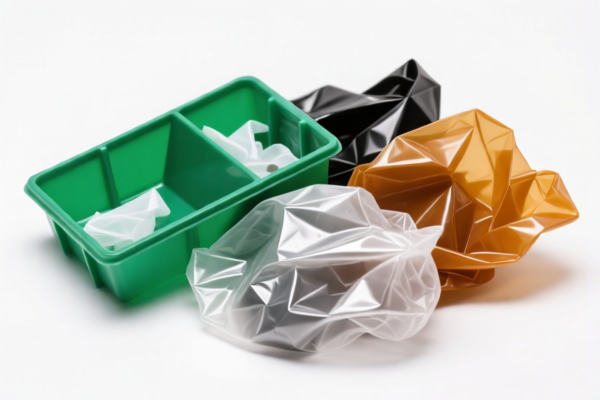
AI Analysis
♻️ Styrene Copolymer Waste (Polystyrene Scrap/Debris)
🌐 HS Code Reference & Customs Clearance Guide | 2026 Latest Tariff Analysis | Professional Strategy for PS Waste Imports
📌 I. Product Definition & Classification: What is "Styrene Copolymer Waste"?
"Styrene Copolymer Waste" primarily refers to Polystyrene (PS) in the form of waste, scraps, chips, or边角料 (offcuts). It is not raw material for manufacturing new finished goods in the traditional sense, but rather recyclable plastic residue. In international trade, the classification hinges on whether it is classified as raw polymer (rare for waste) or plastic waste/scrap.
⚠️ Key Distinction:
- If it is raw, unmolded PS pellets intended for reuse without being considered "waste" →归入 3903.xx (Primary Forms)
- If it is discarded, used, or scrap PS (chips, flakes, bulk waste) →归入 3915.xx (Plastic Waste & Scrap)
- Crucial Note: The term "Copolymer" in the user input likely refers to general Polystyrene categories. Customs often groups general PS waste under specific PS waste codes rather than generic "other plastics" if the material identity is clear.
📦 II. HS Code Classification Details (2026 Latest Tariff Authority Match)
Based on the provided data, the following HS Codes are matched based on Material (Polystyrene/Styrene Polymer) and Form (Waste/Scrap/Raw Residue).
| HS Code | Product Description | Matching Logic | Tax Profile |
|---|---|---|---|
3903.11.00.00 |
Polystyrene, in primary forms | Material Match: Polystyrene. Form Match: Classified as "Primary Form/Raw Material" despite the name "Waste". Assumes high-purity recyclable input. | Total: 41.5% |
3915.90.00.90 |
Waste, fragments, and scraps of plastics (other) | Material Match: Polystyrene (Plastic). Form Match: Waste/Scrap. Classified under "Other Plastics" if not specifically listed as PS scrap elsewhere. | Total: 35.0% |
3903.19.00.00 |
Other Polystyrene, in primary forms | Material Match: Polystyrene. Form Match: Waste inferred as "Bulk/Raw State". Similar to 3903.11 but for non-expanded or specific PS types. | Total: 41.5% |
3915.20.00.00 |
Waste, fragments, and scraps of polystyrene | ✅ Perfect Match: "Styrene Copolymer" = Polystyrene; "Waste" = Waste/Scrap. This is the most precise code for PS scrap. | Total: 35.0% |
3915.10.00.00 |
Waste, fragments, and scraps of polymers of ethylene | ⚠️ Mismatch Risk: Matches "Ethylene Polymer" not "Styrene". Included in data as a potential error or broad misclassification. | Total: 35.0% |
🔍 Critical Analysis:
-3915.20.00.00is the most accurate classification for "Styrene Copolymer Waste" (Polystyrene Scrap).
-3915.90.00.90is a fallback if the material is mixed or less clearly identified as pure PS.
-3903.11.00.00/3903.19.00.00are high-risk classifications for "Waste". Using these implies the material is "Primary Form" (raw pellets), which may trigger audits if the product is visibly scrap. However, if the waste is processed into clean, uniform chips suitable for immediate re-extrusion, some customs authorities may accept this, leading to higher tax (41.5%).
-3915.10.00.00is likely incorrect for Styrene products (it is for Polyethylene).
💰 III. 2026 Latest Tariff Rate Breakdown (Including Surtaxes & Policy Add-ons)
✅ Applicable Country: United States (US)
✅ Origin: China (CN)
✅ Effective Date: November 10, 2025 onwards (including subsequent imports)
🎯 1. Primary Classification: 3915.20.00.00 (Polystyrene Waste)
Recommended for most "Styrene Copolymer Waste" imports.
| Item | Content |
|---|---|
| Base Tariff | 0.0% (Ad Valorem) |
| USITC Surtax (Section 301) | +25.0% (Due to China origin) |
| IEEPA Surtax (Section 122) | +10.0% (针对中国产品,自2025年11月10日起) |
| Total Tariff Rate | 35.0% |
| Tax Calculation | CIF Value × 35% |
| De Minimis Exemption | ❌ Not Applicable (deny_de_minimis) |
| Legal Basis Path | USITC:3915.20.00.00 → FOOTNOTE:301 → IEEPA:9903.01.24 |
📌 Explanation:
- The base tariff for plastic waste is low (0%), but the Section 301 (25%) and Section 122 (10%) surtaxes make the total 35%.
- This is a significant cost driver. Importers must factor this into their recycling margin.
🎯 2. Alternative Classification: 3903.11.00.00 / 3903.19.00.00 (Polystyrene Primary Forms)
Used if declaring as "Recyclable Raw Material" rather than "Waste".
| Item | Content |
|---|---|
| Base Tariff | 6.5% (Ad Valorem) |
| USITC Surtax (Section 301) | +25.0% |
| IEEPA Surtax (Section 122) | +10.0% |
| Total Tariff Rate | 41.5% |
| Tax Calculation | CIF Value × 41.5% |
| De Minimis Exemption | ❌ Not Applicable |
| Legal Basis Path | USITC:3903.11.00.00 → FOOTNOTE:301 → IEEPA:9903.01.24 |
📌 Warning:
- While the base rate is higher (6.5%), the total is 6.5% higher than the waste classification.
- Risk: If Customs determines the goods are actually waste and not primary forms, you may face penalties for misclassification.
🎯 3. Fallback Classification: 3915.90.00.90 (Other Plastic Waste)
| Item | Content |
|---|---|
| Base Tariff | 0.0% |
| USITC Surtax (Section 301) | +25.0% |
| IEEPA Surtax (Section 122) | +10.0% |
| Total Tariff Rate | 35.0% |
| Tax Calculation | CIF Value × 35.0% |
📌 Note: Same total rate as
3915.20.00.00, but less specific. May trigger additional documentation requirements to prove material composition.
🛠️ IV. Customs Clearance Practical Advice (Avoid Pitfalls)
✅ 1. Documentation Checklist (Mandatory)
| Document | Required | Description |
|---|---|---|
| ✅ Material Safety Data Sheet (MSDS) | ✔️ | Confirm no hazardous substances mixed with PS waste. |
| ✅ Commercial Invoice | ✔️ | Must clearly state "Styrene Copolymer Waste" or "Polystyrene Scrap". Avoid vague terms like "Plastic Pieces". |
| ✅ Packing List | ✔️ | Detail weight, volume, and packaging type (bales, bags, bulk). |
| ✅ Certificate of Origin | ✔️ | Essential for confirming China origin and applying surtaxes. |
| ✅ Photos of Goods | ✔️ | Show the waste form (flakes, chips, bales) to support HS Code 3915 classification. |
| ✅ Third-Party Inspection Report | ✔️ | Verify purity and material type (PS vs. Mixed Plastics). |
✅ 2. Declaration Strategy (Key Tips)
🔥 "Be Honest on Form, Be Precise on Code!"
| Scenario | Correct Declaration | Incorrect Practice | Consequence |
|---|---|---|---|
| Clean PS Flakes | 3915.20.00.00 (Polystyrene Waste) |
Declaring as 3903.11 (Raw PS) without proof |
High audit risk, potential penalty |
| Mixed Plastic Scrap | 3915.90.00.90 (Other Plastic Waste) |
Declaring as pure PS waste | Misclassification, delay |
| PS Bottles (Unprocessed) | 3915.20.00.00 |
Declaring as finished goods | Wrong HS Code, 35-41.5% tax |
| Contaminated Waste | 3915.20.00.00 + EPA Permit |
No EPA Permit | Rejection/Return |
✅ 3. Special Considerations
| Issue | Advice |
|---|---|
| EPA Regulations | Plastic waste imports may require EPA notification (TSCA). Ensure compliance with US EPA rules on imported plastic waste. |
| Contamination | If waste contains >5% non-PS material, declare as 3915.90.00.90 to avoid misclassification penalties. |
| Pre-cleaning | Clean, dry, and compacted waste is easier to classify as 3915.20.00.00. Dirty, mixed waste may be rejected or classified differently. |
| Value Declaration | Ensure CIF value includes freight and insurance. Under-declaring value triggers audits. |
🌍 V. Global Market Comparison (2026 Update)
| Country/Region | Recommended HS Code | Tariff (China Origin) | Notes |
|---|---|---|---|
| 🇺🇸 USA | 3915.20.00.00 |
35% (25% + 10%) | High surtaxes. EPA compliance critical. |
| 🇨🇳 China | 3915.20.00.00 |
0-5% | May have restrictions on "solid waste" imports. |
| 🇪🇺 EU | 3915.20.00.00 |
0-4% | Stricter recycling regulations. |
| 🇯🇵 Japan | 3915.20.00.00 |
0-5% | High standards for material purity. |
📌 Conclusion:
- The USA imposes a 35% total tariff on PS waste from China.
- EPA regulations are as critical as tariff rates. Ensure all environmental compliance documents are in order.
- Recommendation: Use3915.20.00.00for clear PS waste. Avoid3903codes unless you can prove it is "primary form" material, not waste.
📌 VI. Common Errors & Pitfalls (Lessons Learned)
❌ Error 1: Declaring "Styrene Waste" as 3903.11 (Primary Form) without justification.
👉 Consequence: Customs may reject as "Waste" classified as "Product", leading to 41.5% tax + penalties.
❌ Error 2: Ignoring EPA requirements for plastic waste imports.
👉 Consequence: Cargo hold or return at US port.
❌ Error 3: Mixing PS waste with other plastics and declaring as pure PS.
👉 Consequence: Misclassification, 35% tax may be upheld, but audit risk increases.
❌ Error 4: Using vague descriptions like "Plastic Scrap" on invoices.
👉 Consequence: Delays for additional verification and potential reclassification.
✅ Correct Practice:
"Polystyrene (Styrene Copolymer) Waste, Clean Flakes, Baled, for Recycling. HS Code: 3915.20.00.00."
🎯 VII. Conclusion: Precise Classification Saves Money!
🎯 Remember:
🔹 "Waste is Waste: 35% Tax. Raw is Raw: 41.5% Tax."
🔹 "EPA Compliance is Non-Negotiable."
🔹 "Be Honest on Description, Accurate on Code."
📌 Pro Tip:
If you are importing large volumes, consider applying for an Advance Ruling from US Customs and Border Protection (CBP) to confirm the HS Code and tariff liability before shipment. This reduces the risk of unexpected costs.
📣 Immediate Action:
📞 Consult a licensed customs broker.
📄 Prepare EPA documentation.
🚀 Ensure your suppliers provide clear material specifications.
✨ Professional Clearance Starts with Accurate Classification!
💼 Every percent saved on tariff is pure profit!
Customer Reviews
About HS Code Classification
The Harmonized System (HS) is an internationally standardized nomenclature developed by the World Customs Organization (WCO) to classify traded products. Over 200 countries use the HS system as the basis for customs tariffs, trade statistics, and import/export regulations.
Each HS code follows a hierarchical structure:
- Chapter (2 digits) — Broad category of goods (e.g., Chapter 84: Machinery and Mechanical Appliances)
- Heading (4 digits) — More specific grouping within the chapter
- Subheading (6 digits) — Internationally standardized breakdown, used by all WCO member countries
- National subdivisions (8-10 digits) — Country-specific extensions for further classification, such as US HTSUS 10-digit codes
Correct HS code classification is essential for smooth customs clearance, accurate duty payment, and compliance with trade regulations. Misclassification can lead to customs delays, overpayment of duties, or penalties.
When importing from CN to US, the applicable tariff rates may include:
- Most-Favored-Nation (MFN) rate — The standard duty rate applied to WTO members
- General rate — Applied to countries without trade agreements
- Trade remedy duties — Additional tariffs such as Section 301 (anti-dumping), Section 232 (national security), or countervailing duties
The information provided on this page is for reference purposes only. For official classification, please consult with your local customs authority or a licensed customs broker.