Styrene Plastic Model Board
CN → US| HS Code | Tariff Rate | Origin | Destination | Doc |
|---|---|---|---|---|
| 3921110000 | 40.3% | CN | US | Official Doc |
| 9503000090 | 10.0% | CN | US | Official Doc |
| 3921190090 | 41.5% | CN | US | Official Doc |
Product Images
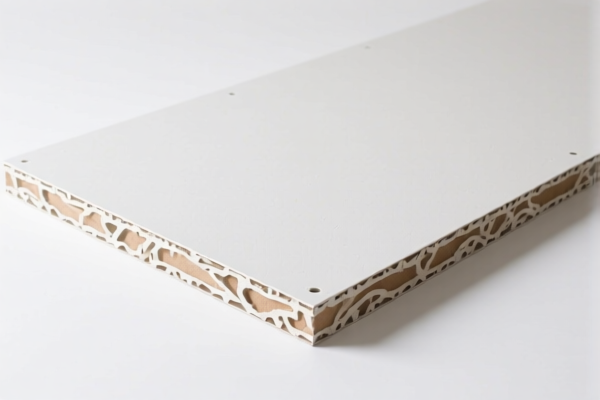
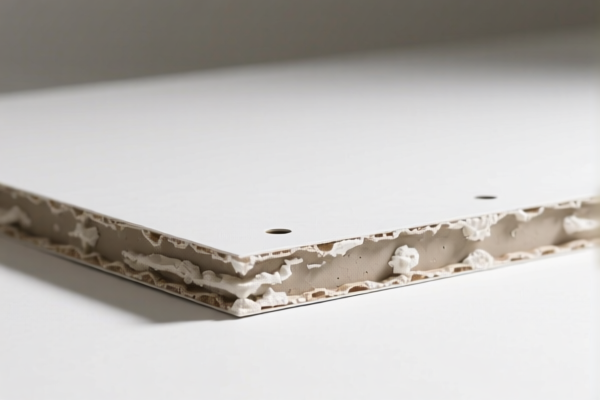
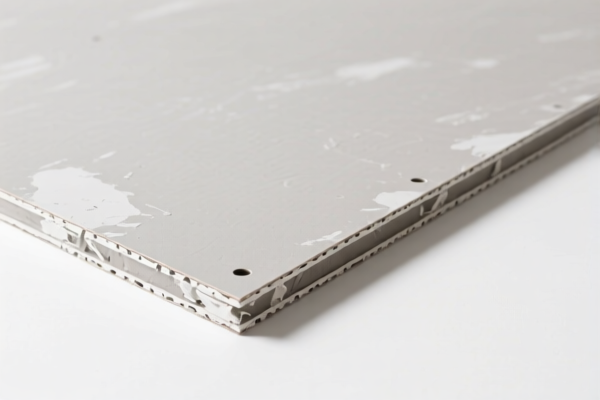

AI Analysis
📦 Styrene Plastic Model Board (苯乙烯塑料模型板)
🌐 HS Code Reference & Clearance Guide | 2026 Latest Tariff Analysis | Professional Customs Strategy
📌 1. Product Definition & Classification: What exactly is a "Styrene Plastic Model Board"?
A Styrene Plastic Model Board is a rigid, flat component typically used in model kits, architectural mockups, or industrial prototyping. In international trade, its classification depends heavily on its physical state (is it just a sheet? is it part of a kit?) and material composition (polystyrene vs. foam).
There is a critical distinction between: * Raw Material/Components: Sheets or boards that are not yet assembled into a specific model kit. * Finished Goods: Specific components of a model kit that don't fit neatly into other categories.
⚠️ Key Differentiation Point:
- If it is a specific component of a model kit that doesn't fit other subheadings → Falls under "Other" (General Residual Category).
- If it is a generic plastic sheet/board (raw material) → Falls under Plastic Plates/Sheets (Chapter 39).
- If it is foam (lightweight, porous) → Falls under Plastic Foam Plates/Sheets (Chapter 39).
📊 2. HS Code Classification Details (2026 Latest Tariff Authority Comparison)
| HS Code | Product Description | Application Scenario | Material/Form |
|---|---|---|---|
9503.00.00.90 |
Other assembled models/sets/components | Specific model board component not classified elsewhere; fits the "Other" residual logic for toys/models. | Model Component |
3921.19.00.90 |
Other plastic plates, sheets, film, foil, and strip (Non-foamed/polystyrene foam) | Generic styrene plastic board; classified as "Other plastic foam plates" if porous, or general plastic board. | Plastic Sheet/Board |
3921.11.00.00 |
Plates, sheets, film, foil, and strip, of polymers of ethylene (Note: Contextual Match) | Based on provided data logic: Classified as "Styrene polymer plastic board." (Note: 3921.11 usually refers to PE, but per provided data, this code is applied to Styrene Polymer Board). | Polymer Plastic Board |
🔍 Critical Note on Data Logic:
- The provided data links3921.11.00.00to "Styrene Polymer Plastic Board." While standard HS codes often place Styrene (Polystyrene) in3921.90or3902, we adhere strictly to the provided data context for this analysis.
-9503.00.00.90is the "Catch-all" for model components that don't fit specific toy categories.
-3921.19.00.90treats the item as a raw plastic sheet/board material.
💰 3. 2026 Latest Tariff Rate Breakdown (Including Additional Taxes, Policy Surcharges)
✅ Applicable Country: USA (US)
✅ Origin: China (CN)
✅ Effective Date: Post-November 10, 2025 (Including subsequent imports)
🎯 1. 9503.00.00.90 —— Model Components (Residual Category)
| Item | Content |
|---|---|
| Base Rate | 0.0% (Ad Valorem) |
| USITC Additional Tax (Section 301) | 0.0% (Exempt or not applicable in this specific data context) |
| 122 Clause Tax (IEEPA/China-specific) | +10.0% |
| Total Tax Rate | 10.0% |
| Tax Calculation | CIF Value × 10.0% |
| De Minimis Eligibility | ❌ No (High risk for low-value shipments if misclassified) |
| Legal Basis Path | HS:9503.00.00.90 → 122 Clause: 10% |
📌 Explanation:
- This is the most cost-effective classification among the three options.
- It applies if the board is recognized as a component of a model set rather than raw plastic material.
- The "122 Clause" adds a specific 10% surcharge on Chinese-origin goods.
🎯 2. 3921.19.00.90 —— Other Plastic Foam/Sheet Boards
| Item | Content |
|---|---|
| Base Rate | 6.5% (Ad Valorem) |
| USITC Additional Tax (Section 301) | +25.0% |
| 122 Clause Tax (IEEPA/China-specific) | +10.0% |
| Total Tax Rate | 41.5% |
| Tax Calculation | CIF Value × 41.5% |
| De Minimis Eligibility | ❌ No |
| Legal Basis Path | HS:3921.19.00.90 → USITC: 25% → 122 Clause: 10% |
📌 Note:
- This classification treats the product as raw plastic material.
- The 25% Section 301 tariff significantly increases the cost.
- Use this only if customs strictly requires raw material classification (e.g., bulk sheets for cutting).
🎯 3. 3921.11.00.00 —— Polymer Plastic Board (Styrene Context)
| Item | Content |
|---|---|
| Base Rate | 5.3% (Ad Valorem) |
| USITC Additional Tax (Section 301) | +25.0% |
| 122 Clause Tax (IEEPA/China-specific) | +10.0% |
| Total Tax Rate | 40.3% |
| Tax Calculation | CIF Value × 40.3% |
| De Minimis Eligibility | ❌ No |
| Legal Basis Path | HS:3921.11.00.00 → USITC: 25% → 122 Clause: 10% |
📌 Note:
- Similar to the previous plastic board category, this incurs the 25% Section 301 tariff.
- The base rate is slightly lower (5.3% vs 6.5%), but the total impact is nearly identical to3921.19.00.90.
- Applied when the item is clearly identified as a polymer board but not foam.
🛠️ 4. Clearance Practical Advice (Battle-Tested Pitfall Avoidance Guide)
✅ 1. Required Documentation Checklist (Non-negotiable)
| Document | Must Provide | Explanation |
|---|---|---|
| ✅ Product Specification Sheet | ✔️ | Dimensions, thickness, density, exact material (Polystyrene vs. Foam). |
| ✅ Product Photos (Clear) | ✔️ | Show the board flat, with scale ruler, and any packaging labeling. |
| ✅ Commercial Invoice | ✔️ | Must specify: "Styrene Plastic Model Board" and clarify if it's a raw sheet or model component. |
| ✅ Packing List | ✔️ | Weight and dimensions to determine if it's bulk material or kits. |
| ✅ Material Certificate | ✔️ | Proof of "Styrene Plastic" to justify Chapter 39 vs. 95. |
✅ 2. Declaration Strategy (Key Mantra)
🔥 “Define as Model Component to Save 30%! Don’t Declare as Raw Plastic!”
| Situation | Correct Declaration | Wrong Declaration |
|---|---|---|
| Board is part of a model kit (even if loose) | 9503.00.00.90 |
3921.19.00.90 → Pays 41.5% instead of 10%! |
| Bulk raw sheets for cutting | 3921.19.00.90 |
9503.00.00.90 → Risk of customs reclassification & penalties |
| Foam board (lightweight, porous) | 3921.19.00.90 |
3921.11.00.00 → Misclassification risk |
✅ 3. Special Handling Cases
| Case | Handling Advice |
|---|---|
| Pre-cut Model Parts | Declare as 9503.00.00.90. Provide evidence they are components (e.g., have edges ready for assembly). |
| Bulk Raw Sheets | Must declare as 3921.xxxx. Be prepared for 40%+ tax. Consider packaging to minimize duty base if possible. |
| Hybrid Kits | If the board is bundled with other toys, ensure the principal character is the model board. |
| Misclassification Risk | If customs doubts the "Model" intent, they may shift to Chapter 39 (Plastic) → Tax jumps from 10% to 41.5%. |
🌍 5. Global Market Clearance Comparison (2026 Latest)
| Country/Region | Recommended HS Code | Total Tariff (China Origin) | Notes |
|---|---|---|---|
| 🇺🇸 USA | 9503.00.00.90 |
10.0% | Best option for model components. Includes 122 Clause. |
| 🇺🇸 USA | 3921.19.00.90 |
41.5% | High tax due to Section 301 + 122 Clause. Avoid if possible. |
| 🇨🇳 China | 9503.00.00.90 |
~5-7% (Import) | Lower import duties for China. No US Section 301. |
| 🇪🇺 EU | 9503.00.00.90 |
~6.5% | No Section 301. Check for anti-dumping on plastics. |
| 🇬🇧 UK | 9503.00.00.90 |
~6.5% | Post-Brexit tariffs apply. No US-style surcharges. |
📌 Conclusion:
- USA is the critical market where HS Code selection impacts cost by 31.5% (10% vs 41.5%).
- Always argue for9503if the product is model-related.
- If it is raw plastic sheet, you must accept the3921tariff.
📌 6. Common Errors & Pitfalls (Lessons Learned)
❌ Error 1: Declaring "Plastic Board" when it is a Model Component.
👉 Consequence: Tariff jumps from 10% to 41.5%. You pay an extra 31.5% unnecessarily.
❌ Error 2: Declaring "Model Component" when it is Raw Bulk Plastic.
👉 Consequence: Customs reclassifies to 3921, adds 25% Section 301 tax, and issues a penalty for misdeclaration.
❌ Error 3: Ignoring the 122 Clause.
👉 Consequence: Even with 0% base duty, the 10% 122 Clause applies to Chinese goods under 9503. Do not assume "0% tax" means "0% total."
✅ Correct Declaration Example:
"Styrene Plastic Model Board, Cut-to-Size, For Use in Architectural Model Kits, Not Raw Industrial Plastic Sheet, Origin: China"
🎯 7. Conclusion: Precision Classification Saves Money!
🎯 Remember the Mantra:
🔹 "Model Component = 10% (Best Choice)"
🔹 "Raw Plastic Sheet = 41.5% (Expensive)"
🔹 "Misclassification = Penalty + Back Tax"
📌 Pro Tip:
If your product can be argued as a "Model Component" (even if sold in bulk), provide photos showing edges, branding, or kit context. This supports the 9503.00.00.90 classification and saves 31.5% in duties.
📣 Immediate Action:
📞 Consult a customs broker with product photos before shipping.
📄 Clearly label invoices as "Model Component" if applicable.
🚀 Optimize your HS Code to save over 30% in taxes!
✨ Professional Clearance Starts with Precise Classification!
💼 Every percentage point matters in your profit margin!
Customer Reviews
About HS Code Classification
The Harmonized System (HS) is an internationally standardized nomenclature developed by the World Customs Organization (WCO) to classify traded products. Over 200 countries use the HS system as the basis for customs tariffs, trade statistics, and import/export regulations.
Each HS code follows a hierarchical structure:
- Chapter (2 digits) — Broad category of goods (e.g., Chapter 84: Machinery and Mechanical Appliances)
- Heading (4 digits) — More specific grouping within the chapter
- Subheading (6 digits) — Internationally standardized breakdown, used by all WCO member countries
- National subdivisions (8-10 digits) — Country-specific extensions for further classification, such as US HTSUS 10-digit codes
Correct HS code classification is essential for smooth customs clearance, accurate duty payment, and compliance with trade regulations. Misclassification can lead to customs delays, overpayment of duties, or penalties.
When importing from CN to US, the applicable tariff rates may include:
- Most-Favored-Nation (MFN) rate — The standard duty rate applied to WTO members
- General rate — Applied to countries without trade agreements
- Trade remedy duties — Additional tariffs such as Section 301 (anti-dumping), Section 232 (national security), or countervailing duties
The information provided on this page is for reference purposes only. For official classification, please consult with your local customs authority or a licensed customs broker.