Styrene Plastic Waste
CN → US| HS Code | Tariff Rate | Origin | Destination | Doc |
|---|---|---|---|---|
| 3915900090 | 35.0% | CN | US | Official Doc |
| 3903110000 | 41.5% | CN | US | Official Doc |
| 3915200000 | 35.0% | CN | US | Official Doc |
| 3903190000 | 41.5% | CN | US | Official Doc |
| 3915100000 | 35.0% | CN | US | Official Doc |
Product Images

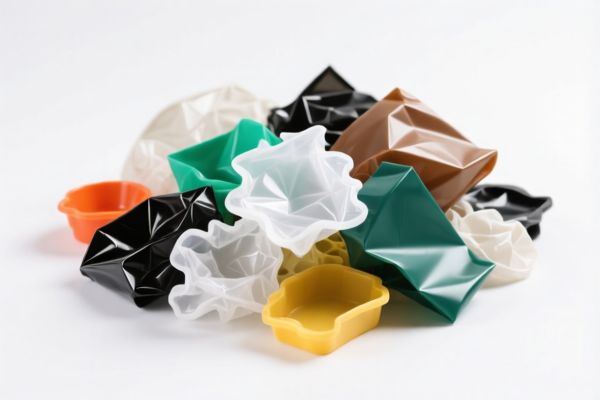
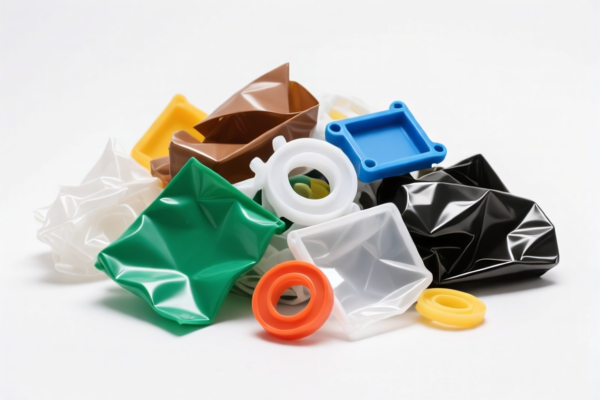
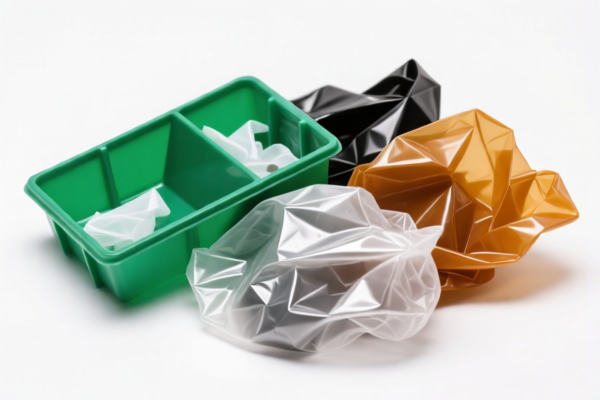
AI Analysis
🗑️ Styrene Plastic Waste (Polystyrene Scrap & Offcuts)
🌐 HS Code Reference & Customs Clearance Guide | 2026 Latest Tariff Analysis | Professional Entry Strategy
📌 I. Product Definition & Classification: What Exactly is "Styrene Plastic Waste"?
Styrene plastic waste, primarily referring to Polystyrene (PS) and its copolymers, exists in various forms in the recycling and waste trade. In international trade, the classification depends heavily on the physical state (raw material vs. waste) and the specific polymer type (e.g., EPS, General Purpose PS, HIPS).
Two Main Categories: 1. Waste/Scrap Form (Chapter 3915): The most common classification for discarded, recycled, or offcut styrene plastics. This includes shredded foam, broken blocks, and non-integrated scraps. 2. Raw Material/Form (Chapter 3903): Rare for "waste," but applies if the material is deemed a "primary shape" or raw granulate rather than waste. Note: The provided data indicates some matches for waste under this category, likely due to specific regulatory interpretations of "waste" vs. "recyclable feedstock."
⚠️ Key Distinction Point:
- If the material is discarded, offcut, or non-conforming → It is classified as Waste/Scrap (HS 3915).
- If the material is integrated into a specific polymer waste category (e.g., Ethylene vs. Styrene) → The HS Code changes based on the polymer family.
- Why multiple codes? Different sub-headings capture nuances: "Other waste" (3915.90), "Styrene polymer waste" (3915.20), or "Ethylene waste" (3915.10 - often a misclassification or broader category match in some databases).
📦 II. HS Code Classification Details (2026 Latest Tariff Authority Comparison)
Based on the provided dataset, here are the precise HS Codes for Styrene Plastic Waste, their summaries, and tax implications.
| HS Code | Product Description & Logic | Total Tax Rate | Tax Breakdown |
|---|---|---|---|
| 3915.90.00.90 | Polystyrene Waste: Other Plastics Waste • Matches the general definition of "Other plastic waste." • Used when specific styrene sub-codes don't apply or for mixed styrene scraps. |
35.0% | Base: 0.0% Trade War: 25.0% Section 301: 10% |
| 3903.11.00.00 | Polystyrene Waste: Raw Material/Primary Shape Match • Unusual for waste, but matches if classified under "Polystyrene in primary forms." • Likely applies to recyclable feedstock treated as raw material. |
41.5% | Base: 6.5% Trade War: 25.0% Section 301: 10% |
| 3915.20.00.00 | Polystyrene Waste: Styrene Polymer Waste • Direct match for waste from styrene polymers (e.g., EPS, GPPS, HIPS). • Most accurate for dedicated styrene scrap. |
35.0% | Base: 0.0% Trade War: 25.0% Section 301: 10% |
| 3903.19.00.00 | Polystyrene Waste: Other Categories • Matches material requirements under "Other polystyrene." • Applies when specific waste sub-codes are ambiguous. |
41.5% | Base: 6.5% Trade War: 25.0% Section 301: 10% |
| 3915.10.00.00 | Ethylene Plastic Waste: Polymer Waste Match • Note: While titled "Ethylene," this code appears in the data for styrene waste. This may indicate a broader categorization error in some systems or a specific regulatory overlap. |
35.0% | Base: 0.0% Trade War: 25.0% Section 301: 10% |
🔍 Key Insight:
- Most Common/Winnable Rate: 35.0% (Codes 3915.90, 3915.20, 3915.10).
- Higher Risk Rate: 41.5% (Codes 3903.11, 3903.19) due to the 6.5% Base Duty.
- Why the difference? Chapter 3903 (Polymers) often carries a base duty, while Chapter 3915 (Waste/Scrap) often has 0% base duty but still attracts the full 35% additional tariffs (25% + 10%).
💰 III. 2026 Latest Tariff Rate Detailed Explanation (Including Surcharges & Policy Add-ons)
✅ Applicable Country: United States (US)
✅ Origin: China (CN)
✅ Effective Time: Post-2025 (Based on Section 301 & IEEPA extensions)
🎯 1. The "35.0%" Bracket (Codes: 3915.90.00.90, 3915.20.00.00, 3915.10.00.00)
This is the most common classification for plastic waste.
| Item | Detail |
|---|---|
| Base Duty (MFN) | 0.0% • Plastic waste/scrap typically enjoys 0% base duty to encourage recycling. |
| USITC Section 301 Tariff | +25.0% • Applies to all Chinese-origin goods under specific HTSUs. |
| IEEPA/Executive Order Surcharge | +10.0% • Additional levy on Chinese imports (often referred to as "122 Clause" or similar executive actions). |
| Total Effective Rate | 35.0% |
| Calculation | CIF Value × 35% |
| De Minimis Exemption? | ❌ NO • Section 301 and IEEPA tariffs DO NOT apply to de minimis (low-value) shipments. |
📌 Explanation:
- Although the base duty is 0%, the 35% surcharge makes importing plastic waste from China expensive.
- Why is it 35% and not 41.5%? Because the base duty is 0%. The 25% + 10% are added on top.
🎯 2. The "41.5%" Bracket (Codes: 3903.11.00.00, 3903.19.00.00)
This bracket applies if the goods are classified under Chapter 3903 (Polystyrene in primary forms) rather than Chapter 3915 (Waste).
| Item | Detail |
|---|---|
| Base Duty (MFN) | 6.5% • Polystyrene resins/raw materials carry a standard import duty. |
| USITC Section 301 Tariff | +25.0% |
| IEEPA/Executive Order Surcharge | +10.0% |
| Total Effective Rate | 41.5% |
| Calculation | CIF Value × 41.5% |
| De Minimis Exemption? | ❌ NO |
📌 Why is this higher?
- Customs may interpret "recyclable styrene" as "raw material" (3903) instead of "waste" (3915).
- Risk: This classification attracts a 6.5% base duty on top of the 35% surcharge.
- Avoidance Strategy: Ensure documentation clearly states "WASTE," "SCRAP," or "OFFCUTS" to argue for Chapter 3915.
🛠️ IV. Customs Clearance Practical Advice (Battle-Tested Pitfall Avoidance)
✅ 1. Essential Documentation Checklist
| Document | Required? | Purpose |
|---|---|---|
| ✅ Commercial Invoice | ✔️ | Must clearly state: "Polystyrene Plastic Waste / Scrap", not just "Plastic" or "Resin". |
| ✅ Packing List | ✔️ | Detail weight, volume, and packaging type (bales, bags). |
| ✅ Certificate of Origin | ✔️ | Proves Chinese origin to apply correct tariffs. |
| ✅ Waste/Shred Photos | ✔️ | CRITICAL: Show the material is non-integrated, shredded, or broken. |
| ✅ EPA/TSCA Cert | ✔️ | For plastic waste, US EPA regulations may apply to ensure it’s not hazardous waste. |
| ✅ Third-Party Inspection | ✔️ | Confirms material is truly "waste" and not "new goods" (which would have different taxes/fines). |
✅ 2. Declaration Strategy (Key Mantras)
🔥 "Waste Not New, Shred Not Sheet, Clear Description, Lower Rate!"
| Scenario | Correct Declaration | Incorrect Declaration |
|---|---|---|
| EPS Beads/Granules (Used) | HS 3915.20.00.00 – "Styrene Polymer Waste" |
HS 3903.11.00.00 – "Polystyrene Resin" (Triggers 41.5%) |
| Mixed Plastic Scrap (Contains PS) | HS 3915.90.00.90 – "Other Plastic Waste" |
Generic "Plastic Scrap" (May be audited) |
| Clean PS Offcuts (New) | ⚠️ Risky: May be seen as "Primary Shape" → HS 3903.19.00.00 (41.5%) |
Better to declare as "Offcuts/Scrap" with proof of non-usable state |
| Ethylene-Containing Waste | HS 3915.10.00.00 – If dominant polymer is PE, but data lists it for Styrene → Verify Polymer Mix |
Misidentifying PE as PS or vice versa |
✅ 3. Special Cases & Handling
| Case | Handling Advice |
|---|---|
| Mixed Polymer Waste | If waste contains both PS and PE, declare as "Mixed Plastic Waste" (3915.90.00.90). Ensure PS content is significant enough to justify PS labeling, or declare as "Other." |
| Contaminated Waste | If waste has food residue, glue, or metal, Customs may classify it as "Refuse" rather than recyclable plastic. This can lead to rejection or destruction. Clean waste is key. |
| "Waste" vs. "Recyclable Feedstock" | Some suppliers try to import "recycled PS pellets" as 3903 (Raw Material). If it’s regranulated, it might be considered a product, not waste. Ensure it meets "Waste" definition (discarded, offcut). |
| EPA Regulations | Plastic waste imports are scrutinized for illegal dumping. Ensure compliance with EPA’s Transboundary Movements regulations. |
🌍 V. Global Market Comparison (2026 Latest)
| Country/Region | Recommended HS Code | Tariff (China Origin) | Certification | Notes |
|---|---|---|---|---|
| 🇺🇸 USA | 3915.20.00.00 or 3915.90.00.90 |
35.0% | EPA TSCA, CBP | High Tariff: 25% + 10% surcharge. Base duty 0%. |
| 🇨🇳 China | 3915.20.00.00 |
0% | N/A | China imports plastic waste for recycling. |
| 🇪🇺 EU | 3915.10.00 or 3915.90.00 |
0% (if certified) | EU Plastic Waste Regulation | Strict on non-recyclable waste. |
| 🇻🇳 Vietnam | 3915.10.00 |
Varies | Local Recycling License | Popular destination for Chinese plastic waste. |
| 🇮🇩 Indonesia | 3915.10.00 |
20-30% | BANAL Certificate | Import bans on low-quality waste. |
📌 Conclusion:
- USA has the highest effective tariff for plastic waste (35%) due to trade war measures.
- EU and Asia have stricter environmental controls but lower tariffs if certified.
- Strategy: If importing to the US, ensure the goods are high-quality, clean, and clearly labeled as waste to avoid the 41.5% bracket and EPA rejections.
📌 VI. Common Mistakes & Pitfall Guide (Lessons Learned)
❌ Mistake 1: Declaring "Recycled PS Pellets" as 3903.11.00.00 (Raw Material)
👉 Consequence: If deemed "waste," you face 35% surcharge. If deemed "new," you pay 6.5% base + 35% surcharge = 41.5% + potential anti-dumping.
👉 Fix: Clarify status: "Waste/Scrap" vs. "Processed Pellets."
❌ Mistake 2: Using "Plastic Resin" instead of "Plastic Waste" in Invoice
👉 Consequence: Customs may suspect undeclared goods or misclassification.
👉 Fix: Use exact terms: "Polystyrene Plastic Waste," "PS Scrap," "Offcuts."
❌ Mistake 3: Ignoring EPA TSCA Certification
👉 Consequence: Shipment detained or destroyed by EPA.
👉 Fix: Obtain EPA TSCA certification for plastic waste imports.
❌ Mistake 4: Mixing HS Codes in One Shipment
👉 Consequence: Audit risk. If 90% is PS waste (3915) and 10% is PE waste (3915.10), declare separately or as "Mixed" with clear breakdown.
✅ Correct Declaration Example:
"POLYSTYRENE PLASTIC WASTE, SHREDDED, OFFCUTS, NON-HAZARDOUS, FOR RECYCLING PURPOSES ONLY. HS 3915.20.00.00. ORIGIN: CHINA."
🎯 VII. Conclusion: Professional Declaration, Save Cost, Ensure Compliance!
🎯 Remember the Mantra:
🔹 "Waste Not New, Base 0%, Surcharge 35%."
🔹 "3915 for Waste, 3903 for Resin. Don’t Mix!"
🔹 "Clean Waste Pays Less, Dirty Waste Gets Rejected."
📌 Pro Tip:
If your styrene waste is contaminated or mixed with non-recyclable materials, consider processing it domestically or exporting to countries with lower environmental restrictions (e.g., Southeast Asia) to avoid US EPA hurdles and high tariffs.
📣 Immediate Action:
📞 Consult a licensed customs broker.
🖼️ Provide photos of the waste state.
📄 Ensure EPA TSCA compliance before shipping to the US.
🚀 Clear Customs, Reduce Costs, Maximize Profit!
✨ Professional Clearance Starts with Accurate Classification!
💼 Every Percent Counts in Plastic Trade!
Customer Reviews
About HS Code Classification
The Harmonized System (HS) is an internationally standardized nomenclature developed by the World Customs Organization (WCO) to classify traded products. Over 200 countries use the HS system as the basis for customs tariffs, trade statistics, and import/export regulations.
Each HS code follows a hierarchical structure:
- Chapter (2 digits) — Broad category of goods (e.g., Chapter 84: Machinery and Mechanical Appliances)
- Heading (4 digits) — More specific grouping within the chapter
- Subheading (6 digits) — Internationally standardized breakdown, used by all WCO member countries
- National subdivisions (8-10 digits) — Country-specific extensions for further classification, such as US HTSUS 10-digit codes
Correct HS code classification is essential for smooth customs clearance, accurate duty payment, and compliance with trade regulations. Misclassification can lead to customs delays, overpayment of duties, or penalties.
When importing from CN to US, the applicable tariff rates may include:
- Most-Favored-Nation (MFN) rate — The standard duty rate applied to WTO members
- General rate — Applied to countries without trade agreements
- Trade remedy duties — Additional tariffs such as Section 301 (anti-dumping), Section 232 (national security), or countervailing duties
The information provided on this page is for reference purposes only. For official classification, please consult with your local customs authority or a licensed customs broker.